Story code: ST-001216
Part 1: The Decimals
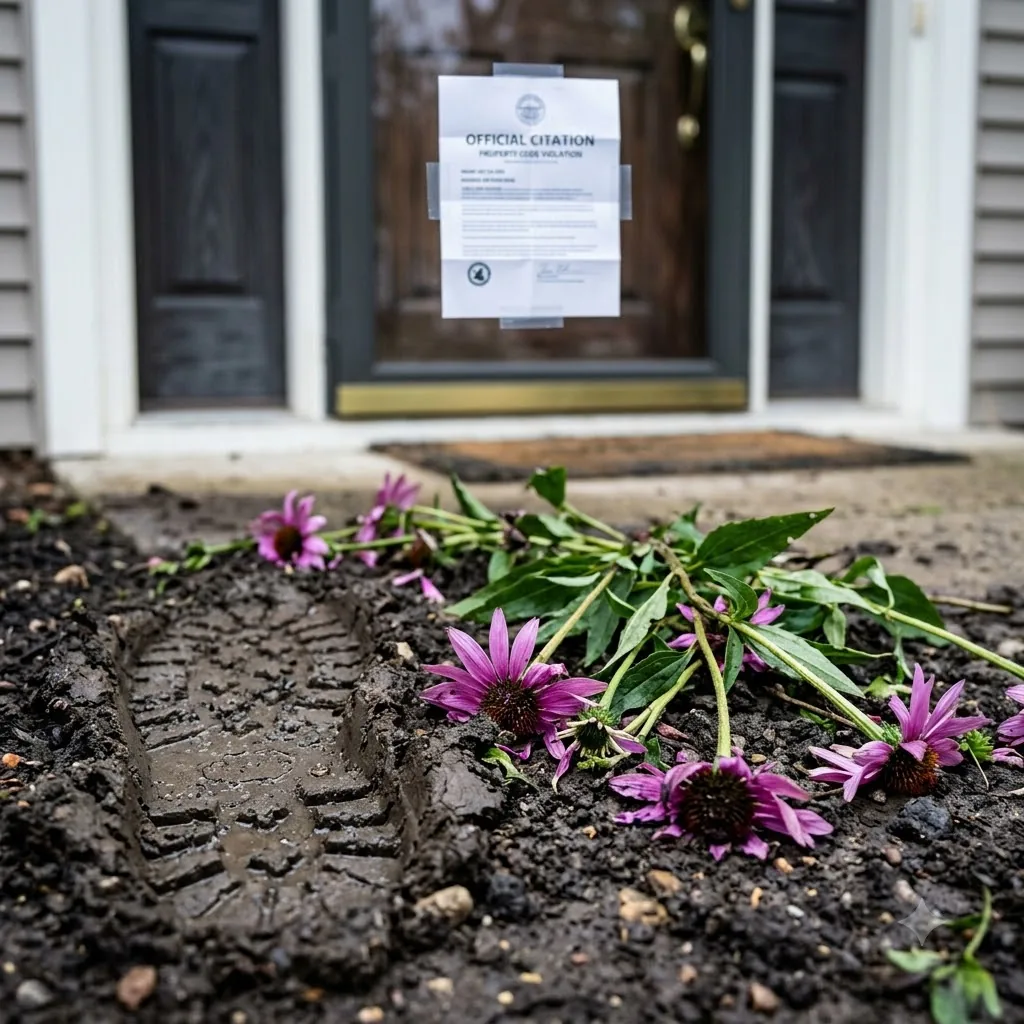
Julian knelt in the damp mulch, his fingers trembling slightly as they hovered over the snapped stalk of a mature purple coneflower. The bruised, herbaceous scent of crushed echinacea hung thick in the stagnant morning air, mixing with the sharp odor of freshly gouged earth where a massive boot had driven the plant directly into the clay. He rocked back on his heels, scanning the perimeter of his native pollinator garden. Three distinct clusters of blooms lay flattened, their petals ground violently into the dark soil.
This was no accident. The heavy lug-sole tread marks formed a deliberate, tactical path. Whoever had done this bypassed the wide flagstone walkway entirely, choosing instead to march straight through the center of the densest planting beds. Julian leaned closer to the nearest depression. The heel strike was deep enough to pool the morning dew, indicating a person of significant weight standing entirely still for a prolonged period, shifting their balance right over the fragile root systems.
A flash of neon green caught his peripheral vision. He stood, his joints stiffening as he turned toward his front porch. A heavy sheet of cardstock was fixed to the center of his front door, positioned exactly at eye level.
The Homeowners Association typically left standard tri-fold notices wedged into mailboxes or clipped to door handles. This document was taped down with four thick strips of industrial packing tape, sealing all four edges directly to the painted wood. Julian walked up the steps, his chest tight. He tried to peel the top right corner, but the adhesive gripped fiercely, threatening to strip the exterior paint away. He resorted to reading it exactly where it hung.
It was not a standard form letter. It was a custom-printed spreadsheet, formatted in a microscopic, rigid font. The bold header across the top declared a violation for organic matter height exceedance and unauthorized topographical deviation.
Beneath the header, a meticulously organized grid laid out coordinates mapped to specific sectors of his front yard. Julian traced the tiny text with his index finger. The first row detailed a native grass cluster precisely three feet and four inches from the driveway border. The recorded height was listed at 152.4 millimeters. The allowable maximum was printed beside it as 101.6 millimeters, followed by a bolded column highlighting a deviation of 50.8 millimeters.
His eyes darted down the page. The sheer volume of data was staggering. Sector seven, stonework edge, noted soil erosion overlapping the concrete boundary by exactly 14.2 millimeters. Sector nine, mulch perimeter, cited a natural debris scatter pattern exceeding the containment barrier by 8.7 millimeters.
A tape measure could not yield that level of precision. A cold dread settled in Julian’s stomach. The numbers required digital calipers or a laser measure. Someone had spent a significant amount of time in his yard in the dead of night, crouching in the dirt with specialized equipment to log measurements down to the decimal point of a millimeter.
He looked back over his shoulder at the ruined coneflower bed. The heavy boot prints aligned perfectly with the locations listed on the grid. Sector four was the crushed echinacea. Sector seven was the displaced mulch by the stonework. The intruder had not just been measuring. They had been physically imposing their presence over the terrain, stamping out the life Julian had spent three years cultivating into a vibrant sanctuary.
The quiet suburban street suddenly felt oppressive. Rhythmic ticks echoed from the adjacent properties as automatic sprinklers swept in perfect unison over manicured, sterile expanses of uniform green turf. Not a single car drove past. Not a single neighbor stood on a porch. Yet the hair on the back of Julian’s neck prickled. The stillness carried the distinct, heavy weight of an unseen gaze. He scanned the darkened windows of the houses across the asphalt, looking for a twitching blind or the glint of a lens. Nothing moved.
He stepped off the porch and walked back to the deepest set of boot prints. He needed a record of the intrusion before the morning sun baked the mud dry. Pulling his phone from his pocket, he framed the shot to capture the aggressive depth of the tread pattern. The screen illuminated the dark soil, highlighting the sharp ridges of the sole.
As he adjusted the angle to reduce the glare from the wet earth, a tiny reflection caught his eye. It was half-buried just beside the deepest heel strike.
Julian lowered the phone and crouched down, reaching into the mud. He pinched the cold, rigid object between his thumb and forefinger, pulling it free from the suction of the wet clay. He wiped the dirt away with his thumb, revealing a heavy, sheared-off metal spike attached to a small mechanical housing. It was a broken piece of professional surveying equipment, snapped cleanly at the joint from immense downward force. Behind him, the heavy crunch of gravel signaled a slow, deliberate footstep at the edge of his driveway.
Julian knelt in the damp mulch, his fingers trembling slightly as they hovered over the snapped stalk of a mature purple coneflower. The bruised, herbaceous scent of crushed echinacea hung thick in the stagnant morning air, mixing with the sharp odor of freshly gouged earth where a massive boot had driven the plant directly into the clay. He rocked back on his heels, scanning the perimeter of his native pollinator garden. Three distinct clusters of blooms lay flattened, their petals ground violently into the dark soil.
This was no accident. The heavy lug-sole tread marks formed a deliberate, tactical path. Whoever had done this bypassed the wide flagstone walkway entirely, choosing instead to march straight through the center of the densest planting beds. Julian leaned closer to the nearest depression. The heel strike was deep enough to pool the morning dew, indicating a person of significant weight standing entirely still for a prolonged period, shifting their balance right over the fragile root systems.
A flash of neon green caught his peripheral vision. He stood, his joints stiffening as he turned toward his front porch. A heavy sheet of cardstock was fixed to the center of his front door, positioned exactly at eye level.
The Homeowners Association typically left standard tri-fold notices wedged into mailboxes or clipped to door handles. This document was taped down with four thick strips of industrial packing tape, sealing all four edges directly to the painted wood. Julian walked up the steps, his chest tight. He tried to peel the top right corner, but the adhesive gripped fiercely, threatening to strip the exterior paint away. He resorted to reading it exactly where it hung.
It was not a standard form letter. It was a custom-printed spreadsheet, formatted in a microscopic, rigid font. The bold header across the top declared a violation for organic matter height exceedance and unauthorized topographical deviation.
Beneath the header, a meticulously organized grid laid out coordinates mapped to specific sectors of his front yard. Julian traced the tiny text with his index finger. The first row detailed a native grass cluster precisely three feet and four inches from the driveway border. The recorded height was listed at 152.4 millimeters. The allowable maximum was printed beside it as 101.6 millimeters, followed by a bolded column highlighting a deviation of 50.8 millimeters.
His eyes darted down the page. The sheer volume of data was staggering. Sector seven, stonework edge, noted soil erosion overlapping the concrete boundary by exactly 14.2 millimeters. Sector nine, mulch perimeter, cited a natural debris scatter pattern exceeding the containment barrier by 8.7 millimeters.
A tape measure could not yield that level of precision. A cold dread settled in Julian’s stomach. The numbers required digital calipers or a laser measure. Someone had spent a significant amount of time in his yard in the dead of night, crouching in the dirt with specialized equipment to log measurements down to the decimal point of a millimeter.
He looked back over his shoulder at the ruined coneflower bed. The heavy boot prints aligned perfectly with the locations listed on the grid. Sector four was the crushed echinacea. Sector seven was the displaced mulch by the stonework. The intruder had not just been measuring. They had been physically imposing their presence over the terrain, stamping out the life Julian had spent three years cultivating into a vibrant sanctuary.
The quiet suburban street suddenly felt oppressive. Rhythmic ticks echoed from the adjacent properties as automatic sprinklers swept in perfect unison over manicured, sterile expanses of uniform green turf. Not a single car drove past. Not a single neighbor stood on a porch. Yet the hair on the back of Julian’s neck prickled. The stillness carried the distinct, heavy weight of an unseen gaze. He scanned the darkened windows of the houses across the asphalt, looking for a twitching blind or the glint of a lens. Nothing moved.
He stepped off the porch and walked back to the deepest set of boot prints. He needed a record of the intrusion before the morning sun baked the mud dry. Pulling his phone from his pocket, he framed the shot to capture the aggressive depth of the tread pattern. The screen illuminated the dark soil, highlighting the sharp ridges of the sole.
As he adjusted the angle to reduce the glare from the wet earth, a tiny reflection caught his eye. It was half-buried just beside the deepest heel strike.
Julian lowered the phone and crouched down, reaching into the mud. He pinched the cold, rigid object between his thumb and forefinger, pulling it free from the suction of the wet clay. He wiped the dirt away with his thumb, revealing a heavy, sheared-off metal spike attached to a small mechanical housing. It was a broken piece of professional surveying equipment, snapped cleanly at the joint from immense downward force. Behind him, the heavy crunch of gravel signaled a slow, deliberate footstep at the edge of his driveway.