Story code: ST-001062
Part 1: The Barrier
Julian held his practiced, empathetic smile for three extra seconds after his closing sign-off, preaching the absolute necessity of radical wealth redistribution to sixty thousand viewers while the muffled rhythm of blaring car horns pounded against the soundproof glass of his idling G-Wagon. He tapped the red button on his dashboard mount to end the broadcast. The curated warmth on his face evaporated instantly, replaced by a rigid, white-hot scowl.
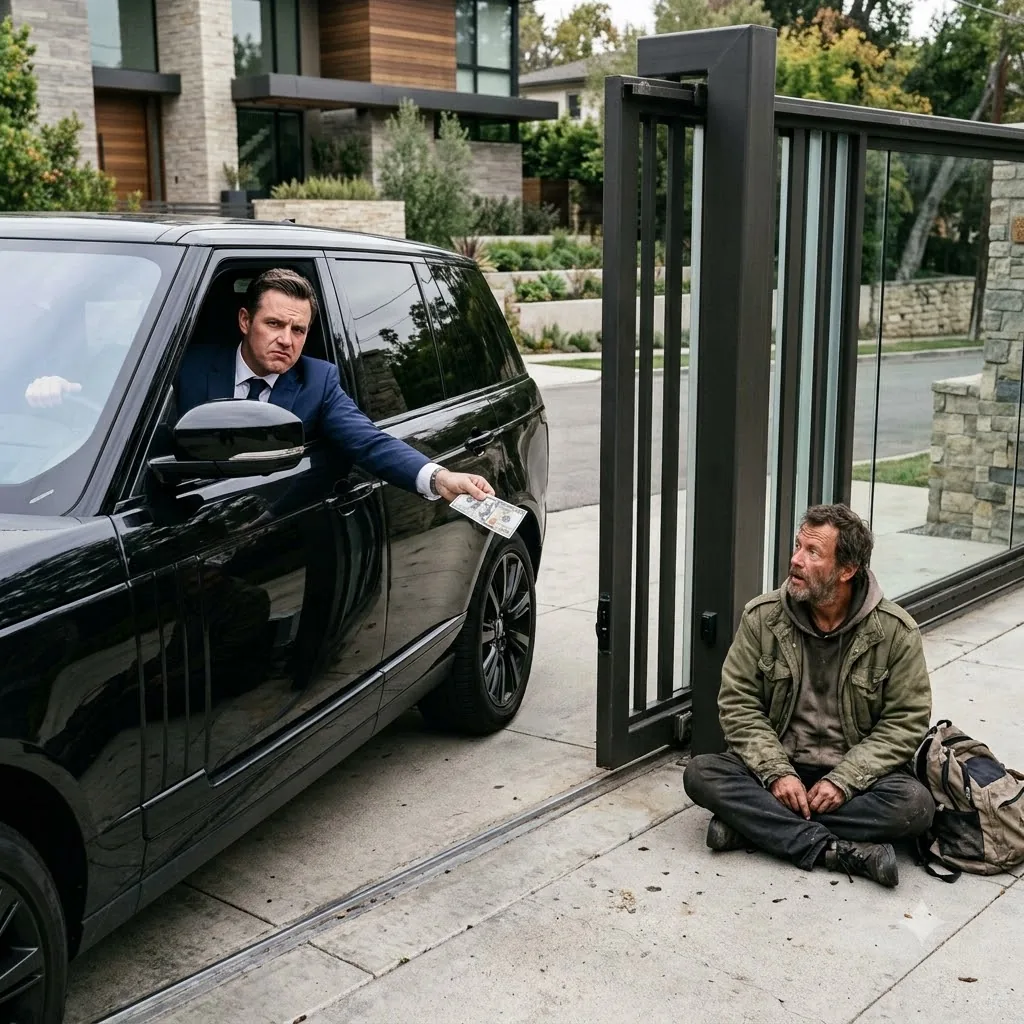
He shifted the heavy luxury SUV into park and glared through the tinted windshield. His automated, wrought-iron estate gate remained stubbornly shut. The delay was not a mechanical failure. A man in a faded, dust-caked canvas jacket sat cross-legged directly on the asphalt driveway, his body positioned perfectly over the electronic sensor pad. The man’s chin rested heavily against his chest, his posture radiating a bone-deep exhaustion that made him look like a permanent fixture of the pavement.
Behind the G-Wagon, the narrow canyon road was completely bottlenecked. A line of trapped commuters stretched around the blind curve, their drivers leaning on their steering wheels in unified frustration. Inside the climate-controlled cabin of the SUV, the noise was nothing more than a dull, distant hum. The scent of rich leather and eucalyptus air freshener insulated Julian from the grit of the city he had just spent an hour lecturing about. He checked his heavy gold watch. He had a private consultation with a crypto-staking firm in twelve minutes. He needed to be inside his compound, sitting at his reclaimed-wood desk, perfectly framed by his curated bookshelf.
The obstruction in the driveway was a direct threat to his schedule. Julian reached into the deep center console, bypassing a tin of organic mints, and pulled a crisp hundred-dollar bill from a brushed steel money clip. He pressed the smooth silver button on his door panel.
The window glided down, and the sudden intrusion of reality was violent.
The wall of sound hit him instantly. The honking from the trapped cars echoed sharply off the canyon walls, mixing with the harsh, suffocating smell of exhaust fumes from a dozen idling engines. The afternoon heat washed over Julian’s face, instantly breaking a sweat on his brow. He hated the heat. He hated the noise. Most of all, he hated the absolute lack of control he had over the lump of unmoving humanity blocking his private sanctuary.
Julian leaned out the window, extending the hundred-dollar bill into the smoggy air. He snapped his fingers twice. The sharp, percussive sound cut through the ambient traffic noise. He ordered the man to take the money and clear the gate. He kept his voice low enough to avoid echoing down the line of angry drivers behind him, but laced the words with enough venom to make his authority clear.
The man on the ground did not flinch.
Julian leaned further out, his seatbelt locking against his chest. He examined the man with growing disdain. The intruder wore heavy, scuffed boots with worn treads, the kind built for miles of punishing terrain rather than city sidewalks. A faded olive-drab duffel bag sat by his hip, the straps pulled tight and secured with military precision. None of this registered to Julian as anything more than visual evidence of a vagrant ruining his afternoon. He snapped his fingers again, harder, the friction stinging his skin. He waved the hundred-dollar bill like a flag, a transactional command to vacate the premises.
A driver two cars back laid on their horn for a solid ten seconds, leaning out their window to shout something unintelligible up the hill. Julian ignored the noise, focusing all his mounting rage on the man sitting on his driveway. He calculated the risk of easing his foot off the brake, just enough to let the G-Wagon creep forward and nudge the man’s heavy boots with his reinforced steel bumper. It was a fleeting, dark impulse, quickly suppressed by the cold realization of liability and the sheer hassle of dealing with the police.
Instead, Julian shoved the car into park with unnecessary force, unbuckled his seatbelt, and pushed his heavy door open. The aggressive beep of the open-door warning chime joined the chaotic symphony of the canyon traffic. He stepped out onto the hot asphalt, towering over the seated figure. He shoved the hundred-dollar bill down toward the man’s face, demanding he take the cash and leave immediately.
The man finally moved.
He did not reach for the money. He did not scramble to his feet or offer an apology. Slowly, with the deliberate, aching motion of someone whose joints were filled with sand, the man lifted his head. His face was weathered, deeply lined with sun damage and fatigue, but his eyes were entirely lucid. He looked at the crisp bill trembling in Julian’s manicured hand, then shifted his gaze slowly up Julian’s arm, past his designer polo, locking directly onto Julian’s eyes.
The man reached into his own dust-covered jacket.
Julian held his practiced, empathetic smile for three extra seconds after his closing sign-off, preaching the absolute necessity of radical wealth redistribution to sixty thousand viewers while the muffled rhythm of blaring car horns pounded against the soundproof glass of his idling G-Wagon. He tapped the red button on his dashboard mount to end the broadcast. The curated warmth on his face evaporated instantly, replaced by a rigid, white-hot scowl.
He shifted the heavy luxury SUV into park and glared through the tinted windshield. His automated, wrought-iron estate gate remained stubbornly shut. The delay was not a mechanical failure. A man in a faded, dust-caked canvas jacket sat cross-legged directly on the asphalt driveway, his body positioned perfectly over the electronic sensor pad. The man’s chin rested heavily against his chest, his posture radiating a bone-deep exhaustion that made him look like a permanent fixture of the pavement.
Behind the G-Wagon, the narrow canyon road was completely bottlenecked. A line of trapped commuters stretched around the blind curve, their drivers leaning on their steering wheels in unified frustration. Inside the climate-controlled cabin of the SUV, the noise was nothing more than a dull, distant hum. The scent of rich leather and eucalyptus air freshener insulated Julian from the grit of the city he had just spent an hour lecturing about. He checked his heavy gold watch. He had a private consultation with a crypto-staking firm in twelve minutes. He needed to be inside his compound, sitting at his reclaimed-wood desk, perfectly framed by his curated bookshelf.
The obstruction in the driveway was a direct threat to his schedule. Julian reached into the deep center console, bypassing a tin of organic mints, and pulled a crisp hundred-dollar bill from a brushed steel money clip. He pressed the smooth silver button on his door panel.
The window glided down, and the sudden intrusion of reality was violent.
The wall of sound hit him instantly. The honking from the trapped cars echoed sharply off the canyon walls, mixing with the harsh, suffocating smell of exhaust fumes from a dozen idling engines. The afternoon heat washed over Julian’s face, instantly breaking a sweat on his brow. He hated the heat. He hated the noise. Most of all, he hated the absolute lack of control he had over the lump of unmoving humanity blocking his private sanctuary.
Julian leaned out the window, extending the hundred-dollar bill into the smoggy air. He snapped his fingers twice. The sharp, percussive sound cut through the ambient traffic noise. He ordered the man to take the money and clear the gate. He kept his voice low enough to avoid echoing down the line of angry drivers behind him, but laced the words with enough venom to make his authority clear.
The man on the ground did not flinch.
Julian leaned further out, his seatbelt locking against his chest. He examined the man with growing disdain. The intruder wore heavy, scuffed boots with worn treads, the kind built for miles of punishing terrain rather than city sidewalks. A faded olive-drab duffel bag sat by his hip, the straps pulled tight and secured with military precision. None of this registered to Julian as anything more than visual evidence of a vagrant ruining his afternoon. He snapped his fingers again, harder, the friction stinging his skin. He waved the hundred-dollar bill like a flag, a transactional command to vacate the premises.
A driver two cars back laid on their horn for a solid ten seconds, leaning out their window to shout something unintelligible up the hill. Julian ignored the noise, focusing all his mounting rage on the man sitting on his driveway. He calculated the risk of easing his foot off the brake, just enough to let the G-Wagon creep forward and nudge the man’s heavy boots with his reinforced steel bumper. It was a fleeting, dark impulse, quickly suppressed by the cold realization of liability and the sheer hassle of dealing with the police.
Instead, Julian shoved the car into park with unnecessary force, unbuckled his seatbelt, and pushed his heavy door open. The aggressive beep of the open-door warning chime joined the chaotic symphony of the canyon traffic. He stepped out onto the hot asphalt, towering over the seated figure. He shoved the hundred-dollar bill down toward the man’s face, demanding he take the cash and leave immediately.
The man finally moved.
He did not reach for the money. He did not scramble to his feet or offer an apology. Slowly, with the deliberate, aching motion of someone whose joints were filled with sand, the man lifted his head. His face was weathered, deeply lined with sun damage and fatigue, but his eyes were entirely lucid. He looked at the crisp bill trembling in Julian’s manicured hand, then shifted his gaze slowly up Julian’s arm, past his designer polo, locking directly onto Julian’s eyes.
The man reached into his own dust-covered jacket.