Story code: ST-000190
Part 1: The Glass Floor
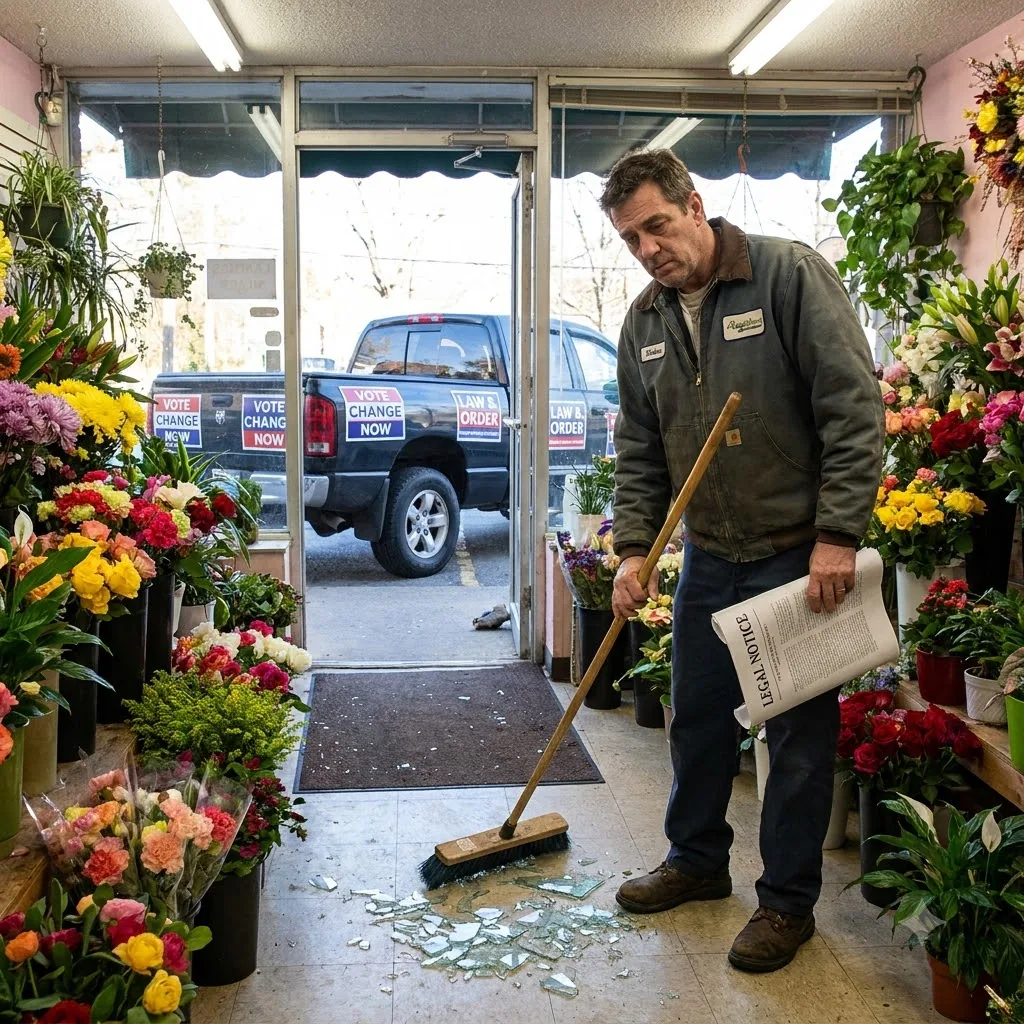
Julian pressed the stiff bristles of his broom against the hardwood floor, forcing a pile of shattered window glass and crushed orchids into a metal dustpan. In his left hand, he gripped the crisp, twenty-page federal injunction that had just granted him the legal right to host his reading event at the public library. He stared at the embossed court seal stamped on the final page. The document had cost him thousands of dollars in legal fees and months of relentless anxiety. It was meant to be his ultimate shield. Instead, he was standing in a freezing floral shop that smelled of winter wind and trampled potting soil.
A heavy paving brick sat near the register, surrounded by the ruin of his most expensive floral arrangements. The court victory yesterday afternoon was supposed to be the end of the war. The federal judge had slammed the gavel, ordered the mayor’s office to cease interfering with Julian’s community programs, and validated his grueling fight. But the mayor’s supporters had delivered their own rebuttal through his storefront window sometime past midnight.
Julian’s shoulders ached with a dull, heavy throb. He had not slept a single minute. He had spent the dark hours boarding up the drafty hole in his facade with scavenged plywood, jumping at every passing pair of headlights and flinching at every scrape of tires on the asphalt outside. He folded the expensive court order and shoved it deep into the pocket of his heavy wool coat.
He checked his watch, noting the tight window of time remaining. He needed to leave for the library immediately to organize the space, coordinate with the sympathetic librarians, and prepare himself for the crowd. He grabbed his ring of keys and hoisted a large plastic bin filled with storybooks, craft supplies, and a few surviving bouquets he had salvaged from the wreckage of the shop floor.
He carried the heavy bin out the side door, stepping into the narrow, brick-lined alleyway that served as his private driveway. The freezing morning air bit at his cheeks as he loaded the materials into the back of his delivery van. He slammed the rear doors shut, the metallic thud echoing off the tight alley walls, and climbed into the driver’s seat. Glancing at the dashboard clock, he calculated he had exactly forty-five minutes to set up before the library doors opened to the public. He turned the ignition, shifted into drive, and rolled forward toward the street.
He slammed on the brakes.
A massive, lifted black truck sat idling directly across the apron of his driveway. It was parked perpendicular to the alley, its front and rear bumpers practically touching the brick walls of the adjacent buildings. The exit was completely sealed off.
Julian put the van in park and leaned forward over the steering wheel. The vehicle blocking him was entirely wrapped in glossy vinyl campaign advertisements. The words MAYOR RICHARDSON stood out in bold, aggressive lettering across the side panels, flanked by the sprawling slogan TRADITION FIRST. The truck’s oversized tires encroached a full foot onto Julian’s property line. Thick white exhaust plumed from dual tailpipes, drifting into the alley and clouding Julian’s windshield with a greasy haze.
Julian tapped his horn, letting out a short, sharp burst.
The black truck remained perfectly motionless. The heavy tint on the windows made it impossible to see inside the cab. Julian pressed the horn again, holding his palm against the center of the wheel for a solid five seconds. The idling engine merely rumbled in response, a deep, vibrating hum that rattled the loose tools sitting on Julian’s passenger seat.
He looked at the dashboard clock a second time. The realization settled into his chest like a stone. The mayor’s people knew exactly what they were doing. If Julian called the police to report a blocked driveway, dispatch would log it as a low-priority parking violation. An officer would take at least an hour to arrive. Then would come the paperwork, the deliberate dragging of feet, the bureaucratic slow-roll designed to ensure Julian missed his own event. The federal injunction burning a hole in his pocket would mean absolutely nothing if he failed to show up to the library on time. It was a perfectly calculated social trap designed to bleed away the clock.
Julian shifted his van back into park and killed the engine. The silence inside his cabin was immediately swallowed by the aggressive, rhythmic idle of the campaign truck outside. He stepped out onto the damp asphalt, the cold wind whipping the lapels of his coat. He kept his hand firmly pressed over the pocket holding the court order, drawing a strange, desperate comfort from the thick paper.
He walked down the tight space of the alley, closing the distance to the barricade. The exhaust smelled rich and unburned, choking the narrow brick corridor. He stopped mere inches from the driver’s side door. The black tinted glass reflected his own exhausted, pale face back at him. He raised his knuckles, preparing to strike the window and demand the driver back up.
Before his hand could make contact with the glass, a loud metallic clack echoed through the alley, and the heavy truck door unexpectedly unlatched and swung outward.
Julian pressed the stiff bristles of his broom against the hardwood floor, forcing a pile of shattered window glass and crushed orchids into a metal dustpan. In his left hand, he gripped the crisp, twenty-page federal injunction that had just granted him the legal right to host his reading event at the public library. He stared at the embossed court seal stamped on the final page. The document had cost him thousands of dollars in legal fees and months of relentless anxiety. It was meant to be his ultimate shield. Instead, he was standing in a freezing floral shop that smelled of winter wind and trampled potting soil.
A heavy paving brick sat near the register, surrounded by the ruin of his most expensive floral arrangements. The court victory yesterday afternoon was supposed to be the end of the war. The federal judge had slammed the gavel, ordered the mayor’s office to cease interfering with Julian’s community programs, and validated his grueling fight. But the mayor’s supporters had delivered their own rebuttal through his storefront window sometime past midnight.
Julian’s shoulders ached with a dull, heavy throb. He had not slept a single minute. He had spent the dark hours boarding up the drafty hole in his facade with scavenged plywood, jumping at every passing pair of headlights and flinching at every scrape of tires on the asphalt outside. He folded the expensive court order and shoved it deep into the pocket of his heavy wool coat.
He checked his watch, noting the tight window of time remaining. He needed to leave for the library immediately to organize the space, coordinate with the sympathetic librarians, and prepare himself for the crowd. He grabbed his ring of keys and hoisted a large plastic bin filled with storybooks, craft supplies, and a few surviving bouquets he had salvaged from the wreckage of the shop floor.
He carried the heavy bin out the side door, stepping into the narrow, brick-lined alleyway that served as his private driveway. The freezing morning air bit at his cheeks as he loaded the materials into the back of his delivery van. He slammed the rear doors shut, the metallic thud echoing off the tight alley walls, and climbed into the driver’s seat. Glancing at the dashboard clock, he calculated he had exactly forty-five minutes to set up before the library doors opened to the public. He turned the ignition, shifted into drive, and rolled forward toward the street.
He slammed on the brakes.
A massive, lifted black truck sat idling directly across the apron of his driveway. It was parked perpendicular to the alley, its front and rear bumpers practically touching the brick walls of the adjacent buildings. The exit was completely sealed off.
Julian put the van in park and leaned forward over the steering wheel. The vehicle blocking him was entirely wrapped in glossy vinyl campaign advertisements. The words MAYOR RICHARDSON stood out in bold, aggressive lettering across the side panels, flanked by the sprawling slogan TRADITION FIRST. The truck’s oversized tires encroached a full foot onto Julian’s property line. Thick white exhaust plumed from dual tailpipes, drifting into the alley and clouding Julian’s windshield with a greasy haze.
Julian tapped his horn, letting out a short, sharp burst.
The black truck remained perfectly motionless. The heavy tint on the windows made it impossible to see inside the cab. Julian pressed the horn again, holding his palm against the center of the wheel for a solid five seconds. The idling engine merely rumbled in response, a deep, vibrating hum that rattled the loose tools sitting on Julian’s passenger seat.
He looked at the dashboard clock a second time. The realization settled into his chest like a stone. The mayor’s people knew exactly what they were doing. If Julian called the police to report a blocked driveway, dispatch would log it as a low-priority parking violation. An officer would take at least an hour to arrive. Then would come the paperwork, the deliberate dragging of feet, the bureaucratic slow-roll designed to ensure Julian missed his own event. The federal injunction burning a hole in his pocket would mean absolutely nothing if he failed to show up to the library on time. It was a perfectly calculated social trap designed to bleed away the clock.
Julian shifted his van back into park and killed the engine. The silence inside his cabin was immediately swallowed by the aggressive, rhythmic idle of the campaign truck outside. He stepped out onto the damp asphalt, the cold wind whipping the lapels of his coat. He kept his hand firmly pressed over the pocket holding the court order, drawing a strange, desperate comfort from the thick paper.
He walked down the tight space of the alley, closing the distance to the barricade. The exhaust smelled rich and unburned, choking the narrow brick corridor. He stopped mere inches from the driver’s side door. The black tinted glass reflected his own exhausted, pale face back at him. He raised his knuckles, preparing to strike the window and demand the driver back up.
Before his hand could make contact with the glass, a loud metallic clack echoed through the alley, and the heavy truck door unexpectedly unlatched and swung outward.