Story code: ST-001059
Part 1: The Safety Slider
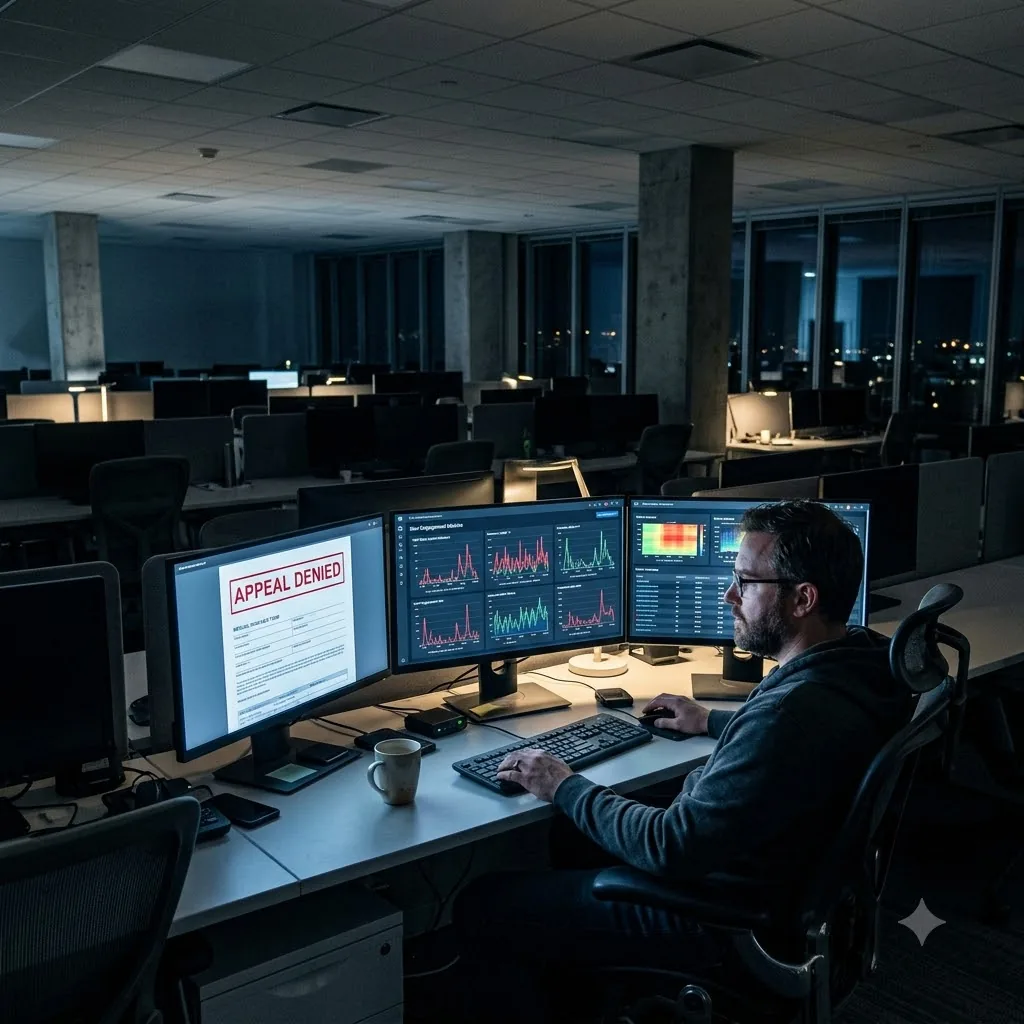
The fluorescent lights on the fourteenth floor buzzed with a flat, sterile hum that vibrated right into Marcus’s jaw. At 2:14 AM, the expansive open-plan office was a cavern of empty standing desks and powered-down workstations, leaving only the dual monitors at his terminal casting a harsh blue glow across his face. His cursor flicked between two open windows. On the left monitor sat a two-page PDF from BlueCross, the bold red header reading ‘Appeal Denied’ floating above a block of dense legal text. On the right monitor, a live proprietary data dashboard pulsed with a steady stream of incoming metrics.
The PDF detailed the insurance company’s final decision on Elena’s multiple sclerosis treatment protocol. The words ‘experimental’ and ‘insufficient clinical justification’ were highlighted in yellow, a courtesy from their case manager. The out-of-pocket cost for the six-month infusion cycle was listed at the bottom of page two. It was a number that required Marcus to secure the maximum tier of his quarterly engagement bonus, a payout tied directly to the time-in-app metrics of his assigned demographic cluster.
He dragged the PDF window to the corner of the screen and expanded the live feed for User_9482.
User_9482 was a sixteen-year-old male in the Midwest. The dashboard represented him as a cluster of rapidly updating bar charts and scatter plots. The boy had been scrolling for three hours straight. His engagement velocity was erratic. The dwell time on videos tagged with anger and betrayal was thirty percent higher than his baseline, but his overall session retention was flagging. The platform’s automated safety guardrails were working exactly as designed, quietly inserting calming, low-arousal palate cleansers into the boy’s feed to prevent algorithmic fatigue and psychological burnout.
Marcus watched the retention probability score dip from seventy percent to sixty-five. If User_9482 closed the app, the aggregate session length for the cluster would drop below the threshold required for Marcus’s bonus multiplier.
Elena had dropped her coffee mug that morning. Her fingers simply stopped gripping the ceramic handle. The shatter had been loud against the kitchen tiles, but her silence afterward had been louder.
Marcus opened the developer console overlay on his right monitor. The administrative access token he held as a senior engineer bypassed the standard product team approvals. He navigated to the content recommendation weighting parameters. The interface was a simple set of sliders governing the emotional valence of the feed. The safety slider, designated as ‘Friction_Limit’, was currently locked at its default value of 0.75. This was the industry standard to prevent vulnerable users from spiraling into total digital dependency or acute distress during late-night sessions.
He clicked the padlock icon next to the slider. The system prompted him for his authentication key. He typed it in without looking at the keyboard.
The slider turned from gray to active green. Marcus placed his cursor over the digital toggle. He held his breath, listening to the hum of the HVAC unit overhead and the faint, rhythmic clicking of his own mouse against the desk pad. He thought about the finality of the PDF on his left screen. He thought about the exact dollar amount required to keep Elena walking by next spring.
He clicked and dragged the safety slider from 0.75 down to 0.00.
The change took effect in the subsequent content fetch, approximately four seconds later. The dashboard blinked as the new algorithm parameters compiled and executed on User_9482’s device. The calming palate cleansers vanished from the queue. The feed flooded with unfiltered, high-arousal, hyper-antagonistic content optimized purely for raw neurological retention.
Marcus watched the data roll in. The boy’s scroll speed plummeted as his dwell time skyrocketed. User_9482 was no longer skimming. He was transfixed. The engagement metrics spiked vertically, pushing the cluster’s aggregate session length past the bonus threshold in a matter of minutes. The bio-feedback estimates, derived from screen pressure and micro-hesitations in the scrolling thumb, indicated a massive surge in the user’s stress markers. The teenager was typing furious, jagged comments on videos specifically designed to isolate and enrage him.
Marcus’s breathing leveled out. The bonus was secure. The infusion therapy was funded.
A sharp ping echoed from his desktop speakers. An automated flag from the platform’s root moderation bot appeared in the center of his screen. The alert was bordered in crimson, indicating a critical psychological safety violation had been detected on a minor’s account. The system initiated an automatic countdown to suspend the user and lock Marcus’s administrative access for review.
Marcus lunged forward and slammed his hand over the keyboard to override the termination script.
The fluorescent lights on the fourteenth floor buzzed with a flat, sterile hum that vibrated right into Marcus’s jaw. At 2:14 AM, the expansive open-plan office was a cavern of empty standing desks and powered-down workstations, leaving only the dual monitors at his terminal casting a harsh blue glow across his face. His cursor flicked between two open windows. On the left monitor sat a two-page PDF from BlueCross, the bold red header reading ‘Appeal Denied’ floating above a block of dense legal text. On the right monitor, a live proprietary data dashboard pulsed with a steady stream of incoming metrics.
The PDF detailed the insurance company’s final decision on Elena’s multiple sclerosis treatment protocol. The words ‘experimental’ and ‘insufficient clinical justification’ were highlighted in yellow, a courtesy from their case manager. The out-of-pocket cost for the six-month infusion cycle was listed at the bottom of page two. It was a number that required Marcus to secure the maximum tier of his quarterly engagement bonus, a payout tied directly to the time-in-app metrics of his assigned demographic cluster.
He dragged the PDF window to the corner of the screen and expanded the live feed for User_9482.
User_9482 was a sixteen-year-old male in the Midwest. The dashboard represented him as a cluster of rapidly updating bar charts and scatter plots. The boy had been scrolling for three hours straight. His engagement velocity was erratic. The dwell time on videos tagged with anger and betrayal was thirty percent higher than his baseline, but his overall session retention was flagging. The platform’s automated safety guardrails were working exactly as designed, quietly inserting calming, low-arousal palate cleansers into the boy’s feed to prevent algorithmic fatigue and psychological burnout.
Marcus watched the retention probability score dip from seventy percent to sixty-five. If User_9482 closed the app, the aggregate session length for the cluster would drop below the threshold required for Marcus’s bonus multiplier.
Elena had dropped her coffee mug that morning. Her fingers simply stopped gripping the ceramic handle. The shatter had been loud against the kitchen tiles, but her silence afterward had been louder.
Marcus opened the developer console overlay on his right monitor. The administrative access token he held as a senior engineer bypassed the standard product team approvals. He navigated to the content recommendation weighting parameters. The interface was a simple set of sliders governing the emotional valence of the feed. The safety slider, designated as ‘Friction_Limit’, was currently locked at its default value of 0.75. This was the industry standard to prevent vulnerable users from spiraling into total digital dependency or acute distress during late-night sessions.
He clicked the padlock icon next to the slider. The system prompted him for his authentication key. He typed it in without looking at the keyboard.
The slider turned from gray to active green. Marcus placed his cursor over the digital toggle. He held his breath, listening to the hum of the HVAC unit overhead and the faint, rhythmic clicking of his own mouse against the desk pad. He thought about the finality of the PDF on his left screen. He thought about the exact dollar amount required to keep Elena walking by next spring.
He clicked and dragged the safety slider from 0.75 down to 0.00.
The change took effect in the subsequent content fetch, approximately four seconds later. The dashboard blinked as the new algorithm parameters compiled and executed on User_9482’s device. The calming palate cleansers vanished from the queue. The feed flooded with unfiltered, high-arousal, hyper-antagonistic content optimized purely for raw neurological retention.
Marcus watched the data roll in. The boy’s scroll speed plummeted as his dwell time skyrocketed. User_9482 was no longer skimming. He was transfixed. The engagement metrics spiked vertically, pushing the cluster’s aggregate session length past the bonus threshold in a matter of minutes. The bio-feedback estimates, derived from screen pressure and micro-hesitations in the scrolling thumb, indicated a massive surge in the user’s stress markers. The teenager was typing furious, jagged comments on videos specifically designed to isolate and enrage him.
Marcus’s breathing leveled out. The bonus was secure. The infusion therapy was funded.
A sharp ping echoed from his desktop speakers. An automated flag from the platform’s root moderation bot appeared in the center of his screen. The alert was bordered in crimson, indicating a critical psychological safety violation had been detected on a minor’s account. The system initiated an automatic countdown to suspend the user and lock Marcus’s administrative access for review.
Marcus lunged forward and slammed his hand over the keyboard to override the termination script.