Story code: ST-001805
Part 1: The False Alarm
The fiberglass insulation scraped against Marcus’s forearms as he dragged himself another two feet into the suffocating darkness of the crawlspace. Sweat pooled in his safety goggles, blurring his vision, but the real torment was the thick plastic box strapped above his right boot, humming with a random, erratic vibration that bruised his ankle bone. He aimed his heavy flashlight at the rusted duct joint, clamping down hard on the metal crimpers. The air down here sat at a stagnant hundred and ten degrees, thick with humidity and the smell of rot. He had been working for forty-five minutes to patch a blown return line, breathing strictly through his mouth to avoid the taste of ancient dust and desiccated mice.
The ankle monitor buzzed again, delivering a prolonged three-second shock of vibration. Marcus gritted his teeth and ignored the pain. The state Department of Corrections had upgraded the devices two weeks ago to a new biometric tracking system handled by a third-party contractor. Since the switch, the black box had been throwing ghost alerts, vibrating at random intervals even when he was sitting dead center in his approved work zones. He applied the mastic sealant, smearing the thick gray paste over the seam until the duct was completely airtight. He just needed to get out of this oven, get the homeowner to sign the digital invoice, and move on to the next dispatch before his boss started tracking his van’s idle time.
Marcus shoved his heavy canvas tool bag toward the square of daylight leading out to the utility room. He squeezed through the tight access hatch, standing up and brushing the worst of the toxic yellow cobwebs from his uniform shirt. His knees popped loudly in the quiet house. He wiped his face with an oil-stained rag, turning toward the hallway.
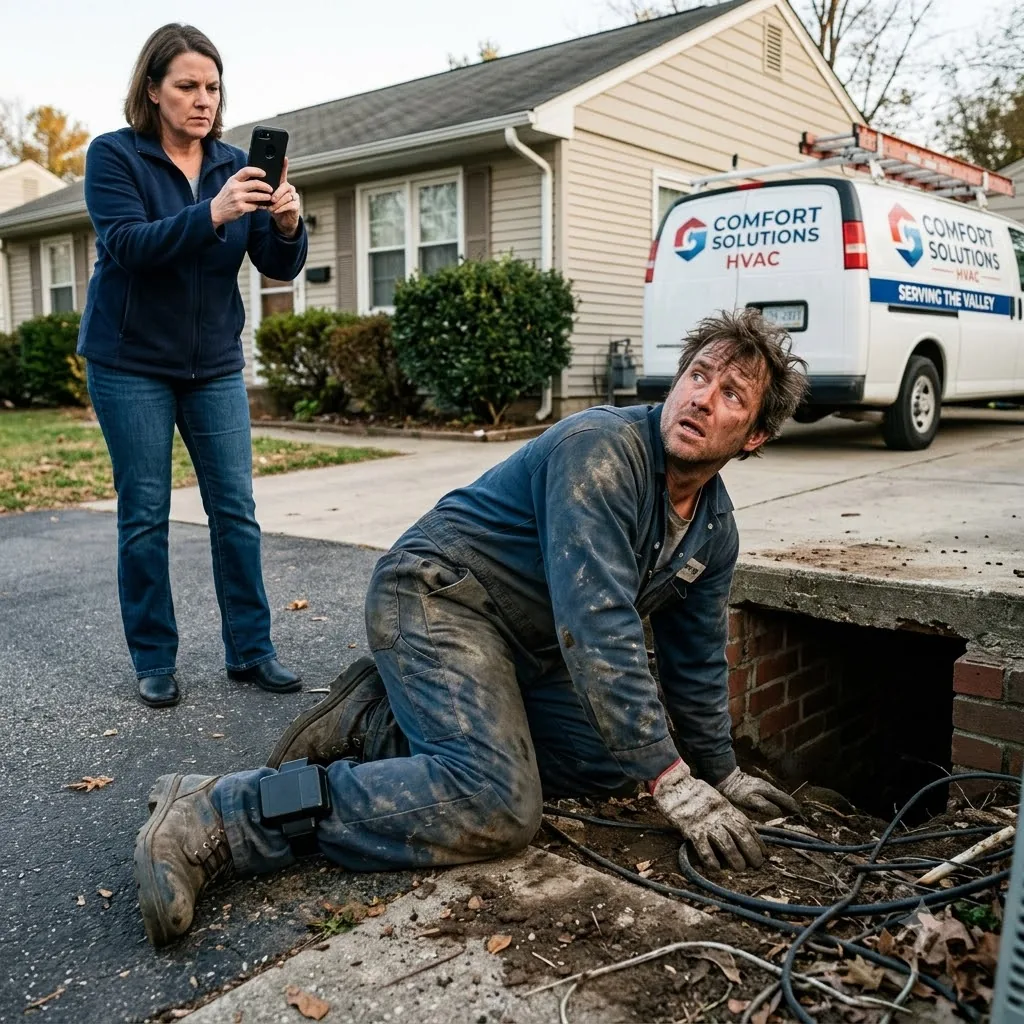
The homeowner stood in the doorway. She was a woman with tight blonde curls and a rigid, defensive posture, holding a glass of ice water she had no intention of offering him. Her eyes darted straight down to the bulky black device protruding from the hem of his work pants. She took a distinct half-step backward, her shoulder pressing against the doorframe. Marcus recognized the flinch immediately. He saw it three times a week. People wanted their air conditioning fixed in the middle of a July heatwave, but they did not want the realities of the state second-chance employment program standing in their mudroom.
He pulled his tablet from his back pocket to load the final invoice. The woman kept her distance, her gaze fixed entirely on his leg. She reached into her cardigan pocket and produced a silver smartphone, holding it flat against her chest with the camera lens pointed directly at him.
Marcus tapped the cracked screen of his tablet, keeping his voice carefully neutral. He told her the duct was sealed and the system would cool the house within the hour. She did not look at the tablet. She kept the phone angled at him, her thumb hovering over the screen.
Then, the monitor went off.
It was not a silent vibration this time. The plastic box emitted a high-pitched, piercing siren that echoed terribly off the linoleum floor. A synthetic, automated voice blared from the device’s tiny speaker at maximum volume.
“ZONE VIOLATION. OFFENDER HAS BREACHED PERIMETER. LAW ENFORCEMENT NOTIFIED.”
Marcus dropped his rag. He reached down instinctively, though there were no buttons to press, no way to manually mute the false alarm on the tamper-proof casing.
The woman thrust her phone forward, holding it at eye level. The red recording light blinked aggressively on the screen. She backed into the kitchen, shouting over the blaring siren that she knew he was a violent criminal and she was calling the police.
Marcus held his hands up, palms open, stepping back toward the side door to show he was leaving immediately. He tried to speak over the mechanical screaming of the ankle bracelet, stating clearly that it was a system error, a glitch in the GPS tracking. The automated voice simply looped, repeating the perimeter breach warning with deafening regularity. The woman narrated into her phone camera, declaring to the lens that a dangerous convict was refusing to leave her property.
Marcus pushed out the screen door and jogged down the driveway to his company van. The siren cut off the exact moment his hand touched the driver-side door handle, leaving a ringing silence in the manicured suburban cul-de-sac. He threw his tools into the back and climbed into the baking hot cab, slamming the door shut. The woman was standing on her front porch now, zooming in on his license plate and company logo.
Marcus keyed the ignition, pulling away from the curb as his chest tightened into a hard knot. He needed to call his parole officer and get ahead of the software glitch before the automated system escalated the alert. He reached for his phone in the center console. The screen lit up before he could unlock it. An automated text message sat waiting on the lock screen from the state corrections dispatch number.
“VIOLATION LOGGED. WARRANT PENDING. REPORT TO SUPERVISOR IMMEDIATELY.”
The fiberglass insulation scraped against Marcus’s forearms as he dragged himself another two feet into the suffocating darkness of the crawlspace. Sweat pooled in his safety goggles, blurring his vision, but the real torment was the thick plastic box strapped above his right boot, humming with a random, erratic vibration that bruised his ankle bone. He aimed his heavy flashlight at the rusted duct joint, clamping down hard on the metal crimpers. The air down here sat at a stagnant hundred and ten degrees, thick with humidity and the smell of rot. He had been working for forty-five minutes to patch a blown return line, breathing strictly through his mouth to avoid the taste of ancient dust and desiccated mice.
The ankle monitor buzzed again, delivering a prolonged three-second shock of vibration. Marcus gritted his teeth and ignored the pain. The state Department of Corrections had upgraded the devices two weeks ago to a new biometric tracking system handled by a third-party contractor. Since the switch, the black box had been throwing ghost alerts, vibrating at random intervals even when he was sitting dead center in his approved work zones. He applied the mastic sealant, smearing the thick gray paste over the seam until the duct was completely airtight. He just needed to get out of this oven, get the homeowner to sign the digital invoice, and move on to the next dispatch before his boss started tracking his van’s idle time.
Marcus shoved his heavy canvas tool bag toward the square of daylight leading out to the utility room. He squeezed through the tight access hatch, standing up and brushing the worst of the toxic yellow cobwebs from his uniform shirt. His knees popped loudly in the quiet house. He wiped his face with an oil-stained rag, turning toward the hallway.
The homeowner stood in the doorway. She was a woman with tight blonde curls and a rigid, defensive posture, holding a glass of ice water she had no intention of offering him. Her eyes darted straight down to the bulky black device protruding from the hem of his work pants. She took a distinct half-step backward, her shoulder pressing against the doorframe. Marcus recognized the flinch immediately. He saw it three times a week. People wanted their air conditioning fixed in the middle of a July heatwave, but they did not want the realities of the state second-chance employment program standing in their mudroom.
He pulled his tablet from his back pocket to load the final invoice. The woman kept her distance, her gaze fixed entirely on his leg. She reached into her cardigan pocket and produced a silver smartphone, holding it flat against her chest with the camera lens pointed directly at him.
Marcus tapped the cracked screen of his tablet, keeping his voice carefully neutral. He told her the duct was sealed and the system would cool the house within the hour. She did not look at the tablet. She kept the phone angled at him, her thumb hovering over the screen.
Then, the monitor went off.
It was not a silent vibration this time. The plastic box emitted a high-pitched, piercing siren that echoed terribly off the linoleum floor. A synthetic, automated voice blared from the device’s tiny speaker at maximum volume.
“ZONE VIOLATION. OFFENDER HAS BREACHED PERIMETER. LAW ENFORCEMENT NOTIFIED.”
Marcus dropped his rag. He reached down instinctively, though there were no buttons to press, no way to manually mute the false alarm on the tamper-proof casing.
The woman thrust her phone forward, holding it at eye level. The red recording light blinked aggressively on the screen. She backed into the kitchen, shouting over the blaring siren that she knew he was a violent criminal and she was calling the police.
Marcus held his hands up, palms open, stepping back toward the side door to show he was leaving immediately. He tried to speak over the mechanical screaming of the ankle bracelet, stating clearly that it was a system error, a glitch in the GPS tracking. The automated voice simply looped, repeating the perimeter breach warning with deafening regularity. The woman narrated into her phone camera, declaring to the lens that a dangerous convict was refusing to leave her property.
Marcus pushed out the screen door and jogged down the driveway to his company van. The siren cut off the exact moment his hand touched the driver-side door handle, leaving a ringing silence in the manicured suburban cul-de-sac. He threw his tools into the back and climbed into the baking hot cab, slamming the door shut. The woman was standing on her front porch now, zooming in on his license plate and company logo.
Marcus keyed the ignition, pulling away from the curb as his chest tightened into a hard knot. He needed to call his parole officer and get ahead of the software glitch before the automated system escalated the alert. He reached for his phone in the center console. The screen lit up before he could unlock it. An automated text message sat waiting on the lock screen from the state corrections dispatch number.
“VIOLATION LOGGED. WARRANT PENDING. REPORT TO SUPERVISOR IMMEDIATELY.”