Story code: ST-000506
Part 1: The Countdown
The industrial-grade cyanoacrylate had already cured into a thick, cloudy resin against the bank’s imported Italian marble. Arthur stared at the hardened puddle sealing the young woman’s bare hand to the floor, then glanced at the cracked screen of his dispatch device. The red digits flashed a relentless countdown, currently resting at two minutes and forty-seven seconds before his task logged as a critical failure. A critical failure meant automatic termination of his janitorial contract. Termination meant his family’s health insurance would lapse at midnight.
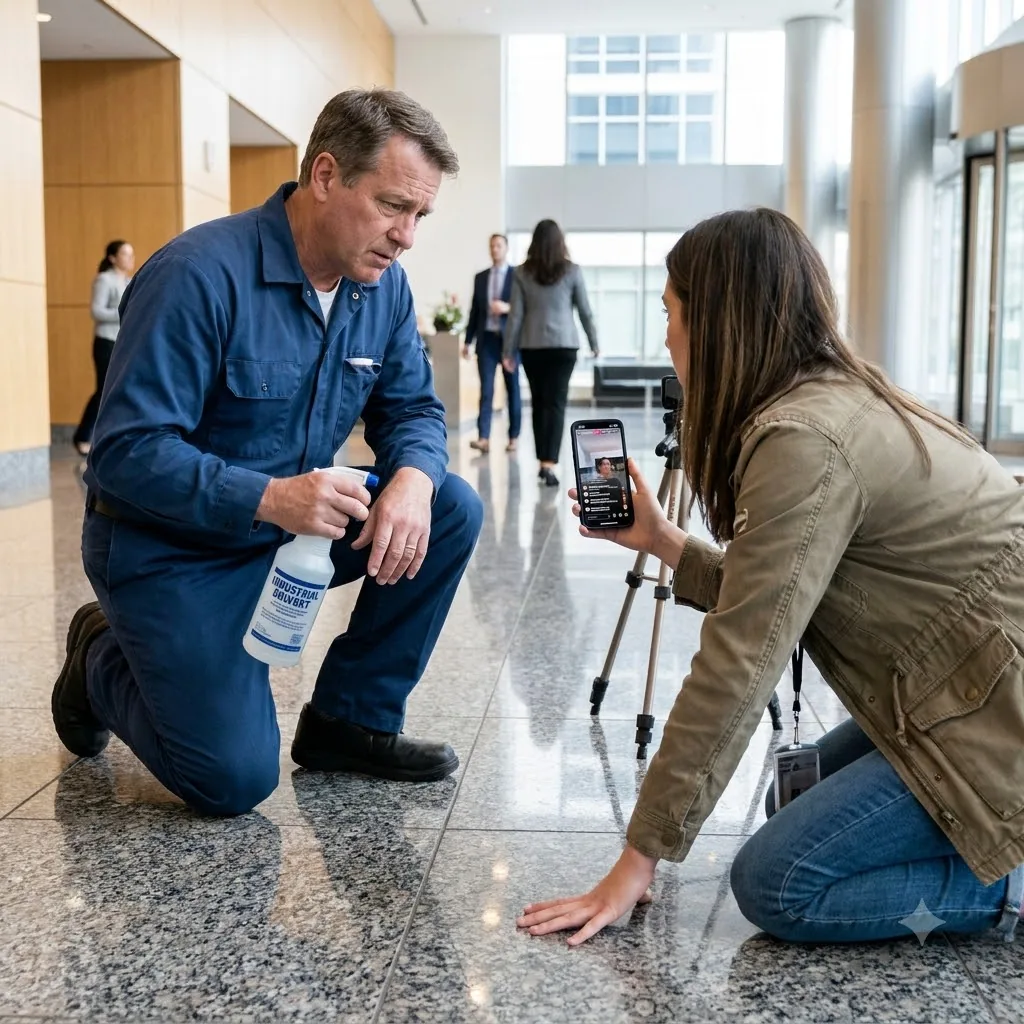
Arthur gripped the ribbed plastic bottle of commercial-grade chemical solvent in his right hand. The heavy blue polyester of his uniform clung to his sweating back. He crouched beside the activist. Her name, according to the neon-green letters painted across her hemp shirt, was Chloe. She had one hand cemented to the stone and the other holding a smartphone mounted on a telescoping grip, the lens pointed squarely at Arthur.
Chloe angled the camera to capture Arthur’s faded nametag. She spoke to her audience with a soft, patronizing cadence. She narrated the tragic reality of the working class being forced to do the dirty work of fossil-fuel billionaires. She told her viewers to look at this poor, exhausted man, trapped in a blue-collar nightmare, compelled to confront a peaceful protester because he had no other choice. She projected a deep, theatrical pity for him, emphasizing his stooped shoulders and stained boots.
Arthur did not look at the camera. He looked at the timer.
Two minutes and twelve seconds.
He thumbed the edge of the solvent bottle. The text on the plastic warned of severe tissue damage and respiratory distress. If he did not dissolve the bond and clear the lobby obstruction, the automated system would sever his employment. The insurance premiums for his daughter’s ongoing treatments would trigger a default notice by morning. The brutal mathematics of the situation left absolutely no margin for error or empathy.
Chloe leaned away from him, keeping her glued hand perfectly still. She told Arthur he did not have to follow their orders. She assured him that the thousands of people watching the livestream would support him if he just walked away and joined her stand against corporate greed. She used a slow, deliberate tone, the kind a person might use to calm a frightened animal or explain a complex concept to a small child.
Arthur checked the screen again. One minute and fifty seconds.
The marble was cold against his knees. The bank lobby remained completely empty, save for the two of them and the distant, echoing hum of the HVAC system. Security had locked the exterior doors and retreated behind the teller glass, leaving the independent contractor to handle the messy reality of the eviction. The dispatch app vibrated in his palm, a haptic warning that time was running out.
He squeezed the solvent bottle. The plastic yielded slightly under his grip. He needed to apply the liquid directly to her skin, wait thirty seconds for the chemical reaction to break down the cyanoacrylate polymers, and physically detach her from the floor. The app required a photo of the cleared space as proof of task completion.
Chloe noticed him gripping the bottle. She raised her voice, ensuring the microphone picked up her next words. She described the toxic chemicals the bank was forcing an uneducated worker to handle without proper protective equipment. She framed him as a victim of systemic exploitation, a pawn in a uniform who lacked the education to understand the larger implications of the machinery he served. She pleaded with him to drop the bottle and walk out the door.
Forty-five seconds.
Arthur took a slow, measured breath. The blue polyester scratched at his collar. The weight of the impending midnight deadline pressed down on his chest. His family’s entire safety net hung on the flashing red digits on a cracked screen.
He placed the dispatch device on the floor, the numbers still ticking downward.
Thirty seconds.
He moved closer to Chloe. She flinched, adjusting the camera angle to capture his looming approach. She began to narrate his aggression, preparing her viewers for the brutal enforcement of corporate will. She told Arthur that the whole world was watching, that he would be held accountable for whatever he did next, and that he was better than the masters he served.
Arthur ignored the smartphone lens. He grasped the child-proof cap of the industrial solvent. He pressed down and twisted. The plastic seal snapped with a sharp crack that echoed across the vast, empty lobby.
Noxious, acrid fumes spilled into the air between them. Chloe choked on the sudden smell, her eyes watering, her monologue faltering for the first time.
Arthur leaned in close, his voice stripping away the exhausted, passive tone he had maintained since walking into the building. He informed her that under Section four of the Commercial Trespass Statute, her unpermitted use of industrial adhesives on private property voided her standard duty-of-care protections, legally reclassifying this physical intervention from an assault to a mandatory hazard abatement.
The industrial-grade cyanoacrylate had already cured into a thick, cloudy resin against the bank’s imported Italian marble. Arthur stared at the hardened puddle sealing the young woman’s bare hand to the floor, then glanced at the cracked screen of his dispatch device. The red digits flashed a relentless countdown, currently resting at two minutes and forty-seven seconds before his task logged as a critical failure. A critical failure meant automatic termination of his janitorial contract. Termination meant his family’s health insurance would lapse at midnight.
Arthur gripped the ribbed plastic bottle of commercial-grade chemical solvent in his right hand. The heavy blue polyester of his uniform clung to his sweating back. He crouched beside the activist. Her name, according to the neon-green letters painted across her hemp shirt, was Chloe. She had one hand cemented to the stone and the other holding a smartphone mounted on a telescoping grip, the lens pointed squarely at Arthur.
Chloe angled the camera to capture Arthur’s faded nametag. She spoke to her audience with a soft, patronizing cadence. She narrated the tragic reality of the working class being forced to do the dirty work of fossil-fuel billionaires. She told her viewers to look at this poor, exhausted man, trapped in a blue-collar nightmare, compelled to confront a peaceful protester because he had no other choice. She projected a deep, theatrical pity for him, emphasizing his stooped shoulders and stained boots.
Arthur did not look at the camera. He looked at the timer.
Two minutes and twelve seconds.
He thumbed the edge of the solvent bottle. The text on the plastic warned of severe tissue damage and respiratory distress. If he did not dissolve the bond and clear the lobby obstruction, the automated system would sever his employment. The insurance premiums for his daughter’s ongoing treatments would trigger a default notice by morning. The brutal mathematics of the situation left absolutely no margin for error or empathy.
Chloe leaned away from him, keeping her glued hand perfectly still. She told Arthur he did not have to follow their orders. She assured him that the thousands of people watching the livestream would support him if he just walked away and joined her stand against corporate greed. She used a slow, deliberate tone, the kind a person might use to calm a frightened animal or explain a complex concept to a small child.
Arthur checked the screen again. One minute and fifty seconds.
The marble was cold against his knees. The bank lobby remained completely empty, save for the two of them and the distant, echoing hum of the HVAC system. Security had locked the exterior doors and retreated behind the teller glass, leaving the independent contractor to handle the messy reality of the eviction. The dispatch app vibrated in his palm, a haptic warning that time was running out.
He squeezed the solvent bottle. The plastic yielded slightly under his grip. He needed to apply the liquid directly to her skin, wait thirty seconds for the chemical reaction to break down the cyanoacrylate polymers, and physically detach her from the floor. The app required a photo of the cleared space as proof of task completion.
Chloe noticed him gripping the bottle. She raised her voice, ensuring the microphone picked up her next words. She described the toxic chemicals the bank was forcing an uneducated worker to handle without proper protective equipment. She framed him as a victim of systemic exploitation, a pawn in a uniform who lacked the education to understand the larger implications of the machinery he served. She pleaded with him to drop the bottle and walk out the door.
Forty-five seconds.
Arthur took a slow, measured breath. The blue polyester scratched at his collar. The weight of the impending midnight deadline pressed down on his chest. His family’s entire safety net hung on the flashing red digits on a cracked screen.
He placed the dispatch device on the floor, the numbers still ticking downward.
Thirty seconds.
He moved closer to Chloe. She flinched, adjusting the camera angle to capture his looming approach. She began to narrate his aggression, preparing her viewers for the brutal enforcement of corporate will. She told Arthur that the whole world was watching, that he would be held accountable for whatever he did next, and that he was better than the masters he served.
Arthur ignored the smartphone lens. He grasped the child-proof cap of the industrial solvent. He pressed down and twisted. The plastic seal snapped with a sharp crack that echoed across the vast, empty lobby.
Noxious, acrid fumes spilled into the air between them. Chloe choked on the sudden smell, her eyes watering, her monologue faltering for the first time.
Arthur leaned in close, his voice stripping away the exhausted, passive tone he had maintained since walking into the building. He informed her that under Section four of the Commercial Trespass Statute, her unpermitted use of industrial adhesives on private property voided her standard duty-of-care protections, legally reclassifying this physical intervention from an assault to a mandatory hazard abatement.