Story code: ST-000451
Part 1: The Claim
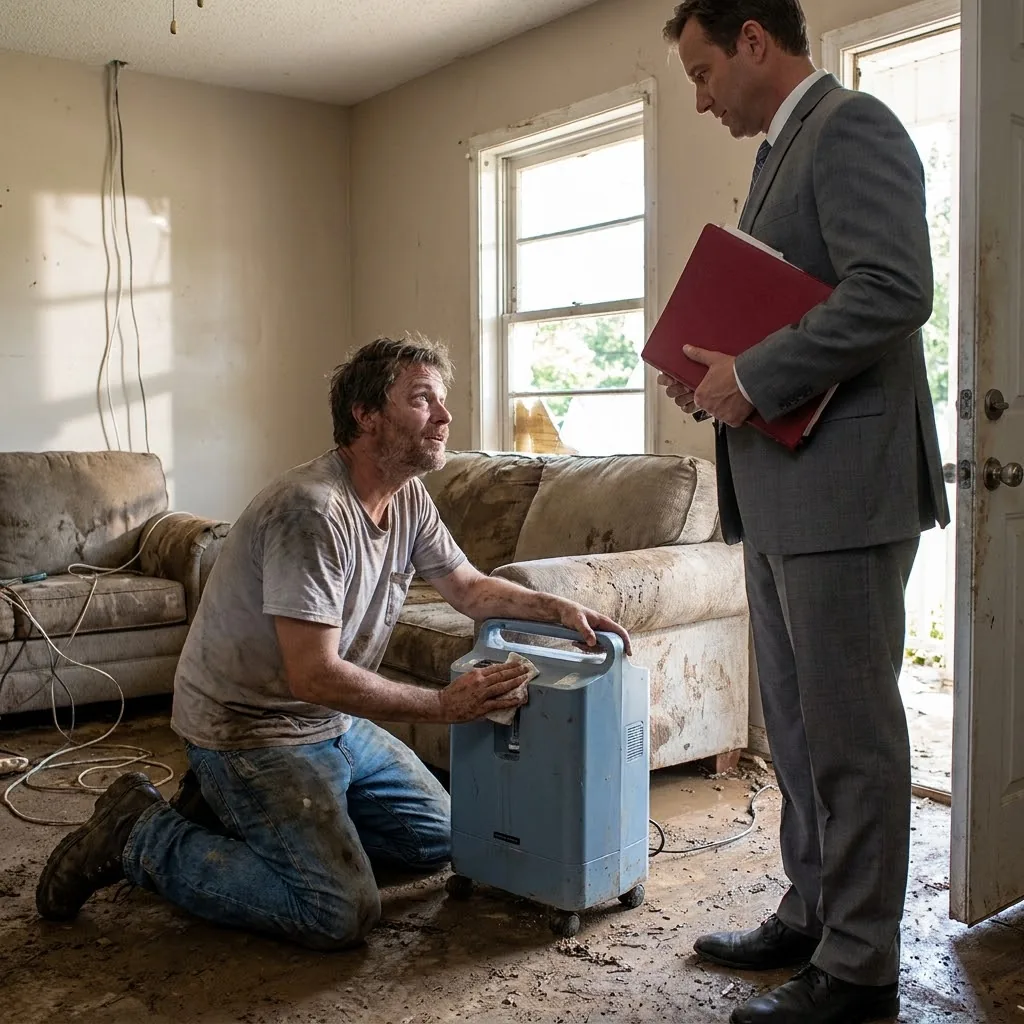
Harlan dragged the tiny nylon brush through the center of the clear PVC tubing, holding his breath against the suffocating stench of mildew and wet rot. The living room walls bore a dark, wavy waterline at waist height, leaving the exposed insulation to sag like wet wool over the baseboards. He kept his eyes locked on the translucent plastic in his blistered hands. A single speck of dried river silt or a stray black spore sucked into the oxygen concentrator would go straight into Mary’s fragile lungs. He dipped the brush into the plastic basin of sterile water, watching a tiny grey flake float to the surface. He swore under his breath, discarded the fouled brush, and reached for a fresh one from the sealed plastic wrapping. He had to start over.
Every breath Mary took in the bedroom down the hall sounded like crumpled newspaper. The rhythmic, mechanical thumping of the concentrator was the only thing keeping that brittle sound steady. Harlan wiped his hands on a clean white towel, the absolute last pristine thing left in the house, and picked up a fresh section of tubing. He worked with agonizing slowness. The air in the house felt thick, heavy with an aggressive humidity that refused to evaporate, pressing down on his chest like a physical weight. Dust from the crumbling drywall floated in the shafts of gray light filtering through the boarded-up windows. He used his shoulder to block the draft, shielding the medical equipment with his own body to catch any falling debris before it could contaminate the basin.
A heavy knock rattled the warped front door, sending a fresh shower of drywall dust settling toward the sterile water. Harlan lurched forward, throwing the white towel over the tubing to protect it. He stared at the vibrating wood of the door, his heart hammering against his ribs. Nobody had driven down their road in six days. The mud outside was a foot deep, a thick, putrid paste of river sludge and splintered debris that had swallowed their mailbox and most of their driveway.
Harlan wiped his cracked hands on his damp jeans and navigated the maze of ruined furniture stacked in the center of the room. He threw the deadbolt and pulled the door open, the swollen wood shrieking in loud protest against the doorframe.
A man stood on the porch, stepping delicately away from a puddle of stagnant brown water. He wore a pristine charcoal suit. The fabric was immaculate, sharply creased at the trousers, entirely alien against the backdrop of splintered trees and wrecked homes lining the street. His black oxford shoes shone with a high glass gloss, completely untouched by the treacherous river mud covering the yard. In his left hand, he held a thick, bright red binder.
Harlan felt a massive, suffocating weight lift from his shoulders. The tension in his jaw vanished, replaced by an overwhelming flood of relief. The insurance company had finally sent someone. He had spent hours on hold over the last four days, burning the absolute last of his cell phone battery, begging the automated system for an emergency relocation team. This man was the answer. He was the signature on the check, the immediate authorization for the medical transport van that would take Mary away from this toxic air before her lungs completely failed.
“Thank god,” Harlan breathed out, pushing the heavy door wider. “You made it. I didn’t think anyone could get a standard vehicle up the ridge.”
The man did not smile. He stepped over the threshold, his polished shoes clicking sharply against the warped hardwood. He paused to brush an invisible speck of dust from his lapel, his eyes scanning the ruined living room. He noted the dark waterlines, the sagging ceiling, and the humming oxygen concentrator in the corner. His gaze lingered on the white towel draped over the medical tubing, then moved past it without a trace of human empathy.
“It is much worse in the bedroom,” Harlan said, stepping back, eager to guide the man toward the physical evidence of their desperation. “The floorboards are buckling right under the bed frame. I have the medical records and the emergency claim number right here on the kitchen counter. We just need the paperwork signed for the specialized transport van.”
The man unfastened the heavy silver clasp of the red binder. He flipped past several laminated tabs, the crisp sound of heavy paper echoing over the mechanical thump of the oxygen machine. Harlan moved closer, trying to read the densely typed forms, expecting to see a signature line for the emergency funds.
The man ran a manicured finger down a column of printed numbers. His face remained completely blank, a mask of calculated, corporate indifference that made Harlan’s stomach suddenly twist. The overwhelming relief began to curdle into a cold, sharp dread.
“I have the timestamped photos of the water damage from the first day,” Harlan offered, his voice sounding entirely too loud in the damp, quiet room. “And the doctor’s note about the extreme danger of spore exposure for her condition.”
The man closed the red binder with a sharp, definitive snap. He looked up, his eyes locking onto Harlan with the detached focus of someone reading a spreadsheet.
“The physical damage assessment is irrelevant, as your emergency relocation request has been denied and your policy voided by our algorithm for a preexisting risk metric.”
Harlan dragged the tiny nylon brush through the center of the clear PVC tubing, holding his breath against the suffocating stench of mildew and wet rot. The living room walls bore a dark, wavy waterline at waist height, leaving the exposed insulation to sag like wet wool over the baseboards. He kept his eyes locked on the translucent plastic in his blistered hands. A single speck of dried river silt or a stray black spore sucked into the oxygen concentrator would go straight into Mary’s fragile lungs. He dipped the brush into the plastic basin of sterile water, watching a tiny grey flake float to the surface. He swore under his breath, discarded the fouled brush, and reached for a fresh one from the sealed plastic wrapping. He had to start over.
Every breath Mary took in the bedroom down the hall sounded like crumpled newspaper. The rhythmic, mechanical thumping of the concentrator was the only thing keeping that brittle sound steady. Harlan wiped his hands on a clean white towel, the absolute last pristine thing left in the house, and picked up a fresh section of tubing. He worked with agonizing slowness. The air in the house felt thick, heavy with an aggressive humidity that refused to evaporate, pressing down on his chest like a physical weight. Dust from the crumbling drywall floated in the shafts of gray light filtering through the boarded-up windows. He used his shoulder to block the draft, shielding the medical equipment with his own body to catch any falling debris before it could contaminate the basin.
A heavy knock rattled the warped front door, sending a fresh shower of drywall dust settling toward the sterile water. Harlan lurched forward, throwing the white towel over the tubing to protect it. He stared at the vibrating wood of the door, his heart hammering against his ribs. Nobody had driven down their road in six days. The mud outside was a foot deep, a thick, putrid paste of river sludge and splintered debris that had swallowed their mailbox and most of their driveway.
Harlan wiped his cracked hands on his damp jeans and navigated the maze of ruined furniture stacked in the center of the room. He threw the deadbolt and pulled the door open, the swollen wood shrieking in loud protest against the doorframe.
A man stood on the porch, stepping delicately away from a puddle of stagnant brown water. He wore a pristine charcoal suit. The fabric was immaculate, sharply creased at the trousers, entirely alien against the backdrop of splintered trees and wrecked homes lining the street. His black oxford shoes shone with a high glass gloss, completely untouched by the treacherous river mud covering the yard. In his left hand, he held a thick, bright red binder.
Harlan felt a massive, suffocating weight lift from his shoulders. The tension in his jaw vanished, replaced by an overwhelming flood of relief. The insurance company had finally sent someone. He had spent hours on hold over the last four days, burning the absolute last of his cell phone battery, begging the automated system for an emergency relocation team. This man was the answer. He was the signature on the check, the immediate authorization for the medical transport van that would take Mary away from this toxic air before her lungs completely failed.
“Thank god,” Harlan breathed out, pushing the heavy door wider. “You made it. I didn’t think anyone could get a standard vehicle up the ridge.”
The man did not smile. He stepped over the threshold, his polished shoes clicking sharply against the warped hardwood. He paused to brush an invisible speck of dust from his lapel, his eyes scanning the ruined living room. He noted the dark waterlines, the sagging ceiling, and the humming oxygen concentrator in the corner. His gaze lingered on the white towel draped over the medical tubing, then moved past it without a trace of human empathy.
“It is much worse in the bedroom,” Harlan said, stepping back, eager to guide the man toward the physical evidence of their desperation. “The floorboards are buckling right under the bed frame. I have the medical records and the emergency claim number right here on the kitchen counter. We just need the paperwork signed for the specialized transport van.”
The man unfastened the heavy silver clasp of the red binder. He flipped past several laminated tabs, the crisp sound of heavy paper echoing over the mechanical thump of the oxygen machine. Harlan moved closer, trying to read the densely typed forms, expecting to see a signature line for the emergency funds.
The man ran a manicured finger down a column of printed numbers. His face remained completely blank, a mask of calculated, corporate indifference that made Harlan’s stomach suddenly twist. The overwhelming relief began to curdle into a cold, sharp dread.
“I have the timestamped photos of the water damage from the first day,” Harlan offered, his voice sounding entirely too loud in the damp, quiet room. “And the doctor’s note about the extreme danger of spore exposure for her condition.”
The man closed the red binder with a sharp, definitive snap. He looked up, his eyes locking onto Harlan with the detached focus of someone reading a spreadsheet.
“The physical damage assessment is irrelevant, as your emergency relocation request has been denied and your policy voided by our algorithm for a preexisting risk metric.”