Story code: ST-000154
Part 4: The Weight of Obsolescence
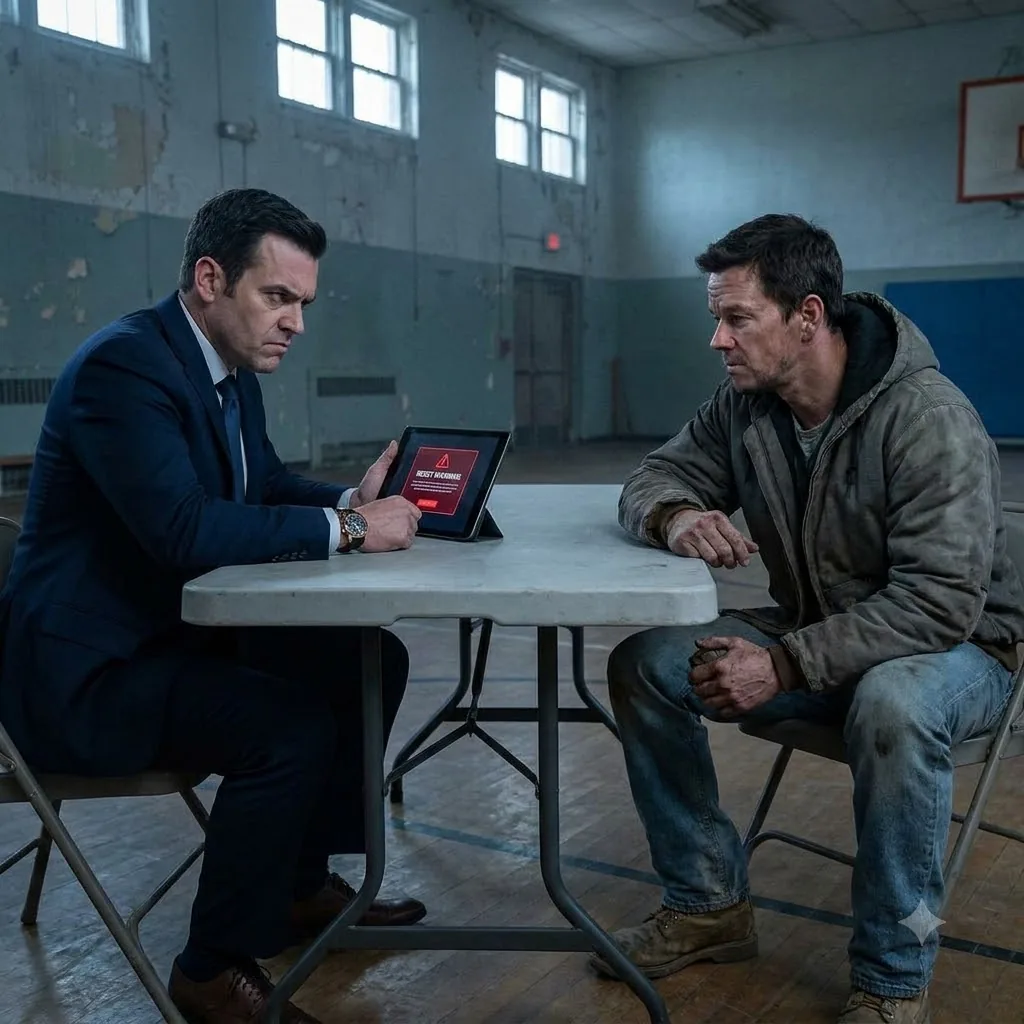
Julian slowly lowered the cheap plastic burner phone and placed it onto the scarred plywood table. It came to rest beside his heavy gold Montblanc fountain pen and the fifty-page paper contract. The crisp, pristine white pages, filled with complex legal jargon and predatory clauses he had personally drafted, suddenly looked like ancient, meaningless hieroglyphs.
He looked down at his tailored Brioni suit, the silk tie, the gleaming platinum Rolex adorning his wrist. Armor. He had dressed for war this morning, fully believing himself to be the apex predator within Vanguard’s vast corporate ecosystem. He had sacrificed his twenties and thirties to the firm. He had normalized grueling eighty-hour workweeks, skipped his younger sister’s wedding to close a critical downtown commercial merger, and ruthlessly evicted hundreds of small businesses without ever losing a single night of sleep. He had wholly believed that his relentless loyalty, his Stanford MBA, and his flawless quarterly track records made him an indispensable pillar of the company.
But to Vanguard’s new Automated Predictive Purchasing AI, Julian wasn’t a shark. He wasn’t a prodigy or a Vice President. He was simply an inefficient, biological line of code. He was a slow, walking middleman who required an exorbitant salary, health insurance, sleep, and physical hardware to function.
The realization settled into the bottom of Julian’s chest like a freezing block of lead. He had no job. He had no equity-the unvested shares he had aggressively counted on to secure an early retirement at forty were undoubtedly nullified under the mass liquidation protocol. His corporate bank accounts were instantly frozen. Even his personal cell phone, completely hijacked by the localized Vanguard wipe command, was now nothing more than a useless, cooling brick of glass and titanium. He was entirely, brutally disconnected from the financial grid that had defined his entire adult existence.
“You knew,” Julian whispered into the drafty air, his voice utterly stripped of its polished, commanding boardroom resonance. He couldn’t bring himself to look up from the table. “You stalled me. You waited until ten o’clock.”
Marcus exhaled a long, measured breath, the sound loud in the dead quiet of the community center. “I didn’t know they were going to fire you, Julian. Not exactly. But the city zoning board received an automated notification at midnight. A massive corporate entity filed to rezone this entire district without a single human signature. The algorithm didn’t need me to sign your contract. It just bypassed the holdouts and bought the underlying municipal debt directly from the city.”
Julian closed his eyes, feeling a wave of nausea wash over him. The predictive AI had bypassed the manual negotiation entirely. The aggressive buyout he had spent three agonizing months meticulously planning was obsolete before he had even stepped out of his town car this morning. Vanguard hadn’t sent him to this decaying neighborhood to close a lucrative deal. They had sent him here on a fool’s errand, keeping him physically occupied and geographically isolated while the automated system quietly rendered his entire department extinct.
He was stranded. If he walked out the double doors of this hall, where would he go? The FBI was actively swarming the Vanguard tower downtown, seizing physical assets and detaining anyone unfortunate enough to still be on the acquisitions floor. He couldn’t go back to his luxury penthouse-the lease was an exclusive corporate perk, held entirely under Vanguard’s executive housing umbrella. He had literally nothing left to his name but the tailored clothes on his back and a dead piece of hardware radiating residual heat onto a plywood table.
The heavy silence of the drafty hall stretched between the two men. Julian braced himself, waiting for Marcus to finally gloat. He waited for the righteous anger, for the older man to rightfully order him out of the building he had just spent a quarter of a year trying to bulldoze into dust. It would have been the natural response. It was exactly what Julian would have done in his shoes.
Instead, Marcus pushed back his rusted folding chair. The metal legs scraped harshly against the scuffed linoleum floor. He walked over to a battered card table in the far corner of the room, where a cheap, plastic drip coffee maker sat next to a sagging sleeve of styrofoam cups. The machine looked like it had been manufactured in the late nineties, its glass pot deeply stained brown from years of continuous use.
Marcus poured two cups in total silence. The sharp smell of burnt, stale coffee drifted through the cold air, lacking any of the rich, complex aroma of the artisanal espresso Julian ordered every morning from the towering lobby cafe at Vanguard headquarters.
Marcus walked back to the table and set one of the styrofoam cups directly in front of Julian. It bumped gently against the useless, fifty-page paper contract. A thin ribbon of steam curled up from the dark, watery liquid.
Taking his seat again, Marcus wrapped his calloused hands around his own cup to absorb the heat. He didn’t offer a hollow platitude. He didn’t offer a sarcastic welcome to the growing ranks of the displaced and unemployed. He simply sat there, silently sharing the drink, watching Julian with a look of solemn understanding as he recognized the younger man’s sudden, violent plunge into total powerlessness.
Julian stared at the stark white styrofoam. His hands were trembling slightly. For years, he had operated under the absolute illusion that he was the untouchable architect of his own destiny. Now, stripped of his titles, his access, and his digital identity, he finally understood how fragile that illusion had been.
Slowly, Julian reached out. His manicured fingers bypassed the heavy gold fountain pen and the pristine legal paper. He grasped the cheap styrofoam cup. It was flimsy, radiating a harsh, immediate heat against his palms. He lifted it to his lips and took a slow sip. The coffee was scalding, bitter, and tasted faintly of burnt plastic, but he didn’t put it down. He just sat in the cold, dilapidated community hall, holding tightly onto the only thing he had left.