Story code: ST-000339
Part 1: The Ninetieth Shift
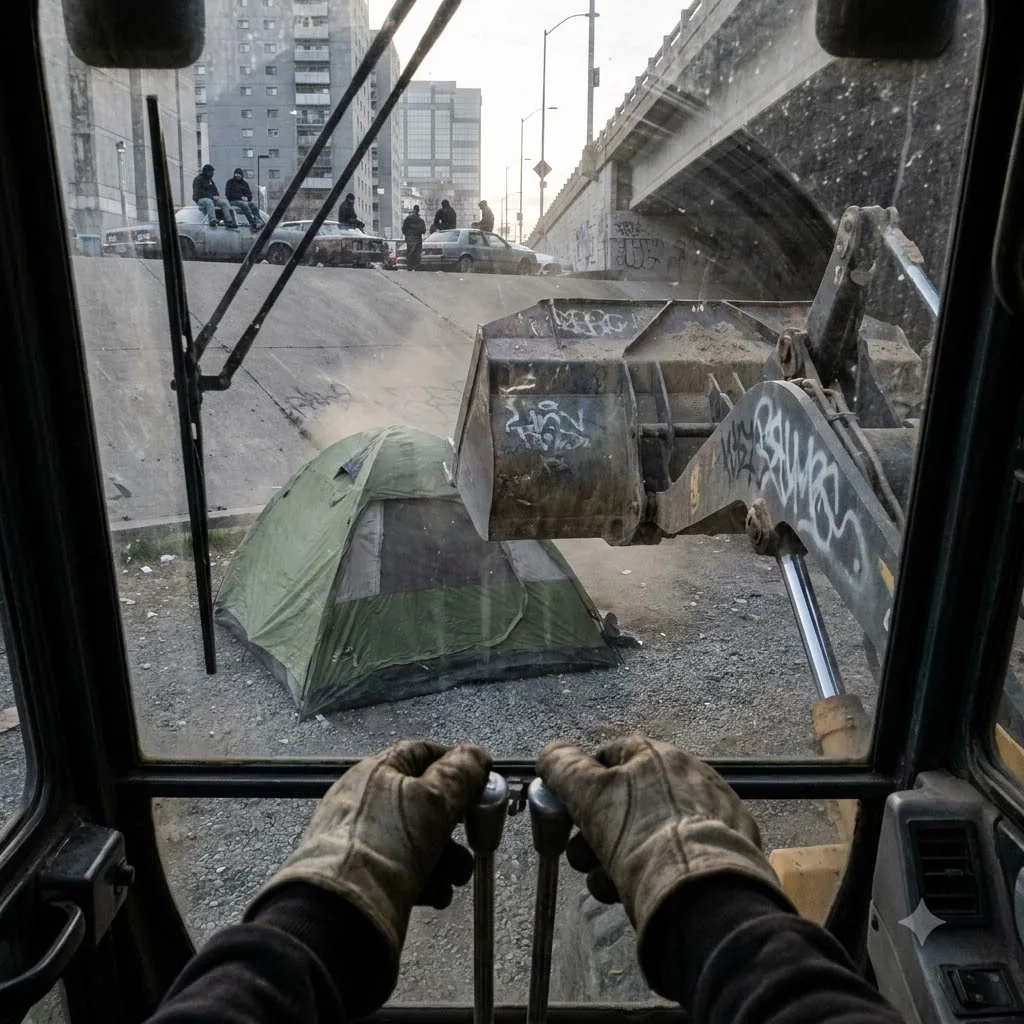
The diesel engine roared with a bone-rattling intensity, vibrating up through the rusted metal floorboards and directly into Marcus’s molars. His calloused hands gripped the sticky rubber joysticks of the massive yellow front-loader, coaxing the heavy steel bucket downward. The suffocating stench of raw exhaust mixed with the sour, damp rot of the underpass, creating a sensory overload that made his eyes water. He forced himself to blink away the sting and fixed his gaze on the digital dashboard clock. The glowing green numbers read 3:42 PM. Eighteen minutes remained in his shift. Eighteen minutes separated him from the end of his ninety-day probationary period. Tomorrow, the city would hand him a union card, securing full health insurance for his little brother, Leo, and a steady paycheck that meant they would never face another eviction notice.
He adjusted his grip and glanced up through the dust-streaked windshield. Five shadowy figures stood shoulder-to-shoulder on the steep concrete embankment overlooking the encampment. They wore the heavy leather jackets and red bandanas of the Eastside Kings, their silhouettes sharp against the gray afternoon sky. They watched him work from their high perch like vultures circling a dying animal. Marcus knew exactly why they were waiting. The Kings used this shadowed section of the underpass for their dead drops, but the sprawling homeless camp had brought far too much police attention for their liking. Now, the city was doing the gang’s dirty work for free. Once Marcus bulldozed the last of the makeshift shelters, the Kings would swoop down to claim the cleared concrete.
The hydraulic arms shrieked as Marcus drove the loader forward. The steel bucket scraped violently against the cracked pavement, throwing a shower of orange sparks into the dim light. He pushed a sprawling mountain of soggy cardboard, shattered wooden pallets, and ruined mattresses toward the waiting disposal truck. The immense power of the machine crushed a metal shopping cart like it was made of cheap tin. He swallowed the bitter guilt pooling in his throat. He hated destroying these people’s only refuge, but his supervisor’s warning that morning echoed relentlessly in his head. The foreman had demanded he clean the entire sector without a single exception, or he could pack up his locker and leave empty-handed.
Marcus spun the heavy steering wheel with the palm of his hand, pivoting the rumbling machine toward the deep shadow of the southern abutment. Only one structure remained. It was not a flimsy blue tarp lean-to like the dozens he had already demolished. This was a heavy, olive-drab military canvas tent, staked tight and meticulously into the hard-packed dirt against the concrete wall. The bucket of the loader hovered mere inches above its peaked roof. The gang members on the ridge whistled and jeered, one of them tossing a crushed beer can that bounced loudly off the loader’s yellow hood. They were eager for the final act of demolition.
Marcus laid his palm flat on the air horn. A deafening blast tore through the enclosed space, loud enough to shake the loose gravel from the concrete overpass above. He waited for someone to scramble out in a panic. The heavy canvas flap remained perfectly still. The digital clock ticked over to 3:51 PM. Nine minutes left. The disposal truck driver blasted his own horn in return, signaling impatiently that it was time to wrap up the sweep.
Marcus lowered the bucket another inch. The shadow of the steel teeth fell directly across the entrance. That was when he saw a pair of boots placed neatly just outside the flap. They were scuffed, heavy-duty combat boots with frayed black laces, sitting parallel on a clean scrap of cardboard. He pulled back on the throttle, killing the drive to the steel tracks, and slammed the heavy parking brake into place. The machine settled into a low, vibrating idle that shook the cabin glass.
He pushed the heavy cabin door open, immediately hit by a wall of freezing, damp air. He climbed backward down the metal rungs, his boots hitting the debris-strewn concrete with a heavy thud. The Kings yelled down from the embankment, their voices echoing in a chaotic chorus of insults and threats, urging him to flatten the tent so they could finally move in.
Marcus ignored them, keeping his eyes locked on the dark green canvas. The broken glass and loose gravel crunched under his boots as he closed the twenty yards between his machine and the wall. The roar of the idling loader masked the sound of the heavy city traffic rolling above them. He reached the entrance of the tent and stopped, staring at the thick flap. If he delayed this sweep, the foreman would write him up, and the union card would vanish forever. He had to clear this final zone for Leo’s sake.
He grabbed the rough, cold fabric of the canvas door. Bracing himself for a tense confrontation with a stubborn squatter, he pulled the heavy material aside, letting the amber glow of the loader’s headlights pierce the interior gloom. Sitting inside on an overturned milk crate, with his weathered hands resting heavily on the polished head of a wooden cane, was the scarred old veteran who spent every single afternoon guarding the corner of 4th and Elm to ensure Leo walked home safe from the very vultures circling above.
The diesel engine roared with a bone-rattling intensity, vibrating up through the rusted metal floorboards and directly into Marcus’s molars. His calloused hands gripped the sticky rubber joysticks of the massive yellow front-loader, coaxing the heavy steel bucket downward. The suffocating stench of raw exhaust mixed with the sour, damp rot of the underpass, creating a sensory overload that made his eyes water. He forced himself to blink away the sting and fixed his gaze on the digital dashboard clock. The glowing green numbers read 3:42 PM. Eighteen minutes remained in his shift. Eighteen minutes separated him from the end of his ninety-day probationary period. Tomorrow, the city would hand him a union card, securing full health insurance for his little brother, Leo, and a steady paycheck that meant they would never face another eviction notice.
He adjusted his grip and glanced up through the dust-streaked windshield. Five shadowy figures stood shoulder-to-shoulder on the steep concrete embankment overlooking the encampment. They wore the heavy leather jackets and red bandanas of the Eastside Kings, their silhouettes sharp against the gray afternoon sky. They watched him work from their high perch like vultures circling a dying animal. Marcus knew exactly why they were waiting. The Kings used this shadowed section of the underpass for their dead drops, but the sprawling homeless camp had brought far too much police attention for their liking. Now, the city was doing the gang’s dirty work for free. Once Marcus bulldozed the last of the makeshift shelters, the Kings would swoop down to claim the cleared concrete.
The hydraulic arms shrieked as Marcus drove the loader forward. The steel bucket scraped violently against the cracked pavement, throwing a shower of orange sparks into the dim light. He pushed a sprawling mountain of soggy cardboard, shattered wooden pallets, and ruined mattresses toward the waiting disposal truck. The immense power of the machine crushed a metal shopping cart like it was made of cheap tin. He swallowed the bitter guilt pooling in his throat. He hated destroying these people’s only refuge, but his supervisor’s warning that morning echoed relentlessly in his head. The foreman had demanded he clean the entire sector without a single exception, or he could pack up his locker and leave empty-handed.
Marcus spun the heavy steering wheel with the palm of his hand, pivoting the rumbling machine toward the deep shadow of the southern abutment. Only one structure remained. It was not a flimsy blue tarp lean-to like the dozens he had already demolished. This was a heavy, olive-drab military canvas tent, staked tight and meticulously into the hard-packed dirt against the concrete wall. The bucket of the loader hovered mere inches above its peaked roof. The gang members on the ridge whistled and jeered, one of them tossing a crushed beer can that bounced loudly off the loader’s yellow hood. They were eager for the final act of demolition.
Marcus laid his palm flat on the air horn. A deafening blast tore through the enclosed space, loud enough to shake the loose gravel from the concrete overpass above. He waited for someone to scramble out in a panic. The heavy canvas flap remained perfectly still. The digital clock ticked over to 3:51 PM. Nine minutes left. The disposal truck driver blasted his own horn in return, signaling impatiently that it was time to wrap up the sweep.
Marcus lowered the bucket another inch. The shadow of the steel teeth fell directly across the entrance. That was when he saw a pair of boots placed neatly just outside the flap. They were scuffed, heavy-duty combat boots with frayed black laces, sitting parallel on a clean scrap of cardboard. He pulled back on the throttle, killing the drive to the steel tracks, and slammed the heavy parking brake into place. The machine settled into a low, vibrating idle that shook the cabin glass.
He pushed the heavy cabin door open, immediately hit by a wall of freezing, damp air. He climbed backward down the metal rungs, his boots hitting the debris-strewn concrete with a heavy thud. The Kings yelled down from the embankment, their voices echoing in a chaotic chorus of insults and threats, urging him to flatten the tent so they could finally move in.
Marcus ignored them, keeping his eyes locked on the dark green canvas. The broken glass and loose gravel crunched under his boots as he closed the twenty yards between his machine and the wall. The roar of the idling loader masked the sound of the heavy city traffic rolling above them. He reached the entrance of the tent and stopped, staring at the thick flap. If he delayed this sweep, the foreman would write him up, and the union card would vanish forever. He had to clear this final zone for Leo’s sake.
He grabbed the rough, cold fabric of the canvas door. Bracing himself for a tense confrontation with a stubborn squatter, he pulled the heavy material aside, letting the amber glow of the loader’s headlights pierce the interior gloom. Sitting inside on an overturned milk crate, with his weathered hands resting heavily on the polished head of a wooden cane, was the scarred old veteran who spent every single afternoon guarding the corner of 4th and Elm to ensure Leo walked home safe from the very vultures circling above.