Story code: ST-001406
Part 1: The Foreclosure
Claire parked her sedan two houses down, unable to pull into Arthur’s driveway because a rusted, wheel-less trailer blocked the curb. She gripped the steering wheel, her knuckles white against the dark leather. Beside her on the passenger seat sat a red-bordered envelope containing a final notice of foreclosure, a fortunate bureaucratic error forwarded to her old address that had finally broken her three-year vow of silence. She shoved the notice into her tote bag and stepped out into the heavy, humid suburban afternoon.
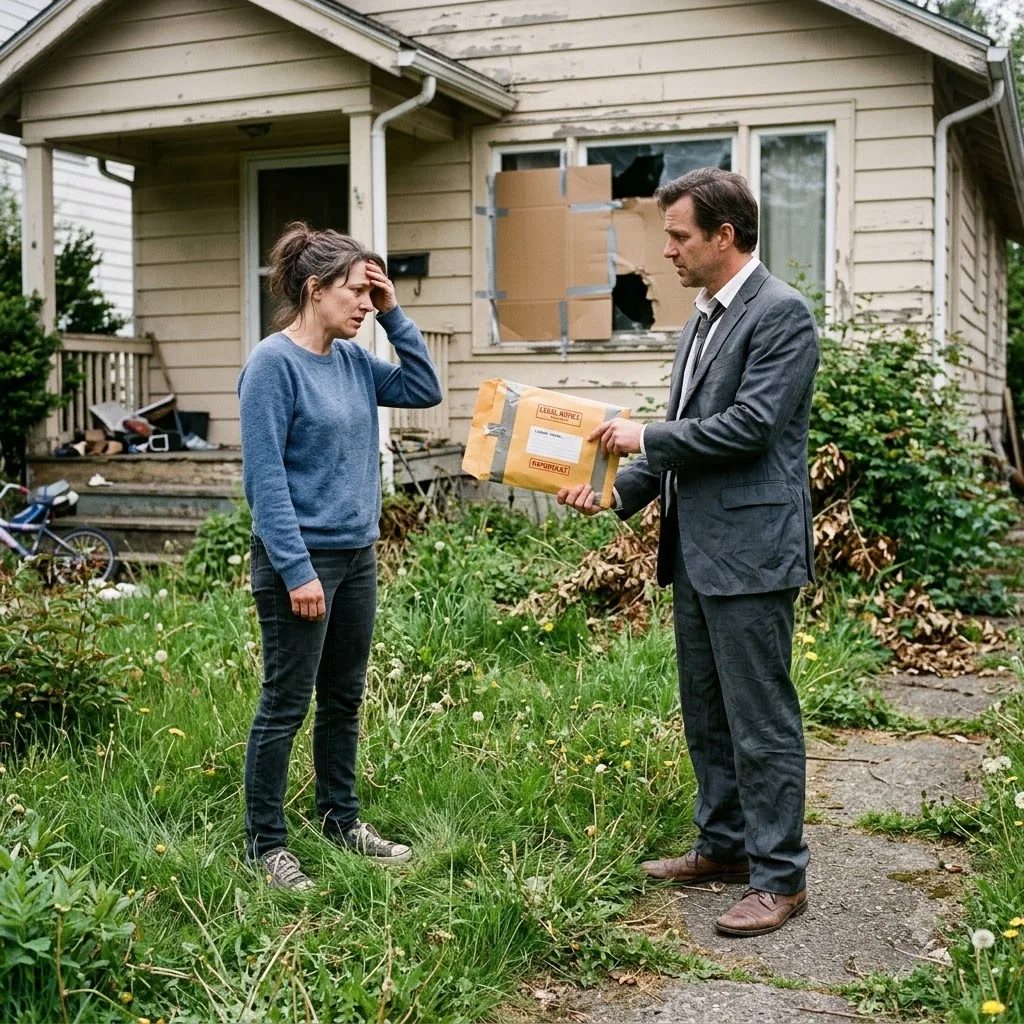
The short walk to 42 Elm Street felt like crossing into a hostile zone. The rest of the neighborhood consisted of manicured lawns and polite flowerbeds, making Arthur’s property stand out like an infected wound. Weeds stood waist-high, choking the cracked concrete path and swallowing the forgotten garden gnomes. Brambles reached out from the overgrown bushes, snagging the fabric of her trousers.
Claire stopped dead halfway up the path. A heavy-set man in a rumpled grey suit stood on the rotting planks of the front porch. He clutched a thick manila envelope and stared at the front door with an expression of profound exhaustion. He raised a fist to knock, hesitated, and let his hand drop to his side.
“Excuse me,” Claire said, her voice sharp enough to cut through the ambient hum of the neighborhood cicadas.
The man jumped, spinning around violently. He wiped a bead of sweat from his forehead with the back of a thick wrist. He looked at her, then out at the tangled jungle of the yard, and let out a long sigh.
“If you are selling something, I highly suggest you skip this address,” the man said.
“I grew up here,” Claire told him, stepping over a collapsed birdbath to get closer. “That is my father’s house. I need you to tell me what you are doing on his porch.”
The man’s posture relaxed slightly, though his grip on the envelope tightened. “You are Arthur’s daughter. That makes my day significantly easier. I am an agent for the county tax office. I have been out here four times this month.”
Claire felt a cold knot form in her stomach. “I have his final notice right here in my bag. I came to pay it. We just need to sit down and figure out the exact total for the back taxes.”
The man shook his head, stepping down the sagging wooden stairs. He kept his body angled away from the front door, as if he expected the wood to splinter outward at any second. “The back taxes are just the beginning of the liens on this parcel. There are code enforcement fines and hazardous material citations. I am just here to serve the physical property seizure warning.”
He held out the thick manila envelope. Claire did not take it.
“He is inside,” she said, nodding toward the house.
“I am well aware,” the man replied, thrusting the envelope forward again until it pressed firmly against Claire’s arm. “He was shouting at me through the mail slot three minutes ago. He recited an entire paragraph about maritime law, claimed I was an agent of a fictitious corporate entity, and told me he had authorized defensive measures. I do not get paid enough to get shot over a local property tax dispute.”
Claire took the envelope. It was heavy, packed with layered legal documents.
“Thirty days,” the man said, already backing away down the path. “Then the sheriff comes with a battering ram. Good luck.”
He turned and jogged the rest of the way to the street, leaving Claire alone in the oppressive stillness of the yard. She looked at the front of the house. The windows were entirely blacked out. It was not curtains or blinds. Someone had taped heavy-duty black plastic bags over the glass, sealing every possible crack of light.
She climbed the three porch steps. The wood groaned under her weight. She pulled her childhood key from her keyring, her fingers trembling slightly. The door now featured three new deadbolts, shiny brass circles completely out of place on the peeling white wood. None of the new locks had keyholes on the outside, meaning whoever was inside had locked themselves in without a way to open them from the exterior.
But the bottom handle, the original brass knob, still had its old keyhole. Claire pressed her ear to the wood. She could hear a faint, rhythmic clicking sound echoing from deep inside the house, accompanied by the low static of a radio tuned to a dead frequency.
“Dad,” she said loudly, knocking flat-palmed against the door. “It is Claire. I am coming in. You need to undo the bolts.”
There was no answer. The static hissed loudly through the wood.
She slid her key into the old lock and turned it. It clicked. She pushed the handle. To her surprise, the door gave way immediately. The new deadbolts had not been engaged.
Claire pushed the heavy door inward. The smell hit her instantly-a sharp, chemical odor mixed with the unmistakable scent of hot metal and damp, rotting paper. She stepped over the threshold, blinking as her eyes tried to adjust to the total gloom. The wide, welcoming entryway she remembered from her childhood was completely gone.
In its place stood a narrow, claustrophobic tunnel built entirely of floor-to-ceiling stacks of cardboard boxes, metal filing cabinets, and heavy bundles of exposed copper wire. Claire took one more step forward, her boot hovering in the dark, just as her shin brushed against a line of bright yellow twine stretched tightly across the walkway, leading directly into the shadows.
Claire parked her sedan two houses down, unable to pull into Arthur’s driveway because a rusted, wheel-less trailer blocked the curb. She gripped the steering wheel, her knuckles white against the dark leather. Beside her on the passenger seat sat a red-bordered envelope containing a final notice of foreclosure, a fortunate bureaucratic error forwarded to her old address that had finally broken her three-year vow of silence. She shoved the notice into her tote bag and stepped out into the heavy, humid suburban afternoon.
The short walk to 42 Elm Street felt like crossing into a hostile zone. The rest of the neighborhood consisted of manicured lawns and polite flowerbeds, making Arthur’s property stand out like an infected wound. Weeds stood waist-high, choking the cracked concrete path and swallowing the forgotten garden gnomes. Brambles reached out from the overgrown bushes, snagging the fabric of her trousers.
Claire stopped dead halfway up the path. A heavy-set man in a rumpled grey suit stood on the rotting planks of the front porch. He clutched a thick manila envelope and stared at the front door with an expression of profound exhaustion. He raised a fist to knock, hesitated, and let his hand drop to his side.
“Excuse me,” Claire said, her voice sharp enough to cut through the ambient hum of the neighborhood cicadas.
The man jumped, spinning around violently. He wiped a bead of sweat from his forehead with the back of a thick wrist. He looked at her, then out at the tangled jungle of the yard, and let out a long sigh.
“If you are selling something, I highly suggest you skip this address,” the man said.
“I grew up here,” Claire told him, stepping over a collapsed birdbath to get closer. “That is my father’s house. I need you to tell me what you are doing on his porch.”
The man’s posture relaxed slightly, though his grip on the envelope tightened. “You are Arthur’s daughter. That makes my day significantly easier. I am an agent for the county tax office. I have been out here four times this month.”
Claire felt a cold knot form in her stomach. “I have his final notice right here in my bag. I came to pay it. We just need to sit down and figure out the exact total for the back taxes.”
The man shook his head, stepping down the sagging wooden stairs. He kept his body angled away from the front door, as if he expected the wood to splinter outward at any second. “The back taxes are just the beginning of the liens on this parcel. There are code enforcement fines and hazardous material citations. I am just here to serve the physical property seizure warning.”
He held out the thick manila envelope. Claire did not take it.
“He is inside,” she said, nodding toward the house.
“I am well aware,” the man replied, thrusting the envelope forward again until it pressed firmly against Claire’s arm. “He was shouting at me through the mail slot three minutes ago. He recited an entire paragraph about maritime law, claimed I was an agent of a fictitious corporate entity, and told me he had authorized defensive measures. I do not get paid enough to get shot over a local property tax dispute.”
Claire took the envelope. It was heavy, packed with layered legal documents.
“Thirty days,” the man said, already backing away down the path. “Then the sheriff comes with a battering ram. Good luck.”
He turned and jogged the rest of the way to the street, leaving Claire alone in the oppressive stillness of the yard. She looked at the front of the house. The windows were entirely blacked out. It was not curtains or blinds. Someone had taped heavy-duty black plastic bags over the glass, sealing every possible crack of light.
She climbed the three porch steps. The wood groaned under her weight. She pulled her childhood key from her keyring, her fingers trembling slightly. The door now featured three new deadbolts, shiny brass circles completely out of place on the peeling white wood. None of the new locks had keyholes on the outside, meaning whoever was inside had locked themselves in without a way to open them from the exterior.
But the bottom handle, the original brass knob, still had its old keyhole. Claire pressed her ear to the wood. She could hear a faint, rhythmic clicking sound echoing from deep inside the house, accompanied by the low static of a radio tuned to a dead frequency.
“Dad,” she said loudly, knocking flat-palmed against the door. “It is Claire. I am coming in. You need to undo the bolts.”
There was no answer. The static hissed loudly through the wood.
She slid her key into the old lock and turned it. It clicked. She pushed the handle. To her surprise, the door gave way immediately. The new deadbolts had not been engaged.
Claire pushed the heavy door inward. The smell hit her instantly-a sharp, chemical odor mixed with the unmistakable scent of hot metal and damp, rotting paper. She stepped over the threshold, blinking as her eyes tried to adjust to the total gloom. The wide, welcoming entryway she remembered from her childhood was completely gone.
In its place stood a narrow, claustrophobic tunnel built entirely of floor-to-ceiling stacks of cardboard boxes, metal filing cabinets, and heavy bundles of exposed copper wire. Claire took one more step forward, her boot hovering in the dark, just as her shin brushed against a line of bright yellow twine stretched tightly across the walkway, leading directly into the shadows.