Story code: ST-000606
Part 1: The Last Deadline
The hum beneath Martha’s feet died abruptly. For twelve years, the subterranean rumble of the massive rotary press had been a constant vibration through the soles of her shoes, a mechanical heartbeat affirming the paper was still alive. Now, the floorboards sat cold and absolutely still, leaving a silence that felt heavier than the noise ever had.
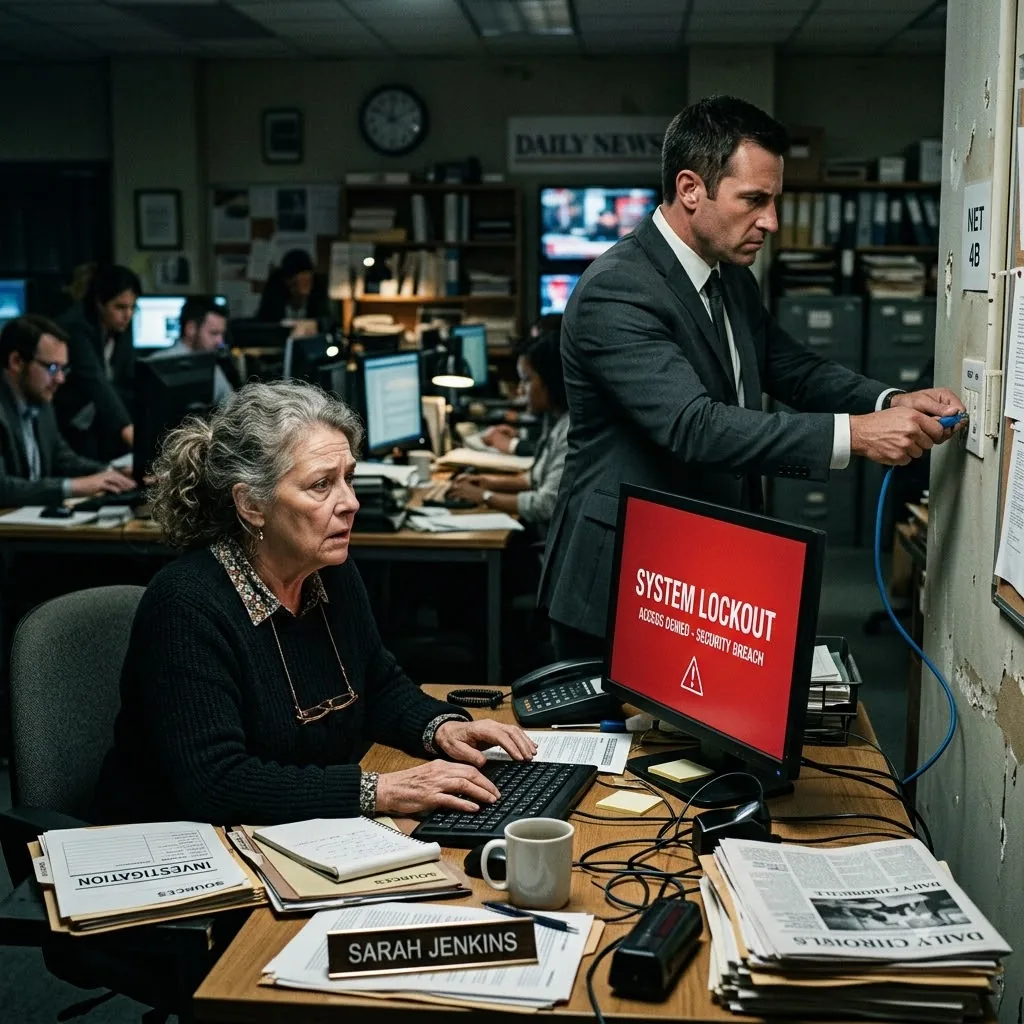
Martha ignored the sudden quiet and hammered her keyboard. On her monitor, the decrypted offshore ledgers sat in a neatly labeled, zipped folder. It was three hundred megabytes of shell-company transfers, an irrefutable chain of evidence proving Vance Capital had purchased the hundred-and-twenty-year-old newspaper for the sole purpose of burying its own dark money trail.
She dragged the file into the secure external upload portal. The blue progress bar crawled across the screen.
Sixty percent.
Seventy percent.
A crimson banner dropped across the top of her browser. Error 403. Administrator Privileges Revoked.
Martha mashed the refresh key, her breathing shallow. The portal flashed white and resolved into a generic corporate login page bearing the sleek, silver Vance Capital logo. They had cut the internal content management system.
A shadow fell over her keyboard. A heavy, collapsed cardboard box slammed onto her desk, rattling her half-empty coffee mug and spilling cold brown liquid across her notepad.
Martha jerked back in her chair. A man in a charcoal suit leaned over her partition. He wore a blank, professional expression. He did not introduce himself, nor did he ask her to pack her things. He simply reached over her monitors, his forearm brushing her cheek, and gripped the yellow ethernet cable plugged into the wall. With a sharp, violent downward jerk, he ripped it out of the socket. The plastic retaining clip snapped off and pinged against the carpet.
“Personal effects only,” the man said, his voice devoid of emotion. “All hardware belongs to the liquidator.”
Martha stared at the severed yellow cable dangling over the edge of her desk. Around her, the sprawling newsroom erupted into a disjointed chorus of shouts, scraping chairs, and slamming phones. Fifty desks, fifty reporters, all realizing at the exact same moment that the institution was being dismantled in real time. Men in identical charcoal suits moved systematically down the aisles. They were ruthlessly pulling power cords, confiscating hard drives, and boxing up company cell phones.
The decrypted ledger was still sitting on Martha’s local drive. If the fixer took the tower, the evidence would disappear into an industrial shredder before sunset.
Martha slid her left hand toward the black USB drive resting next to her mousepad. She palmed the cold metal casing. With a swift, practiced motion, she bumped her elbow against a towering stack of reporter notebooks, sending them cascading to the floor in a flurry of loose paper. The fixer sighed in annoyance and stepped back to avoid the avalanche. In that split second of distraction, Martha jammed the drive into the front port, dragged the Vance folder over to the removable disk, and watched the local copy icon spin.
The file was massive. The transfer speed on the aging desktop was agonizingly slow.
“Step away from the terminal,” the fixer commanded. He was already reaching for the heavy black power cable at the back of the tower.
Martha gripped the edge of the desk so hard her knuckles turned white. The transfer hit ninety-nine percent. The fixer yanked the power cord from the wall.
The twin monitors went instantly black.
Martha slipped the USB drive out in the darkness of the unpowered port and curled her fingers tightly around it, burying her fist deep in her coat pocket. She stood up without a word. The fixer immediately hauled the heavy desktop tower out of its cradle, tossing it carelessly into a plastic bin on a rolling industrial cart.
She had the file, but she had absolutely no way to send it.
The newsroom Wi-Fi was completely dead. Cellular service in the basement-level bullpen had always been non-existent due to the thick concrete walls and lead pipes. She desperately needed a hardline connection that Vance’s people had not yet located and severed.
Martha walked rapidly down the main aisle, her heart hammering wildly against her ribs. She kept her head down, avoiding the frantic eyes of her colleagues who were arguing fruitlessly with the private security contractors. The managing editor was shouting at a man with a clipboard near the glass-walled conference room. It was completely useless. Vance owned the building, the servers, the chairs, and the ink.
She turned sharply toward the back corridor. The archive room sat at the very end of the hall, a dust-choked, windowless space housing microfilm readers and obsolete equipment slated for eventual recycling. More importantly, it housed the legacy sports desk terminal. Ten years ago, the former sports editor had insisted on a dedicated, unmetered copper line for transmitting high-resolution photos from remote stadiums. That line bypassed the main switchboard entirely.
Martha slipped past the employee breakroom. A pair of fixers were tearing the main server rack apart, pulling sleek blade servers out with ruthless efficiency and tossing them onto a pallet. They did not look her way as she hurried past.
She reached the heavy oak door of the archive and pushed it open, slipping inside and letting the latch click shut behind her. The room smelled of decaying newspaper and ozone. In the far corner, buried under a massive stack of bound volumes from the nineteen-nineties, sat the bulky beige tower of the legacy terminal.
Martha practically threw the heavy books aside, dust pluming into the air. She found the mechanical power button and pressed it hard. The machine responded with a deafening fan noise, whining loudly as the ancient hard drive spun up. She leaned over the desk to check the back. The thick black copper line was still firmly plugged into the wall jack.
The old Windows login screen appeared, pixelated and blindingly bright in the dim room. She bypassed the broken network login and opened a local offline session. She plugged her USB drive into the front port. The system took ten agonizing seconds to recognize the external hardware.
Martha opened a lightweight, encrypted email portal she kept bookmarked for secure drops. She attached the zipped ledger. The file size made the old browser freeze for a terrifying, breathless moment before the attachment icon finally solidified on the screen.
She moved her mouse to the send button.
A heavy thud echoed from the hallway outside. Someone was walking slowly down the corridor, checking the handles of every door. The footsteps stopped right outside the archive room.
Martha clicked send.
The upload bar appeared on the screen. It estimated four minutes remaining.
The heavy brass handle of the archive door began to turn.
The hum beneath Martha’s feet died abruptly. For twelve years, the subterranean rumble of the massive rotary press had been a constant vibration through the soles of her shoes, a mechanical heartbeat affirming the paper was still alive. Now, the floorboards sat cold and absolutely still, leaving a silence that felt heavier than the noise ever had.
Martha ignored the sudden quiet and hammered her keyboard. On her monitor, the decrypted offshore ledgers sat in a neatly labeled, zipped folder. It was three hundred megabytes of shell-company transfers, an irrefutable chain of evidence proving Vance Capital had purchased the hundred-and-twenty-year-old newspaper for the sole purpose of burying its own dark money trail.
She dragged the file into the secure external upload portal. The blue progress bar crawled across the screen.
Sixty percent.
Seventy percent.
A crimson banner dropped across the top of her browser. Error 403. Administrator Privileges Revoked.
Martha mashed the refresh key, her breathing shallow. The portal flashed white and resolved into a generic corporate login page bearing the sleek, silver Vance Capital logo. They had cut the internal content management system.
A shadow fell over her keyboard. A heavy, collapsed cardboard box slammed onto her desk, rattling her half-empty coffee mug and spilling cold brown liquid across her notepad.
Martha jerked back in her chair. A man in a charcoal suit leaned over her partition. He wore a blank, professional expression. He did not introduce himself, nor did he ask her to pack her things. He simply reached over her monitors, his forearm brushing her cheek, and gripped the yellow ethernet cable plugged into the wall. With a sharp, violent downward jerk, he ripped it out of the socket. The plastic retaining clip snapped off and pinged against the carpet.
“Personal effects only,” the man said, his voice devoid of emotion. “All hardware belongs to the liquidator.”
Martha stared at the severed yellow cable dangling over the edge of her desk. Around her, the sprawling newsroom erupted into a disjointed chorus of shouts, scraping chairs, and slamming phones. Fifty desks, fifty reporters, all realizing at the exact same moment that the institution was being dismantled in real time. Men in identical charcoal suits moved systematically down the aisles. They were ruthlessly pulling power cords, confiscating hard drives, and boxing up company cell phones.
The decrypted ledger was still sitting on Martha’s local drive. If the fixer took the tower, the evidence would disappear into an industrial shredder before sunset.
Martha slid her left hand toward the black USB drive resting next to her mousepad. She palmed the cold metal casing. With a swift, practiced motion, she bumped her elbow against a towering stack of reporter notebooks, sending them cascading to the floor in a flurry of loose paper. The fixer sighed in annoyance and stepped back to avoid the avalanche. In that split second of distraction, Martha jammed the drive into the front port, dragged the Vance folder over to the removable disk, and watched the local copy icon spin.
The file was massive. The transfer speed on the aging desktop was agonizingly slow.
“Step away from the terminal,” the fixer commanded. He was already reaching for the heavy black power cable at the back of the tower.
Martha gripped the edge of the desk so hard her knuckles turned white. The transfer hit ninety-nine percent. The fixer yanked the power cord from the wall.
The twin monitors went instantly black.
Martha slipped the USB drive out in the darkness of the unpowered port and curled her fingers tightly around it, burying her fist deep in her coat pocket. She stood up without a word. The fixer immediately hauled the heavy desktop tower out of its cradle, tossing it carelessly into a plastic bin on a rolling industrial cart.
She had the file, but she had absolutely no way to send it.
The newsroom Wi-Fi was completely dead. Cellular service in the basement-level bullpen had always been non-existent due to the thick concrete walls and lead pipes. She desperately needed a hardline connection that Vance’s people had not yet located and severed.
Martha walked rapidly down the main aisle, her heart hammering wildly against her ribs. She kept her head down, avoiding the frantic eyes of her colleagues who were arguing fruitlessly with the private security contractors. The managing editor was shouting at a man with a clipboard near the glass-walled conference room. It was completely useless. Vance owned the building, the servers, the chairs, and the ink.
She turned sharply toward the back corridor. The archive room sat at the very end of the hall, a dust-choked, windowless space housing microfilm readers and obsolete equipment slated for eventual recycling. More importantly, it housed the legacy sports desk terminal. Ten years ago, the former sports editor had insisted on a dedicated, unmetered copper line for transmitting high-resolution photos from remote stadiums. That line bypassed the main switchboard entirely.
Martha slipped past the employee breakroom. A pair of fixers were tearing the main server rack apart, pulling sleek blade servers out with ruthless efficiency and tossing them onto a pallet. They did not look her way as she hurried past.
She reached the heavy oak door of the archive and pushed it open, slipping inside and letting the latch click shut behind her. The room smelled of decaying newspaper and ozone. In the far corner, buried under a massive stack of bound volumes from the nineteen-nineties, sat the bulky beige tower of the legacy terminal.
Martha practically threw the heavy books aside, dust pluming into the air. She found the mechanical power button and pressed it hard. The machine responded with a deafening fan noise, whining loudly as the ancient hard drive spun up. She leaned over the desk to check the back. The thick black copper line was still firmly plugged into the wall jack.
The old Windows login screen appeared, pixelated and blindingly bright in the dim room. She bypassed the broken network login and opened a local offline session. She plugged her USB drive into the front port. The system took ten agonizing seconds to recognize the external hardware.
Martha opened a lightweight, encrypted email portal she kept bookmarked for secure drops. She attached the zipped ledger. The file size made the old browser freeze for a terrifying, breathless moment before the attachment icon finally solidified on the screen.
She moved her mouse to the send button.
A heavy thud echoed from the hallway outside. Someone was walking slowly down the corridor, checking the handles of every door. The footsteps stopped right outside the archive room.
Martha clicked send.
The upload bar appeared on the screen. It estimated four minutes remaining.
The heavy brass handle of the archive door began to turn.