Story code: ST-001242
Part 1: The Frozen Ledger
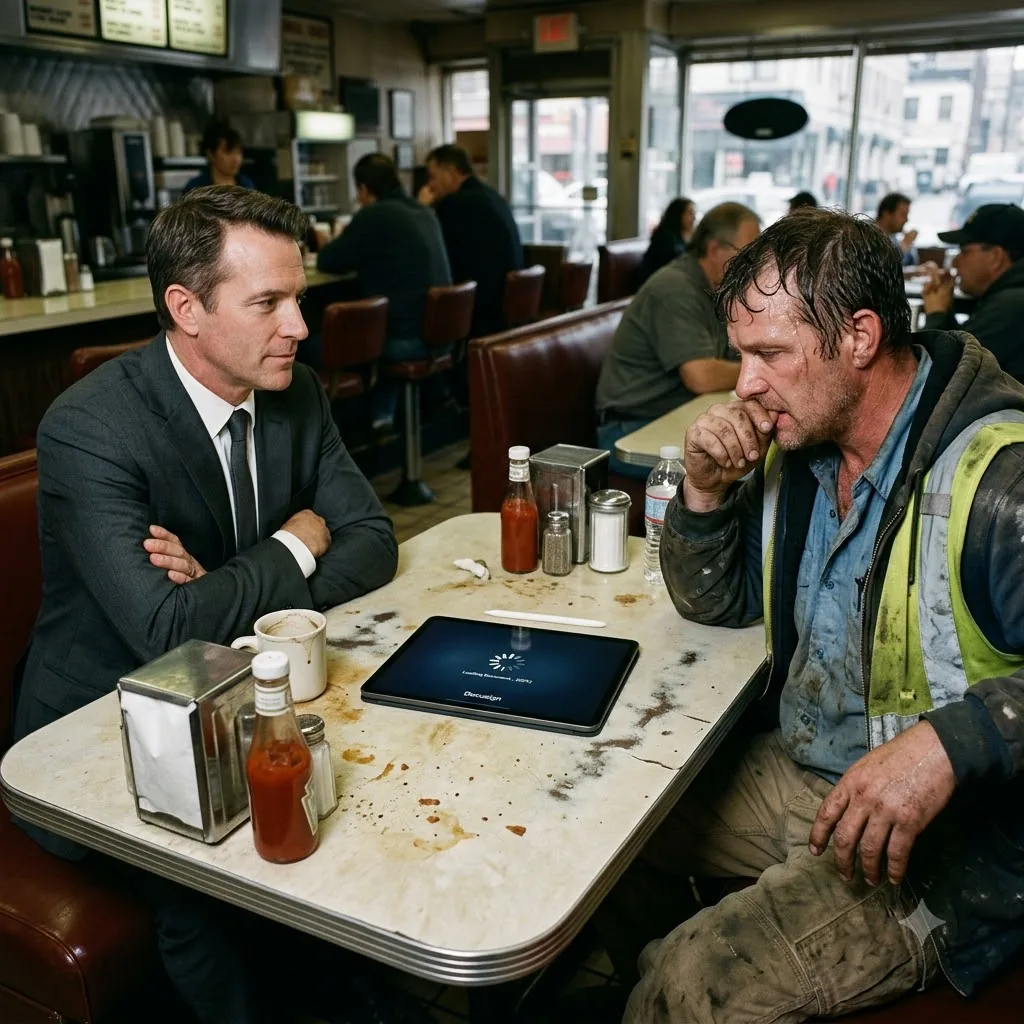
The corporate-issue tablet screen locked on a spinning blue circle, the bright glare reflecting off the grease-stained Formica of the diner table. Arthur pressed his index finger flat against the glass, expecting the final buyout contract to render. The animation stuttered, freezing completely into a jagged blue crescent. He let out a slow, controlled breath, blaming the rusty router bolted to the acoustic ceiling tiles above them. He hated conducting business in places that smelled of old fry oil and bleach.
Elias sat across the booth, gripping a cheap plastic pen so tightly the casing was bending under the pressure. The older man smelled of stale diesel and absolute defeat, his posture slumped inside a faded canvas jacket. Six months of Arthur’s relentless legal pressure had worked exactly as planned. The zoning threats, the sudden property tax re-evaluations, the subtle hints about eminent domain action from the state level. It had all led to this highway-side diner in the middle of nowhere. The land was finally secured. All Arthur needed was the digital ink on the screen, and his massive end-of-year commission would clear before midnight. He could already picture the bonus hitting his offshore account.
Arthur gave Elias a tight, rehearsed smile. He stated the rural internet was taking an extra moment to process the heavy legal document. Elias did not look up from the table. He just stared at the blank, frozen screen, waiting to sign away three generations of his family’s history. His breathing was shallow, the chest of his canvas jacket barely moving.
Arthur picked up his company phone to tether a private connection. He unlocked the device, instantly noticing the status bar at the top of the display. The 5G indicator was completely gone. There were no signal bars, no roaming icon, no network name. Just an empty grey void next to the battery percentage. He tapped the settings icon, intending to manually force a network search. The screen flashed white and dumped him back to the main home screen.
He tapped the icon again. The application crashed instantly.
A cold prickle of annoyance started at the base of Arthur’s neck. He prided himself on flawless efficiency. This technical delay was highly unprofessional, leaving him exposed to the one thing he despised most in his line of work-awkward silence with the people he was dismantling. He swiped to his email client, hoping to pull an offline cached version of the contract. The mail app icon was greyed out. A small padlock symbol had appeared over the white envelope logo. He tapped it firmly. A generic system prompt appeared in a floating gray box, stating the application was no longer authorized for his profile.
He dragged his thumb down the screen to force a hard reset. The power options did not appear. Instead, the phone vibrated with a long, continuous pulse that felt physically wrong in his palm. He placed the phone face down on the table, trying to hide the malfunctioning device from Elias. He turned his attention back to the primary tablet. The screen had finally changed.
The frozen blue circle was gone. The entire display had shifted to a solid, aggressive crimson red. There were no corporate logos, no navigation bars, no legal headers. A single, brutalist text box sat in the absolute center of the red void, demanding biometric authentication.
Arthur wiped his thumb on his tailored suit trousers. He pressed it firmly against the sensor built into the bottom bezel of the device. A harsh, grinding vibration buzzed against the table, rattling the porcelain coffee cups. The text box flashed yellow, then snapped back to red. The text updated to state the provided biometric data did not match any active authorized personnel.
Elias shifted in his seat, the vinyl squeaking loudly in the quiet diner. He muttered that he needed to get back to his truck soon. He mentioned his wife was waiting for him at the hospital.
Arthur held up a single finger, demanding silence without raising his voice or looking up from the screen. He rubbed his thumb raw against his cloth napkin and pressed it to the sensor a second time. The tablet vibrated violently. The screen flashed a brighter, more violent shade of red. The text changed again, stating further attempts would result in immediate hardware lockdown.
He reached for his phone again. The screen woke up before his hand even touched the casing. His custom wallpaper of the Chicago skyline had vanished, replaced by the exact same blinding red that dominated the tablet. His contact list, his calendar, his messaging apps were all gone. The phone was entirely wiped, reduced to a single, unchangeable function.
An incoming call occupied the entire screen. The caller ID was a string of twelve zeroes. There was no decline button.
Arthur stared at the ringing device. The diner around him seemed to fade into a muffled background hum. The waitress dropped a handful of silverware into a plastic tub across the room, but the loud clatter barely registered. He slid his finger across the glass to accept the call, unable to stop the slight tremor in his wrist, and pressed the speaker to his ear.
A voice entirely devoid of breath or human cadence spoke directly into his ear. The synthetic tone instructed him to remain exactly where he was.
The corporate-issue tablet screen locked on a spinning blue circle, the bright glare reflecting off the grease-stained Formica of the diner table. Arthur pressed his index finger flat against the glass, expecting the final buyout contract to render. The animation stuttered, freezing completely into a jagged blue crescent. He let out a slow, controlled breath, blaming the rusty router bolted to the acoustic ceiling tiles above them. He hated conducting business in places that smelled of old fry oil and bleach.
Elias sat across the booth, gripping a cheap plastic pen so tightly the casing was bending under the pressure. The older man smelled of stale diesel and absolute defeat, his posture slumped inside a faded canvas jacket. Six months of Arthur’s relentless legal pressure had worked exactly as planned. The zoning threats, the sudden property tax re-evaluations, the subtle hints about eminent domain action from the state level. It had all led to this highway-side diner in the middle of nowhere. The land was finally secured. All Arthur needed was the digital ink on the screen, and his massive end-of-year commission would clear before midnight. He could already picture the bonus hitting his offshore account.
Arthur gave Elias a tight, rehearsed smile. He stated the rural internet was taking an extra moment to process the heavy legal document. Elias did not look up from the table. He just stared at the blank, frozen screen, waiting to sign away three generations of his family’s history. His breathing was shallow, the chest of his canvas jacket barely moving.
Arthur picked up his company phone to tether a private connection. He unlocked the device, instantly noticing the status bar at the top of the display. The 5G indicator was completely gone. There were no signal bars, no roaming icon, no network name. Just an empty grey void next to the battery percentage. He tapped the settings icon, intending to manually force a network search. The screen flashed white and dumped him back to the main home screen.
He tapped the icon again. The application crashed instantly.
A cold prickle of annoyance started at the base of Arthur’s neck. He prided himself on flawless efficiency. This technical delay was highly unprofessional, leaving him exposed to the one thing he despised most in his line of work-awkward silence with the people he was dismantling. He swiped to his email client, hoping to pull an offline cached version of the contract. The mail app icon was greyed out. A small padlock symbol had appeared over the white envelope logo. He tapped it firmly. A generic system prompt appeared in a floating gray box, stating the application was no longer authorized for his profile.
He dragged his thumb down the screen to force a hard reset. The power options did not appear. Instead, the phone vibrated with a long, continuous pulse that felt physically wrong in his palm. He placed the phone face down on the table, trying to hide the malfunctioning device from Elias. He turned his attention back to the primary tablet. The screen had finally changed.
The frozen blue circle was gone. The entire display had shifted to a solid, aggressive crimson red. There were no corporate logos, no navigation bars, no legal headers. A single, brutalist text box sat in the absolute center of the red void, demanding biometric authentication.
Arthur wiped his thumb on his tailored suit trousers. He pressed it firmly against the sensor built into the bottom bezel of the device. A harsh, grinding vibration buzzed against the table, rattling the porcelain coffee cups. The text box flashed yellow, then snapped back to red. The text updated to state the provided biometric data did not match any active authorized personnel.
Elias shifted in his seat, the vinyl squeaking loudly in the quiet diner. He muttered that he needed to get back to his truck soon. He mentioned his wife was waiting for him at the hospital.
Arthur held up a single finger, demanding silence without raising his voice or looking up from the screen. He rubbed his thumb raw against his cloth napkin and pressed it to the sensor a second time. The tablet vibrated violently. The screen flashed a brighter, more violent shade of red. The text changed again, stating further attempts would result in immediate hardware lockdown.
He reached for his phone again. The screen woke up before his hand even touched the casing. His custom wallpaper of the Chicago skyline had vanished, replaced by the exact same blinding red that dominated the tablet. His contact list, his calendar, his messaging apps were all gone. The phone was entirely wiped, reduced to a single, unchangeable function.
An incoming call occupied the entire screen. The caller ID was a string of twelve zeroes. There was no decline button.
Arthur stared at the ringing device. The diner around him seemed to fade into a muffled background hum. The waitress dropped a handful of silverware into a plastic tub across the room, but the loud clatter barely registered. He slid his finger across the glass to accept the call, unable to stop the slight tremor in his wrist, and pressed the speaker to his ear.
A voice entirely devoid of breath or human cadence spoke directly into his ear. The synthetic tone instructed him to remain exactly where he was.