Story code: ST-001145
Part 1: The Discarded Record
The heavy rubber wheels of the janitor’s cart squealed against the scuffed linoleum, masking the erratic shuffle of Arthur’s loafers as he stepped over discarded notebooks and scattered pens. He stopped short outside the frosted glass of the principal’s office, his gaze locked on a flash of vibrant yellow peeking out from the gray plastic trash bin. It was the spine of a recently banned memoir, its cover bent backward, resting atop a pile of crumpled algebra worksheets. The unannounced locker sweeps had ended ten minutes ago. The senior hallway now sat completely deserted, though it still smelled heavily of industrial bleach, floor wax, and the distinct, sour tang of adolescent panic. Lockers hung half-open, their contents spilling onto the floor in the wake of the administration’s aggressive search.
Arthur pressed his back against the cool painted metal of locker 412. He waited, holding his breath, until the custodian’s heavy boots echoed around the far corner toward the cafeteria.
His heart hammered a frantic, irregular rhythm against his ribs. Retirement was exactly eight months and twelve days away. His pension was finally secure. His quiet life was completely mapped out down to the Tuesday afternoon bridge games at the community center. Yet here he was, a sixty-two-year-old man in a frayed tweed cardigan, sweating through his cotton undershirt as he approached a custodial garbage can like a common thief in the broad daylight of a Tuesday morning.
He stepped away from the lockers and hurried toward the cart. He reached into the bin, wincing as his knuckles brushed against a sticky wad of discarded chewing gum. The confiscated book felt heavy in his hands. Its pages were already warping, dampened by a half-empty soda cup tossed carelessly on top of it. Arthur did not care about the physical book itself. The school board had officially banned it three weeks ago, wiping its barcode from the library’s digital database and mandating the immediate removal of all copies. The administration believed the hardcovers were safely boxed up in the damp basement. This specific copy had slipped through, secretly passed from backpack to backpack in the shadows.
Arthur opened the damp cover. His arthritic fingers trembled as he flipped past the title page to the blank back flap. He ignored the printed text and dug his right thumbnail into the tight, glued seam of the binding.
He found the hidden crease.
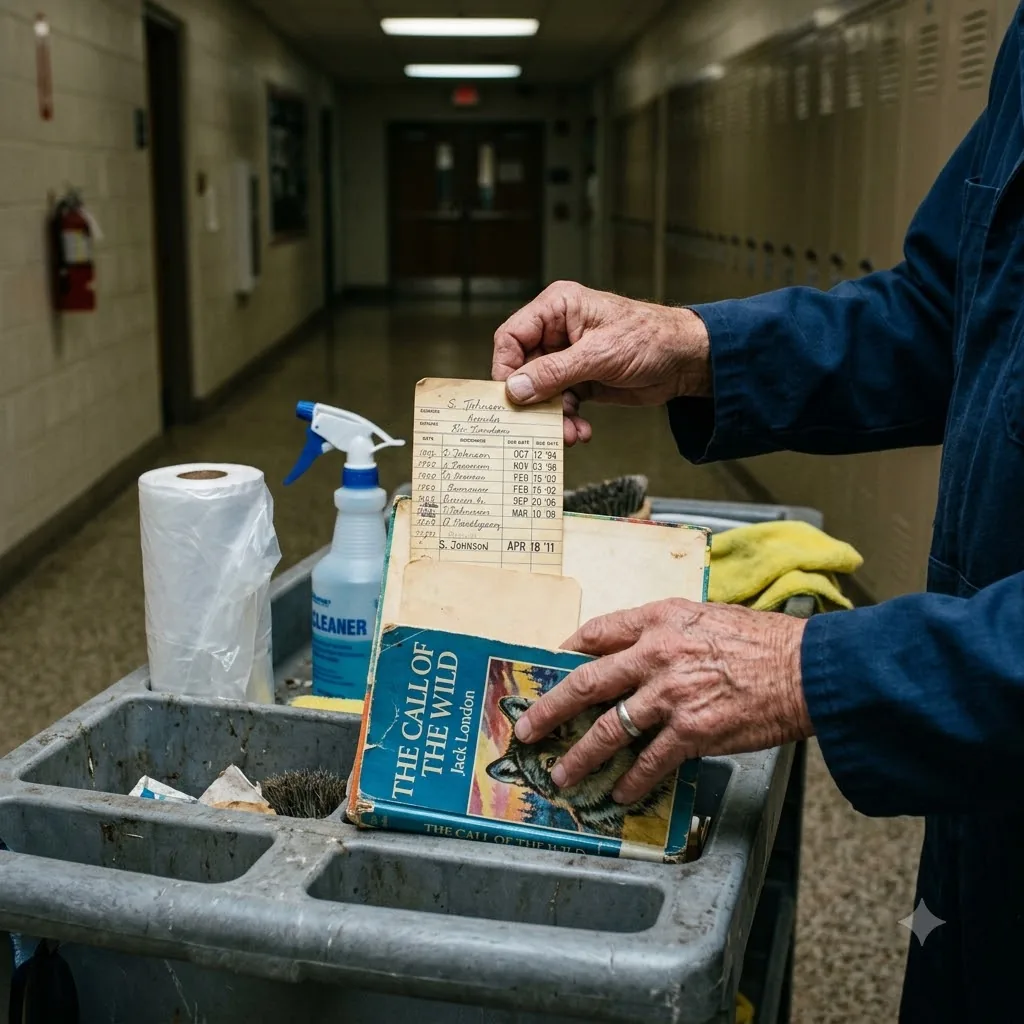
A small, rectangular manila card, cut by hand to perfectly match the length and width of the spine, rested securely in the pocket of the binding. Arthur pinched the stiff paper and pulled it free with a soft, satisfying scrape. This small piece of cardstock was the true danger. He flatly refused to log these specific, targeted titles in the school’s digital tracking software, knowing exactly how easily those central servers could be audited by the administration. Instead, he relied on an archaic, invisible system of hidden paper cards. He tracked the borrowing history in his own cramped handwriting, ensuring the books came back without ever leaving a trace on the network. The digital footprint of the students remained pristine. The terrified teenager who had hidden this memoir under a pile of gym clothes was safe, their identity existing only on this three-by-five slip of paper.
Arthur folded the manila card in half. He shoved it deep into the wool pocket of his cardigan, pressing his palm flat against the fabric to make sure it did not bulge. He let out a long, shaky breath. He released the damp book, letting it fall back into the trash among the wet paper towels. The immediate threat was neutralized. He could go back to his quiet desk, stamp a few overdue geometry textbooks, and pretend the morning’s aggressive locker raids were just another administrative nuisance to be ignored.
He turned on his heel to head back to the safety of the library.
A sharp mechanical click echoed in the quiet hall.
Arthur froze in place.
Standing less than six feet away, blocking the center of the corridor, was Chloe. She wore a tailored beige trench coat, her posture rigidly upright, her arms raised holding her smartphone at eye level. The bright screen displayed Arthur’s startled, pale face in sharp high-definition resolution. In the top right corner of her screen, a tiny red dot flashed in steady, rhythmic intervals.
She was recording everything.
Arthur swallowed hard. His hand instinctively flew to his cardigan pocket, covering the spot where the folded manila card burned against his hip. Chloe did not lower the device. She took a slow, deliberate step forward on her expensive leather heels, keeping the camera lens centered squarely on Arthur’s chest. As the vocal head of the local parents’ coalition, her sharp features were a staple at every combative school board meeting, always positioned aggressively at the microphone.
The hallway suddenly felt impossibly narrow. The cinderblock walls seemed to press inward, suffocating the air out of the corridor. Arthur tried to step to the right, hoping to edge past her toward the stairwell. Chloe mirrored his movement immediately, shifting her weight to cut off his path. The red recording dot pulsed on the screen, a digital heartbeat counting down his ruin.
Arthur stared directly into the black, unblinking lens of the phone camera. He remained acutely aware of the rough edge of the manila card scratching against the delicate lining of his pocket, holding the name of a student Chloe was desperate to expose. She took a final step forward, thrusting the camera lens mere inches from Arthur’s face, her thumb pressing the screen to zoom in on his trembling hand.
The heavy rubber wheels of the janitor’s cart squealed against the scuffed linoleum, masking the erratic shuffle of Arthur’s loafers as he stepped over discarded notebooks and scattered pens. He stopped short outside the frosted glass of the principal’s office, his gaze locked on a flash of vibrant yellow peeking out from the gray plastic trash bin. It was the spine of a recently banned memoir, its cover bent backward, resting atop a pile of crumpled algebra worksheets. The unannounced locker sweeps had ended ten minutes ago. The senior hallway now sat completely deserted, though it still smelled heavily of industrial bleach, floor wax, and the distinct, sour tang of adolescent panic. Lockers hung half-open, their contents spilling onto the floor in the wake of the administration’s aggressive search.
Arthur pressed his back against the cool painted metal of locker 412. He waited, holding his breath, until the custodian’s heavy boots echoed around the far corner toward the cafeteria.
His heart hammered a frantic, irregular rhythm against his ribs. Retirement was exactly eight months and twelve days away. His pension was finally secure. His quiet life was completely mapped out down to the Tuesday afternoon bridge games at the community center. Yet here he was, a sixty-two-year-old man in a frayed tweed cardigan, sweating through his cotton undershirt as he approached a custodial garbage can like a common thief in the broad daylight of a Tuesday morning.
He stepped away from the lockers and hurried toward the cart. He reached into the bin, wincing as his knuckles brushed against a sticky wad of discarded chewing gum. The confiscated book felt heavy in his hands. Its pages were already warping, dampened by a half-empty soda cup tossed carelessly on top of it. Arthur did not care about the physical book itself. The school board had officially banned it three weeks ago, wiping its barcode from the library’s digital database and mandating the immediate removal of all copies. The administration believed the hardcovers were safely boxed up in the damp basement. This specific copy had slipped through, secretly passed from backpack to backpack in the shadows.
Arthur opened the damp cover. His arthritic fingers trembled as he flipped past the title page to the blank back flap. He ignored the printed text and dug his right thumbnail into the tight, glued seam of the binding.
He found the hidden crease.
A small, rectangular manila card, cut by hand to perfectly match the length and width of the spine, rested securely in the pocket of the binding. Arthur pinched the stiff paper and pulled it free with a soft, satisfying scrape. This small piece of cardstock was the true danger. He flatly refused to log these specific, targeted titles in the school’s digital tracking software, knowing exactly how easily those central servers could be audited by the administration. Instead, he relied on an archaic, invisible system of hidden paper cards. He tracked the borrowing history in his own cramped handwriting, ensuring the books came back without ever leaving a trace on the network. The digital footprint of the students remained pristine. The terrified teenager who had hidden this memoir under a pile of gym clothes was safe, their identity existing only on this three-by-five slip of paper.
Arthur folded the manila card in half. He shoved it deep into the wool pocket of his cardigan, pressing his palm flat against the fabric to make sure it did not bulge. He let out a long, shaky breath. He released the damp book, letting it fall back into the trash among the wet paper towels. The immediate threat was neutralized. He could go back to his quiet desk, stamp a few overdue geometry textbooks, and pretend the morning’s aggressive locker raids were just another administrative nuisance to be ignored.
He turned on his heel to head back to the safety of the library.
A sharp mechanical click echoed in the quiet hall.
Arthur froze in place.
Standing less than six feet away, blocking the center of the corridor, was Chloe. She wore a tailored beige trench coat, her posture rigidly upright, her arms raised holding her smartphone at eye level. The bright screen displayed Arthur’s startled, pale face in sharp high-definition resolution. In the top right corner of her screen, a tiny red dot flashed in steady, rhythmic intervals.
She was recording everything.
Arthur swallowed hard. His hand instinctively flew to his cardigan pocket, covering the spot where the folded manila card burned against his hip. Chloe did not lower the device. She took a slow, deliberate step forward on her expensive leather heels, keeping the camera lens centered squarely on Arthur’s chest. As the vocal head of the local parents’ coalition, her sharp features were a staple at every combative school board meeting, always positioned aggressively at the microphone.
The hallway suddenly felt impossibly narrow. The cinderblock walls seemed to press inward, suffocating the air out of the corridor. Arthur tried to step to the right, hoping to edge past her toward the stairwell. Chloe mirrored his movement immediately, shifting her weight to cut off his path. The red recording dot pulsed on the screen, a digital heartbeat counting down his ruin.
Arthur stared directly into the black, unblinking lens of the phone camera. He remained acutely aware of the rough edge of the manila card scratching against the delicate lining of his pocket, holding the name of a student Chloe was desperate to expose. She took a final step forward, thrusting the camera lens mere inches from Arthur’s face, her thumb pressing the screen to zoom in on his trembling hand.