Story code: ST-001036
Part 1: The Citation
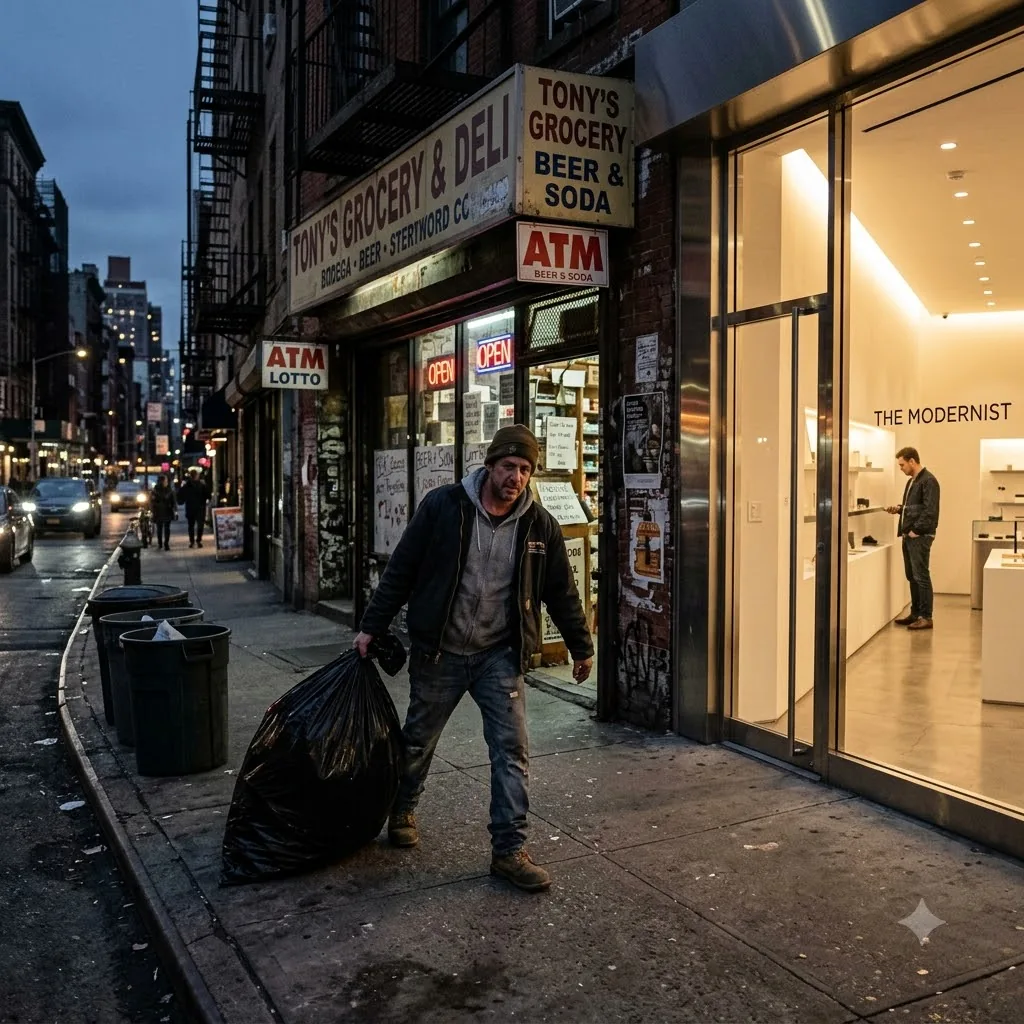
Elias hauled the second industrial trash bag over the threshold of El Sol Grocery, his steel-toed boots skidding on the wet linoleum. The heavy black plastic stretched tight, tearing near the knot to reveal the edges of shrink-wrapped imported cheeses, whole wheels of panela, and tightly bound cuts of cured meats he had purchased just two days prior. He dragged the dead weight across the concrete sidewalk, hoisting it over the curb with a grunt that scraped the raw back of his throat. The bag hit the asphalt with a dense, expensive thud.
Inside the bodega, behind the scratched plexiglass shield of the main register, Julian sat hunched under the humming fluorescent light. Julian’s index finger tapped rhythmically on the keys of a gray adding machine. Beside the machine sat a bright yellow health department citation. The overhead light reflected off the glossy yellow paper, illuminating the black block letters spelling out infractions that had never existed before this month. Storage height variances of a quarter inch. Refrigeration fluctuations of a single degree during a mandatory defrost cycle. Display spacing irregularities. His father had stacked these exact shelves the exact same way for forty years. Now, those exact methods were grounds for immediate product disposal.
Elias wiped sweat from his forehead with the back of his forearm, leaving a dark streak of dust across his skin. He stood on the curb and looked to his left. A newly installed matte-black sign hung above the storefront next door, reading Axiom Provisions in a minimalist serif font. Through their floor-to-ceiling spotless windows, a clerk in a slate-gray linen apron polished an imported espresso machine. The walls were painted a stark, sterile white, adorned only by a single piece of reclaimed driftwood. The stark contrast made Elias’s faded neon beer signs, hand-painted fruit murals, and crowded, narrow aisles feel like targets painted directly on his back. The entire block felt like a museum exhibit waiting to be paved over and replaced.
Elias walked back inside, the door chiming a harsh, mechanical note. Julian pushed the adding machine tape toward the edge of the counter. The red numbers printed on the thin white paper rolled down toward the floor, curling at the ends. Elias stared at the negative balances. Throwing out this week’s perishable inventory meant missing the first rent installment. Missing the rent meant dealing with the new management company, the same faceless corporate entity that had refused to renew the lease for the neighborhood bakery down the street. Elias pressed his palms flat against the cold formica countertop, his eyes locked on the glaring yellow citation. Three targeted visits in four weeks. Someone was making the calls, watching their daily operations, timing the complaints perfectly with their delivery schedules.
Julian pulled a thick, worn ledger from beneath the register, crossing out entire columns of projected income with a red pen. The scratching sound of the pen tip against the thick paper filled the silence of the empty store.
“I have to take out the bruised produce,” Elias said, his voice flat and exhausted.
Julian did not speak, only rubbed the bridge of his nose and began keying in another stack of unpaid invoices. Elias grabbed a gray plastic bin from the back aisle, filling it with mangoes that had a few brown spots, plantains that were perfectly ripe for frying but deemed too soft to satisfy the new inspector’s arbitrary firmness guidelines. Every heavy toss into the bin felt like a physical blow to his own ribs. He carried the heavy gray bin outside, the hinges of the front door squealing in sharp protest.
The brass bell above the door of Axiom Provisions chimed a soft, melodic note. A man stepped out onto the sidewalk, holding a small ceramic tasting cup. It was Holden, the owner of the boutique shop. Holden wore dark selvedge denim and wire-rimmed glasses, stepping carefully around a small damp patch on the concrete to avoid dirtying his suede boots. Holden stood exactly at the edge of his pristine property line, watching Elias dump the perfectly edible mangoes into the green municipal compost bin.
“Tough morning,” Holden said, swirling the dark liquid in his ceramic cup.
Elias tightened his grip on the edge of the empty gray bin. He stared at Holden, noting the crispness of his collar and the utter lack of tension in his posture. Holden took another step closer, his eyes flicking toward the yellow paper still visible through the bodega window, a faint, knowing smirk pulling at the corner of his mouth. Elias stood his ground on the cracked pavement, his chest rising and falling with heavy, labored breaths.
Holden reached into the inner breast pocket of his denim jacket. He pulled out a folded piece of thick, glossy cardstock.
“You know, Elias, I hate seeing you struggle like this,” Holden said, his tone smooth and entirely devoid of empathy. He extended his arm, holding the heavy paper out over the trash bins.
Elias looked down at the extended hand. The front of the pamphlet featured an architectural rendering of a sleek, modern luxury complex built exactly where El Sol currently stood. Holden stepped forward and pressed the glossy paper flat against Elias’s chest.
Elias hauled the second industrial trash bag over the threshold of El Sol Grocery, his steel-toed boots skidding on the wet linoleum. The heavy black plastic stretched tight, tearing near the knot to reveal the edges of shrink-wrapped imported cheeses, whole wheels of panela, and tightly bound cuts of cured meats he had purchased just two days prior. He dragged the dead weight across the concrete sidewalk, hoisting it over the curb with a grunt that scraped the raw back of his throat. The bag hit the asphalt with a dense, expensive thud.
Inside the bodega, behind the scratched plexiglass shield of the main register, Julian sat hunched under the humming fluorescent light. Julian’s index finger tapped rhythmically on the keys of a gray adding machine. Beside the machine sat a bright yellow health department citation. The overhead light reflected off the glossy yellow paper, illuminating the black block letters spelling out infractions that had never existed before this month. Storage height variances of a quarter inch. Refrigeration fluctuations of a single degree during a mandatory defrost cycle. Display spacing irregularities. His father had stacked these exact shelves the exact same way for forty years. Now, those exact methods were grounds for immediate product disposal.
Elias wiped sweat from his forehead with the back of his forearm, leaving a dark streak of dust across his skin. He stood on the curb and looked to his left. A newly installed matte-black sign hung above the storefront next door, reading Axiom Provisions in a minimalist serif font. Through their floor-to-ceiling spotless windows, a clerk in a slate-gray linen apron polished an imported espresso machine. The walls were painted a stark, sterile white, adorned only by a single piece of reclaimed driftwood. The stark contrast made Elias’s faded neon beer signs, hand-painted fruit murals, and crowded, narrow aisles feel like targets painted directly on his back. The entire block felt like a museum exhibit waiting to be paved over and replaced.
Elias walked back inside, the door chiming a harsh, mechanical note. Julian pushed the adding machine tape toward the edge of the counter. The red numbers printed on the thin white paper rolled down toward the floor, curling at the ends. Elias stared at the negative balances. Throwing out this week’s perishable inventory meant missing the first rent installment. Missing the rent meant dealing with the new management company, the same faceless corporate entity that had refused to renew the lease for the neighborhood bakery down the street. Elias pressed his palms flat against the cold formica countertop, his eyes locked on the glaring yellow citation. Three targeted visits in four weeks. Someone was making the calls, watching their daily operations, timing the complaints perfectly with their delivery schedules.
Julian pulled a thick, worn ledger from beneath the register, crossing out entire columns of projected income with a red pen. The scratching sound of the pen tip against the thick paper filled the silence of the empty store.
“I have to take out the bruised produce,” Elias said, his voice flat and exhausted.
Julian did not speak, only rubbed the bridge of his nose and began keying in another stack of unpaid invoices. Elias grabbed a gray plastic bin from the back aisle, filling it with mangoes that had a few brown spots, plantains that were perfectly ripe for frying but deemed too soft to satisfy the new inspector’s arbitrary firmness guidelines. Every heavy toss into the bin felt like a physical blow to his own ribs. He carried the heavy gray bin outside, the hinges of the front door squealing in sharp protest.
The brass bell above the door of Axiom Provisions chimed a soft, melodic note. A man stepped out onto the sidewalk, holding a small ceramic tasting cup. It was Holden, the owner of the boutique shop. Holden wore dark selvedge denim and wire-rimmed glasses, stepping carefully around a small damp patch on the concrete to avoid dirtying his suede boots. Holden stood exactly at the edge of his pristine property line, watching Elias dump the perfectly edible mangoes into the green municipal compost bin.
“Tough morning,” Holden said, swirling the dark liquid in his ceramic cup.
Elias tightened his grip on the edge of the empty gray bin. He stared at Holden, noting the crispness of his collar and the utter lack of tension in his posture. Holden took another step closer, his eyes flicking toward the yellow paper still visible through the bodega window, a faint, knowing smirk pulling at the corner of his mouth. Elias stood his ground on the cracked pavement, his chest rising and falling with heavy, labored breaths.
Holden reached into the inner breast pocket of his denim jacket. He pulled out a folded piece of thick, glossy cardstock.
“You know, Elias, I hate seeing you struggle like this,” Holden said, his tone smooth and entirely devoid of empathy. He extended his arm, holding the heavy paper out over the trash bins.
Elias looked down at the extended hand. The front of the pamphlet featured an architectural rendering of a sleek, modern luxury complex built exactly where El Sol currently stood. Holden stepped forward and pressed the glossy paper flat against Elias’s chest.