Story code: ST-000679
Part 1: Dead Weight
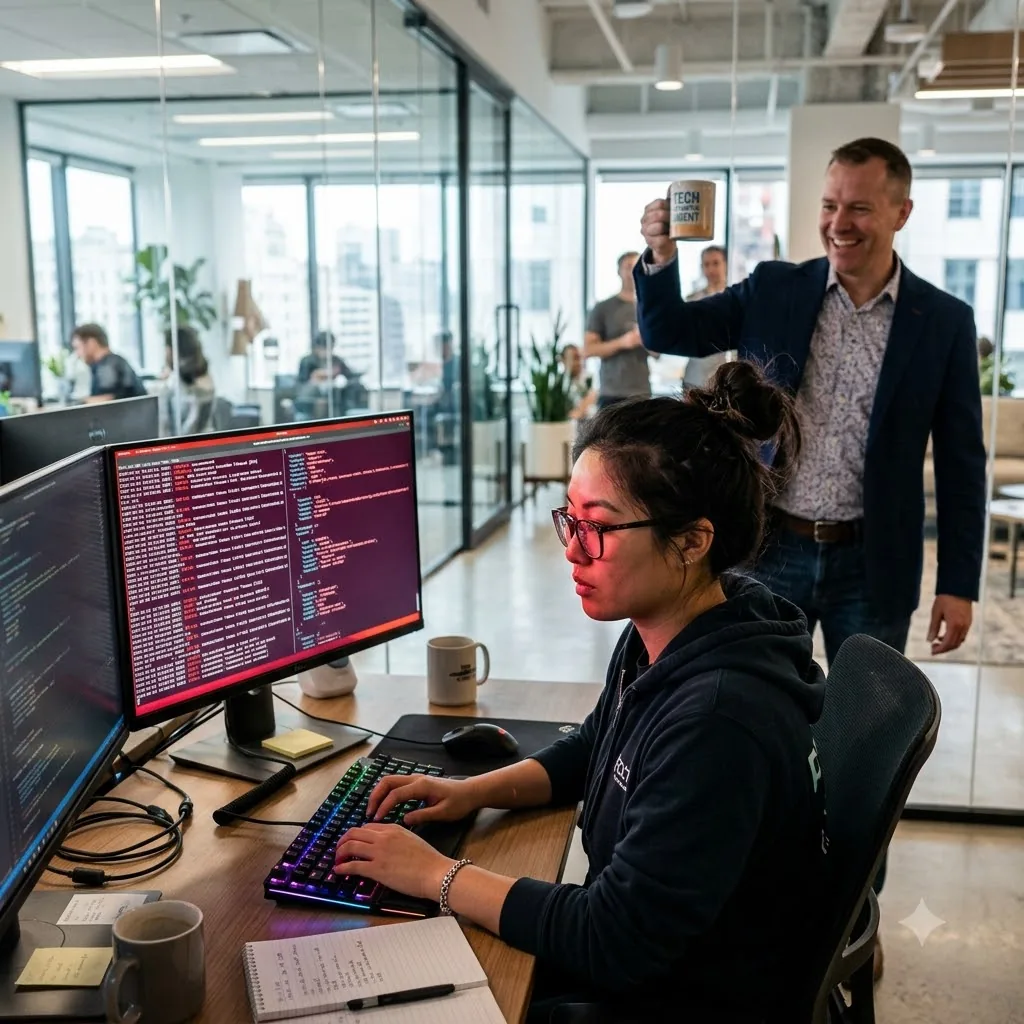
Row after row of hexadecimal identifiers flashed across Arthur’s secondary monitor, each followed by a cold, green `status: terminated` flag. Across the open-plan floor, Bryce held a plastic champagne flute high, accepting a booming laugh and a clap on the shoulder from the Vice President of Operations. The sheer volume of automated terminations blurred into a solid wall of scrolling data, remaining entirely abstract until a frantic woman began slamming her bare fists against the frosted glass of the twelfth-floor lobby doors.
Arthur flinched at the hollow, rhythmic thud of flesh striking thick glass. Bryce and the VP did not look up from the conference room monitor. They were too busy admiring the projected quarterly revenue graph, a steep upward curve that perfectly mirrored the lethal acceleration of the script tearing through Arthur’s database.
Arthur dragged his mouse over the live deployment logs. Six months of his life had gone into building the risk-assessment algorithm. He had meticulously designed it to flag minor credit anomalies for human review, shielding vulnerable users from predatory, automated overdraft cycles. Last week, Bryce had stood in front of the executive board and presented the entire architecture as his own proprietary efficiency model. Arthur had swallowed the theft in silence, accepting the quiet stability of his paycheck and the safety of his cubicle over a volatile, public confrontation.
But the code executing right now was a butchered mutation of his original logic.
Another violent thud echoed from the lobby, hard enough to rattle the aluminum frame holding the glass. Through the hazy distortion of the corporate partitioning, Arthur watched the silhouette of the woman. She was pressing a cluster of crumpled papers flat against the barrier. Security guards in dark uniforms were already closing in, moving swiftly to block her from view and drag her toward the elevators.
Arthur tabbed back to his terminal, his pulse thrumming in his ears. He pulled the version history for the production environment. The master parameter governing the risk tolerance threshold had been altered at two in the morning on Sunday. Bryce’s administrative credentials sat squarely next to the commit log. Bryce had completely removed the manual review requirement and dropped the safety threshold from eighty percent to fifteen.
At fifteen percent, the algorithm was no longer catching edge cases. It was indiscriminately slaughtering the entire lower quartile of their user base.
The termination lines accelerated, blurring into a continuous green waterfall. Four hundred accounts had been closed in the last ten seconds. A thousand in the last minute. These were not dormant profiles or simple savings accounts. They were active, critical credit lines, the primary financial arteries for families, small businesses, and individuals living paycheck to paycheck. The automated system was instantly freezing assets, locking cards, and recalling standing loans with zero warning.
“Absolute efficiency,” Bryce said loudly. His voice carried effortlessly over the low hum of the server racks and the distant, muffled scuffle out in the lobby. “We eliminated the human bottleneck entirely. The model optimizes yield by cutting the dead weight before it ever becomes a liability.”
Arthur stared at the flashing screen. He pulled up the master geographic dashboard. The red dots on the heat map were multiplying like a contagion across the city grid. Every dot represented a termination. Every termination meant a frozen life.
The security guards in the lobby finally managed to pull the woman away from the doors. As they dragged her back, one of the papers she had pressed against the glass slipped from her fingers. It slid under the narrow gap at the bottom of the door and came to rest on the pristine grey carpet of the inner office.
Arthur stood up. His legs felt hollow, disconnected from his torso. He walked past rows of oblivious engineers deep in their noise-canceling headphones and approached the glass. The paper lay face up under the harsh fluorescent lights. It was a printed notice of an immediate medical foreclosure action, triggered automatically by a frozen health-escrow account. Across the top, their company logo sat stamped in bold blue ink.
Arthur looked back toward the conference room. Bryce was smiling broadly, gesturing with his empty champagne flute toward the revenue spike. Bryce had traded tens of thousands of livelihoods for a single, lucrative promotion.
Arthur returned to his desk, his jaw set. His hands hovered over the mechanical keyboard. He still had his unlogged backdoor access. He possessed the root keys to revert the algorithm, roll back the deployment, and force the threshold back to eighty percent. Doing so would instantly halt the cascade. It would also generate a massive system alert, destroy Bryce’s presentation in real time, wipe out the quarterly win, and definitively end Arthur’s own career for unauthorized manipulation of a live production environment.
A new, flashing alert hijacked the center of Arthur’s primary screen. It was a mass-action warning. The algorithm had just queued an auto-execution batch for forty thousand additional accounts, scheduled for hard-clearing at noon. The clock in the corner of his monitor read eleven fifty-seven.
Arthur cracked his knuckles. He quickly typed the first terminal command to initiate the server override and bypass the security lock.
A heavy hand clamped down hard on his shoulder.
“Remarkable dashboard,” Bryce said, leaning in so close that Arthur could smell the stale champagne on his breath as a thick palm flattened directly over Arthur’s keyboard.
Row after row of hexadecimal identifiers flashed across Arthur’s secondary monitor, each followed by a cold, green `status: terminated` flag. Across the open-plan floor, Bryce held a plastic champagne flute high, accepting a booming laugh and a clap on the shoulder from the Vice President of Operations. The sheer volume of automated terminations blurred into a solid wall of scrolling data, remaining entirely abstract until a frantic woman began slamming her bare fists against the frosted glass of the twelfth-floor lobby doors.
Arthur flinched at the hollow, rhythmic thud of flesh striking thick glass. Bryce and the VP did not look up from the conference room monitor. They were too busy admiring the projected quarterly revenue graph, a steep upward curve that perfectly mirrored the lethal acceleration of the script tearing through Arthur’s database.
Arthur dragged his mouse over the live deployment logs. Six months of his life had gone into building the risk-assessment algorithm. He had meticulously designed it to flag minor credit anomalies for human review, shielding vulnerable users from predatory, automated overdraft cycles. Last week, Bryce had stood in front of the executive board and presented the entire architecture as his own proprietary efficiency model. Arthur had swallowed the theft in silence, accepting the quiet stability of his paycheck and the safety of his cubicle over a volatile, public confrontation.
But the code executing right now was a butchered mutation of his original logic.
Another violent thud echoed from the lobby, hard enough to rattle the aluminum frame holding the glass. Through the hazy distortion of the corporate partitioning, Arthur watched the silhouette of the woman. She was pressing a cluster of crumpled papers flat against the barrier. Security guards in dark uniforms were already closing in, moving swiftly to block her from view and drag her toward the elevators.
Arthur tabbed back to his terminal, his pulse thrumming in his ears. He pulled the version history for the production environment. The master parameter governing the risk tolerance threshold had been altered at two in the morning on Sunday. Bryce’s administrative credentials sat squarely next to the commit log. Bryce had completely removed the manual review requirement and dropped the safety threshold from eighty percent to fifteen.
At fifteen percent, the algorithm was no longer catching edge cases. It was indiscriminately slaughtering the entire lower quartile of their user base.
The termination lines accelerated, blurring into a continuous green waterfall. Four hundred accounts had been closed in the last ten seconds. A thousand in the last minute. These were not dormant profiles or simple savings accounts. They were active, critical credit lines, the primary financial arteries for families, small businesses, and individuals living paycheck to paycheck. The automated system was instantly freezing assets, locking cards, and recalling standing loans with zero warning.
“Absolute efficiency,” Bryce said loudly. His voice carried effortlessly over the low hum of the server racks and the distant, muffled scuffle out in the lobby. “We eliminated the human bottleneck entirely. The model optimizes yield by cutting the dead weight before it ever becomes a liability.”
Arthur stared at the flashing screen. He pulled up the master geographic dashboard. The red dots on the heat map were multiplying like a contagion across the city grid. Every dot represented a termination. Every termination meant a frozen life.
The security guards in the lobby finally managed to pull the woman away from the doors. As they dragged her back, one of the papers she had pressed against the glass slipped from her fingers. It slid under the narrow gap at the bottom of the door and came to rest on the pristine grey carpet of the inner office.
Arthur stood up. His legs felt hollow, disconnected from his torso. He walked past rows of oblivious engineers deep in their noise-canceling headphones and approached the glass. The paper lay face up under the harsh fluorescent lights. It was a printed notice of an immediate medical foreclosure action, triggered automatically by a frozen health-escrow account. Across the top, their company logo sat stamped in bold blue ink.
Arthur looked back toward the conference room. Bryce was smiling broadly, gesturing with his empty champagne flute toward the revenue spike. Bryce had traded tens of thousands of livelihoods for a single, lucrative promotion.
Arthur returned to his desk, his jaw set. His hands hovered over the mechanical keyboard. He still had his unlogged backdoor access. He possessed the root keys to revert the algorithm, roll back the deployment, and force the threshold back to eighty percent. Doing so would instantly halt the cascade. It would also generate a massive system alert, destroy Bryce’s presentation in real time, wipe out the quarterly win, and definitively end Arthur’s own career for unauthorized manipulation of a live production environment.
A new, flashing alert hijacked the center of Arthur’s primary screen. It was a mass-action warning. The algorithm had just queued an auto-execution batch for forty thousand additional accounts, scheduled for hard-clearing at noon. The clock in the corner of his monitor read eleven fifty-seven.
Arthur cracked his knuckles. He quickly typed the first terminal command to initiate the server override and bypass the security lock.
A heavy hand clamped down hard on his shoulder.
“Remarkable dashboard,” Bryce said, leaning in so close that Arthur could smell the stale champagne on his breath as a thick palm flattened directly over Arthur’s keyboard.