Story code: ST-001068
Part 1: The Barrier at the Counter
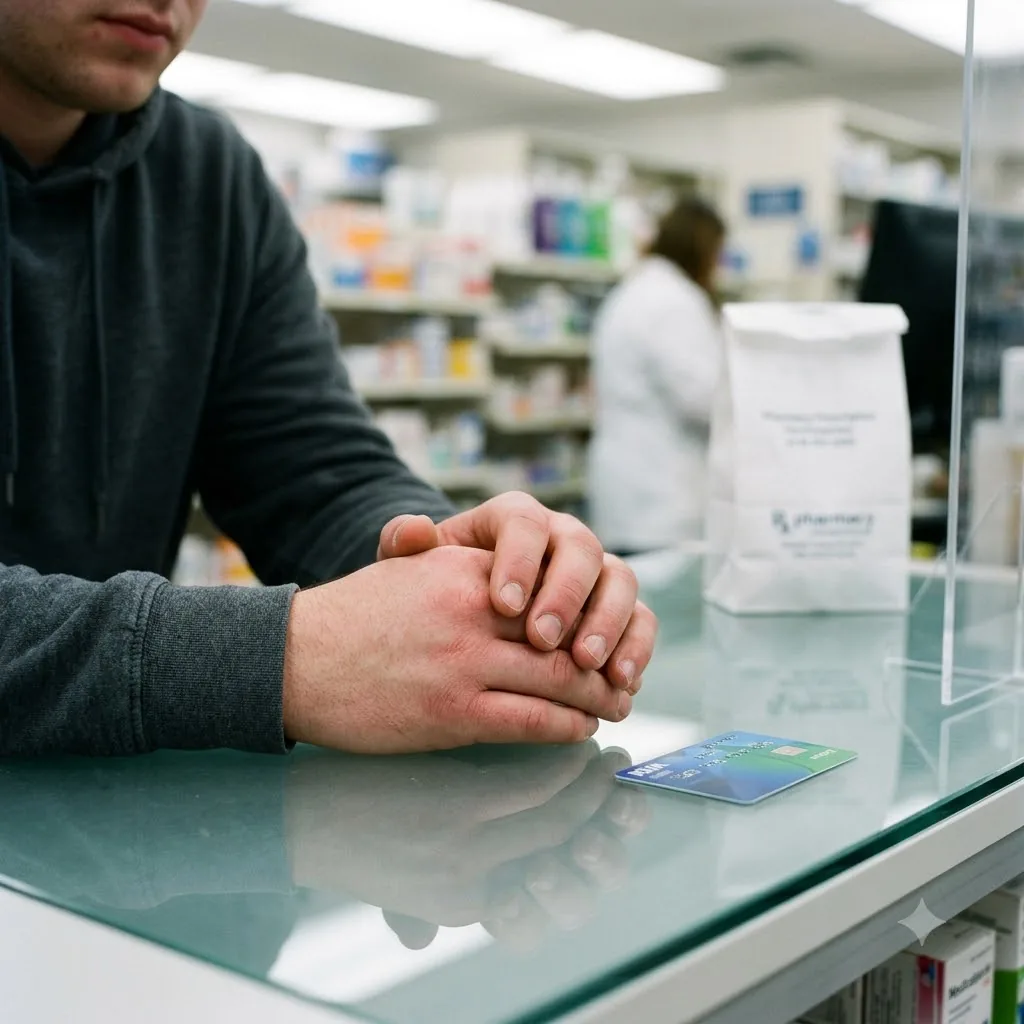
The white paper bag sat exactly six inches from Eli’s right hand, the receipt already stapled to the folded top. The sterile, uninterrupted hum of the fluorescent lights above the small-town pharmacy counter felt like a victory march compared to the agonizing drive here. Inside that stapled bag was the insulated cooler box holding the heavy glass vial. That vial would finally stop his immune system from chewing through the cartilage in his knees and wrists. He had spent three agonizing weeks fighting his insurance provider, escalating appeals and spending hours on hold until they finally approved the emergency biologic. Now, the profound physical relief of seeing it sitting right there on the faux-granite laminate washed over him, loosening the tight, defensive posture in his shoulders.
He just needed the pharmacist to scan the barcode.
The pharmacy was entirely empty save for the two of them. It occupied the back corner of a dusty independent drug store, flanked by rows of faded greeting cards and over-priced vitamins. The pharmacist, a tall man whose brass nametag read *Marcus*, stood behind the register with his hand hovering over the scanning gun. Marcus did not pick it up. Instead, he stared at the glowing computer monitor, tapping the down arrow key in a slow, rhythmic cadence.
Eli shifted his weight to his left leg to take the pressure off his badly inflamed right hip. The joints in his fingers throbbed with a dull, sickening heat. Every passing second without the medication meant more irreversible damage to his connective tissue. His rheumatologist had made the stakes brutally clear yesterday. The aggressive nature of the flare-up meant his mobility was on a timer.
“Take your time,” Eli told the man, forcing a polite retail smile. “I know the authorization took forever to push through on the provider portal.”
Marcus stopped tapping the keyboard. He kept his eyes locked on the screen, his face illuminated by the harsh blue light of the monitor. “The authorization cleared an hour ago.”
Eli let out a long, shuddering breath. That was the last administrative hurdle. He pulled his credit card from his leather wallet, actively ignoring the sharp spike of pain in his knuckles as he gripped the plastic. He placed the card on the counter next to the digital payment terminal.
Marcus did not activate the terminal. The sterile quiet of the store stretched out, broken only by the distant hum of a beverage cooler in the front aisle. Marcus leaned forward, clicking the mouse once, then scrolling. He repeated the motion three times.
It looked exactly like a standard bureaucratic glitch. Eli had seen this exact pantomime a hundred times at various medical offices and clinics. A frozen software screen, a spinning loading wheel, a mismatched billing code that required a manager’s override. He prepared himself for another ten minutes of standing, locking his knees to manage the radiating ache shooting up his legs. He focused on the bag. The condensation from the ice pack inside was just beginning to dampen the bottom corner of the white paper.
“Computers always pick the worst days to freeze up,” Eli said, trying to fill the heavy dead air between them. “I can wait if you need to reboot.”
Marcus finally looked away from the monitor. He looked down at the white bag on the counter, then slowly raised his eyes to look at Eli’s swollen, rigid hands resting on the edge of the laminate. The pharmacist’s expression remained entirely blank, completely devoid of the usual customer service apologies or stressed frustration.
Marcus reached out and slid the bag backward. It dragged across the counter with a dry, scraping rasp, moving from six inches away to two feet away. Out of Eli’s reach.
Eli felt a sudden, cold spike of adrenaline cut through the haze of his joint pain. He instinctively leaned forward, pressing his stomach against the counter.
“I can just call my provider on speakerphone if there is a block on the prescription,” Eli said, keeping his voice strictly level and calm. “They promised me the file was clean.”
“The prescription is perfectly valid,” Marcus said.
Marcus picked up a small red permanent marker from a plastic pen cup beside the register. He pulled the paper bag all the way toward his chest, uncapped the marker with a sharp squeak, and drew a thick, heavy line directly through the black and white barcode on the receipt.
Eli stared at the bright red ink bleeding into the thin thermal paper. The polite, patient facade he had built up for this errand shattered. His joints burned. The glass vial inside that bag belonged to him. It was already processed, already approved, and sitting right in front of him, mere inches away.
“Then ring me up,” Eli told him, dropping the friendly tone entirely and sliding his credit card forward.
Marcus capped the marker with a loud, final snap. He turned around, putting his broad back to the register, and placed Eli’s medication into a gray plastic bin marked for hazardous returns.
“I am exercising my personal right to refuse this transaction,” Marcus said, keeping his back turned as he began locking the return bin with a heavy brass padlock.
The white paper bag sat exactly six inches from Eli’s right hand, the receipt already stapled to the folded top. The sterile, uninterrupted hum of the fluorescent lights above the small-town pharmacy counter felt like a victory march compared to the agonizing drive here. Inside that stapled bag was the insulated cooler box holding the heavy glass vial. That vial would finally stop his immune system from chewing through the cartilage in his knees and wrists. He had spent three agonizing weeks fighting his insurance provider, escalating appeals and spending hours on hold until they finally approved the emergency biologic. Now, the profound physical relief of seeing it sitting right there on the faux-granite laminate washed over him, loosening the tight, defensive posture in his shoulders.
He just needed the pharmacist to scan the barcode.
The pharmacy was entirely empty save for the two of them. It occupied the back corner of a dusty independent drug store, flanked by rows of faded greeting cards and over-priced vitamins. The pharmacist, a tall man whose brass nametag read *Marcus*, stood behind the register with his hand hovering over the scanning gun. Marcus did not pick it up. Instead, he stared at the glowing computer monitor, tapping the down arrow key in a slow, rhythmic cadence.
Eli shifted his weight to his left leg to take the pressure off his badly inflamed right hip. The joints in his fingers throbbed with a dull, sickening heat. Every passing second without the medication meant more irreversible damage to his connective tissue. His rheumatologist had made the stakes brutally clear yesterday. The aggressive nature of the flare-up meant his mobility was on a timer.
“Take your time,” Eli told the man, forcing a polite retail smile. “I know the authorization took forever to push through on the provider portal.”
Marcus stopped tapping the keyboard. He kept his eyes locked on the screen, his face illuminated by the harsh blue light of the monitor. “The authorization cleared an hour ago.”
Eli let out a long, shuddering breath. That was the last administrative hurdle. He pulled his credit card from his leather wallet, actively ignoring the sharp spike of pain in his knuckles as he gripped the plastic. He placed the card on the counter next to the digital payment terminal.
Marcus did not activate the terminal. The sterile quiet of the store stretched out, broken only by the distant hum of a beverage cooler in the front aisle. Marcus leaned forward, clicking the mouse once, then scrolling. He repeated the motion three times.
It looked exactly like a standard bureaucratic glitch. Eli had seen this exact pantomime a hundred times at various medical offices and clinics. A frozen software screen, a spinning loading wheel, a mismatched billing code that required a manager’s override. He prepared himself for another ten minutes of standing, locking his knees to manage the radiating ache shooting up his legs. He focused on the bag. The condensation from the ice pack inside was just beginning to dampen the bottom corner of the white paper.
“Computers always pick the worst days to freeze up,” Eli said, trying to fill the heavy dead air between them. “I can wait if you need to reboot.”
Marcus finally looked away from the monitor. He looked down at the white bag on the counter, then slowly raised his eyes to look at Eli’s swollen, rigid hands resting on the edge of the laminate. The pharmacist’s expression remained entirely blank, completely devoid of the usual customer service apologies or stressed frustration.
Marcus reached out and slid the bag backward. It dragged across the counter with a dry, scraping rasp, moving from six inches away to two feet away. Out of Eli’s reach.
Eli felt a sudden, cold spike of adrenaline cut through the haze of his joint pain. He instinctively leaned forward, pressing his stomach against the counter.
“I can just call my provider on speakerphone if there is a block on the prescription,” Eli said, keeping his voice strictly level and calm. “They promised me the file was clean.”
“The prescription is perfectly valid,” Marcus said.
Marcus picked up a small red permanent marker from a plastic pen cup beside the register. He pulled the paper bag all the way toward his chest, uncapped the marker with a sharp squeak, and drew a thick, heavy line directly through the black and white barcode on the receipt.
Eli stared at the bright red ink bleeding into the thin thermal paper. The polite, patient facade he had built up for this errand shattered. His joints burned. The glass vial inside that bag belonged to him. It was already processed, already approved, and sitting right in front of him, mere inches away.
“Then ring me up,” Eli told him, dropping the friendly tone entirely and sliding his credit card forward.
Marcus capped the marker with a loud, final snap. He turned around, putting his broad back to the register, and placed Eli’s medication into a gray plastic bin marked for hazardous returns.
“I am exercising my personal right to refuse this transaction,” Marcus said, keeping his back turned as he began locking the return bin with a heavy brass padlock.