Story code: ST-000675
Part 1: The Sweep
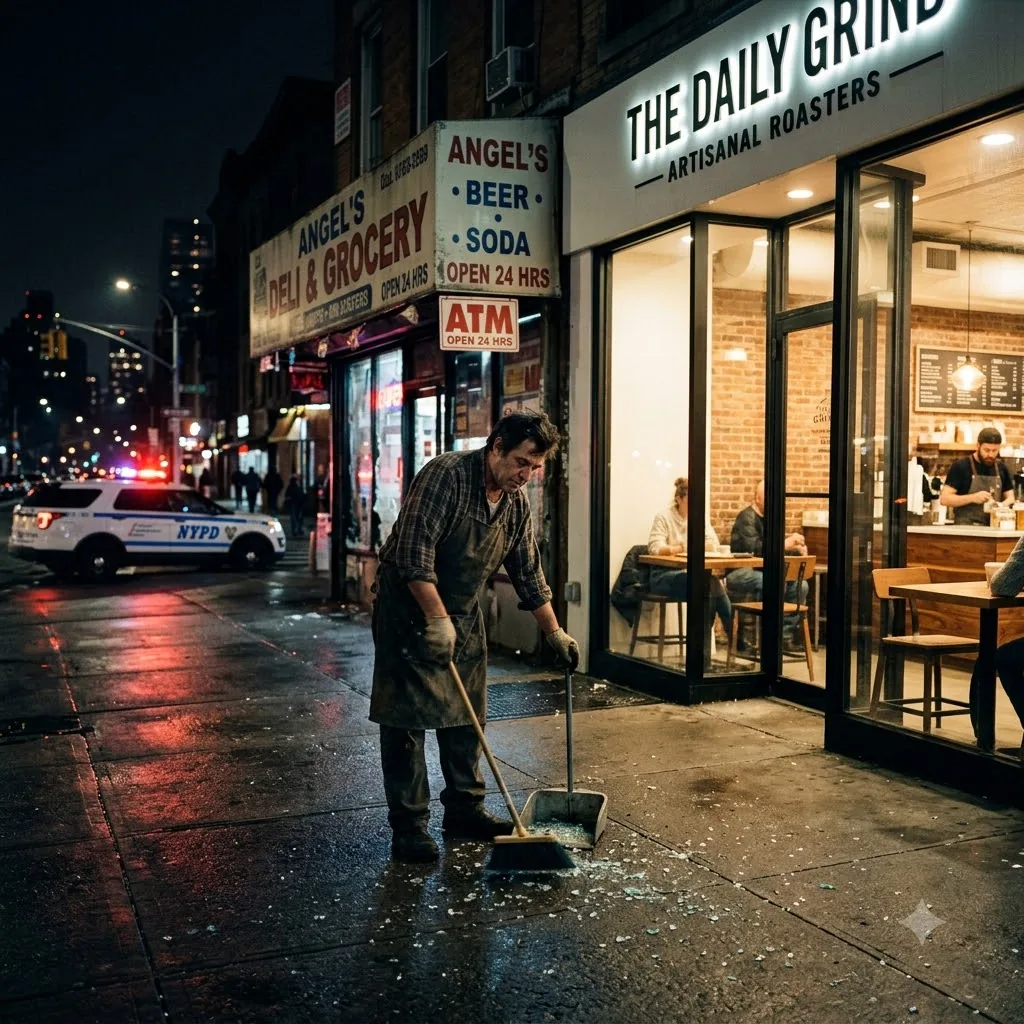
The push broom rasped against the pavement, the stiff red bristles catching shattered green glass and a spreading puddle of spilled oat milk. Blue and red lights still flashed a faint reflection against the brickwork of Hector’s bodega, fading only when the last police cruiser finally turned the corner at the end of the avenue. The sidewalk felt hollowed out, suddenly and violently stripped of the figures that usually leaned against the humming metal of the ice machine. Hector kept his head down, sweeping the wreckage into a neat pile. He focused on the glass. He refused to look at the empty milk crates where his regulars normally sat.
Julian stepped over the invisible property line that divided the bodega from the new espresso bar next door. His pristine denim apron gleamed against the grime of the street, perfectly ironed, utterly out of place. He balanced two ceramic cups on a recycled cardboard tray, the steam rising in neat little ribbons. Julian carefully avoided a wet patch on the concrete, adjusting his tortoiseshell glasses as he approached.
“Terrible mess today, Hector,” Julian said, offering one of the flat whites. “I had to call them again. The trash was piling up right in front of my patio fencing. It was getting completely out of hand.”
Hector stopped sweeping. He took the cup, letting the hot ceramic burn his calloused fingers. He forced a nod. He had to keep nodding. Julian was the head of the new merchants’ association. Julian had the direct cell phone number of the precinct captain.
“They scare off the brunch crowd,” Julian continued, sipping his own coffee. “I tell them to move along, and they just stare at me. It is terrible for business. Bad for your business, too, having those people blocking your door all afternoon.”
Hector looked at the specific patch of concrete where old man Tomas usually sat. Tomas was currently handcuffed in the back of a cruiser heading downtown to central booking. Hector’s chest tightened, a vice grip clamping over his ribs. He took a sip of the flat white. It tasted like air and foam, masking the bitter roast beneath.
He swept the broken glass into his metal dustpan. Julian stood there, watching, completely oblivious to the way Hector’s knuckles strained against the broom handle. Julian set his coffee on the edge of the bodega’s ice box and pulled a neatly folded sheet of heavy-stock paper from his apron pocket.
“I am circulating this,” Julian said, smoothing the paper flat on the dented metal of the ice machine lid. “A petition for the precinct. We need a permanent observation tower on this corner. A constant police presence to keep the element away permanently.”
Hector stared down at the paper. The names of the other new business owners already filled the first dozen lines in flowing blue ink. The artisanal bakery, the boutique pet store, the natural wine shop. His bodega was the last holdout from the old block, a decaying island in a sea of fresh paint and neon signs. He needed Julian to think they were on the same side. If Julian turned his complaints and his committee meetings toward the bodega itself, the health inspectors would follow. Then the zoning board. Then the crushing daily fines. Hector could not afford a single fine.
Hector leaned the broom against the brick wall, wiping his palms on his faded jeans.
“Just put your name right there,” Julian said, tapping the bottom line. “Show them we present a united front. It will clean up the neighborhood for good. We can make this block shine.”
Hector reached into his pocket for a pen. His fingers brushed against the small stack of folded brown paper bags he kept tucked in his apron. The empty ones. He swallowed hard, his throat dry despite the coffee. The street felt far too quiet. For years, the loiterers outside had been a fixture, a noisy, chaotic shield. Now the concrete was bare, pressure-washed by the flashing lights of the raid Julian had just called in.
Julian smiled, a bright, even expression that remained entirely in his mouth and never reached his eyes. “I knew you would understand the vision here. We both want a safe street for our customers.”
Hector clicked the pen. He hovered the ballpoint tip over the heavy paper.
Inside the dim interior of the bodega, on the counter right next to the scratch-off lottery machine, his phone screen lit up. The vibration buzzed violently against the cheap laminate wood, loud enough to rattle a display of breath mints. Hector could read the glowing letters through the glass of his storefront window.
*Mercy Hosp Billing.*
The ink in Hector’s pen stopped flowing. He pressed harder, nearly tearing through Julian’s crisp white paper.
The phone continued to vibrate. It was the third call this week. The final notice had arrived in the mail on Tuesday. He needed the cash by five o’clock today to keep his wife on the active transplant list. He had packed the thick envelope in one of the brown paper bags just an hour ago. He had handed it to Tomas to hold, a decoy drop to keep it safe while Hector went to the alley to deal with a delivery truck driver who always demanded a cash tip.
Tomas, who was now sitting in central booking. Tomas, who would be processed in less than an hour. Tomas, whose pockets would be emptied out into a plastic bin by a desk sergeant looking for contraband.
Tomas had the bag with the hospital money.
Julian tapped the paper again, oblivious to the glowing phone inside the shop. “Right on the bottom line, Hector. Just sign it.”
Hector stared at the word *Mercy* glowing in the dark of his shop. The compressor on the ice machine hummed a low, steady drone. His wife’s breathing machine sounded exactly like that hum, working tirelessly in their cramped apartment upstairs. He looked down at the pen trembling in his hand, then back up at the avenue where the police cruiser had disappeared into the city traffic.
Julian sighed, crossing his arms over his pristine apron. “It is just a signature, Hector.”
Hector gripped the plastic barrel of the pen until it cracked.
The push broom rasped against the pavement, the stiff red bristles catching shattered green glass and a spreading puddle of spilled oat milk. Blue and red lights still flashed a faint reflection against the brickwork of Hector’s bodega, fading only when the last police cruiser finally turned the corner at the end of the avenue. The sidewalk felt hollowed out, suddenly and violently stripped of the figures that usually leaned against the humming metal of the ice machine. Hector kept his head down, sweeping the wreckage into a neat pile. He focused on the glass. He refused to look at the empty milk crates where his regulars normally sat.
Julian stepped over the invisible property line that divided the bodega from the new espresso bar next door. His pristine denim apron gleamed against the grime of the street, perfectly ironed, utterly out of place. He balanced two ceramic cups on a recycled cardboard tray, the steam rising in neat little ribbons. Julian carefully avoided a wet patch on the concrete, adjusting his tortoiseshell glasses as he approached.
“Terrible mess today, Hector,” Julian said, offering one of the flat whites. “I had to call them again. The trash was piling up right in front of my patio fencing. It was getting completely out of hand.”
Hector stopped sweeping. He took the cup, letting the hot ceramic burn his calloused fingers. He forced a nod. He had to keep nodding. Julian was the head of the new merchants’ association. Julian had the direct cell phone number of the precinct captain.
“They scare off the brunch crowd,” Julian continued, sipping his own coffee. “I tell them to move along, and they just stare at me. It is terrible for business. Bad for your business, too, having those people blocking your door all afternoon.”
Hector looked at the specific patch of concrete where old man Tomas usually sat. Tomas was currently handcuffed in the back of a cruiser heading downtown to central booking. Hector’s chest tightened, a vice grip clamping over his ribs. He took a sip of the flat white. It tasted like air and foam, masking the bitter roast beneath.
He swept the broken glass into his metal dustpan. Julian stood there, watching, completely oblivious to the way Hector’s knuckles strained against the broom handle. Julian set his coffee on the edge of the bodega’s ice box and pulled a neatly folded sheet of heavy-stock paper from his apron pocket.
“I am circulating this,” Julian said, smoothing the paper flat on the dented metal of the ice machine lid. “A petition for the precinct. We need a permanent observation tower on this corner. A constant police presence to keep the element away permanently.”
Hector stared down at the paper. The names of the other new business owners already filled the first dozen lines in flowing blue ink. The artisanal bakery, the boutique pet store, the natural wine shop. His bodega was the last holdout from the old block, a decaying island in a sea of fresh paint and neon signs. He needed Julian to think they were on the same side. If Julian turned his complaints and his committee meetings toward the bodega itself, the health inspectors would follow. Then the zoning board. Then the crushing daily fines. Hector could not afford a single fine.
Hector leaned the broom against the brick wall, wiping his palms on his faded jeans.
“Just put your name right there,” Julian said, tapping the bottom line. “Show them we present a united front. It will clean up the neighborhood for good. We can make this block shine.”
Hector reached into his pocket for a pen. His fingers brushed against the small stack of folded brown paper bags he kept tucked in his apron. The empty ones. He swallowed hard, his throat dry despite the coffee. The street felt far too quiet. For years, the loiterers outside had been a fixture, a noisy, chaotic shield. Now the concrete was bare, pressure-washed by the flashing lights of the raid Julian had just called in.
Julian smiled, a bright, even expression that remained entirely in his mouth and never reached his eyes. “I knew you would understand the vision here. We both want a safe street for our customers.”
Hector clicked the pen. He hovered the ballpoint tip over the heavy paper.
Inside the dim interior of the bodega, on the counter right next to the scratch-off lottery machine, his phone screen lit up. The vibration buzzed violently against the cheap laminate wood, loud enough to rattle a display of breath mints. Hector could read the glowing letters through the glass of his storefront window.
*Mercy Hosp Billing.*
The ink in Hector’s pen stopped flowing. He pressed harder, nearly tearing through Julian’s crisp white paper.
The phone continued to vibrate. It was the third call this week. The final notice had arrived in the mail on Tuesday. He needed the cash by five o’clock today to keep his wife on the active transplant list. He had packed the thick envelope in one of the brown paper bags just an hour ago. He had handed it to Tomas to hold, a decoy drop to keep it safe while Hector went to the alley to deal with a delivery truck driver who always demanded a cash tip.
Tomas, who was now sitting in central booking. Tomas, who would be processed in less than an hour. Tomas, whose pockets would be emptied out into a plastic bin by a desk sergeant looking for contraband.
Tomas had the bag with the hospital money.
Julian tapped the paper again, oblivious to the glowing phone inside the shop. “Right on the bottom line, Hector. Just sign it.”
Hector stared at the word *Mercy* glowing in the dark of his shop. The compressor on the ice machine hummed a low, steady drone. His wife’s breathing machine sounded exactly like that hum, working tirelessly in their cramped apartment upstairs. He looked down at the pen trembling in his hand, then back up at the avenue where the police cruiser had disappeared into the city traffic.
Julian sighed, crossing his arms over his pristine apron. “It is just a signature, Hector.”
Hector gripped the plastic barrel of the pen until it cracked.