Story code: ST-001598
Part 1: The Glass Wall
Elaine’s fingers were mid-keystroke on a normal Tuesday morning when her dual monitors snapped to a flat, dead black. A sterile white login box materialized in the center of the left screen, demanding her network credentials. She typed her password, hit enter, and watched the box shake its head in a silent, red-bordered denial. She assumed a mundane server restart and tried her backup administrative PIN. The red border flashed again. Access Denied. The mechanical keyboard beneath her hands suddenly felt like a dead piece of plastic. She had sat at this specific desk for nine years, writing every major piece of copy the agency produced, and she had never been locked out of the mainframe. She jiggled the mouse, traced the thick display cable down to the docking station under her desk, and pushed the power button on the side of the monitor. Nothing changed. The white login box sat there, a blank vault door waiting for keys she no longer possessed.
Around her, the open-plan office hummed with the usual mid-morning machinery. Phones rang in distant cubicles, keyboards clattered under the hands of junior staff, and the commercial espresso machine hissed aggressively from the breakroom. Nobody was looking her way. The isolation was absolute and instantaneous. Elaine reached for her desk phone to dial the IT helpdesk extension. The digital display on the handset, usually glowing with the time and her extension number, was completely blank. There was no dial tone, no static, nothing but dead air. She was effectively severed from the agency, a ghost sitting in a premium ergonomic chair.
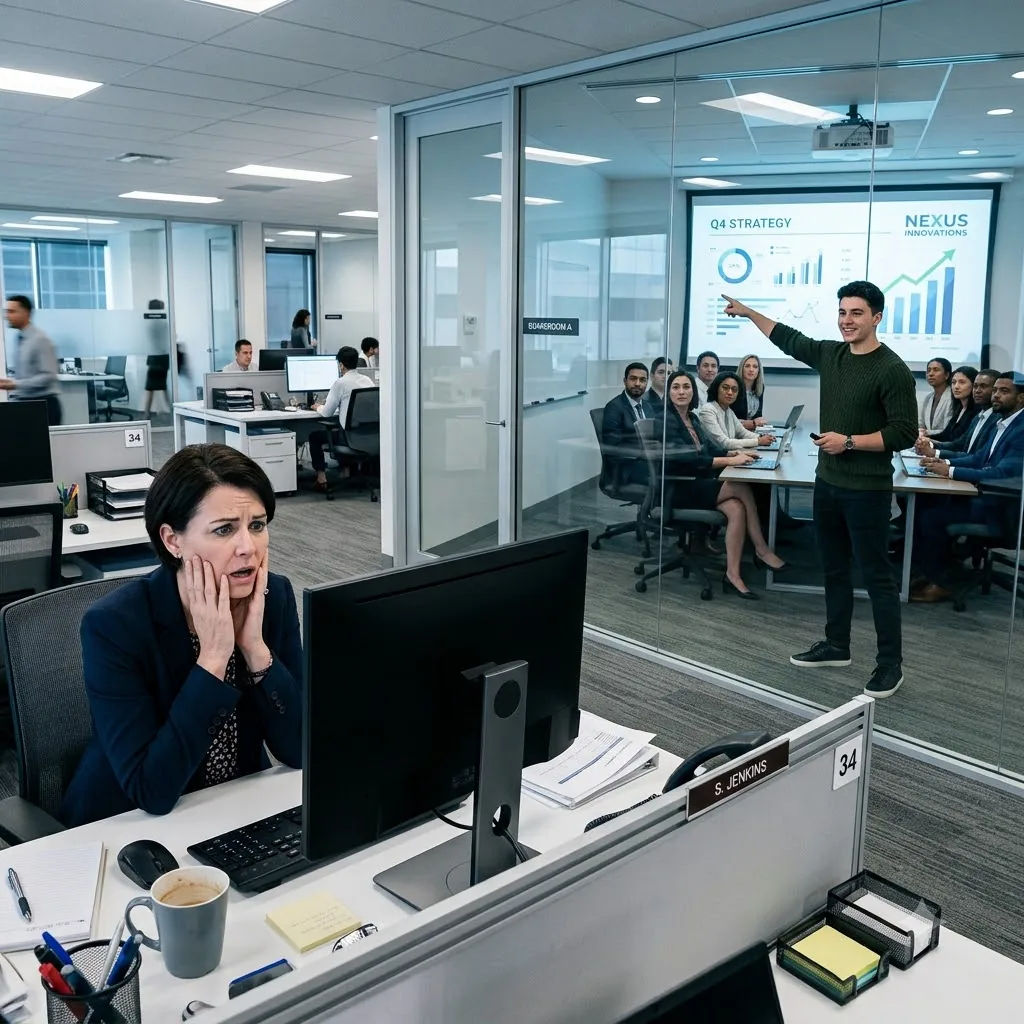
She stood up, the wheels of her chair rolling back sharply over the protective plastic floor mat. That was when she noticed the concentrated movement in the adjacent glass-walled conference room. The motorized blinds, usually drawn tight for executive-level meetings, were wide open to the floor. Inside, a dozen members of the senior leadership team sat around the long mahogany table. The CEO was there, leaning forward with his elbows on the polished wood. Standing at the head of the room, bathed in the glow of the overhead projector, was Tyler.
Tyler had been hired six months ago with a vague title like Junior Digital Innovation Strategist. He was twenty-three, wore immaculate white designer sneakers with tailored suits, and had spent the last two weeks hovering near Elaine’s cubicle. He had framed it as an internal audit, asking endless, hyper-specific queries about her drafting process, her tonal shifts, her file organization, and her personal archive of past campaigns. He had requested access to her raw draft folders to study her workflow. Now, he was holding a laser pointer and a slide clicker, gesturing with the confident, sweeping motions of a seasoned veteran delivering a keynote address.
Elaine moved away from her dead workstation. She walked slowly across the patterned carpet, her eyes fixed entirely on the conference room. Tyler clicked a button on his remote. The massive drop-down projector screen behind him illuminated with the title slide of the highly anticipated Q3 pitch. Elaine stopped in the middle of the main aisle, ignoring a junior designer who had to sidestep to get around her.
The slide on the screen did not contain the standard bullet points, financial projections, or market research graphs. It displayed a massive, scrolling cascade of text. Elaine took two more steps toward the glass. She recognized the first paragraph immediately. It was the exact copy from the flagship automotive campaign she had written three years ago. The text shifted, dissolving into the opening lines of her award-winning healthcare manifesto, then morphed again into the rough, unpublished drafts she had been working on just yesterday afternoon. Her entire career, millions of words and countless late nights, was cascading down the projection screen in a rapid-fire blur of digital ingestion.
Tyler pointed a green laser dot at the scrolling text. He smiled at the CEO. The executives leaned forward, their faces illuminated by the blue light of the projector, nodding in unison at the display. Tyler clicked his remote again. The waterfall of text on the screen stopped scrolling. A new window opened over the presentation, displaying a stark, minimalist black-and-white interface. Tyler turned to his laptop on the podium and typed a single, brief command into a prompt box at the center of the screen.
The interface generated a response instantly. Elaine pressed her hand flat against the cold soundproof glass of the conference room wall. The paragraph forming on the screen was a brand-new pitch for the upcoming luxury retail account. It was flawless. It contained her signature staccato cadence, her highly specific emotional vocabulary, and the exact rhetorical framing she always used for high-end retail clients. It was a perfect, pristine replication of her mind, churned out in three seconds by a piece of software. Tyler had not just presented her old work as a retrospective. He was presenting a digital machine built entirely out of her harvested output. He had fed her entire professional existence into an algorithm.
The CEO stood up from his leather chair and began to clap. The rest of the executives joined him, creating a silent ovation behind the heavy glass. Tyler beamed, bowing his head slightly in mock humility before turning to point the laser directly at the final line of the Elaine-generated text. The heavy oak door to the conference room unlatched from the inside and swung outward, hitting Elaine’s shoulder just as Tyler spoke his first audible words into the hallway.
Elaine’s fingers were mid-keystroke on a normal Tuesday morning when her dual monitors snapped to a flat, dead black. A sterile white login box materialized in the center of the left screen, demanding her network credentials. She typed her password, hit enter, and watched the box shake its head in a silent, red-bordered denial. She assumed a mundane server restart and tried her backup administrative PIN. The red border flashed again. Access Denied. The mechanical keyboard beneath her hands suddenly felt like a dead piece of plastic. She had sat at this specific desk for nine years, writing every major piece of copy the agency produced, and she had never been locked out of the mainframe. She jiggled the mouse, traced the thick display cable down to the docking station under her desk, and pushed the power button on the side of the monitor. Nothing changed. The white login box sat there, a blank vault door waiting for keys she no longer possessed.
Around her, the open-plan office hummed with the usual mid-morning machinery. Phones rang in distant cubicles, keyboards clattered under the hands of junior staff, and the commercial espresso machine hissed aggressively from the breakroom. Nobody was looking her way. The isolation was absolute and instantaneous. Elaine reached for her desk phone to dial the IT helpdesk extension. The digital display on the handset, usually glowing with the time and her extension number, was completely blank. There was no dial tone, no static, nothing but dead air. She was effectively severed from the agency, a ghost sitting in a premium ergonomic chair.
She stood up, the wheels of her chair rolling back sharply over the protective plastic floor mat. That was when she noticed the concentrated movement in the adjacent glass-walled conference room. The motorized blinds, usually drawn tight for executive-level meetings, were wide open to the floor. Inside, a dozen members of the senior leadership team sat around the long mahogany table. The CEO was there, leaning forward with his elbows on the polished wood. Standing at the head of the room, bathed in the glow of the overhead projector, was Tyler.
Tyler had been hired six months ago with a vague title like Junior Digital Innovation Strategist. He was twenty-three, wore immaculate white designer sneakers with tailored suits, and had spent the last two weeks hovering near Elaine’s cubicle. He had framed it as an internal audit, asking endless, hyper-specific queries about her drafting process, her tonal shifts, her file organization, and her personal archive of past campaigns. He had requested access to her raw draft folders to study her workflow. Now, he was holding a laser pointer and a slide clicker, gesturing with the confident, sweeping motions of a seasoned veteran delivering a keynote address.
Elaine moved away from her dead workstation. She walked slowly across the patterned carpet, her eyes fixed entirely on the conference room. Tyler clicked a button on his remote. The massive drop-down projector screen behind him illuminated with the title slide of the highly anticipated Q3 pitch. Elaine stopped in the middle of the main aisle, ignoring a junior designer who had to sidestep to get around her.
The slide on the screen did not contain the standard bullet points, financial projections, or market research graphs. It displayed a massive, scrolling cascade of text. Elaine took two more steps toward the glass. She recognized the first paragraph immediately. It was the exact copy from the flagship automotive campaign she had written three years ago. The text shifted, dissolving into the opening lines of her award-winning healthcare manifesto, then morphed again into the rough, unpublished drafts she had been working on just yesterday afternoon. Her entire career, millions of words and countless late nights, was cascading down the projection screen in a rapid-fire blur of digital ingestion.
Tyler pointed a green laser dot at the scrolling text. He smiled at the CEO. The executives leaned forward, their faces illuminated by the blue light of the projector, nodding in unison at the display. Tyler clicked his remote again. The waterfall of text on the screen stopped scrolling. A new window opened over the presentation, displaying a stark, minimalist black-and-white interface. Tyler turned to his laptop on the podium and typed a single, brief command into a prompt box at the center of the screen.
The interface generated a response instantly. Elaine pressed her hand flat against the cold soundproof glass of the conference room wall. The paragraph forming on the screen was a brand-new pitch for the upcoming luxury retail account. It was flawless. It contained her signature staccato cadence, her highly specific emotional vocabulary, and the exact rhetorical framing she always used for high-end retail clients. It was a perfect, pristine replication of her mind, churned out in three seconds by a piece of software. Tyler had not just presented her old work as a retrospective. He was presenting a digital machine built entirely out of her harvested output. He had fed her entire professional existence into an algorithm.
The CEO stood up from his leather chair and began to clap. The rest of the executives joined him, creating a silent ovation behind the heavy glass. Tyler beamed, bowing his head slightly in mock humility before turning to point the laser directly at the final line of the Elaine-generated text. The heavy oak door to the conference room unlatched from the inside and swung outward, hitting Elaine’s shoulder just as Tyler spoke his first audible words into the hallway.