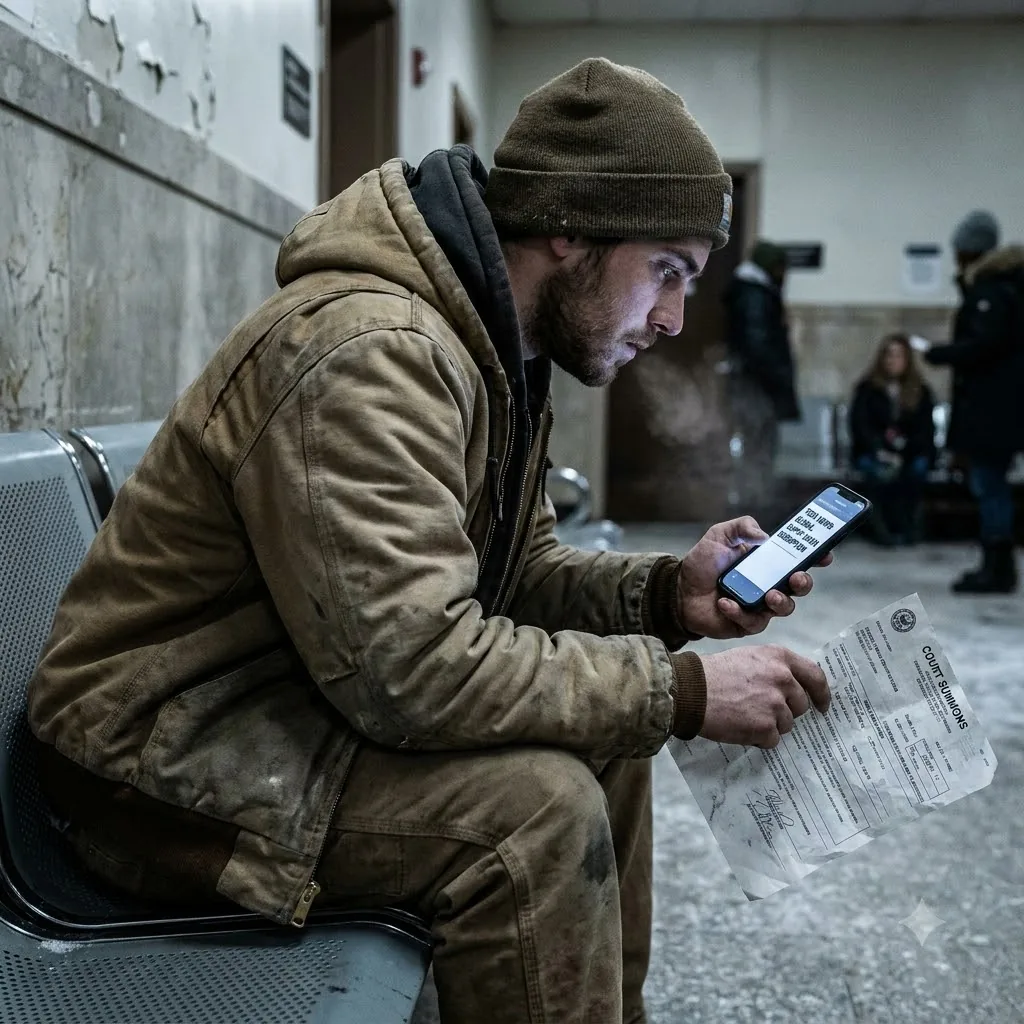
Story code: ST-000152
Part 2: The Backdoor
The freezing wind whipped off the pavement as Manny descended the concrete stairs into the subway station. He swiped his transit card with numb fingers, his mind racing through the rapidly collapsing architecture of his life. The felony summons burned like a hot coal in his jacket pocket. He needed evidence. He needed the raw, cryptographic proof that he had authored the DropSync compression algorithm. Brooks might have locked him out of the cloud servers and the online collaboration spaces, but the physical git repository-the localized, offline history of every single line of code they had written-lived on a heavy silver solid-state drive locked in Manny’s desk drawer.
He caught the downtown express train, staring blankly at his reflection in the scratched window. They rented a small glass-walled office at The Foundry, an upscale co-working space in the tech district. Brooks liked it for the optics and the artisanal espresso bar; Manny tolerated it because the building had fiber-optic internet. If Manny could just grab the SSD and his primary laptop, he could take the hardware to a defense attorney. The commit timestamps, paired with his unique developer keys, would definitively prove he built DropSync. It would prove the university stunt was a joint venture for a shared company, shredding Brooks’s lone-wolf narrative.
Manny jogged up the station steps and pushed through the revolving doors of The Foundry. The lobby was aggressively warm, smelling of roasted coffee beans and expensive cologne. He walked straight toward the security turnstiles and pulled his black RFID keycard from his wallet. He slapped it against the glass reader.
The machine emitted a harsh, flat beep. The LED indicator flashed a solid, unforgiving red.
Manny stared at the light. He tapped the card again. Red. He rubbed the chip against his jeans and pressed it flat against the scanner. Red.
“Problem, sir?” the lobby attendant asked, looking up from his massive marble desk.
“No, just a magnetic issue,” Manny muttered, stepping back. Panic flared in his chest, hot and sharp. Brooks had already contacted the building management.
A courier pushing a metal cart full of packages rolled toward the accessible gate. As the attendant buzzed the courier through, Manny slipped smoothly behind the cart, matching the delivery man’s stride. He ignored the attendant’s sudden shout of protest, ducking past the elevator banks and throwing open the door to the stairwell. He took the steps two at a time, his boots echoing loudly in the concrete shaft until he reached the third floor.
He burst out into the carpeted hallway. The familiar hum of the co-working space washed over him, but everything else felt entirely foreign. He marched toward Suite 312.
Manny stopped dead in his tracks. The frosted glass wall, which had been blank two days ago, now sported a massive, professionally installed decal: *DropSync HQ*.
Through the glass door, Manny saw five strangers sitting at sleek new workstations, typing away on expensive hardware. In the center of the room, Brooks Vance leaned casually against a white oak conference table. Brooks was wearing the same pristine black turtleneck from the TechCrunch article, holding a tablet and smiling as he spoke to two older men in sharp, tailored suits. Venture capitalists.
Manny pushed the glass door open. It hit the stopper with a loud crack.
Seven heads turned. The typing stopped. Brooks looked up, his smile vanishing for only a fraction of a second before morphing into an expression of calm, professional pity.
“Manny,” Brooks said, stepping forward with his hands raised in a placating gesture. “I thought the university police explicitly told you to go home.”
“Where is my laptop?” Manny demanded, his voice trembling despite his desperate attempt to keep it steady. He stepped into the room, his eyes scanning the new desks. His old workstation was entirely gone, replaced by a massive digital whiteboard displaying the app’s soaring download metrics. “Where is the silver SSD, Brooks?”
The two suited men exchanged a confused, wary glance.
“Gentlemen, I apologize,” Brooks said smoothly, turning to the investors. “This is Emmanuel. He was a freelance graphic contractor we hired for some early UI mockups. Unfortunately, he took our guerilla marketing campaign a bit too literally and went off-script on campus.”
“Freelance?” Manny choked out, the sheer audacity of the lie knocking the breath from his lungs. “I wrote ninety percent of the backend. You didn’t even know how to compile the server code until I showed you last month!”
“Emmanuel, please,” Brooks sighed, sounding genuinely exhausted. “You’re making a scene. I paid your invoices. I even covered the remaining balance out of my personal account this morning when I heard about your arrest. But you have to leave.”
“I’m not leaving without my hardware.” Manny lunged toward the locked filing cabinet in the corner, the only piece of original furniture left in the room.
Before he could reach the handle, a heavy hand clamped onto his shoulder. Manny spun around. Two massive building security guards filled the doorway, their expressions grim.
“He doesn’t work here,” Brooks told the guards, pointing a steady finger at Manny. “He’s trespassing and harassing my team.”
“Grab your things, buddy. We’re going for a walk,” the larger guard said, gripping Manny’s bicep with bruising force.
“He stole my company!” Manny yelled, planting his feet, but the second guard grabbed his other arm. They lifted him effortlessly, dragging him backward out of the suite. Through the glass, Manny watched Brooks return to the investors, shaking his head sadly as if dismissing a tragic annoyance.
The guards hauled Manny through the hallway, down the freight elevator, and shoved him out the metal backdoor into the freezing alley behind the building. He stumbled on the icy asphalt, barely keeping his balance. One of the guards tossed a small cardboard box out before the heavy door slammed shut and locked.
Manny walked over to the box. It contained a few loose pens, his ergonomic mouse pad, and a ceramic coffee mug that had shattered into jagged pieces upon impact. There was no laptop. There was no solid-state drive. The offline git repository-his only physical proof of ownership-was gone.
Shivering in the frigid wind, Manny pulled out his phone. He opened his banking app, desperate to see if he at least had enough funds to hire a defense attorney to compel a legal discovery phase. He navigated to the DropSync shared business checking account. A red error message popped up: *Account Closed.*
He checked his personal checking account. The balance sat at exactly forty-two dollars and twelve cents.
The alley walls seemed to close in on him. He was completely broke, locked out of his own life’s work, and facing a felony trial in twenty-one days. He leaned against the icy brick wall and opened the terminal emulator app he kept on his phone. A flashing green cursor blinked against a black void.
He stared at the screen. During the final grueling sprint to get DropSync ready for launch, he had accidentally created a logic flaw in the authentication protocol. He had logged it as a critical bug, planning to patch the backdoor dependency this weekend. Brooks, who couldn’t read the backend architecture, had no idea the flaw existed.
If Manny exploited his own backdoor, he could rip the original server logs straight out of the active cloud database and prove his ownership. He could destroy Brooks’s narrative in seconds. But exploiting the flaw meant breaching a commercial server he no longer legally had access to. It was a direct violation of federal cybercrime laws. If he was caught, the university vandalism charge would look like a parking ticket compared to the federal prison sentence he would receive.
The cursor continued to blink in the cold alleyway, waiting for his first keystroke.