Story code: ST-000294
Part 1: The Community Standard
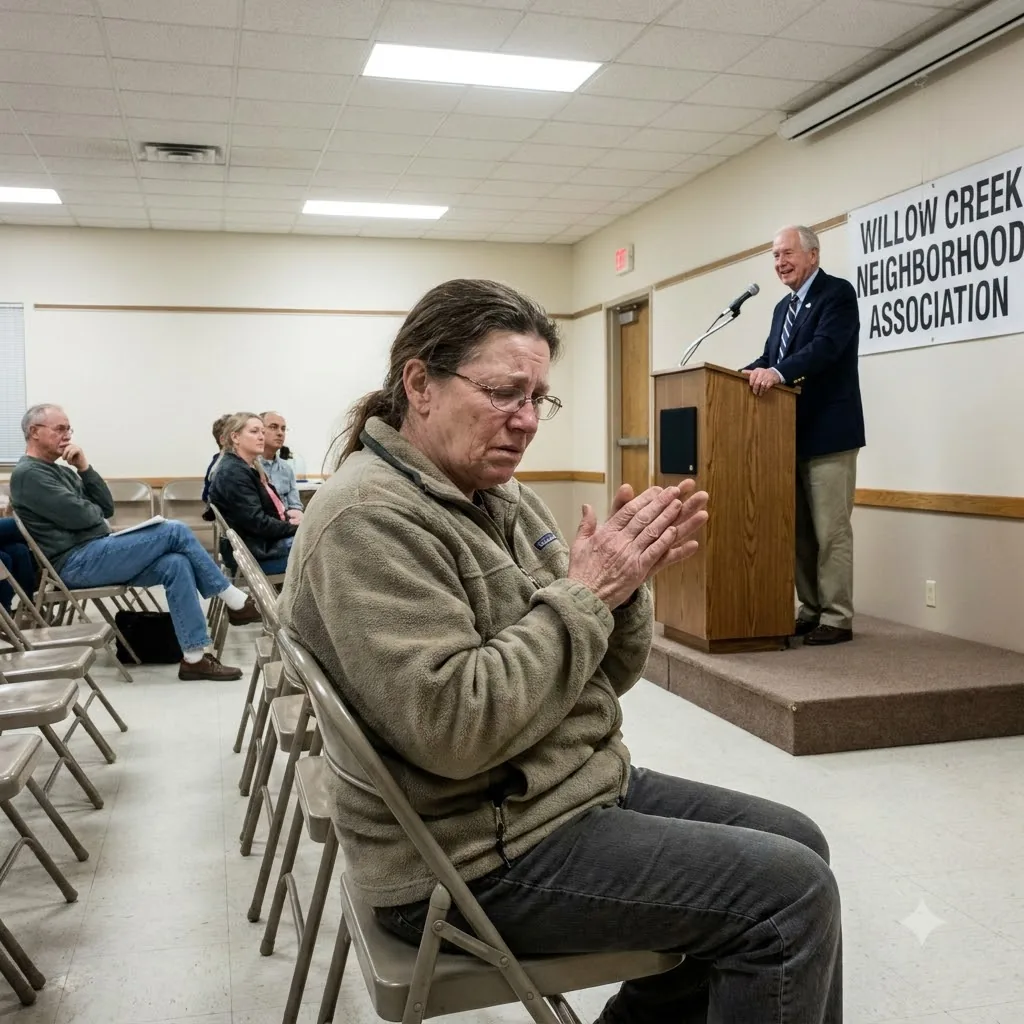
The fluorescent lights in the community center hummed a relentless, suffocating note over the rows of metal folding chairs and half-empty styrofoam cups of decaf. Claire pressed her aching thumbs against her thighs, trying to endure the thick layers of polite hostility filling the room. At the front of the hall, Arthur stood with his hands resting gently on the cheap laminate podium. He did not raise his voice, yet the entire room leaned in to catch every syllable dropping from the beloved local pharmacist.
He was dismantling the proposal for the Elm Street free clinic, piece by piece. He used words like “vulnerable” and “neighborhood wellness,” weaving a narrative of safety and care. He spoke of protecting the local families from the unpredictable elements such a clinic might attract. He smiled with paternal warmth, completely masking the iron grip he was using to shut down a vital health resource for the town’s uninsured. The neighborhood board members nodded in unified, sheepish agreement, completely spellbound by his gentle rhetoric.
Claire focused on breathing through the dull, persistent burn radiating from her joints. Her autoimmune flare-ups always punished her when she sat still in rigid chairs for too long. Tomorrow was her refill day. The specialized immunosuppressant she took was the only barrier between her and a hospital bed. She simply needed this meeting to adjourn so she could go home, ice her knees, and rest. The board passed the motion to block the clinic with a round of polite, muted applause. Arthur stepped down from the podium, accepting handshakes like a victorious diplomat.
The next morning, the bell above the door at Oak Creek Pharmacy chimed its cheerful, familiar greeting. Claire stepped onto the pristine linoleum, her prescription slip clutched in a hand that felt uncomfortably stiff and swollen. The air inside smelled of menthol, lavender, and sterile paper. It was a pillar of the community, a place where generations of residents came for healing and advice.
Arthur was right in his element, elevated behind the glass partition of the pharmacy counter. He handed a small white paper bag to Mrs. Gable, leaning over the counter to give the elderly woman a reassuring pat on the wrist. He was the picture of small-town devotion, the trusted guardian of their daily health.
Claire moved to the drop-off window as Mrs. Gable shuffled toward the exit. The sharp throb in Claire’s spine served as a brutal reminder that she was already twelve hours late for her dose. She placed her empty plastic bottle on the counter, the label worn smooth from her gripping it every day.
Arthur picked up the bottle. He looked at the label, then up at Claire. His expression remained entirely placid. The warm, neighborly smile did not vanish, but it altered, tightening into the exact same paternal mask he had worn at the podium the night before. He turned to his computer terminal, his fingers tapping across the keys in a slow, deliberate rhythm. The screen cast a pale blue glow over his neatly trimmed beard.
Claire leaned her weight against the counter to take the pressure off her knees. She waited for the familiar sound of pills rattling into a vial or the rustle of a foil pack slipping into a paper bag. Instead, the only sound was the sudden hum of the small laser printer beside the cash register.
Arthur turned back to the counter. He did not have her medication. He held a single sheet of standard printer paper. He folded it once, deliberately, and slid it under the gap in the glass partition.
Claire reached for the paper, her swollen fingers struggling briefly to grip the smooth edge. She expected a new policy notice, a warning about an insurance complication, or perhaps a supply chain delay. She unfolded the sheet.
The bold, black text at the top was not a standard pharmacy letterhead. It was a formal declaration of refusal. The legalistic words blurred together, but terms like “discretion” and “personal conscience” jumped out at her. It was a complete, unapologetic denial of care.
Arthur leaned forward, bringing his face close to the glass. He lowered his voice to that same gentle, suffocating register he had used to kill the clinic.
“I have to think about the wellness of our community, Claire,” he murmured, his eyes locking onto hers with a cold, unyielding pity. “I cannot in good conscience dispense this to you.”
Claire stared at the paper as a spike of pure, absolute panic shot through her chest. Without this medication, her body would begin to attack its own organs within forty-eight hours. She looked back at Arthur, searching his face for a mistake, a clerical error, a misunderstanding. She opened her mouth to tell him her doctor had already authorized the refill, to tell him her joints were currently burning.
He did not let her speak. He reached for the heavy plastic ‘Next Patient’ placard and set it firmly on the counter in front of her, turning his back to silence her completely.
The fluorescent lights in the community center hummed a relentless, suffocating note over the rows of metal folding chairs and half-empty styrofoam cups of decaf. Claire pressed her aching thumbs against her thighs, trying to endure the thick layers of polite hostility filling the room. At the front of the hall, Arthur stood with his hands resting gently on the cheap laminate podium. He did not raise his voice, yet the entire room leaned in to catch every syllable dropping from the beloved local pharmacist.
He was dismantling the proposal for the Elm Street free clinic, piece by piece. He used words like “vulnerable” and “neighborhood wellness,” weaving a narrative of safety and care. He spoke of protecting the local families from the unpredictable elements such a clinic might attract. He smiled with paternal warmth, completely masking the iron grip he was using to shut down a vital health resource for the town’s uninsured. The neighborhood board members nodded in unified, sheepish agreement, completely spellbound by his gentle rhetoric.
Claire focused on breathing through the dull, persistent burn radiating from her joints. Her autoimmune flare-ups always punished her when she sat still in rigid chairs for too long. Tomorrow was her refill day. The specialized immunosuppressant she took was the only barrier between her and a hospital bed. She simply needed this meeting to adjourn so she could go home, ice her knees, and rest. The board passed the motion to block the clinic with a round of polite, muted applause. Arthur stepped down from the podium, accepting handshakes like a victorious diplomat.
The next morning, the bell above the door at Oak Creek Pharmacy chimed its cheerful, familiar greeting. Claire stepped onto the pristine linoleum, her prescription slip clutched in a hand that felt uncomfortably stiff and swollen. The air inside smelled of menthol, lavender, and sterile paper. It was a pillar of the community, a place where generations of residents came for healing and advice.
Arthur was right in his element, elevated behind the glass partition of the pharmacy counter. He handed a small white paper bag to Mrs. Gable, leaning over the counter to give the elderly woman a reassuring pat on the wrist. He was the picture of small-town devotion, the trusted guardian of their daily health.
Claire moved to the drop-off window as Mrs. Gable shuffled toward the exit. The sharp throb in Claire’s spine served as a brutal reminder that she was already twelve hours late for her dose. She placed her empty plastic bottle on the counter, the label worn smooth from her gripping it every day.
Arthur picked up the bottle. He looked at the label, then up at Claire. His expression remained entirely placid. The warm, neighborly smile did not vanish, but it altered, tightening into the exact same paternal mask he had worn at the podium the night before. He turned to his computer terminal, his fingers tapping across the keys in a slow, deliberate rhythm. The screen cast a pale blue glow over his neatly trimmed beard.
Claire leaned her weight against the counter to take the pressure off her knees. She waited for the familiar sound of pills rattling into a vial or the rustle of a foil pack slipping into a paper bag. Instead, the only sound was the sudden hum of the small laser printer beside the cash register.
Arthur turned back to the counter. He did not have her medication. He held a single sheet of standard printer paper. He folded it once, deliberately, and slid it under the gap in the glass partition.
Claire reached for the paper, her swollen fingers struggling briefly to grip the smooth edge. She expected a new policy notice, a warning about an insurance complication, or perhaps a supply chain delay. She unfolded the sheet.
The bold, black text at the top was not a standard pharmacy letterhead. It was a formal declaration of refusal. The legalistic words blurred together, but terms like “discretion” and “personal conscience” jumped out at her. It was a complete, unapologetic denial of care.
Arthur leaned forward, bringing his face close to the glass. He lowered his voice to that same gentle, suffocating register he had used to kill the clinic.
“I have to think about the wellness of our community, Claire,” he murmured, his eyes locking onto hers with a cold, unyielding pity. “I cannot in good conscience dispense this to you.”
Claire stared at the paper as a spike of pure, absolute panic shot through her chest. Without this medication, her body would begin to attack its own organs within forty-eight hours. She looked back at Arthur, searching his face for a mistake, a clerical error, a misunderstanding. She opened her mouth to tell him her doctor had already authorized the refill, to tell him her joints were currently burning.
He did not let her speak. He reached for the heavy plastic ‘Next Patient’ placard and set it firmly on the counter in front of her, turning his back to silence her completely.