Story code: ST-001238
Part 1: The Vanishing Post
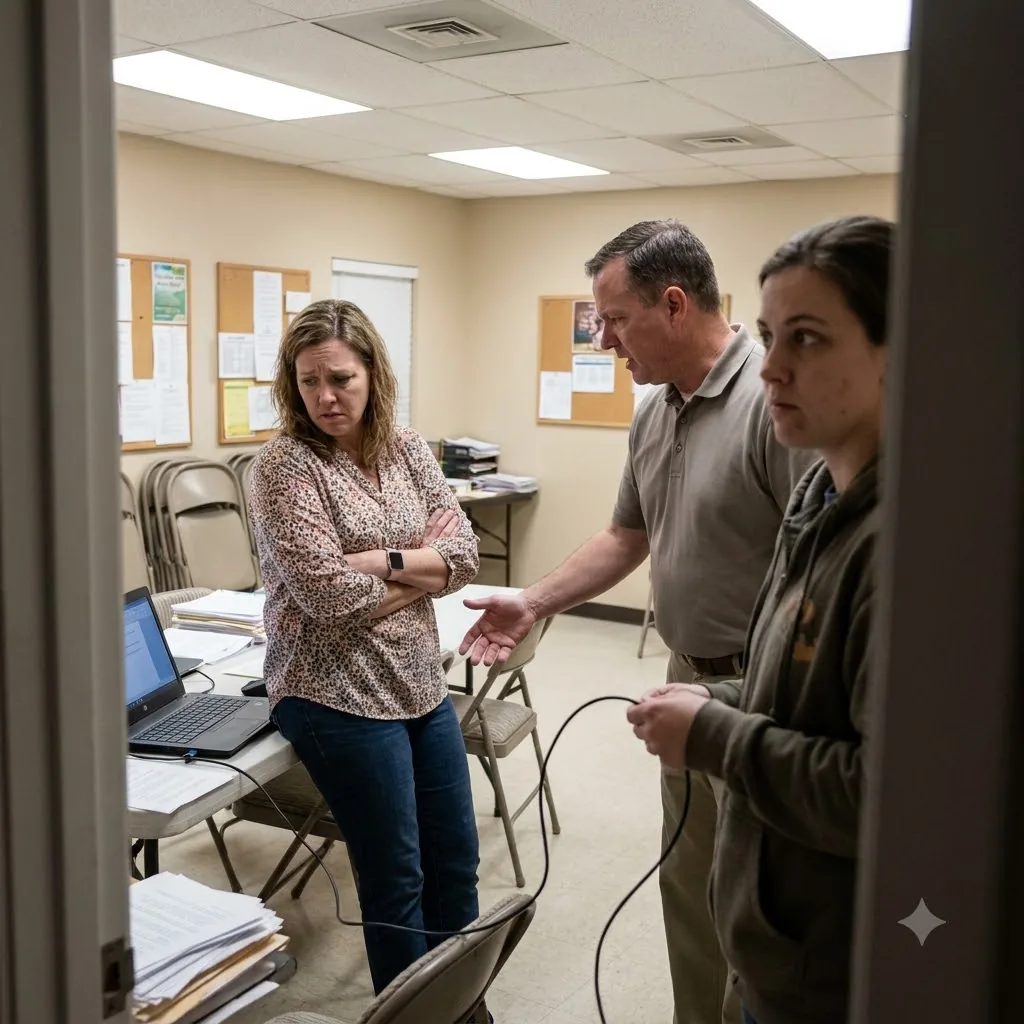
Right there in the Grace Fellowship Church Hall coordinator room, our page moderator Gregory publicly shamed Laura for questioning why her fundraiser update had vanished, using fake tech jargon to make her look too ignorant to object to his control. He pointed to a printed copy of her deleted private post, claiming her lack of technical awareness had compromised the page’s security. I watched from the soundboard at the back of the room as Laura stared down at her lap, her fingers tightly interlaced, while Gregory stood tall at the head of the long table.
Around us, the usual pre-fundraiser activity continued in awkward silence. Two volunteers stopped sorting donation envelopes, their hands hovering over the plastic bins. Another volunteer, Marc, stopped stacking flyers and looked between Laura and Gregory. The air in the small room felt heavy, punctuated only by the low hum of the projector fan.
‘It’s a simple matter of system integrity, Laura,’ Gregory said, his voice carrying clearly across the room. He adjusted his glasses, looking down at his laptop screen. ‘When you bypass the standard formatting protocols, you trigger the platform’s algorithmic curation shielding. The group’s backend API automatically scrubs the post to protect our domain authority.’
Laura cleared her throat, her voice barely above a whisper. ‘I only posted the PDF of the bake sale sign-up sheet, Gregory. I’ve posted it the exact same way for the last three years.’
‘Then you’ve been lucky for three years,’ Gregory replied, a dismissive smile appearing on his face. ‘The new security architecture doesn’t tolerate legacy formatting. If you don’t understand the basic infrastructure of social media hosting, you really shouldn’t be attempting to publish updates without admin pre-screening. It puts the entire church page at risk of suspension.’
Laura’s face flushed a deep red. She picked up her pen, tapping it quickly against her notepad, but she did not look up to meet his eyes. None of the other committee members spoke; they simply shifted in their chairs or looked down at their papers. Gregory’s position as the parish’s resident technology coordinator went unchallenged.
I adjusted the volume slider on the main audio deck, keeping my eyes on Gregory. He leaned back in his chair, crossing his arms with an air of complete authority. On the wall behind him, the projector screen displayed the church group’s home page, clean and empty of Laura’s detailed schedule.
‘So,’ Laura said, her voice shaking slightly as she finally looked up, ‘there was no human decision involved? The system just deleted it?’
Gregory nodded slowly, his expression shifting to one of patient condescension. ‘Exactly. Algorithmic curation shielding is an automated security protocol. It’s hard-coded into the group’s server logic. I couldn’t bypass it even if I wanted to, and neither can you. I had set up the church’s page settings myself and had never seen that term in any documentation.’
Right there in the Grace Fellowship Church Hall coordinator room, our page moderator Gregory publicly shamed Laura for questioning why her fundraiser update had vanished, using fake tech jargon to make her look too ignorant to object to his control. He pointed to a printed copy of her deleted private post, claiming her lack of technical awareness had compromised the page’s security. I watched from the soundboard at the back of the room as Laura stared down at her lap, her fingers tightly interlaced, while Gregory stood tall at the head of the long table.
Around us, the usual pre-fundraiser activity continued in awkward silence. Two volunteers stopped sorting donation envelopes, their hands hovering over the plastic bins. Another volunteer, Marc, stopped stacking flyers and looked between Laura and Gregory. The air in the small room felt heavy, punctuated only by the low hum of the projector fan.
‘It’s a simple matter of system integrity, Laura,’ Gregory said, his voice carrying clearly across the room. He adjusted his glasses, looking down at his laptop screen. ‘When you bypass the standard formatting protocols, you trigger the platform’s algorithmic curation shielding. The group’s backend API automatically scrubs the post to protect our domain authority.’
Laura cleared her throat, her voice barely above a whisper. ‘I only posted the PDF of the bake sale sign-up sheet, Gregory. I’ve posted it the exact same way for the last three years.’
‘Then you’ve been lucky for three years,’ Gregory replied, a dismissive smile appearing on his face. ‘The new security architecture doesn’t tolerate legacy formatting. If you don’t understand the basic infrastructure of social media hosting, you really shouldn’t be attempting to publish updates without admin pre-screening. It puts the entire church page at risk of suspension.’
Laura’s face flushed a deep red. She picked up her pen, tapping it quickly against her notepad, but she did not look up to meet his eyes. None of the other committee members spoke; they simply shifted in their chairs or looked down at their papers. Gregory’s position as the parish’s resident technology coordinator went unchallenged.
I adjusted the volume slider on the main audio deck, keeping my eyes on Gregory. He leaned back in his chair, crossing his arms with an air of complete authority. On the wall behind him, the projector screen displayed the church group’s home page, clean and empty of Laura’s detailed schedule.
‘So,’ Laura said, her voice shaking slightly as she finally looked up, ‘there was no human decision involved? The system just deleted it?’
Gregory nodded slowly, his expression shifting to one of patient condescension. ‘Exactly. Algorithmic curation shielding is an automated security protocol. It’s hard-coded into the group’s server logic. I couldn’t bypass it even if I wanted to, and neither can you. I had set up the church’s page settings myself and had never seen that term in any documentation.’