Story code: ST-001237
Part 4: The Administrative Coldness
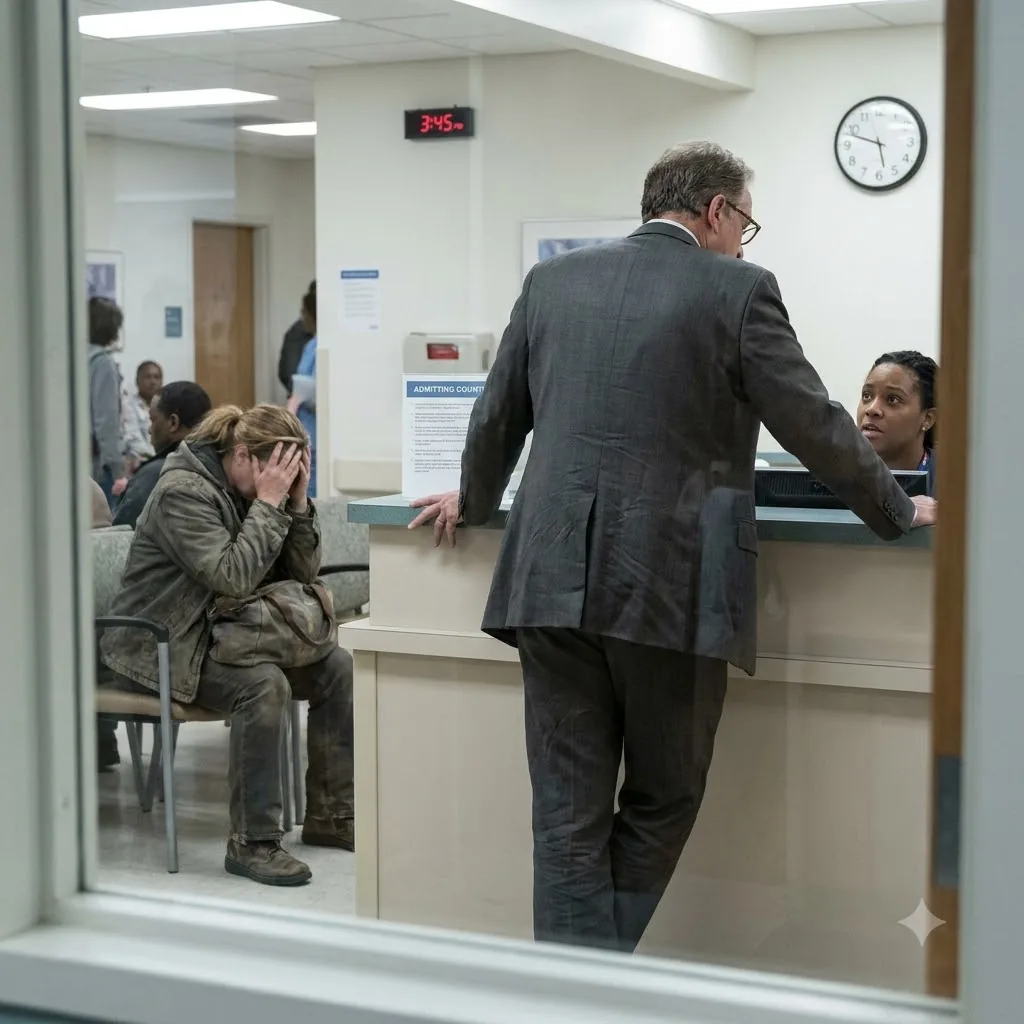
The final sequence of the incident, recorded at 9:22 PM, demonstrates the cold finality of the hospital’s administrative protocol. Officer Davies did not engage in further debate with Harold Vance. Instead, he accessed the visitor management terminal and opened the security profile interface.
According to the system log, Davies checked the box labeled ‘unauthorized dispute disruption.’ He typed Harold Vance’s name into the database. A red indicator popped up on the monitor, officially flagging Harold as ‘unauthorized’ in the hospital security database, revoking his access to the transplant unit and the waiting area.
The security video shows Davies pressing a silent call button beneath the counter desk. Within ninety seconds, two uniformed hospital security guards appeared at the entrance of the transplant waiting room. They walked with measured, routine steps toward the counter. They did not draw their batons or raise their voices. They simply stood on either side of Harold.
‘Mr. Vance,’ the lead guard said, his voice flat and devoid of emotion. ‘Your visitor access has been suspended by administration. We need you to step away from the desk and exit the building.’
Harold turned his head from the guards to Davies, then to the computer screen. The video shows his mouth opening slightly, but no words are recorded on the audio log. His shoulders slumped. Flanked by the two guards, he turned and walked toward the sliding glass doors. The doors opened with a soft hiss, and Harold stepped out into the night, the security personnel following close behind.
With the disruption removed, the waiting room returned to its quiet, sterile routine. Sarah Vance stood alone at the counter. She did not look toward the glass doors where her uncle had just exited. She pushed the blue silicone donor bracelet across the counter one final time.
Davies picked up the blue silicone donor bracelet, holding it steady under the red laser of the barcode scanner. A sharp, mechanical beep echoed through the waiting room. On the desk monitor, the status bar instantly turned from amber to green. The system log recorded: ‘Donor wristband scanned. Token match confirmed. Patient ID verified.’
This scan initiated the automated release of the medical files. There was no human negotiation, no room for family debate, and no delay for signatures. The hospital’s check-in system operated with absolute mechanical reality, overriding Harold’s attempts at manipulation. A small slip of paper printed from the desk machine, listing the transplant authorization code.
Davies handed the printed receipt to Sarah, who folded it carefully and placed it in her pocket. The electronic lock on the ICU double doors clicked open, its heavy magnet releasing with a dull clunk, allowing the transplant team to proceed with the retrieval. I logged the incident as resolved at 9:26 PM, closing the file in the quality assurance database. The cold, mechanical reality of the hospital’s verification system had functioned exactly as designed, reducing a family dispute to a series of validated database fields.