Story code: ST-000015
Part 4: The Note Stayed With His Name
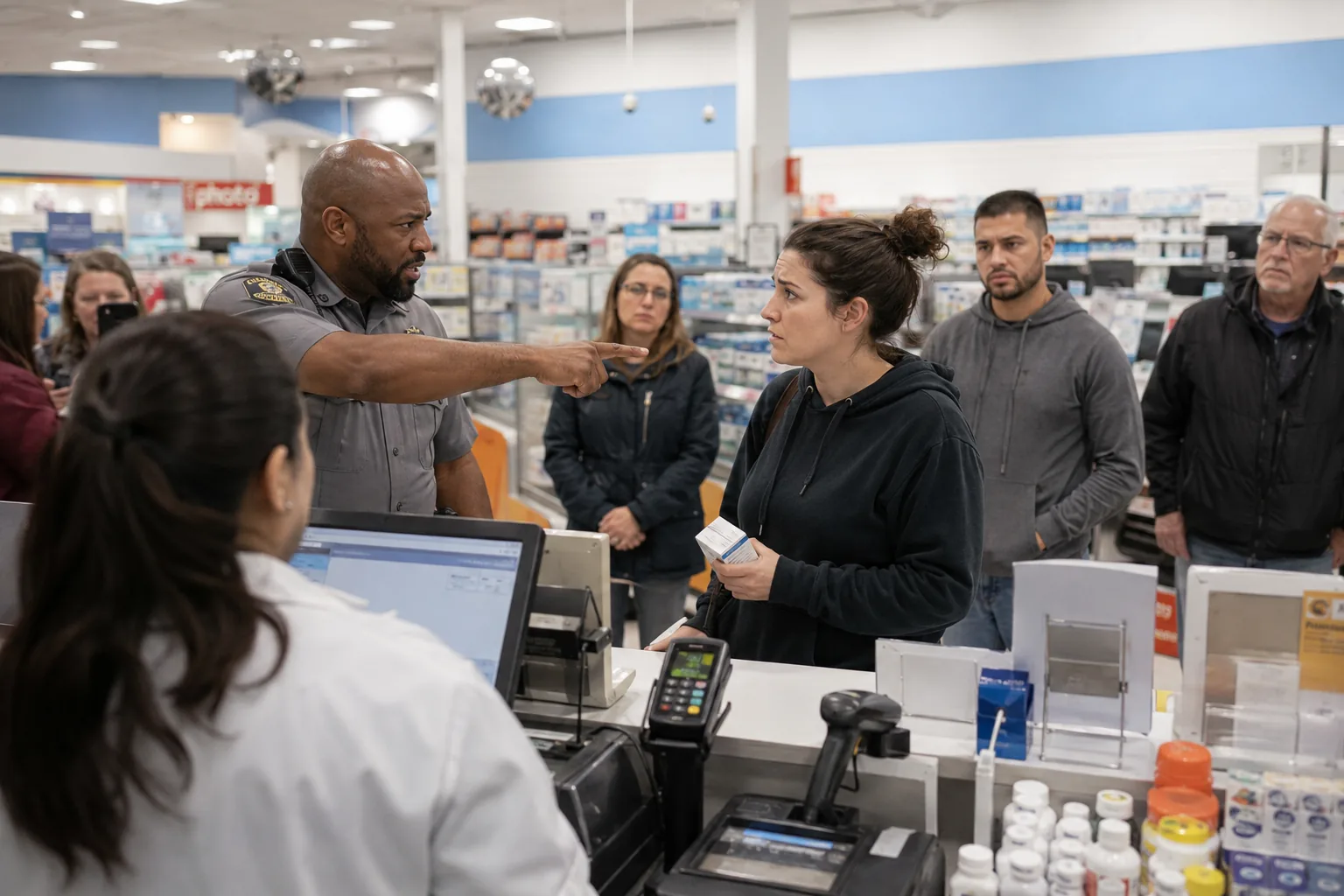
For one second Darnell just stood there with his hand near his belt clip like he had not heard her. Nina did not raise her voice.
“Keys,” she said again.
He looked past her toward the front end, then back at the receipt in her hand. “We can sort this out privately.”
That pulled the room even tighter because everybody there had heard how public he had made it.
Nina answered in the same even tone. “No. We sort out the transaction here because this is where you stopped it. Then I document the rest.”
He took the key ring off at last and set it on the counter harder than he needed to. The metal hit near the candy rack divider and slid an inch toward the scanner. Nina picked it up and hooked it to her own wrist coil without comment.
Then she gave me the next steps one by one.
“Print the detail. Void the open portion. Re-ring anything still unpaid if the customer wants it. Keep the receipt with the correction slip.”
That was the coldest part of the whole thing. No speeches. Just process.
I printed the transaction detail, and the printer fed out another strip of paper under the first one. The item lines, time, terminal number, and the failed coupon sequence all sat there in black ink. Nina laid the new printout beside the original receipt so they could be matched line for line. An ordinary shopping receipt had turned into a fixed surface nobody could talk around.
She asked Tasha, “Do you still want the loose items?”
Tasha glanced at Darnell, then at me. “The fever reducer and toothpaste. Not the bars.”
“Fine,” Nina said. “We’re doing a new sale.”
Darnell tried to step back in. “She shouldn’t be allowed to complete anything until-”
Nina cut him off with his own opening language. “No sudden movements, right? Then don’t move into my lane again.”
A couple of people in line made short sounds through their noses, not laughter exactly, just recognition. He heard it. His face changed color, and he stopped where he was.
That was the callback he had built for himself. He had burst in acting like seconds mattered, like only he could control a crisis. Now the exact urgency he used was coming back at him while his keys sat on Nina’s wrist and his version sat in two receipt strips on my counter.
I rang the two items again from the start. Tasha inserted her card. This time nobody interrupted her. Nina watched the screen, waited for the approval tone, and then nodded for me to print the final receipt.
When it came out, she placed all three papers together: the original interrupted strip, the transaction detail, and the completed new receipt. She wrote the time across the top correction slip and then wrote Darnell’s name beneath a short note in block letters. I could read enough from where I stood: “Customer stopped under stated medical distress. Manager call blocked. Receipt/time verified. LP removed from floor pending review.”
She did not hide the note from him. She slid the packet into a clear plastic document sleeve we keep under the till for refund records and set it beside the register keyboard.
“This stays with tonight’s front-end paperwork,” she said. “Not in your pocket. Not off the floor.”
That was the consequence in visible form. Not an argument. Not a promise. A note with his name on it attached to the receipts he had tried to keep off-limits.
Tasha took her bag and the new receipt, but she did not reach for the plastic sleeve. She looked at Nina and said, very plainly, “He told everybody I needed help so I couldn’t leave.”
Nina answered just as plainly. “I heard that. It’s in the note.”
The woman behind her in line said, “Good,” and then immediately looked down at her basket like she had said more than she meant to.
Nina turned to Darnell. “You’re off the pharmacy end for the rest of the shift. Wait by customer service until the store leader calls you. Do not approach this register again tonight.”
He started to say something about policy, then stopped when she touched the document sleeve with two fingers.
There was nowhere for his version to go now except against that record.
When he walked away, it was not dramatic. He did not storm out. He did not apologize. He moved down the aisle in front of the seasonal display with no keys on him and no lane to stand in. A few customers watched him go, then turned back because people still needed prescriptions and cough drops and milk on the way home.
I finished Tasha’s sale and handed her the bag. She took it with both hands this time.
“Thank you for not letting that paper disappear,” she said.
“I just left it where it printed,” I said.
That was true, and it still felt heavier than it should have. The line started moving again. Eli went back to will-call. Nina carried the key ring and the plastic sleeve to the front-end clipboard station where nightly paperwork gets stacked for the closing review. She clipped the sleeve on top, in plain sight.
The room kept going after that, which was its own kind of ugly. Tasha still had to walk out through the same store where people had heard she was in distress. I still had to ring up the next customer under the same bright lights. Darnell’s note stayed with the receipts, and that mattered, but it did not unsay anything.
By the time my printer started up again for the next sale, the only relief I had was quiet and partial. The paper had held the sequence. The rest of the damage stayed where everyone had heard it.