Story code: ST-000054
Part 1: The Seat They Said I Owed
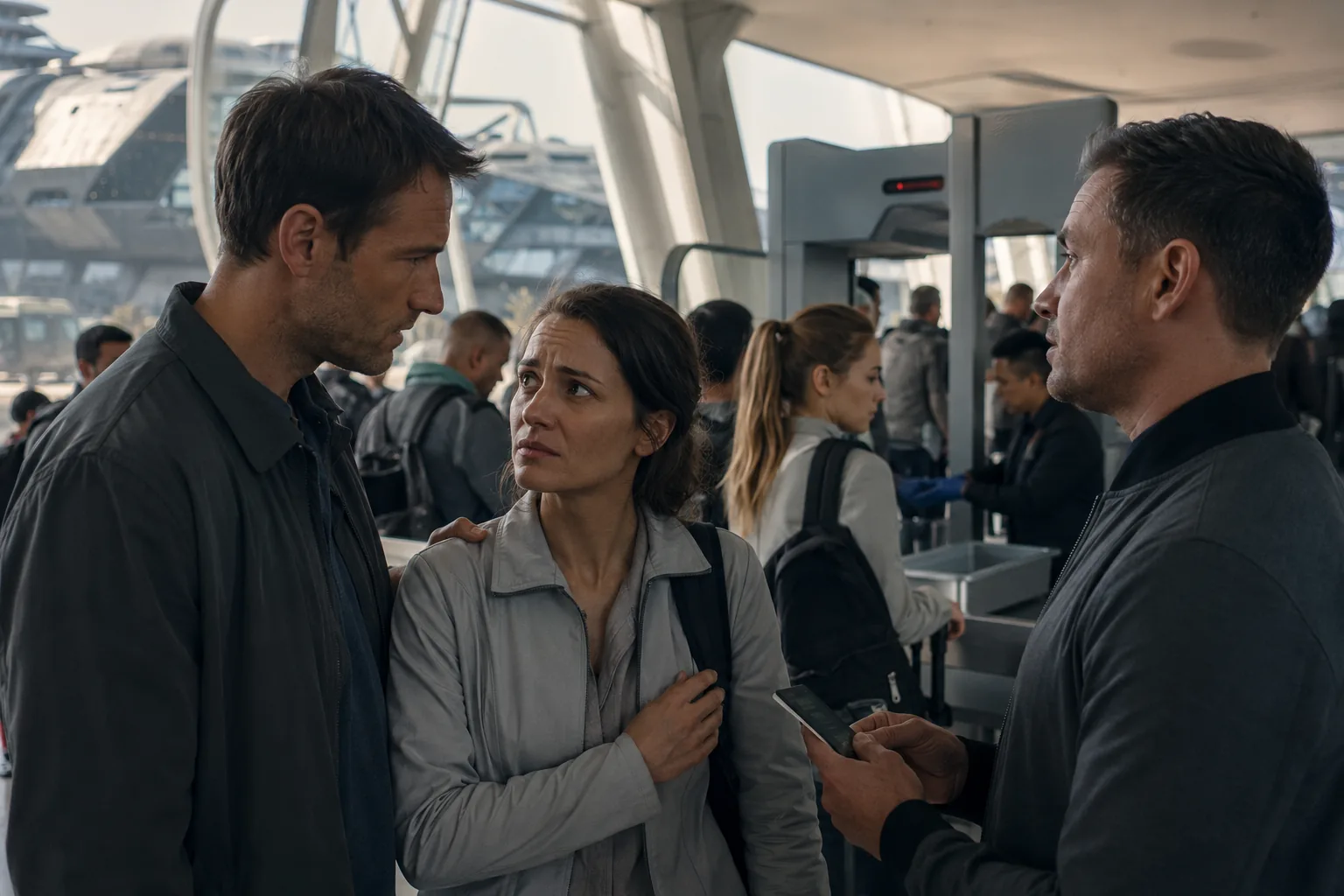
Cal said it like the boarding pass was already his. “You can hand it over now, Mara. After everything Dane did for this family, the least you can do is stop making this hard.” We were standing in the middle of the launch terminal, right beside the moving walkway where people in gray mission jackets kept rolling past with carry-ons and clipped badges, and he was holding out his hand as if my seat were a favor I had borrowed. Tessa was staring at my bag. Dane Mercer stood with that polished sponsor smile of his, one hand folded over the other, letting Cal do the pushing.
I had my boarding pass in my palm. The scanner ribbon on it had already warmed from my hand. The screen above us kept ticking through departures and security calls, and the terminal noise kept swallowing pieces of what they were saying, but I heard enough.
“You know what it cost,” Cal said. He angled his chin toward Dane, then toward me, like he was presenting a closed case. “Somebody had to give up a lot for this launch. Somebody covered the extra placement when the list changed. Somebody paid so you could still be standing here.”
That was the story they had been using all morning. Somebody sacrificed. Somebody gave. Somebody should be grateful. Every time they said it, the word “somebody” landed where my name should have been, and every time I reached for the facts, they pushed the story back in front of me.
Dane finally spoke, calm and public, like he was answering an invisible reporter. “We are all asking for the same thing, Mara. Cooperation keeps the mission intact.” He did not move closer. He did not need to. Cal was already filling the space between us.
A family in matching blue transit jackets cut across the corridor behind us, a kid dragging a duffel that bumped the floor, and the sound of the wheels made me look down at my own pass again. My name was on it. My flight number was on it. My seat assignment was on it. The barcode was black and clean and mine.
Cal saw me looking. He reached for it.
I pulled my hand back.
His face tightened. “Don’t do that in public,” he said, lower now, still too loud for the space. “Not after everything Dane handled.”
There it was again. Not what had been done. Not what had been agreed. What Dane had handled. What I owed. What I should protect.
Tessa shifted her weight and looked at the pass, then at Dane, then back at me. She had that fixed, careful expression people wear when they want the room to stay steady. Nobody around us stopped walking, but a few heads turned and then turned away. The terminal kept moving. The line of people kept moving. I was the only thing they were trying to stop.
I said, “Handled what?”
Cal let out a sharp breath through his nose, the kind that sounded like patience if you were standing far enough away. “Don’t start with that. You know exactly what I’m talking about.”
“No,” I said. “I know what you keep saying. That’s different.”
Dane’s smile stayed in place, but his jaw changed. I could see it under the lights. He touched the edge of his own badge, then let his hand drop. “Mara,” he said, measured and smooth, “this is not the place for a scene.”
“Then don’t make one,” I said.
Cal looked over his shoulder toward the checkpoint lanes, as if he expected somebody official to be watching. “We are trying to get you on that launch. You keep making this about yourself.” He leaned in just enough that I could hear him over the rolling bags. “One pass. That’s all we’re asking. Because of what was done for you.”
What was done for me.
He said it like a fact, but nobody would tell me the fact itself. Not the amount. Not the sequence. Not who signed what. Not why my seat had become something they could hold over my head in a terminal full of strangers.
I looked at Dane’s badge, then at the boarding pass in my hand, then at the people streaming toward security with their trays and laptops and stupid normal lives. If somebody had truly paid too much for my place, why was the pressure landing on me like a threat? And why was the one thing they kept calling a sacrifice attached to obedience instead of proof?
Cal said it like the boarding pass was already his. “You can hand it over now, Mara. After everything Dane did for this family, the least you can do is stop making this hard.” We were standing in the middle of the launch terminal, right beside the moving walkway where people in gray mission jackets kept rolling past with carry-ons and clipped badges, and he was holding out his hand as if my seat were a favor I had borrowed. Tessa was staring at my bag. Dane Mercer stood with that polished sponsor smile of his, one hand folded over the other, letting Cal do the pushing.
I had my boarding pass in my palm. The scanner ribbon on it had already warmed from my hand. The screen above us kept ticking through departures and security calls, and the terminal noise kept swallowing pieces of what they were saying, but I heard enough.
“You know what it cost,” Cal said. He angled his chin toward Dane, then toward me, like he was presenting a closed case. “Somebody had to give up a lot for this launch. Somebody covered the extra placement when the list changed. Somebody paid so you could still be standing here.”
That was the story they had been using all morning. Somebody sacrificed. Somebody gave. Somebody should be grateful. Every time they said it, the word “somebody” landed where my name should have been, and every time I reached for the facts, they pushed the story back in front of me.
Dane finally spoke, calm and public, like he was answering an invisible reporter. “We are all asking for the same thing, Mara. Cooperation keeps the mission intact.” He did not move closer. He did not need to. Cal was already filling the space between us.
A family in matching blue transit jackets cut across the corridor behind us, a kid dragging a duffel that bumped the floor, and the sound of the wheels made me look down at my own pass again. My name was on it. My flight number was on it. My seat assignment was on it. The barcode was black and clean and mine.
Cal saw me looking. He reached for it.
I pulled my hand back.
His face tightened. “Don’t do that in public,” he said, lower now, still too loud for the space. “Not after everything Dane handled.”
There it was again. Not what had been done. Not what had been agreed. What Dane had handled. What I owed. What I should protect.
Tessa shifted her weight and looked at the pass, then at Dane, then back at me. She had that fixed, careful expression people wear when they want the room to stay steady. Nobody around us stopped walking, but a few heads turned and then turned away. The terminal kept moving. The line of people kept moving. I was the only thing they were trying to stop.
I said, “Handled what?”
Cal let out a sharp breath through his nose, the kind that sounded like patience if you were standing far enough away. “Don’t start with that. You know exactly what I’m talking about.”
“No,” I said. “I know what you keep saying. That’s different.”
Dane’s smile stayed in place, but his jaw changed. I could see it under the lights. He touched the edge of his own badge, then let his hand drop. “Mara,” he said, measured and smooth, “this is not the place for a scene.”
“Then don’t make one,” I said.
Cal looked over his shoulder toward the checkpoint lanes, as if he expected somebody official to be watching. “We are trying to get you on that launch. You keep making this about yourself.” He leaned in just enough that I could hear him over the rolling bags. “One pass. That’s all we’re asking. Because of what was done for you.”
What was done for me.
He said it like a fact, but nobody would tell me the fact itself. Not the amount. Not the sequence. Not who signed what. Not why my seat had become something they could hold over my head in a terminal full of strangers.
I looked at Dane’s badge, then at the boarding pass in my hand, then at the people streaming toward security with their trays and laptops and stupid normal lives. If somebody had truly paid too much for my place, why was the pressure landing on me like a threat? And why was the one thing they kept calling a sacrifice attached to obedience instead of proof?