Story code: ST-001550
Part 1: The Wrong Tool for the Job
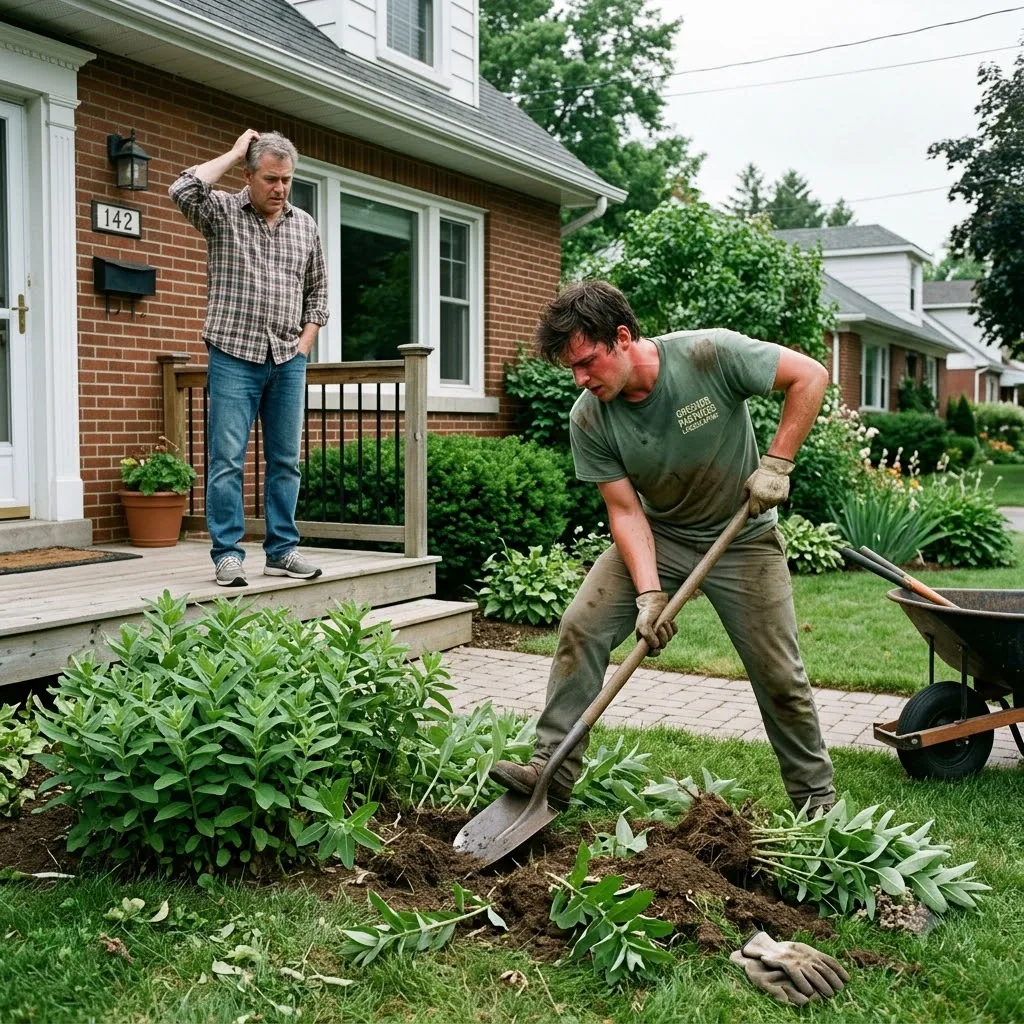
The violent snap of thick, fibrous stems pulled Leo from his morning coffee. He reached the front window just in time to see a heavy steel blade bite into the crown of his prized swamp milkweed. The tall, rose-pink clusters shuddered before the entire plant was wrenched sideways, tearing a jagged hole in the carefully balanced loam. Leo shoved the front door open, the screen slapping the siding, ready to shout the trespasser off his property.
The man in the high-visibility vest was not behaving like a casual vandal or a careless contractor at the wrong address. He was hacking at the earth with a flat-head spade. It was a tool entirely useless for prying up the deep, stubborn taproots of established native perennials, meant for edging lawns, not excavating three years of dense root networks. Every strike jarred the worker’s shoulders, the impact ringing up the metal shaft as the flat edge uselessly chopped at the stems instead of getting beneath them. He was working with a frantic, desperate, and utterly exhausting momentum.
As Leo marched down the porch steps, the morning humidity caught the sheen of sweat pouring off the worker’s face. He was young, maybe early twenties, and his chest heaved with ragged, uneven breaths.
Leo raised a hand and ordered the man to stop right there. The worker flinched, dropping the heavy spade against his steel-toed boot with a dull thud. He scrambled backward, throwing his arms up defensively, his knuckles white and caked in rich black compost. His eyes darted around the manicured, quiet neighborhood, wide and terrified. His lower lip trembled so violently that he could not form a single word, settling for a choked, panicked noise in the back of his throat. He looked at Leo, then at the ruined milkweed, and finally down the strict, orderly street, as if bracing for a predator to strike.
Leo stopped halfway down the walkway, his initial surge of anger giving way to a sharp, unsettling confusion. The destruction of his garden was staggering. Plump, striped monarch caterpillars were already falling from the broken stems, seeking refuge in the trampled mulch. Yet the sheer terror radiating from the kid defied all logic. A rogue landscaper making a mistake would apologize, pack his truck, and flee the scene. This boy was paralyzed.
Tears tracked through the dust on his cheeks, cutting pale lines through the grime, mingling with the sweat. He reached blindly for the spade handle, grabbing the sharp metal collar instead of the rubberized grip. He ignored the scrape on his palm as he tried to drag the heavy tool closer to his chest, using it more like a shield than a shovel.
Leo told him in a calm, flat tone to drop the equipment and step away from the flower beds.
The kid shook his head in rapid, jerky motions. He pointed a trembling, dirt-stained finger toward the far end of the street, then pantomimed digging again, his breathing escalating into a near-hyperventilating wheeze. He grabbed the spade properly this time and lunged at another cluster of blooming milkweed. He slammed the flat blade down onto the delicate roots, letting out a sharp sob as the metal glanced off a landscaping stone. He was not destroying the yard out of malice or carelessness. He was destroying it because he believed he had no other choice, driven by a fear that belonged nowhere near a quiet suburban garden.
The low, whining hum of an electric motor drifted over the sound of breaking stems and ragged breathing.
The landscaper froze instantly. The spade hovered inches above the dirt. His shoulders hunched inward as if he were trying to make himself as small as possible.
A pristine white golf cart rolled smoothly around the corner of the cul-de-sac. The vehicle was equipped with an amber flashing light, an absurd addition for a residential street with a fifteen-mile-per-hour speed limit. Custom chrome rims caught the mid-morning sun, sending blinding reflections dancing across the asphalt. The cart coasted at a painfully slow, deliberate crawl, the electric motor barely audible over the rustle of the neighborhood oak trees.
It coasted to a halt at the edge of Leo’s driveway, stopping exactly an inch from the curb line. The driver did not immediately step out. He sat in the shaded cabin, a rigid silhouette wearing a pressed polo shirt tucked tightly into belted khaki shorts. A heavy aluminum clipboard rested against the steering wheel. The driver tapped a silver pen against the metal clip. The rhythmic clicking cut through the sudden silence of the yard, ringing out like a metronome ticking down a timer.
The landscaper let out a whimpering sound. He frantically drove the spade back into the dirt, ignoring the pain in his hands as he tore up a patch of flowering native coneflowers alongside the remaining milkweed.
The man in the golf cart finally stepped onto the pavement. He adjusted a pair of mirrored aviator sunglasses, locking the hinges with a sharp snap. He ignored Leo entirely, turning his head to face the garden. He lifted his hand and pointed the silver pen directly at the sobbing worker, his mouth forming a thin, tight line as he dragged the pen across his clipboard in a heavy, deliberate stroke.
The violent snap of thick, fibrous stems pulled Leo from his morning coffee. He reached the front window just in time to see a heavy steel blade bite into the crown of his prized swamp milkweed. The tall, rose-pink clusters shuddered before the entire plant was wrenched sideways, tearing a jagged hole in the carefully balanced loam. Leo shoved the front door open, the screen slapping the siding, ready to shout the trespasser off his property.
The man in the high-visibility vest was not behaving like a casual vandal or a careless contractor at the wrong address. He was hacking at the earth with a flat-head spade. It was a tool entirely useless for prying up the deep, stubborn taproots of established native perennials, meant for edging lawns, not excavating three years of dense root networks. Every strike jarred the worker’s shoulders, the impact ringing up the metal shaft as the flat edge uselessly chopped at the stems instead of getting beneath them. He was working with a frantic, desperate, and utterly exhausting momentum.
As Leo marched down the porch steps, the morning humidity caught the sheen of sweat pouring off the worker’s face. He was young, maybe early twenties, and his chest heaved with ragged, uneven breaths.
Leo raised a hand and ordered the man to stop right there. The worker flinched, dropping the heavy spade against his steel-toed boot with a dull thud. He scrambled backward, throwing his arms up defensively, his knuckles white and caked in rich black compost. His eyes darted around the manicured, quiet neighborhood, wide and terrified. His lower lip trembled so violently that he could not form a single word, settling for a choked, panicked noise in the back of his throat. He looked at Leo, then at the ruined milkweed, and finally down the strict, orderly street, as if bracing for a predator to strike.
Leo stopped halfway down the walkway, his initial surge of anger giving way to a sharp, unsettling confusion. The destruction of his garden was staggering. Plump, striped monarch caterpillars were already falling from the broken stems, seeking refuge in the trampled mulch. Yet the sheer terror radiating from the kid defied all logic. A rogue landscaper making a mistake would apologize, pack his truck, and flee the scene. This boy was paralyzed.
Tears tracked through the dust on his cheeks, cutting pale lines through the grime, mingling with the sweat. He reached blindly for the spade handle, grabbing the sharp metal collar instead of the rubberized grip. He ignored the scrape on his palm as he tried to drag the heavy tool closer to his chest, using it more like a shield than a shovel.
Leo told him in a calm, flat tone to drop the equipment and step away from the flower beds.
The kid shook his head in rapid, jerky motions. He pointed a trembling, dirt-stained finger toward the far end of the street, then pantomimed digging again, his breathing escalating into a near-hyperventilating wheeze. He grabbed the spade properly this time and lunged at another cluster of blooming milkweed. He slammed the flat blade down onto the delicate roots, letting out a sharp sob as the metal glanced off a landscaping stone. He was not destroying the yard out of malice or carelessness. He was destroying it because he believed he had no other choice, driven by a fear that belonged nowhere near a quiet suburban garden.
The low, whining hum of an electric motor drifted over the sound of breaking stems and ragged breathing.
The landscaper froze instantly. The spade hovered inches above the dirt. His shoulders hunched inward as if he were trying to make himself as small as possible.
A pristine white golf cart rolled smoothly around the corner of the cul-de-sac. The vehicle was equipped with an amber flashing light, an absurd addition for a residential street with a fifteen-mile-per-hour speed limit. Custom chrome rims caught the mid-morning sun, sending blinding reflections dancing across the asphalt. The cart coasted at a painfully slow, deliberate crawl, the electric motor barely audible over the rustle of the neighborhood oak trees.
It coasted to a halt at the edge of Leo’s driveway, stopping exactly an inch from the curb line. The driver did not immediately step out. He sat in the shaded cabin, a rigid silhouette wearing a pressed polo shirt tucked tightly into belted khaki shorts. A heavy aluminum clipboard rested against the steering wheel. The driver tapped a silver pen against the metal clip. The rhythmic clicking cut through the sudden silence of the yard, ringing out like a metronome ticking down a timer.
The landscaper let out a whimpering sound. He frantically drove the spade back into the dirt, ignoring the pain in his hands as he tore up a patch of flowering native coneflowers alongside the remaining milkweed.
The man in the golf cart finally stepped onto the pavement. He adjusted a pair of mirrored aviator sunglasses, locking the hinges with a sharp snap. He ignored Leo entirely, turning his head to face the garden. He lifted his hand and pointed the silver pen directly at the sobbing worker, his mouth forming a thin, tight line as he dragged the pen across his clipboard in a heavy, deliberate stroke.