Story code: ST-001423
Part 1: The Boundary Line
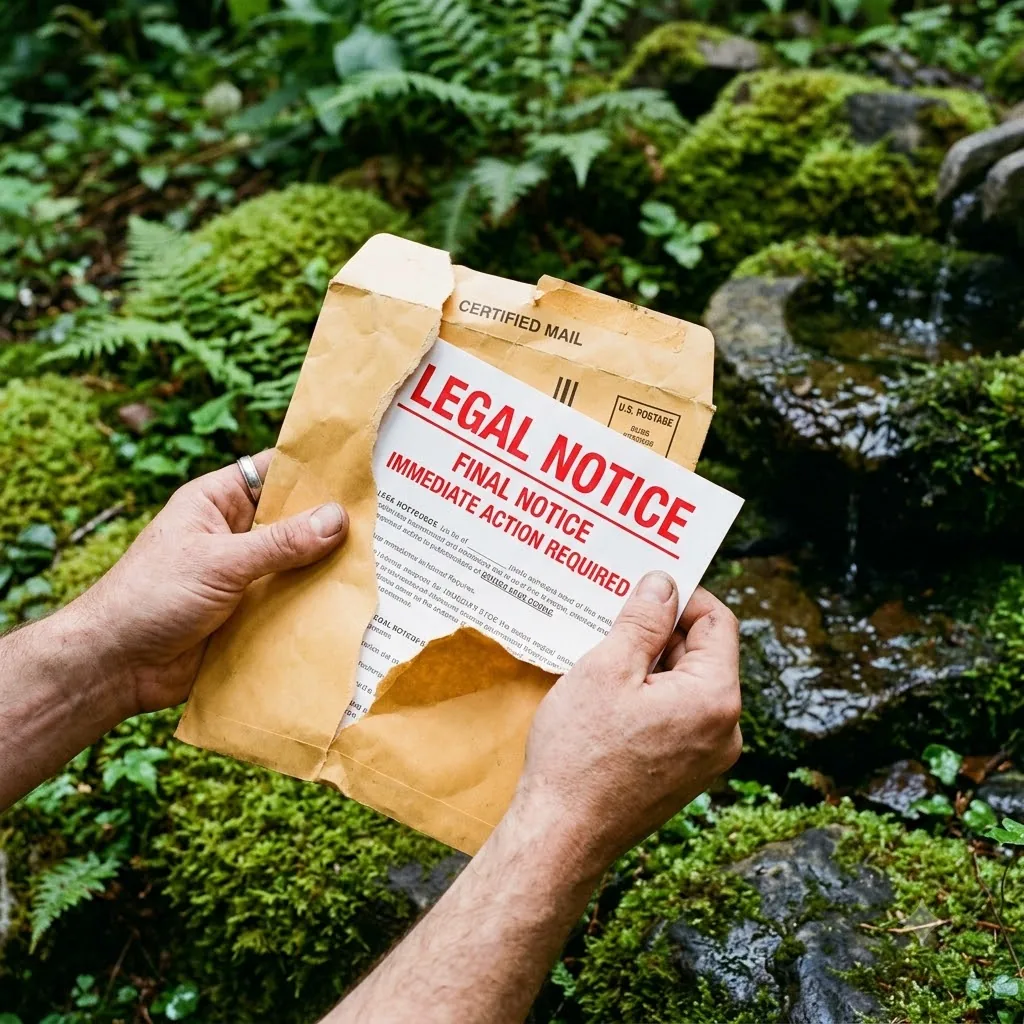
The heavy, fibrous flap of the certified envelope tore with a sound like ripping fabric, exposing a stiff document stamped with bright, aggressive red ink. Leo dragged his thumb across the raised lettering, feeling the violent impression of the words FIVE HUNDRED DOLLAR DAILY FINE burning against his skin. Behind him, the gentle, rhythmic trickle of the bamboo water feature spilled onto smooth river rocks, entirely indifferent to the bureaucratic threat clutched in his hands.
Leo stood paralyzed on the wooden slats of his back porch, the damp, earthy scent of his moss garden filling his lungs. This enclosed space was the only genuine quiet left in his life. Every velvet-green patch of cushion moss, every carefully placed piece of weathered driftwood, and every delicate fern frond had been deliberately nurtured over a decade to drown out the relentless noise of the world. It was a shaded, breathing ecosystem that required infinite patience and constant, gentle care. The air beneath the canopy of old oaks was always ten degrees cooler, smelling deeply of rich soil, rain, and ancient wood. It was a sanctuary built on the simple premise of leaving nature to its own intricate designs.
He stared down at the densely typed paragraphs again. The language was sterile, absolute, and utterly devoid of humanity. The sender cited codes, obscure local ordinances, and aesthetic mandates Leo had never heard of, officially declaring his sanctuary a hazard and an eyesore. The document framed his quiet patch of earth as a direct threat to the newly established property standards of the evolving neighborhood. The mandate was clear, demanding immediate remediation. It required a total flattening of his sanctuary to conform to a manicured, sterile ideal of suburban conformity. If he did not comply by the rapidly approaching deadline, the daily penalty would start draining his meager savings until the county seized his house to cover the debt.
The sheer arrogance of the demand made the muscles in his neck pull tight. Someone had stood safely outside this haven, looked at a piece of land that harmed absolutely no one, and decided to flex their institutional muscle simply because they could. The signature at the bottom was accompanied by a crest, a newly formed neighborhood association title, and a litany of credentials designed exclusively to intimidate those with less power. The red ink felt like a physical intrusion, a loud, artificial siren blaring inside his carefully cultivated silence. He folded the heavy paper, the thick crease snapping sharply under the pressure of his fingernails.
He walked slowly down the porch steps, his work boots sinking slightly into the soft, springy earth he had spent years cultivating. He knelt by a dense cluster of haircap moss. The delicate green spikes were beaded with morning dew, catching the faint, dappled sunlight that managed to pierce the canopy. He brushed his weathered knuckles over the incredibly soft surface, feeling a deep, protective ache in his chest. The letter in his pocket felt like a lead weight, a foreign object trying to drag him down into a bureaucratic labyrinth of zoning boards, appeals, and lawyers he could never afford to hire. The sender possessed the endless financial resources to bury him in paperwork. A five-hundred-dollar daily fine was a literal death sentence for a man who budgeted for his basic groceries down to the exact dollar.
A sharp, unnatural noise suddenly shattered the serene isolation of the garden. A loud, piercing electronic beep echoed through the trees.
Leo stood up slowly, the blood roaring in his ears. The sound originated from the far edge of the yard, where the dense, comforting shade of his oak trees abruptly met the harsh, blinding sunlight of the adjacent property. That neighboring lot had recently been purchased, bulldozed flat, and smothered in sprawling, uniform sod that required constant chemical intervention to maintain its unnatural perfection. Leo walked toward the blinding light, instinctively staying within the protective shadows of his tall ferns. His heart hammered a heavy rhythm against his ribs. The violent red ink of the fine flashed in his memory with every step forward.
He moved cautiously past the central water feature, the soothing trickling sound fading entirely as the electronic beeps grew steadily louder and more frequent. The boundary between his undisturbed land and the hostile new development was marked by a long line of heavy, ancient fieldstones. They had rested there for decades, half-swallowed by the earth and heavily blanketed in pale green lichen. They represented a silent, historical agreement, an old-world border that no one had ever dared to dispute.
Leo reached the final cluster of ferns and stopped dead. The blinding glare of the afternoon sun illuminated a figure standing proudly on the pristine, chemical-green lawn next door. A tall, impeccably dressed man in a tactical polo shirt stood commanding a bright yellow piece of expensive surveying equipment. It was Major Vance, the wealthy transplant whose name Leo had seen plastered on aggressive neighborhood circulars demanding property value protection and total conformity. Vance adjusted the tripod with practiced arrogance, sending a brilliant, aggressive red laser beam cutting straight through the shaded, humid air of Leo’s garden to strike the trunk of a two-hundred-year-old oak. Vance checked a clipboard, tapped a digital screen, and then brought his polished leather boot forward, stepping deliberately and heavily past the ancient, moss-covered boundary stones.
The heavy, fibrous flap of the certified envelope tore with a sound like ripping fabric, exposing a stiff document stamped with bright, aggressive red ink. Leo dragged his thumb across the raised lettering, feeling the violent impression of the words FIVE HUNDRED DOLLAR DAILY FINE burning against his skin. Behind him, the gentle, rhythmic trickle of the bamboo water feature spilled onto smooth river rocks, entirely indifferent to the bureaucratic threat clutched in his hands.
Leo stood paralyzed on the wooden slats of his back porch, the damp, earthy scent of his moss garden filling his lungs. This enclosed space was the only genuine quiet left in his life. Every velvet-green patch of cushion moss, every carefully placed piece of weathered driftwood, and every delicate fern frond had been deliberately nurtured over a decade to drown out the relentless noise of the world. It was a shaded, breathing ecosystem that required infinite patience and constant, gentle care. The air beneath the canopy of old oaks was always ten degrees cooler, smelling deeply of rich soil, rain, and ancient wood. It was a sanctuary built on the simple premise of leaving nature to its own intricate designs.
He stared down at the densely typed paragraphs again. The language was sterile, absolute, and utterly devoid of humanity. The sender cited codes, obscure local ordinances, and aesthetic mandates Leo had never heard of, officially declaring his sanctuary a hazard and an eyesore. The document framed his quiet patch of earth as a direct threat to the newly established property standards of the evolving neighborhood. The mandate was clear, demanding immediate remediation. It required a total flattening of his sanctuary to conform to a manicured, sterile ideal of suburban conformity. If he did not comply by the rapidly approaching deadline, the daily penalty would start draining his meager savings until the county seized his house to cover the debt.
The sheer arrogance of the demand made the muscles in his neck pull tight. Someone had stood safely outside this haven, looked at a piece of land that harmed absolutely no one, and decided to flex their institutional muscle simply because they could. The signature at the bottom was accompanied by a crest, a newly formed neighborhood association title, and a litany of credentials designed exclusively to intimidate those with less power. The red ink felt like a physical intrusion, a loud, artificial siren blaring inside his carefully cultivated silence. He folded the heavy paper, the thick crease snapping sharply under the pressure of his fingernails.
He walked slowly down the porch steps, his work boots sinking slightly into the soft, springy earth he had spent years cultivating. He knelt by a dense cluster of haircap moss. The delicate green spikes were beaded with morning dew, catching the faint, dappled sunlight that managed to pierce the canopy. He brushed his weathered knuckles over the incredibly soft surface, feeling a deep, protective ache in his chest. The letter in his pocket felt like a lead weight, a foreign object trying to drag him down into a bureaucratic labyrinth of zoning boards, appeals, and lawyers he could never afford to hire. The sender possessed the endless financial resources to bury him in paperwork. A five-hundred-dollar daily fine was a literal death sentence for a man who budgeted for his basic groceries down to the exact dollar.
A sharp, unnatural noise suddenly shattered the serene isolation of the garden. A loud, piercing electronic beep echoed through the trees.
Leo stood up slowly, the blood roaring in his ears. The sound originated from the far edge of the yard, where the dense, comforting shade of his oak trees abruptly met the harsh, blinding sunlight of the adjacent property. That neighboring lot had recently been purchased, bulldozed flat, and smothered in sprawling, uniform sod that required constant chemical intervention to maintain its unnatural perfection. Leo walked toward the blinding light, instinctively staying within the protective shadows of his tall ferns. His heart hammered a heavy rhythm against his ribs. The violent red ink of the fine flashed in his memory with every step forward.
He moved cautiously past the central water feature, the soothing trickling sound fading entirely as the electronic beeps grew steadily louder and more frequent. The boundary between his undisturbed land and the hostile new development was marked by a long line of heavy, ancient fieldstones. They had rested there for decades, half-swallowed by the earth and heavily blanketed in pale green lichen. They represented a silent, historical agreement, an old-world border that no one had ever dared to dispute.
Leo reached the final cluster of ferns and stopped dead. The blinding glare of the afternoon sun illuminated a figure standing proudly on the pristine, chemical-green lawn next door. A tall, impeccably dressed man in a tactical polo shirt stood commanding a bright yellow piece of expensive surveying equipment. It was Major Vance, the wealthy transplant whose name Leo had seen plastered on aggressive neighborhood circulars demanding property value protection and total conformity. Vance adjusted the tripod with practiced arrogance, sending a brilliant, aggressive red laser beam cutting straight through the shaded, humid air of Leo’s garden to strike the trunk of a two-hundred-year-old oak. Vance checked a clipboard, tapped a digital screen, and then brought his polished leather boot forward, stepping deliberately and heavily past the ancient, moss-covered boundary stones.