Story code: ST-000805
Part 1: The Negotiating Table
“I am not withdrawing the grievance, Vance.” Frank pushed the silver pen back across the polished mahogany desk. “The local stands firm. You tear down the old mill, you trigger the pension default clause. I will not sell out three hundred men so a tech company can build a shipping center.”
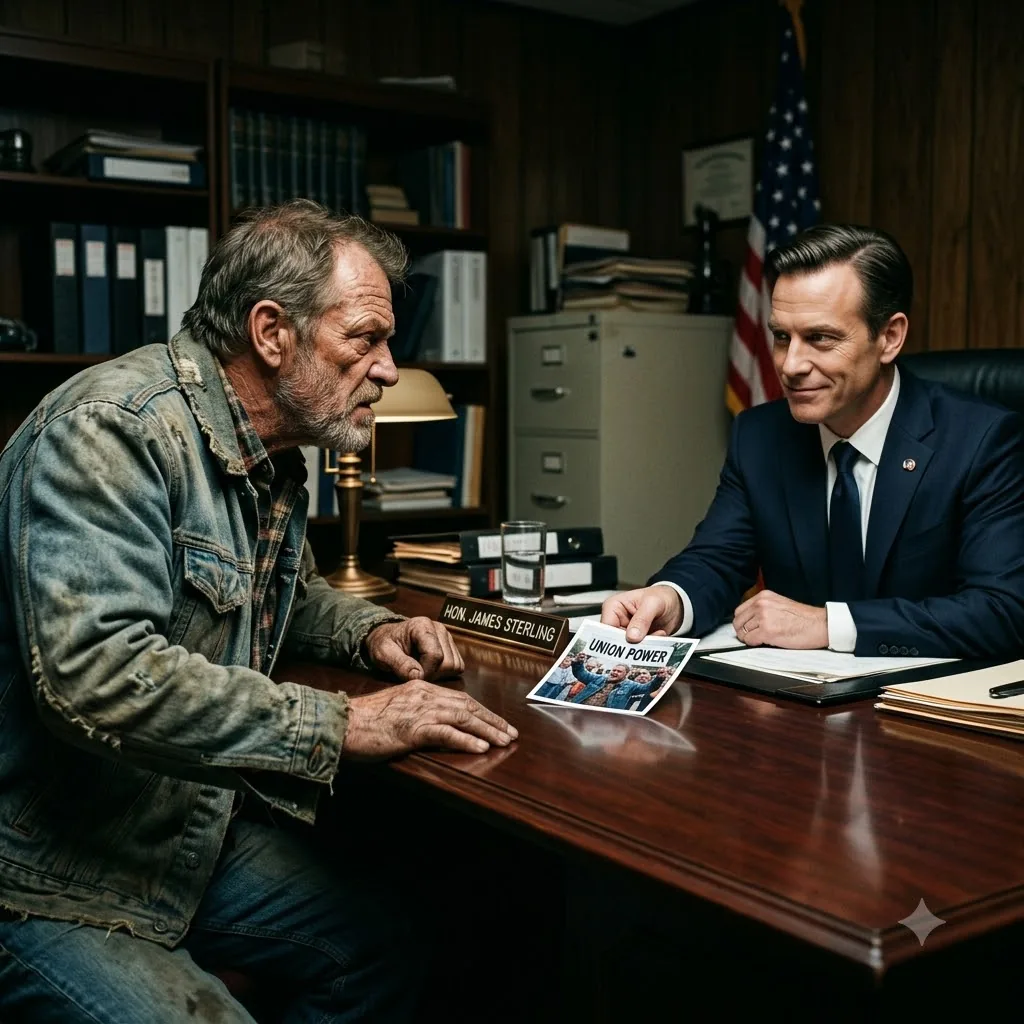
Mayor Vance did not flinch. The mayor sat framed by the large bay window overlooking the municipal square, his tailored suit completely unwrinkled despite three hours of closed-door negotiations. The e-commerce warehouse was Vance’s legacy project. The developers needed the land cleared by the first of the month. Frank was the absolute last hurdle. As the union representative, Frank held the sole authority to waive the legacy claims on the steel mill property.
“We are offering a generous retraining fund,” Vance said, his voice smooth and practiced. “The steel era is over. The mill has been rusting for a decade. This town needs tax revenue. It needs these warehouse jobs.”
Frank crossed his arms over his flannel shirt. He knew the script. They always offered retraining funds. They always promised the future. And they always left the retired guys holding empty promises when the medical bills came due. The union brothers had bled into that mill. Frank had given his right knee to the blast furnace floor. He knew exactly what his signature was worth, and he knew Vance was rapidly running out of time to secure it.
“The retraining fund is a shell game,” Frank stated, keeping his tone flat and unyielding. “You deposit fifty grand, put out a press release, and a year from now it dries up. The pension fund is federally protected until the land changes hands. The men keep their leverage as long as that building stands. My signature stays in my pocket until you guarantee the legacy medical coverage in writing.”
Vance tapped a manicured finger against the leather desk pad. The usual rhythm of these negotiations dictated that Vance should now escalate to threats of eminent domain or municipal injunctions. Frank had prepared his legal counters for both. He had the local’s lawyer on standby. He watched the mayor’s face, waiting for the familiar frustration to crack the politician’s veneer.
Instead, Vance exhaled a slow, calm breath. He leaned back in his chair and looked at Frank with an expression that bordered on clinical pity. The air in the office suddenly felt very still.
“The economic argument has run its course,” Vance said quietly.
The mayor reached toward the stack of legal documents between them. He did not touch the settlement agreement. He bypassed the retraining fund proposal. He closed the thick binder detailing the demolition schedule.
Vance opened a slim, unmarked manila folder resting near his keyboard. He withdrew a single sheet of glossy photographic paper.
Frank watched the movement with narrowed eyes. He expected a surveillance shot of a union protest, perhaps a picture of some local boys trespassing on the mill property. Standard intimidation tactics.
Vance placed two fingers on the photograph and slid it across the smooth wood. The paper made a soft scraping sound before coming to a rest exactly two inches from Frank’s folded hands.
“Look at it,” Vance commanded.
Frank lowered his gaze. The image was sharply focused, printed in high resolution. It was a traffic camera snapshot. The timestamp in the corner read three days ago, precisely at two in the morning.
The subject of the photo was a dark blue Ford F-150. Frank’s truck. The custom grill guard and the specific pattern of rust on the front quarter panel were unmistakable. The license plate was illuminated perfectly by the camera flash, spelling out Frank’s registration numbers.
But the truck was not parked in Frank’s driveway. It was not on the streets of their rust-belt town.
The green highway sign visible in the background designated a specific interstate interchange three states away. It was a very particular stretch of road. A route Frank had taken in the dead of night to respond to a frantic, whispered phone call he had sworn to take to his grave. A place his truck had absolutely no legal reason to be.
Frank stared at the green sign. The blood roared in his ears, drowning out the low hum of the office air conditioning. He knew exactly where that camera was mounted. He knew the devastating cargo that had been sitting in the passenger seat at that exact minute. And he knew with absolute certainty that no one in his union, his family, or this city was supposed to know he had driven that route.
His lungs seized. The polished mahogany desk seemed to tilt slightly beneath him. The entire foundation of his leverage, his moral high ground, and his thirty years of fighting for the local evaporated into the cold, glossy surface of the photograph. The trap had been laid with terrifying precision.
Vance watched the color drain from Frank’s face. The mayor did not smile. He simply reached back into the unmarked manila folder and pulled out a second piece of paper.
“The first photo places your vehicle at the scene,” Vance said, his voice dropping to a near whisper. “This next one shows exactly what you were hiding.”
Vance flipped the second photograph face up and tapped the center of the image.
“I am not withdrawing the grievance, Vance.” Frank pushed the silver pen back across the polished mahogany desk. “The local stands firm. You tear down the old mill, you trigger the pension default clause. I will not sell out three hundred men so a tech company can build a shipping center.”
Mayor Vance did not flinch. The mayor sat framed by the large bay window overlooking the municipal square, his tailored suit completely unwrinkled despite three hours of closed-door negotiations. The e-commerce warehouse was Vance’s legacy project. The developers needed the land cleared by the first of the month. Frank was the absolute last hurdle. As the union representative, Frank held the sole authority to waive the legacy claims on the steel mill property.
“We are offering a generous retraining fund,” Vance said, his voice smooth and practiced. “The steel era is over. The mill has been rusting for a decade. This town needs tax revenue. It needs these warehouse jobs.”
Frank crossed his arms over his flannel shirt. He knew the script. They always offered retraining funds. They always promised the future. And they always left the retired guys holding empty promises when the medical bills came due. The union brothers had bled into that mill. Frank had given his right knee to the blast furnace floor. He knew exactly what his signature was worth, and he knew Vance was rapidly running out of time to secure it.
“The retraining fund is a shell game,” Frank stated, keeping his tone flat and unyielding. “You deposit fifty grand, put out a press release, and a year from now it dries up. The pension fund is federally protected until the land changes hands. The men keep their leverage as long as that building stands. My signature stays in my pocket until you guarantee the legacy medical coverage in writing.”
Vance tapped a manicured finger against the leather desk pad. The usual rhythm of these negotiations dictated that Vance should now escalate to threats of eminent domain or municipal injunctions. Frank had prepared his legal counters for both. He had the local’s lawyer on standby. He watched the mayor’s face, waiting for the familiar frustration to crack the politician’s veneer.
Instead, Vance exhaled a slow, calm breath. He leaned back in his chair and looked at Frank with an expression that bordered on clinical pity. The air in the office suddenly felt very still.
“The economic argument has run its course,” Vance said quietly.
The mayor reached toward the stack of legal documents between them. He did not touch the settlement agreement. He bypassed the retraining fund proposal. He closed the thick binder detailing the demolition schedule.
Vance opened a slim, unmarked manila folder resting near his keyboard. He withdrew a single sheet of glossy photographic paper.
Frank watched the movement with narrowed eyes. He expected a surveillance shot of a union protest, perhaps a picture of some local boys trespassing on the mill property. Standard intimidation tactics.
Vance placed two fingers on the photograph and slid it across the smooth wood. The paper made a soft scraping sound before coming to a rest exactly two inches from Frank’s folded hands.
“Look at it,” Vance commanded.
Frank lowered his gaze. The image was sharply focused, printed in high resolution. It was a traffic camera snapshot. The timestamp in the corner read three days ago, precisely at two in the morning.
The subject of the photo was a dark blue Ford F-150. Frank’s truck. The custom grill guard and the specific pattern of rust on the front quarter panel were unmistakable. The license plate was illuminated perfectly by the camera flash, spelling out Frank’s registration numbers.
But the truck was not parked in Frank’s driveway. It was not on the streets of their rust-belt town.
The green highway sign visible in the background designated a specific interstate interchange three states away. It was a very particular stretch of road. A route Frank had taken in the dead of night to respond to a frantic, whispered phone call he had sworn to take to his grave. A place his truck had absolutely no legal reason to be.
Frank stared at the green sign. The blood roared in his ears, drowning out the low hum of the office air conditioning. He knew exactly where that camera was mounted. He knew the devastating cargo that had been sitting in the passenger seat at that exact minute. And he knew with absolute certainty that no one in his union, his family, or this city was supposed to know he had driven that route.
His lungs seized. The polished mahogany desk seemed to tilt slightly beneath him. The entire foundation of his leverage, his moral high ground, and his thirty years of fighting for the local evaporated into the cold, glossy surface of the photograph. The trap had been laid with terrifying precision.
Vance watched the color drain from Frank’s face. The mayor did not smile. He simply reached back into the unmarked manila folder and pulled out a second piece of paper.
“The first photo places your vehicle at the scene,” Vance said, his voice dropping to a near whisper. “This next one shows exactly what you were hiding.”
Vance flipped the second photograph face up and tapped the center of the image.