Story code: ST-001837
Part 4: The Public Square
The steady, rhythmic beep of a cardiac monitor finally replaced the deafening roar of the mob in Arthur’s ears. He lay flat on his back, staring up at the water-stained acoustic ceiling tiles of a quiet hospital room. The terrifying, hollow gnawing in his stomach was gone, replaced by the cool, steady throb of an IV drip feeding a dextrose solution directly into the back of his bruised left hand.
He remembered the freezing marble against his cheek. He remembered the heavy oak door swinging open, the blinding glare of ring lights, and a woman screaming for an ambulance. After that, there was only a terrifying plunge into absolute darkness.
Arthur turned his head toward the rolling tray table beside his bed. A clear plastic hospital belongings bag sat near his water pitcher. Inside, he could see his soot-stained flannel shirt, his scuffed work boots, and the crumpled, blood-smeared manila folder.
His cheap smartphone rested next to the bag, its notification light blinking a steady green. Arthur reached over with a trembling hand, wincing as the IV line pulled taut against his skin. He unlocked the screen. The inbox was cluttered, but one email stood out, flagged with high-importance red exclamation points from the corporate automated system.
*Subject: Medical Levy Overturned – Policy Reinstated.*
Arthur stared at the bright screen until the letters blurred. His debt was gone. The insulin coverage that had been ripped away by a faceless algorithm had been restored. He was going to live.
The heavy door to his room clicked open. Arthur looked up, expecting a nurse. Instead, Mrs. Sterling stood in the doorway.
Arthur barely recognized her. The pristine, untouchable corporate director who had barked orders through a cracked door was entirely gone. She wore a faded gray cardigan and loose denim jeans. Her hair was pulled back into a messy, uneven knot, and dark, exhausted shadows bruised the skin beneath her hollowed eyes. She looked incredibly small, stripped of the invisible armor her wealth and title had once provided.
She walked in slowly, pulling a vinyl visitor’s chair to the edge of his bed. She didn’t ask how he was. She just stared at the plastic bag containing his ruined boots.
“The hospital staff told me you were awake,” she said. Her voice was flat, devoid of its former executive authority.
“My phone,” Arthur rasped, his throat still raw and scratchy from the dehydration. He nodded toward the device. “The company reinstated my division’s coverage. You did that?”
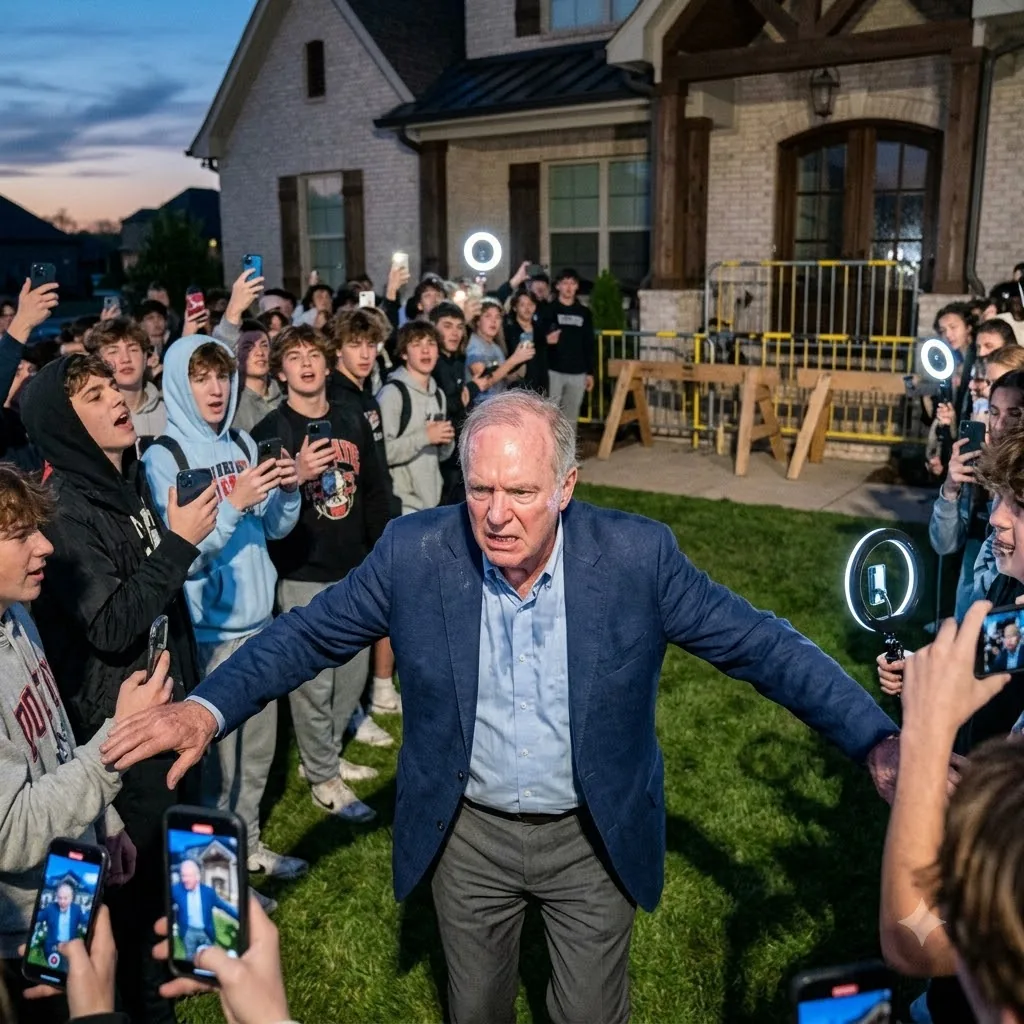
“No,” Eleanor replied, a bitter, humorless smile touching the corner of her mouth. “The algorithm did. The livestream footage of me opening the door and screaming at the crowd hit three million concurrent viewers. It was the top trending video on the internet for forty-eight hours. The board panicked. They realized it was much cheaper to reinstate the Omaha depot than to explain to the press why a sixty-year-old fleet mechanic died on a regional director’s floor while the internet watched.”
Arthur let his head fall back against the stiff hospital pillow. “So, it worked. The protest worked.”
“Don’t give them credit for this,” Eleanor snapped, a sudden, sharp edge returning to her voice. She leaned forward, resting her elbows on her knees. “Those people didn’t care about your insulin, Arthur. They didn’t care about the working class. When I opened that door, I saw their faces. They were furious that I had interrupted their content. They pushed your truck into a drainage ditch and set it on fire because it made a good background for their videos. They would have trampled you into the hardwood just to get a tour of my foyer.”
Arthur closed his eyes. The memory of the crush washed over him-the heavy elbow to the back of his head, the teenager pinning him against the doorframe, the masked man trying to rip the security chain away while Arthur’s organs were shutting down. The mob hadn’t been an army of saviors. They had been a blind, indiscriminate force of nature, chewing up everything in their path regardless of who it belonged to.
“My truck is gone, then,” Arthur whispered.
“Burned to the axles,” Eleanor confirmed softly. “And I can’t go back to my house. The company terminated my contract under the morals clause. They claimed I incited a riot by breaching security protocols and opening the front door. They needed a scapegoat to distance the brand from the violence, and I was the easiest target. My credentials are gone. My severance is revoked. I’m completely locked out.”
Arthur opened his eyes and looked at the woman sitting beside his bed. He had spent the last three days hating her, viewing her as the embodiment of the cold, unfeeling corporate machine that had signed his death warrant. But looking at her now, he realized the machine had chewed her up and spit her out just as easily.
“I spent ten years building digital firewalls to keep the messy parts of the world out,” Eleanor whispered, staring blankly at the sterile white wall behind Arthur’s bed. “I truly believed that if I stayed behind the gate, I was safe. But there is no safety anymore, Arthur. The boardroom throws you to the wolves to protect the stock price, and the public square is just a pack of wolves looking for blood. There’s nothing else left.”
Arthur looked down at the IV line taped to his hand, feeling the steady flow of life-saving medicine entering his veins. His debt was cleared. His body would recover. But as he listened to the distant, wailing siren of an ambulance echoing through the hospital window, he felt no sense of victory. They had both survived the crush, but they were left stranded in the ruins, entirely exposed to a world that was tearing itself apart for the cameras.