Story code: ST-000544
Part 2: The Funnel
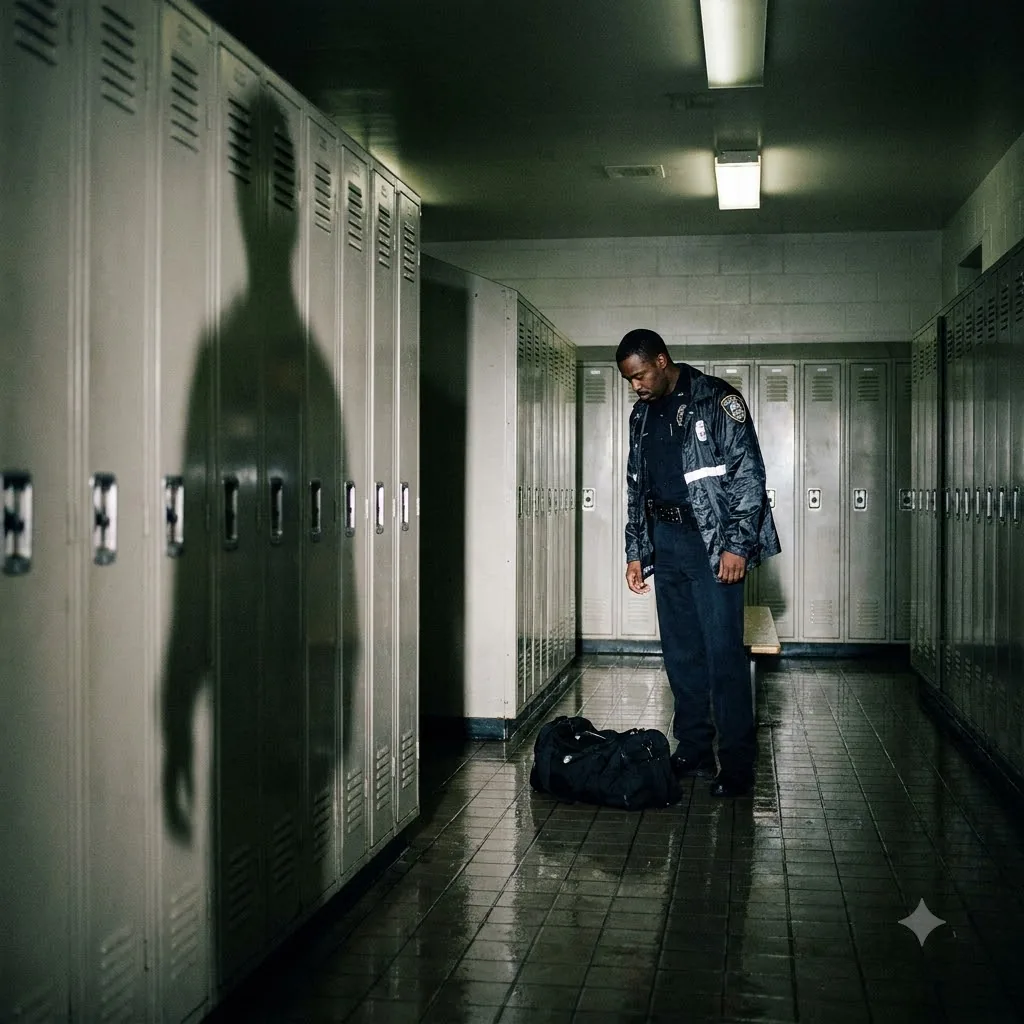
The heavy metal door slammed shut, severing the rest of Sully’s sentence. The sharp echo rang off the tile walls, leaving his final warning hanging in the suffocating air. *Out on the bypass.* I didn’t need him to finish the thought to know exactly what he meant. The main highway was the only direct route to the overflow warehouse across the river, a long, unlit stretch of asphalt flanked by concrete sound barriers. It was the perfect place for a staged traffic stop. My own squad mates pulling me over in the dead of night, no witnesses, no dashboard cameras, just a unified wall of blue uniforms deciding exactly how a ‘resisting arrest’ scenario was going to play out.
I stood frozen by the wooden bench, water dripping from my ruined duty bag and tapping rhythmically against the floor. I grabbed the soaked nylon straps, ignoring the murky puddle that splashed against my boots, and hoisted the heavy weight over my shoulder. The cold dampness instantly seeped through my civilian jacket, chilling me to the bone.
I walked out into the precinct parking lot. The harsh glare of the sodium floodlights cast long, distorted shadows across the cracked pavement. The lot was completely empty except for my ten-year-old sedan sitting under a flickering bulb. Usually, there were at least five or six patrol cars idling near the back fence, officers filling out paperwork or chatting before heading home. Tonight, the absence of idling engines felt louder than a siren. They had all cleared out fast. They were already getting into position.
I unlocked my car, threw the wet bag onto the passenger seat, and climbed behind the wheel. The engine turned over with a sluggish rattle. I sat there gripping the steering wheel, my knuckles turning white, staring at the main exit gate. Sully’s advice to avoid the highway wasn’t a favor from an old union boss looking out for me. It was a herding tactic. He wanted me panicked. He wanted me to take the back roads, the crumbling industrial grid known as the Narrows, where the radio reception was dead and the streets were entirely abandoned after dark. But I had no other choice. Taking the highway meant driving straight into the teeth of an ambush.
I pulled out of the precinct lot and bypassed the highway on-ramp, steering my sedan down the steep incline toward the riverfront industrial park. The Narrows was a labyrinth of rusted chain-link fences, boarded-up chemical plants, and narrow service alleys that hadn’t seen a city maintenance truck in a decade. The streetlights here were entirely shot, leaving my faded yellow headlights to cut through the thick, rolling fog coming off the polluted river.
I kept my speed exactly at the limit, my eyes darting between the cracked windshield and the rearview mirror. For the first two miles, there was nothing but the hollow rumble of my tires hitting deep potholes. I didn’t turn on the radio. I needed to listen. I needed to hear if a cruiser was running dark, closing the gap without its sirens.
As I navigated a sharp bend past an old rail yard, a pair of headlights suddenly flared to life in my rearview mirror.
My stomach dropped. The vehicle had been parked in a dark alley, waiting. It pulled out seamlessly, tucking in directly behind my rear bumper. The headlights sat high, glaring intensely into my cabin and casting my own tense silhouette against the dashboard. Through the glare, I could just make out the wide, aggressive stance and the thick steel bars of a police push bumper. An interceptor.
I didn’t speed up. If I broke the speed limit, they had probable cause to light me up. I kept my foot steady, holding at thirty miles an hour. The cruiser stayed right on my tail, so close I couldn’t even see its front license plate. It didn’t flash its lightbar. It didn’t hit the siren. It just paced me, an intimidating shadow asserting total control over the empty road.
I knew exactly who worked this sector on the night shift. Miller and Vance. They were the loudest voices during the alleyway shakedown this afternoon, the ones who had shoved that kid’s face into the brick wall while the rest of the squad laughed. They were sending a message. I was a civilian out here now, stripped of my badge, entirely cut off from the brotherhood that usually protected its own. If I called 911, dispatch would just route the call right back to the officers in this sector. I was completely on my own.
The road narrowed as it approached the crumbling bridge crossing the river. The interceptor revved its heavy engine, surging forward until its push bumper was mere inches from my trunk. I gripped the wheel, bracing for the metal-on-metal impact of a pit maneuver. I slammed my foot on the gas, accelerating hard, and jerked the steering wheel to the right, sliding my sedan into a narrow, gravel-covered service lane that ran parallel to the canal.
My tires spun, kicking up rocks and dust as I fought to keep the car straight. I looked back, expecting the flashing red and blues to finally erupt. But the cruiser didn’t follow me into the dirt. It simply stopped at the intersection, its headlights blinding me in the side mirror for a few seconds before it slowly backed up and vanished into the fog.
They let me go.
My heart pounded against my ribs as the realization set in. They weren’t trying to run me off the road. They were just beating the brush. They were making sure I stayed off the main avenues and went exactly where I was supposed to go.
Ten minutes later, I pulled up to the overflow warehouse. It was a massive, windowless concrete bunker sitting at the dead end of a flooded street, surrounded by razor wire and decaying shipyards. I parked my car in the shadows near a rusted dumpster, cut the engine, and sat in the suffocating silence.
I grabbed my wet nylon bag from the passenger seat and stepped out into the freezing night air. Sully had clipped a single brass key to the transfer paperwork, supposedly the only way to access the solitary logging detail inside. But as I walked up the cracked concrete steps toward the heavy steel entry door, I saw that I wouldn’t need the key.
The heavy steel deadbolt had been violently smashed inward, leaving splintered metal shavings on the ground. The heavy door was cracked open about an inch, letting out a sliver of absolute darkness. I froze on the top step, my hand hovering inches from the handle. From deep inside the pitch-black warehouse, echoing off the empty concrete walls, I heard the unmistakable, rhythmic squelch of a portable police radio. The squad hadn’t just planned a highway ambush. They had prepared a dead end.