Story code: ST-001621
Part 1: The Liability Matrix
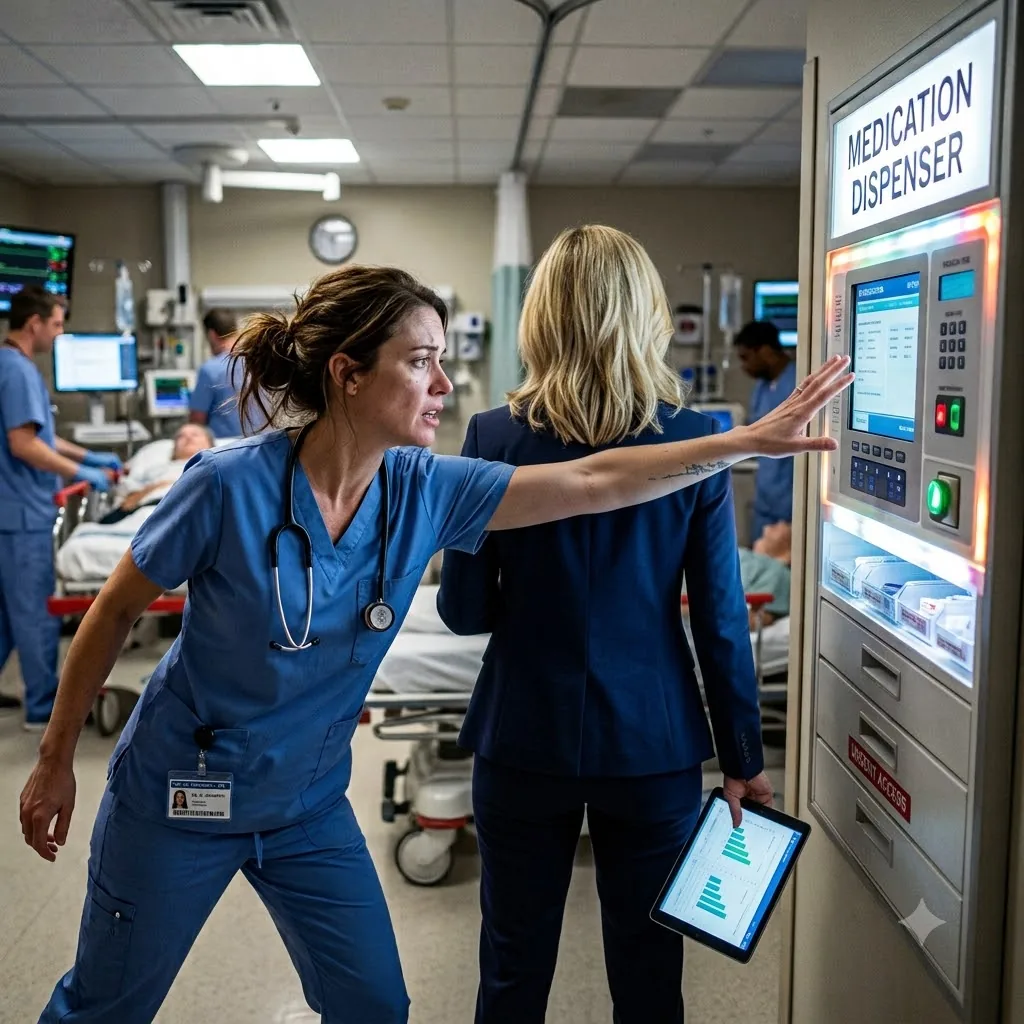
The monitor next to Bed 4 flashed a flatlining blood pressure of sixty over forty as the crimson pool beneath the trauma mattress steadily widened. Dr. Elena Rostova pivoted on her heel, muscle memory propelling her toward the automated medication dispenser to pull the TXA and massive transfusion protocol drugs. She punched in her override code, only to find a tailored navy-blue blazer stepping directly between her hands and the keypad.
The blazer belonged to Marcus Vance, the newly appointed Director of Clinical Risk Management. He wore a placid, perfectly symmetrical smile that did not reach his eyes, and his hand rested firmly over the glowing touchscreen of the drug cabinet. Elena stared at his manicured fingers, the sheer absurdity of the physical obstruction causing a split-second cognitive misfire.
Behind her, the rhythmic, high-pitched alarms from Bed 4 escalated into a frantic, continuous beep. The patient, a twenty-something woman brought in from a multi-vehicle pileup, was exsanguinating from an unstable pelvic fracture. Every second the blood flowed freely from her crushed arteries brought her closer to irreversible shock. The metallic tang of fresh blood was already thick in the air, mixing with the harsh chemical odor of iodine and the sweat of the paramedics who had just transferred her from the gurney.
“Excuse me,” Elena said, her voice dropping into the flat, commanding register she reserved for active codes. She leaned forward to bypass him, aiming her badge at the proximity reader.
Marcus smoothly sidestepped, maintaining his blockade of the machine. “Dr. Rostova, I just need a quick compliance touch-base before we dispense high-liability trauma therapeutics.”
Elena kept her eyes locked on his perfectly knotted silk tie. She could hear the trauma nurse, Jenkins, shouting for the blood bank to release uncrossmatched O-negative. The scene behind her was organized chaos, a desperate scramble to pack the wounds and establish central venous access. Every medical professional in the room was moving with absolute urgency. Every professional except Marcus.
“Step aside, Marcus,” Elena said. “Bed Four is hemorrhaging. I need tranexamic acid and a norepinephrine drip right this second.”
“I completely understand the clinical urgency,” Marcus replied, his tone as soothing and modulated as a corporate training video. He tapped a tablet he held in his left hand. “However, the new Med-Legal Alignment protocol initiated at midnight requires a dual-signature risk assessment for all off-formulary rapid infusions in uninsured trauma cases.”
Elena clenched her jaw so hard her teeth ground together. The patient had been pulled from a wreck without a purse or ID. The administration had essentially coded her as a financial liability the moment she rolled through the ambulance bay doors. Marcus was wearing a cologne that smelled of sandalwood and expensive citrus, an odor that was entirely offensive in a room dedicated to preserving life. The contrast between his pristine attire and the blood-soaked scrubs of the trauma team was a stark visual representation of the hospital’s shifting priorities. Private equity had bought the regional health system six months ago. Since then, the metrics had changed. Patient survival was no longer the primary key performance indicator. Margin preservation was.
“Move,” Elena ordered. She shoved her shoulder against his arm, attempting to physically displace him from the cabinet.
Marcus did not yield. He planted his feet, his smile freezing into a rigid mask of bureaucratic authority. “Elena, touching me in a hostile manner is a zero-tolerance HR violation. I am here to protect the hospital from the exact kind of reckless liability you are about to incur. We simply need to route this through the on-call legal associate.”
“She is dying,” Elena stated, stating the undeniable fact of the room. The monitor pitched higher. Jenkins yelled that the pressure was now fifty palp. The patient’s skin was taking on the gray, waxy pallor of terminal blood loss. Elena visualized the ruptured vessels in the patient’s pelvis, the way the body desperately tried to shunt blood to the brain and heart, starving the extremities, fighting a losing battle against physics and fluid dynamics.
“She is a Jane Doe presenting massive unmitigated risk to this institution,” Marcus countered, pulling up a digital form on his tablet. “I need you to verbally confirm you have evaluated the non-surgical palliative options as mandated by section four-B of the new directive.”
The sheer lunacy of the demand echoed in the chaotic trauma bay. A woman’s life was draining into the floor drains, and the hospital’s priority was shielding itself from a potential lawsuit over expensive, life-saving drugs given to an anonymous casualty. Elena looked at the drug cabinet. The heavy reinforced steel door separated her from the one intervention that would stabilize the clotting cascade. The override button was literally three inches from Marcus’s left elbow.
Elena calculated the consequences. Striking an administrator, forcibly bypassing the new legal lock, and administering the restricted drugs would guarantee her immediate termination. It would mean a report to the medical board. It would likely mean criminal charges for battery, given Marcus’s current posture and the hospital’s aggressive new legal team. She had spent twelve years building her career, sacrificing her personal life, sleeping in on-call rooms, and fighting to become the senior attending in this very ER. All of it was on the line, balanced against the rapidly fading pulse of the woman in Bed 4.
Jenkins called out that they had lost the radial pulse entirely.
Elena looked at Marcus. He held out the tablet, a stylus pinched between his thumb and forefinger, waiting for her to check the boxes that would legally justify letting a human being bleed to death under the guise of fiscal responsibility. The smile had returned to his face, smug and entirely devoid of empathy.
Elena reached out, letting her hand hover over the stylus. Marcus nodded in approval, relaxing his stance just a fraction of an inch to allow her access to the screen.
Instead of taking the pen, Elena planted her left boot against the base of the machine, grabbed Marcus by the lapels of his tailored navy blazer, and violently shoved him backward into the sterile supply cart.
The monitor next to Bed 4 flashed a flatlining blood pressure of sixty over forty as the crimson pool beneath the trauma mattress steadily widened. Dr. Elena Rostova pivoted on her heel, muscle memory propelling her toward the automated medication dispenser to pull the TXA and massive transfusion protocol drugs. She punched in her override code, only to find a tailored navy-blue blazer stepping directly between her hands and the keypad.
The blazer belonged to Marcus Vance, the newly appointed Director of Clinical Risk Management. He wore a placid, perfectly symmetrical smile that did not reach his eyes, and his hand rested firmly over the glowing touchscreen of the drug cabinet. Elena stared at his manicured fingers, the sheer absurdity of the physical obstruction causing a split-second cognitive misfire.
Behind her, the rhythmic, high-pitched alarms from Bed 4 escalated into a frantic, continuous beep. The patient, a twenty-something woman brought in from a multi-vehicle pileup, was exsanguinating from an unstable pelvic fracture. Every second the blood flowed freely from her crushed arteries brought her closer to irreversible shock. The metallic tang of fresh blood was already thick in the air, mixing with the harsh chemical odor of iodine and the sweat of the paramedics who had just transferred her from the gurney.
“Excuse me,” Elena said, her voice dropping into the flat, commanding register she reserved for active codes. She leaned forward to bypass him, aiming her badge at the proximity reader.
Marcus smoothly sidestepped, maintaining his blockade of the machine. “Dr. Rostova, I just need a quick compliance touch-base before we dispense high-liability trauma therapeutics.”
Elena kept her eyes locked on his perfectly knotted silk tie. She could hear the trauma nurse, Jenkins, shouting for the blood bank to release uncrossmatched O-negative. The scene behind her was organized chaos, a desperate scramble to pack the wounds and establish central venous access. Every medical professional in the room was moving with absolute urgency. Every professional except Marcus.
“Step aside, Marcus,” Elena said. “Bed Four is hemorrhaging. I need tranexamic acid and a norepinephrine drip right this second.”
“I completely understand the clinical urgency,” Marcus replied, his tone as soothing and modulated as a corporate training video. He tapped a tablet he held in his left hand. “However, the new Med-Legal Alignment protocol initiated at midnight requires a dual-signature risk assessment for all off-formulary rapid infusions in uninsured trauma cases.”
Elena clenched her jaw so hard her teeth ground together. The patient had been pulled from a wreck without a purse or ID. The administration had essentially coded her as a financial liability the moment she rolled through the ambulance bay doors. Marcus was wearing a cologne that smelled of sandalwood and expensive citrus, an odor that was entirely offensive in a room dedicated to preserving life. The contrast between his pristine attire and the blood-soaked scrubs of the trauma team was a stark visual representation of the hospital’s shifting priorities. Private equity had bought the regional health system six months ago. Since then, the metrics had changed. Patient survival was no longer the primary key performance indicator. Margin preservation was.
“Move,” Elena ordered. She shoved her shoulder against his arm, attempting to physically displace him from the cabinet.
Marcus did not yield. He planted his feet, his smile freezing into a rigid mask of bureaucratic authority. “Elena, touching me in a hostile manner is a zero-tolerance HR violation. I am here to protect the hospital from the exact kind of reckless liability you are about to incur. We simply need to route this through the on-call legal associate.”
“She is dying,” Elena stated, stating the undeniable fact of the room. The monitor pitched higher. Jenkins yelled that the pressure was now fifty palp. The patient’s skin was taking on the gray, waxy pallor of terminal blood loss. Elena visualized the ruptured vessels in the patient’s pelvis, the way the body desperately tried to shunt blood to the brain and heart, starving the extremities, fighting a losing battle against physics and fluid dynamics.
“She is a Jane Doe presenting massive unmitigated risk to this institution,” Marcus countered, pulling up a digital form on his tablet. “I need you to verbally confirm you have evaluated the non-surgical palliative options as mandated by section four-B of the new directive.”
The sheer lunacy of the demand echoed in the chaotic trauma bay. A woman’s life was draining into the floor drains, and the hospital’s priority was shielding itself from a potential lawsuit over expensive, life-saving drugs given to an anonymous casualty. Elena looked at the drug cabinet. The heavy reinforced steel door separated her from the one intervention that would stabilize the clotting cascade. The override button was literally three inches from Marcus’s left elbow.
Elena calculated the consequences. Striking an administrator, forcibly bypassing the new legal lock, and administering the restricted drugs would guarantee her immediate termination. It would mean a report to the medical board. It would likely mean criminal charges for battery, given Marcus’s current posture and the hospital’s aggressive new legal team. She had spent twelve years building her career, sacrificing her personal life, sleeping in on-call rooms, and fighting to become the senior attending in this very ER. All of it was on the line, balanced against the rapidly fading pulse of the woman in Bed 4.
Jenkins called out that they had lost the radial pulse entirely.
Elena looked at Marcus. He held out the tablet, a stylus pinched between his thumb and forefinger, waiting for her to check the boxes that would legally justify letting a human being bleed to death under the guise of fiscal responsibility. The smile had returned to his face, smug and entirely devoid of empathy.
Elena reached out, letting her hand hover over the stylus. Marcus nodded in approval, relaxing his stance just a fraction of an inch to allow her access to the screen.
Instead of taking the pen, Elena planted her left boot against the base of the machine, grabbed Marcus by the lapels of his tailored navy blazer, and violently shoved him backward into the sterile supply cart.