Story code: ST-000990
Part 4: Empty Fortress
The jagged ridge of the ghost gun’s 3D-printed barrel trembled violently, aimed dead at Marcus’s chest. He didn’t blink. He didn’t breathe. The lethal arithmetic of the street was entirely out of his hands now. The desperate, panicked teenager had his finger curled against the heavy trigger, perfectly positioned to end a life simply because his fragile ego could not survive the humiliation of a severed internet stream.
Before Trey could squeeze the plastic trigger, a piercing, mechanical wail shattered the night air. The sharp shriek of a police siren, two blocks north and closing fast, instantly broke the suffocating tension. The residents of the apartment buildings hadn’t spectated in total silence after all; someone hiding behind their locked deadbolts had called the precinct the moment the storefront glass shattered.
The heavy kid panicked. He lunged forward, grabbing the collar of Trey’s distressed denim jacket. “Cops! Dip, Trey! Now!”
Trey flinched, snapping out of his murderous trance. The raw survival instinct overrode his bruised pride. He lowered the ghost gun, spinning on his pristine white sneakers, and practically fell into the driver’s seat of the Hellcat. The heavy door slammed shut. The engine roared, a deafening mechanical scream that drowned out the approaching sirens. The wide tires spun aggressively against the loose gravel, leaving thick streaks of burnt rubber as the vehicle tore away from the curb, kicking the scattered white pages of the civil injunction into the dirty exhaust fumes.
Marcus stood perfectly still on the double yellow line, his chest heaving as the flashing red and blue lights finally washed over the intersection. He was alive. He had held his ground. But as he watched the patrol cruisers swerve aggressively onto his block, he didn’t feel the triumphant rush of victory. He felt the heavy, undeniable weight of a line being crossed.
Eight brutal months later, the physical battle on the pavement had morphed into a grueling, suffocating war of attrition in the sterile courtrooms downtown.
Marcus sat on a folding metal chair in the center of the community center’s gymnasium, staring down at a new stack of stapled papers. The final judgment. He had won. The civil suit was a complete, undisputed legal victory. Leon Vance’s shell company was officially dissolved. A permanent, ironclad restraining order created a strict, three-block exclusion zone for Vance, Trey, and any of their known associates. The police had aggressively enforced the perimeter, parking a marked cruiser at the corner bodega every single night to ensure the drill crew never set foot on the block again. The legal shield had held.
But the cost of that paper shield had been absolute.
Marcus rubbed his thick thumb over the embossed seal of the court, his breath pluming in the freezing air of the gymnasium. The overhead fluorescent lights were dead. The heavy steel radiators were cold. Fighting Vance’s expensive downtown lawyers had required endless motions, depositions, and crushing legal retainer fees. To keep his attorney in the fight, Marcus had systematically drained the center’s meager operating fund, its emergency reserves, and finally, his own modest retirement account. The bank accounts were entirely empty. The utility company had cut the power three days ago. There was no money left for heat, electricity, or the after-school programs he had fought so desperately to protect.
Yet, the financial ruin was only a secondary wound. The true devastation was the absolute silence.
The neighborhood had survived for decades by adhering to a strict, unspoken code. You handled your business on the pavement, or you didn’t survive at all. By dragging the police onto the block, by handing over the retrieved prop gun and using the downloaded livestream footage to put two local teenagers in county holding cells, Marcus had crossed an unforgivable boundary. He had weaponized the very system the neighborhood despised and feared.
The constant police occupation of the block hadn’t made the residents feel safe; it had made them feel hunted. The trust Marcus had spent thirty years sweating to build evaporated overnight. The parents quietly stopped sending their children. The volunteer tutors stopped answering his phone calls. The colorful mural on the exterior brick wall, the one he had sworn to protect, was now defaced with a single, damning word in thick black spray paint: *SNITCH*.
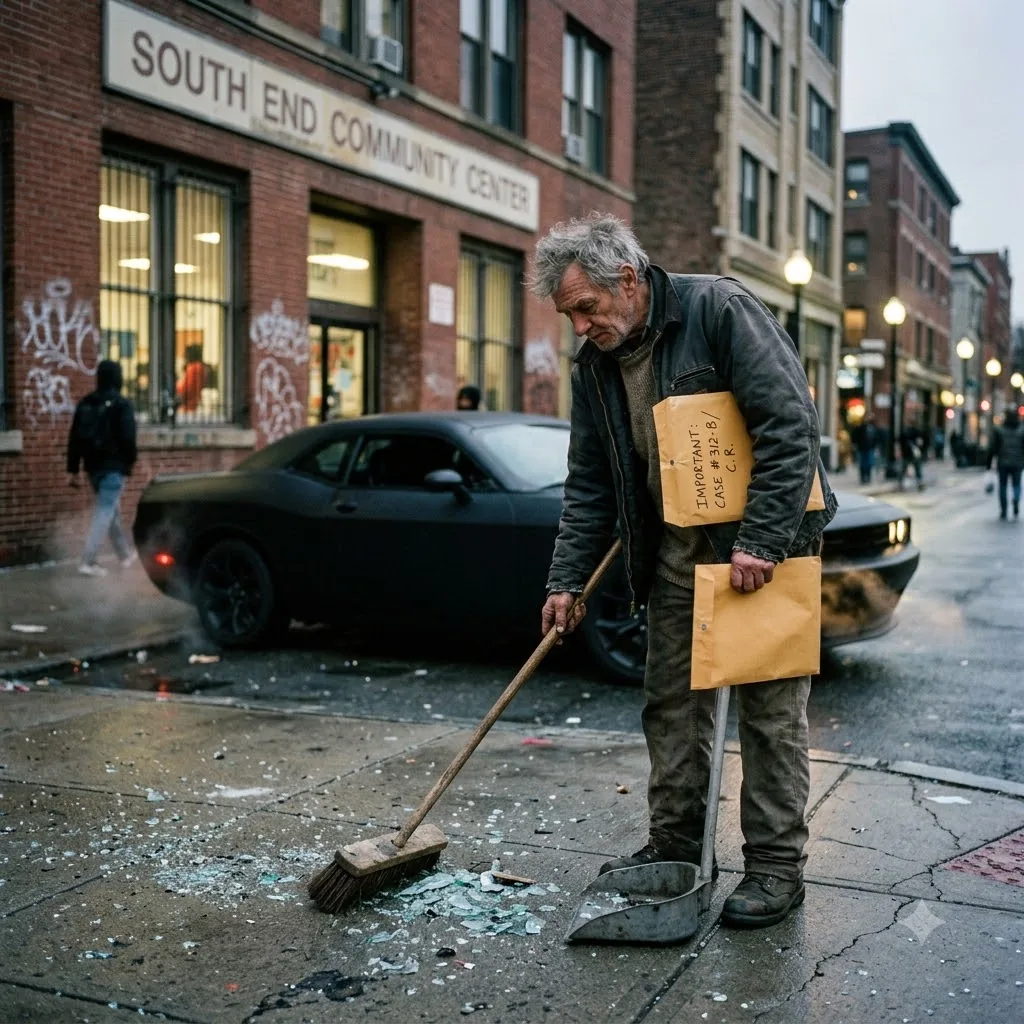
Marcus folded the court order and tucked it into the pocket of his heavy canvas jacket. He stood up, his battered knees popping in the cold, dead air of the massive room. He walked over to the corner and picked up his heavy wooden push broom.
He had won the war. He had kept the building. But as he pushed the coarse bristles across the spotless, abandoned hardwood floor, listening to the hollow scrape echo off the cinderblock walls, he realized the ultimate tragedy of his victory. He had saved the community center, only to become the sole warden of an empty, bankrupt prison.