Story code: ST-001711
Part 4: The Ghosts of October
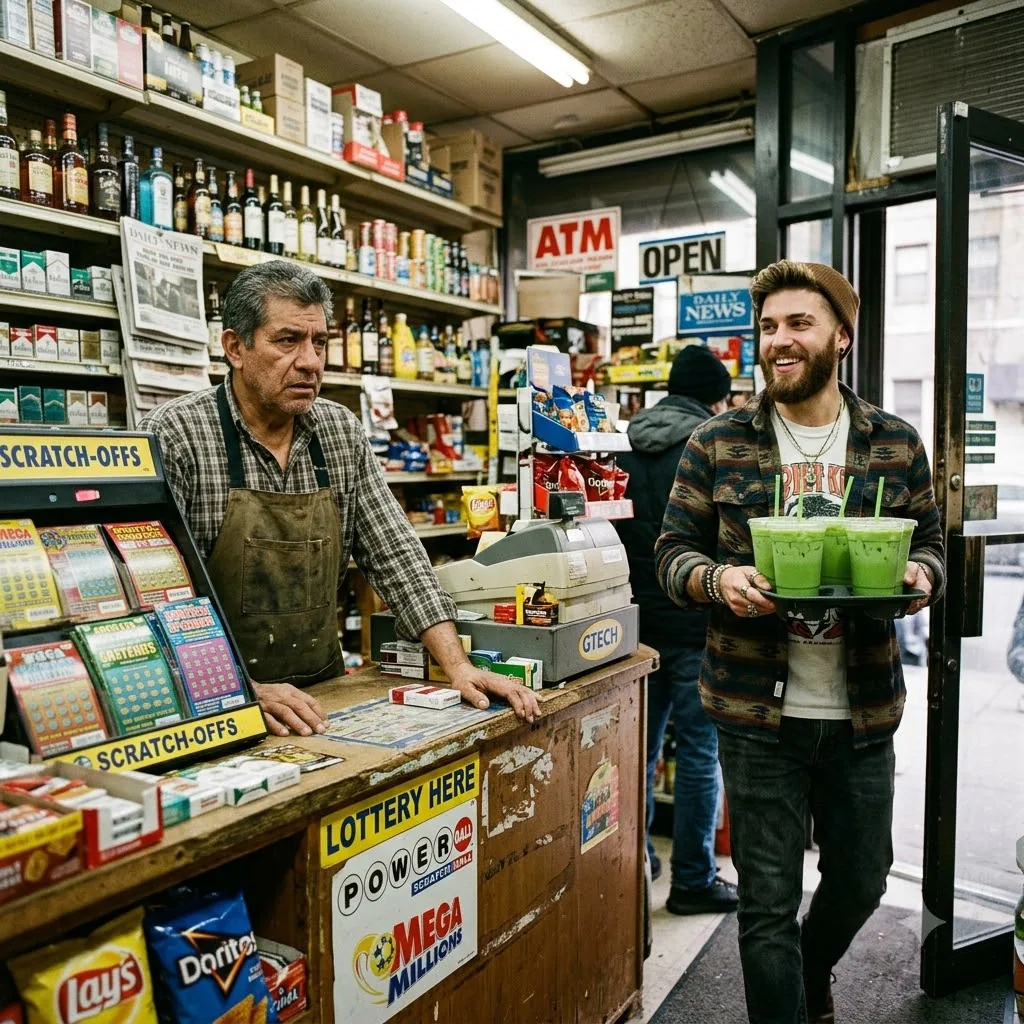
Tomas didn’t blink. He didn’t shout. He just stared at the man in the pastel polo shirt, letting the sheer, suffocating arrogance of the statement hang in the stale air. The absolute stillness of the bodega owner seemed to finally unnerve the cafe proprietor. The silence stretched between them, thick and heavy, broken only by the persistent, rattling cough of the ancient ice cream freezer compressor.
“Look,” Julian said, his voice tightening, suddenly defensive as he lost the last polished edge of his rehearsed, frictionless charm. He reached into his tailored pocket, pulled the folded fifty-dollar bill back out, and tossed it aggressively onto the scratched glass of the deli counter. It landed exactly where his municipal delivery waiver had been sitting minutes before. “Keep it. Buy yourself some packing boxes. You’re going to need them by the first.”
Julian spun on his pristine white sneakers, grabbing the thick brass fitting of the yellow commercial hose. He hauled it toward the door with sharp, angry jerks. The rigid rubber whipped against the narrow aisles, snagging on a wire rack of powdered donuts and sending it crashing to the floor. A cascade of generic potato chips and crushed pastries spilled across the faded linoleum. Julian didn’t apologize. He didn’t even look back. He shoved the heavy glass door open, making the ancient bell scream in protest, and dragged his hose out into the suffocating afternoon heat.
The door slammed shut. The chime rattled against the glass one last time, shuddered, and died.
Tomas stood alone in the center of his store. The earthy, sharp scent of Julian’s expensive cologne lingered in the trapped air, slowly mixing back in with the familiar, deeply ingrained odors of floor bleach, stale coffee, and ripening onions.
On the counter, the two plastic cups of iced matcha continued to sweat. A ring of condensation pooled on the scratched glass, creeping slowly toward the certified letter from Empire Holdings. And next to the letter, the crisp, green fifty-dollar bill sat like a final, mocking tip for twenty years of relentless service.
Tomas looked at the money. It wasn’t just fifty dollars. It was the subsidized runoff of his own destruction. It was the exact currency of his replacement, tossed at him by a man who believed the neighborhood’s history was nothing more than a gritty aesthetic to be mined for foot traffic and then discarded when it became inconvenient.
Tomas reached out and picked up the bill. The paper felt stiff and alien, entirely different from the soft, damp, crumpled singles Hector and the other regulars dug out of their work pants every morning. Tomas walked around the edge of the counter, stepping carefully over the fallen bags of chips, and stopped in front of the gray plastic trash can tucked beneath the lottery machine.
He didn’t tear the bill. He didn’t crumple it in a fit of rage. He just opened his calloused fingers and let the fifty dollars flutter down into the garbage. It landed softly atop a pile of damp, discarded coffee grounds and a handful of losing scratch-off tickets.
Then, Tomas turned his attention to the drinks.
He picked up the two sweating plastic cups. The violently green liquid inside had begun to separate, the expensive oat milk swirling into murky, pale streaks as the artisan ice melted into ordinary water. He carried them past the swinging wooden half-door and into his cramped back room. The space was lit by a single, flickering bare bulb, illuminating towering stacks of surplus canned goods and the deep, cast-iron utility sink that Julian had felt so completely entitled to claim.
Tomas turned on the hot water tap. The old plumbing groaned in the walls, spitting a brief, violent burst of rust before running clear. He popped the plastic lids off the cups and poured the ceremonial grade matcha straight down the drain. The thick green liquid hit the stained iron, swirling around the rusted metal grate before vanishing into the dark, echoing pipes. Tomas rinsed the empty cups, crushed the cheap plastic in his grip, and threw them into the back room bin.
When he walked back out to the main floor, the silence of the store felt entirely different. It wasn’t the peaceful quiet of a slow mid-afternoon lull. It was the heavy, suffocating silence of a definitive ending.
He looked out the barred front window. Across the street, the sun beat down mercilessly on the cracked pavement. A woman pushed a wire laundry cart toward the laundromat on the corner, her shoulders slumped under the oppressive heat. A delivery van rattled past, kicking up a cloud of exhaust and street dust. It looked exactly like the same neighborhood he had served for two decades, but the illusion was permanently broken.
The block wasn’t changing; it was already gone. It had been bundled, appraised, and sold out from under them in air-conditioned corporate boardrooms months ago. The people walking outside, the construction workers buying tallboys, the mothers buying milk-they were all just ghosts walking through a real estate portfolio, waiting for their own eviction notices to arrive.
Tomas walked back behind the counter and looked down at the certified letter from Empire Holdings. He didn’t slide it back under the outdated lottery sheets. There was no point in hiding it anymore. The eviction date, October 1st, glared up at him in bold, undeniable ink, marking the exact day his life would be cleared away to make room for a patio.
He picked up the red plastic broom leaning against the cigarette display. With slow, deliberate, mechanical movements, he walked over to the spilled potato chips and crushed donuts Julian had left in his wake. Tomas began to sweep, gathering the mess into a neat, precise pile on the fading linoleum, keeping his small corner of a sold neighborhood perfectly clean until the very last day.