Story code: ST-000520
Part 1: The Assessment
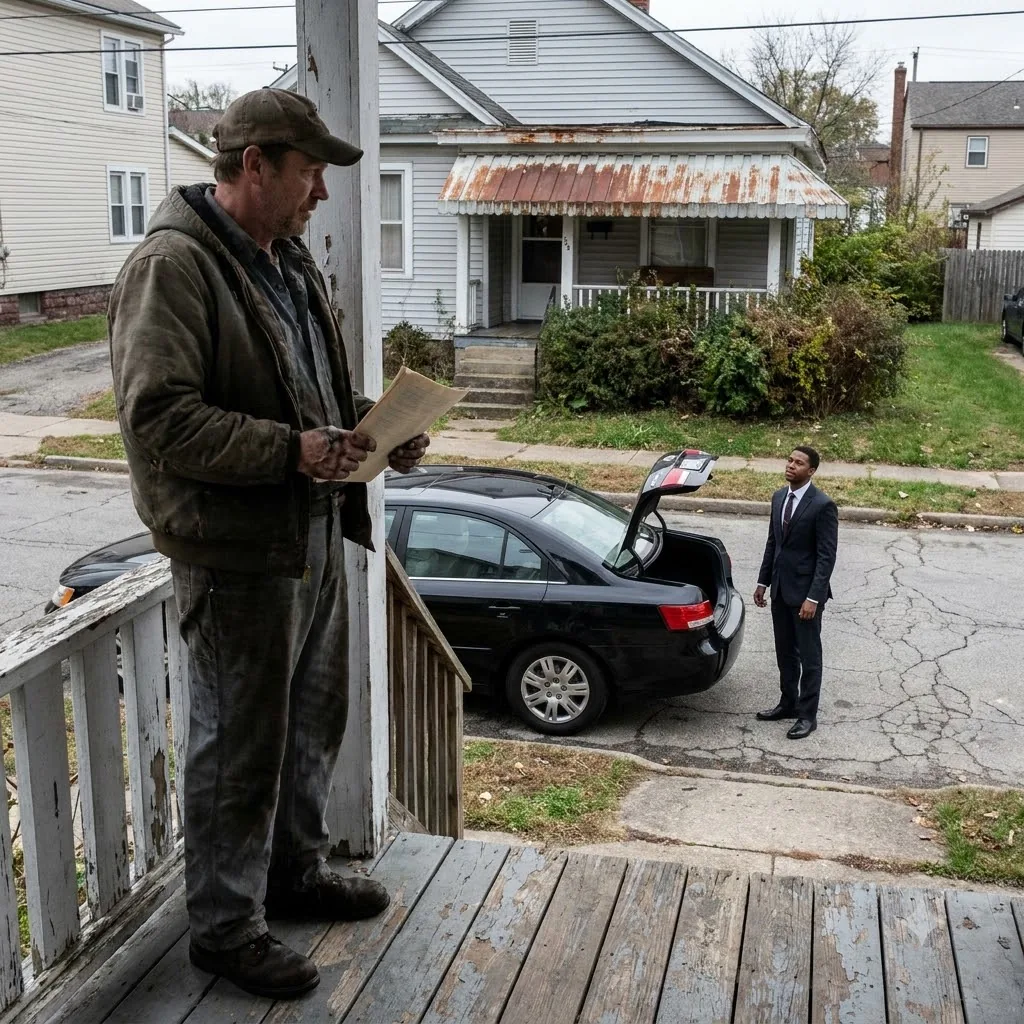
Arthur sat on his sagging front porch, his knuckles white around the county assessor’s notice. The bold printed numbers at the bottom of the page showed a figure exactly four times higher than last year’s property tax. He traced his calloused thumb over the ink, hoping his tired eyes were playing tricks in the afternoon glare. They were not. A quadrupled bill meant he would lose the house by December. He pressed his thumb against the edge of the paper, feeling it tear slightly under the pressure, and stared out at the cracked asphalt of Elm Street. The heat rose in shimmering waves off the road, baking the desperate reality of the notice into his skin.
The usual rattle of neighborhood traffic died instantly as a sleek black town car turned the corner. Its massive chassis ate up the narrow lane, forcing a rusted pickup truck to pull halfway onto the sidewalk to let it pass. Another identical black vehicle followed close behind, acting as a barricade for the street. The engines idled with a low, expensive hum that silenced the stray dogs and the clinking of porch wind-chimes. The lead car stopped directly in front of Arthur’s patched walkway, its dark tinted windows reflecting the peeling paint of his front door.
The rear passenger door swung open. Mayor Julian Reyes stepped out onto the crumbling curb, adjusting the lapels of a tailored charcoal suit that cost more than Arthur’s overdue roof repairs. Julian did not look toward Arthur’s porch. Instead, the mayor turned back to the town car and gestured expansively toward the fractured sidewalks and the overgrown empty lots.
Two men emerged from the leather-lined interior of the town car. They wore sharp, silver-gray suits and spoke in rapid, hushed tones in a language Arthur did not recognize. One of the foreign executives held a sleek digital tablet. The man swiped across the screen, pointing first at the vacant lot next door, then directly at Arthur’s sagging roofline. Julian smiled, placing a familiar hand on the executive’s shoulder. The mayor nodded enthusiastically, sweeping his arm down the length of the struggling neighborhood as if presenting a private estate.
Arthur felt the quadrupled tax bill burn against his palm. He crumpled the heavy stock paper into a tight fist and pushed himself out of his worn rocking chair. The porch boards groaned in protest under his heavy work boots. He marched down the three concrete steps, his pulse drumming a frantic rhythm against his collar. He intended to walk straight up to the mayor, to shove the impossible tax assessment into Julian’s perfectly pressed chest. He wanted to demand an explanation for the sudden spikes destroying the block, to force the man to look at the destruction he was signing into law.
Arthur crossed the patches of dead grass in his front yard, his stride long and aggressive. The mayor’s security detail shifted, uncrossing their arms, their eyes locking onto Arthur’s approach. Arthur ignored them, focusing entirely on the back of Julian’s expensive suit.
He was ten feet away when Julian turned toward the rear of the town car. The mayor pressed a button on his silver key fob. The trunk unlatched with a soft, electronic click and rose automatically, revealing a deep, velvet-lined storage space. Arthur kept his momentum, his jaw set hard, his fist raised slightly to present the crushed bill. He drew in a deep breath to shout Julian’s name across the short distance.
Arthur stopped entirely. The air rushed out of his lungs in a silent exhale.
Julian reached deep into the trunk and hefted something out with both hands, straining slightly against the sudden weight. It was a massive, solid brass fixture, heavily tarnished in the recessed corners but polished to a bright, golden gleam in the center. The deep, ragged gouge on the left side caught the harsh afternoon sun.
Arthur knew that specific gouge. He had caused it twenty-two years ago with a swinging steel pipe during a chaotic strike, back when that massive brass foundry hammer had served as the central door handle to the local union hall down on Fourth Street. It was a bespoke fixture that had been bolted through the thick oak doors of the hall for over half a century. Arthur’s own hands had pulled that very handle every morning of his working life, long before the mills shut down.
Julian wiped a smudge off the face of the brass hammer with his thumb, polishing the raised letters of the local chapter. The mayor then turned with a wide, congratulatory smile and extended the heavy brass piece toward the taller of the two foreign executives.
Arthur sat on his sagging front porch, his knuckles white around the county assessor’s notice. The bold printed numbers at the bottom of the page showed a figure exactly four times higher than last year’s property tax. He traced his calloused thumb over the ink, hoping his tired eyes were playing tricks in the afternoon glare. They were not. A quadrupled bill meant he would lose the house by December. He pressed his thumb against the edge of the paper, feeling it tear slightly under the pressure, and stared out at the cracked asphalt of Elm Street. The heat rose in shimmering waves off the road, baking the desperate reality of the notice into his skin.
The usual rattle of neighborhood traffic died instantly as a sleek black town car turned the corner. Its massive chassis ate up the narrow lane, forcing a rusted pickup truck to pull halfway onto the sidewalk to let it pass. Another identical black vehicle followed close behind, acting as a barricade for the street. The engines idled with a low, expensive hum that silenced the stray dogs and the clinking of porch wind-chimes. The lead car stopped directly in front of Arthur’s patched walkway, its dark tinted windows reflecting the peeling paint of his front door.
The rear passenger door swung open. Mayor Julian Reyes stepped out onto the crumbling curb, adjusting the lapels of a tailored charcoal suit that cost more than Arthur’s overdue roof repairs. Julian did not look toward Arthur’s porch. Instead, the mayor turned back to the town car and gestured expansively toward the fractured sidewalks and the overgrown empty lots.
Two men emerged from the leather-lined interior of the town car. They wore sharp, silver-gray suits and spoke in rapid, hushed tones in a language Arthur did not recognize. One of the foreign executives held a sleek digital tablet. The man swiped across the screen, pointing first at the vacant lot next door, then directly at Arthur’s sagging roofline. Julian smiled, placing a familiar hand on the executive’s shoulder. The mayor nodded enthusiastically, sweeping his arm down the length of the struggling neighborhood as if presenting a private estate.
Arthur felt the quadrupled tax bill burn against his palm. He crumpled the heavy stock paper into a tight fist and pushed himself out of his worn rocking chair. The porch boards groaned in protest under his heavy work boots. He marched down the three concrete steps, his pulse drumming a frantic rhythm against his collar. He intended to walk straight up to the mayor, to shove the impossible tax assessment into Julian’s perfectly pressed chest. He wanted to demand an explanation for the sudden spikes destroying the block, to force the man to look at the destruction he was signing into law.
Arthur crossed the patches of dead grass in his front yard, his stride long and aggressive. The mayor’s security detail shifted, uncrossing their arms, their eyes locking onto Arthur’s approach. Arthur ignored them, focusing entirely on the back of Julian’s expensive suit.
He was ten feet away when Julian turned toward the rear of the town car. The mayor pressed a button on his silver key fob. The trunk unlatched with a soft, electronic click and rose automatically, revealing a deep, velvet-lined storage space. Arthur kept his momentum, his jaw set hard, his fist raised slightly to present the crushed bill. He drew in a deep breath to shout Julian’s name across the short distance.
Arthur stopped entirely. The air rushed out of his lungs in a silent exhale.
Julian reached deep into the trunk and hefted something out with both hands, straining slightly against the sudden weight. It was a massive, solid brass fixture, heavily tarnished in the recessed corners but polished to a bright, golden gleam in the center. The deep, ragged gouge on the left side caught the harsh afternoon sun.
Arthur knew that specific gouge. He had caused it twenty-two years ago with a swinging steel pipe during a chaotic strike, back when that massive brass foundry hammer had served as the central door handle to the local union hall down on Fourth Street. It was a bespoke fixture that had been bolted through the thick oak doors of the hall for over half a century. Arthur’s own hands had pulled that very handle every morning of his working life, long before the mills shut down.
Julian wiped a smudge off the face of the brass hammer with his thumb, polishing the raised letters of the local chapter. The mayor then turned with a wide, congratulatory smile and extended the heavy brass piece toward the taller of the two foreign executives.