Story code: ST-000619
Part 3: The Stress Inoculation
The sweeping spotlights cut through the rotting planks of the lumber mill, casting long, frantic shadows across the terrified children huddled in the dark crates. Elena instinctively threw her body over the unconscious boy, shielding him as the harsh glare passed over them. Beside her, Mia dropped to her knees, burying her face in her blood-stained hands, sobbing quietly.
“Perimeter secured. Initiate thermal sweeps of the structure.”
The voice from the megaphone was heavy, metallic, and devoid of emotion. Elena braced herself, her mind racing through administrative protocols, calculating how to explain her presence to an armed corporate retrieval team. She gripped the heavy iron flashlight, ready to swing.
But the breach did not come from the front doors.
Deep in the shadows at the rear of the processing shed, a massive corrugated steel partition-one Elena had assumed was a solid structural wall-suddenly groaned. Heavy chains rattled, and the partition began to grind upward on rusted tracks. A wave of blinding, fluorescent light spilled into the dim mill, instantly replacing the smell of mildew and sawdust with the sharp, clinical sting of bleach, iodine, and engine oil.
A man stepped through the opening, silhouetted against the bright light. He was wearing a heavy, blood-soaked trauma apron over dark hospital scrubs. In his right hand, he held a police-issue tactical radio.
“Command, this is Medical Team Lead,” the man said into the radio, his voice echoing in the cavernous space. “Hold your thermal sweeps. I am inside the secondary structure. We have civilians present. Stand by.”
Elena’s breath caught in her throat. Her brain violently rejected what her eyes were seeing. “Marcus?”
Dr. Marcus Vance, the Chief of Emergency Medicine at Elena’s own hospital, lowered the radio. He blinked against the darkness of the mill, his eyes settling on Elena, then shifting down to the open bait box of QuickClot gauze at her feet.
“Elena?” Vance’s voice was a mix of sheer exhaustion and disbelief. “What the hell are you doing out here?”
Elena stood slowly, her hands trembling. She pointed the heavy flashlight at Mia, who was still cowering on the dirt floor. “I followed the missing trauma inventory! She took it! She told me an agricultural corporation was harvesting undocumented kids for the inner crop rows-”
Vance let out a heavy, furious sigh and shot a withering glare at the young woman on the floor. “An agro-corp? Mia, I told you to just grab the gauze and come back through the rear access. I didn’t tell you to pitch her a dystopian ghost story.”
“I panicked!” Mia cried, wiping her nose with her sleeve. “She tracked the box! I didn’t know who she was!”
Elena’s administrative detachment shattered completely. She looked back down at the unconscious boy in the crate, her mind racing to reconcile the horrific story she had just been told with the presence of her own ER Chief. She knelt back down in the dirt. She looked at the stark, perfect barcode tattooed on the side of the boy’s neck.
Elena reached out and pressed her thumb hard against the black lines. She scraped her fingernail against the edge. It didn’t bleed. The corner of the barcode caught on her nail and peeled back, revealing clean, unmarked skin beneath a layer of waterproof adhesive.
“This isn’t a tattoo,” Elena breathed, the realization sending a cold shock down her spine. “This is a mass casualty SMART tag. It’s a triage sorting sticker.”
She looked at the boy’s chest, the bubbling wound she had sealed, and the widespread, dark bruising across his collarbones and ribs. Her ten years as a trauma nurse overrode her panic.
“And this trauma…” Elena muttered, tracing the pattern of the bruising without touching his broken skin. “Bilateral contusions. Rib fractures. This isn’t a mechanical crush injury from a thresher. This is compression asphyxia. Somebody stepped on him. A lot of people stepped on him. He was trampled.”
“Walk in here,” Vance said quietly, stepping back into the harsh fluorescent light of the adjoining room.
Elena stood and walked slowly toward the raised partition. As she crossed the threshold, the true scale of the operation hit her.
They were not in a secondary lumber processing shed. They were inside a massive, abandoned auto-body shop that had once serviced the logging trucks. But the hydraulic car lifts suspended in the center of the room weren’t holding vehicles-they were repurposed to hold rows of hanging IV bags. Red metal toolboxes were flipped open, serving as sterile trays for surgical instruments. And scattered across the concrete floor, lying on folding tables, filthy mattresses, and moving blankets, were over forty teenagers. They were battered, bruised, and bleeding.
It was a massive, fully functioning trauma triage zone, entirely off the books.
“The county school district ran a ‘stress inoculation’ drill at the valley high school this afternoon,” Vance said, his voice flat and hollow. “It was designed to be hyper-realistic. No warning to the faculty, no warning to the students. They sent off-duty officers in full tactical gear into the hallways with blank-firing rifles and flashbangs.”
Elena remembered the routine administrative email about the drill, a memo she had archived without reading. “They didn’t tell the students?”
“They didn’t account for the ESL wing,” Vance said, a dark fury rising in his tone. “A hundred undocumented teenagers. Some of these kids fled real violence, real cartels, to cross the border. When heavily armed men in black body armor kicked in their classroom doors screaming and shooting, they didn’t think it was a drill. They thought it was an ICE raid. They thought it was a mass slaughter. They broke the second-story windows. They caused a blind, terrified stampede trying to get to the tree line. Dozens of them were crushed in the stairwells.”
Elena stared at the rows of injured children, her chest tight. “Marcus, we have a Level One trauma center twenty miles away. You’re the Chief of Medicine. You should have called a mass casualty code. We could have taken every single one of them.”
“And done what, Elena?” Vance stepped closer, his voice dropping to an intense, furious whisper. “The moment these kids cross our hospital’s sliding glass doors, they are registered. The police use our waiting room as a staging area. Half of these kids have pending deportation orders. Their parents would be arrested the second they stepped up to the front desk to look for them. They begged me, Elena. I was the medical observer for the drill. When I found them in the woods, they were dragging their crushed friends through the mud, hiding because they were more afraid of the system than they were of dying.”
Vance gestured sharply to Mia, who was quietly walking past them with an armful of IV tubing. “Mia is my niece. She’s a vet tech. I needed someone who could establish a venous line and keep her mouth shut. I couldn’t risk bringing hospital staff.”
The radio on Vance’s hip crackled loudly, the sudden noise making Elena jump.
“Medical Lead, this is SWAT Command,” the harsh, metallic voice barked through the speaker. “We are stacked at the perimeter. Ready to clear the structure for drill absconders. Do you require extraction?”
Vance didn’t pick up the radio. He just looked at Elena. The flashing red and blue lights of the police cruisers pulsed heavily through the frosted, cracked windows of the auto-body shop’s garage doors, painting the frightened faces of the teenagers in alternating colors.
“They think they are hunting for runaways,” Vance said quietly. “They don’t know I’ve been pulling the dying ones out of the ravine all night.”
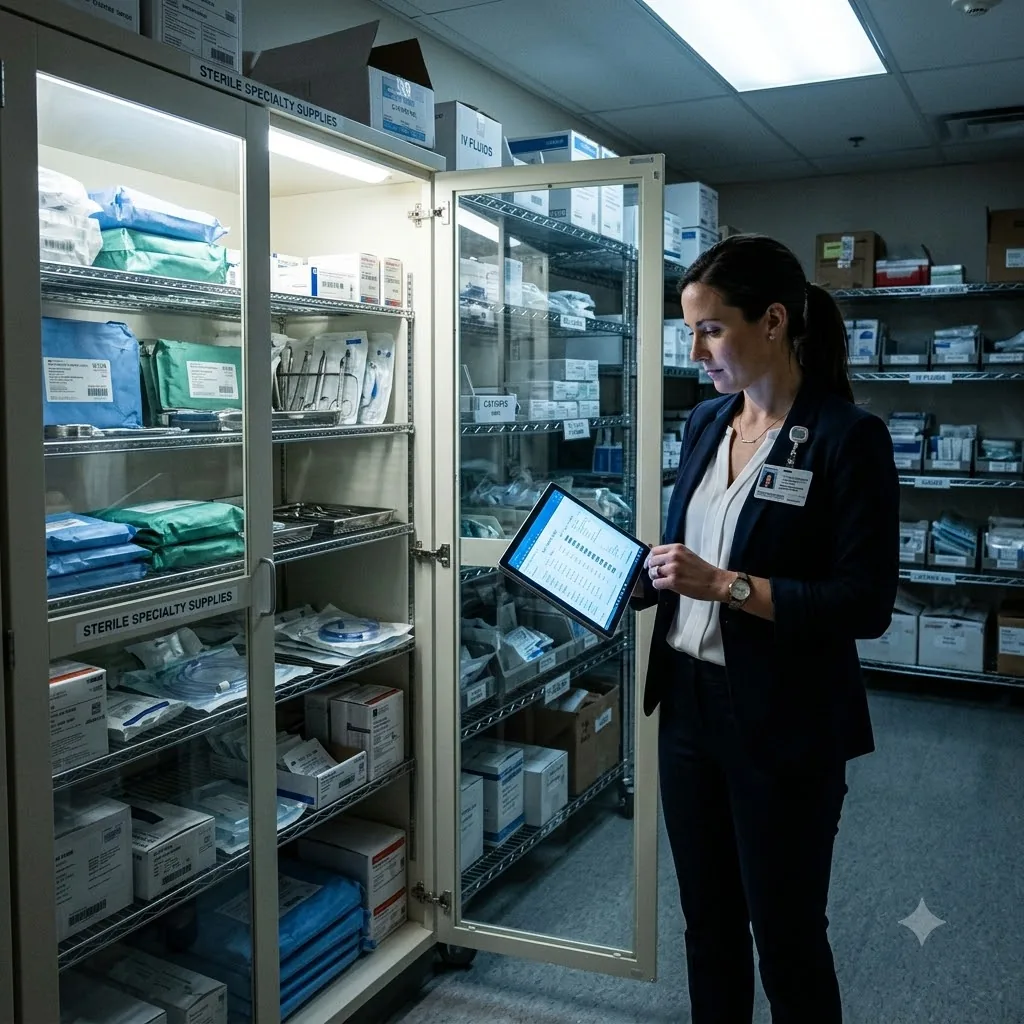
Elena looked down at the logistics tablet still clutched in her hand. The glowing screen showed the hospital’s supply matrix, the glaring red discrepancy of the stolen trauma gear that Vance had drained to save these kids. She was the administrator. She held the power to clear the inventory, or to open the doors.
The radio crackled again. “Medical Lead, respond. We are breaching the doors in thirty seconds.”