Story code: ST-000056
Part 4: The Morning Light
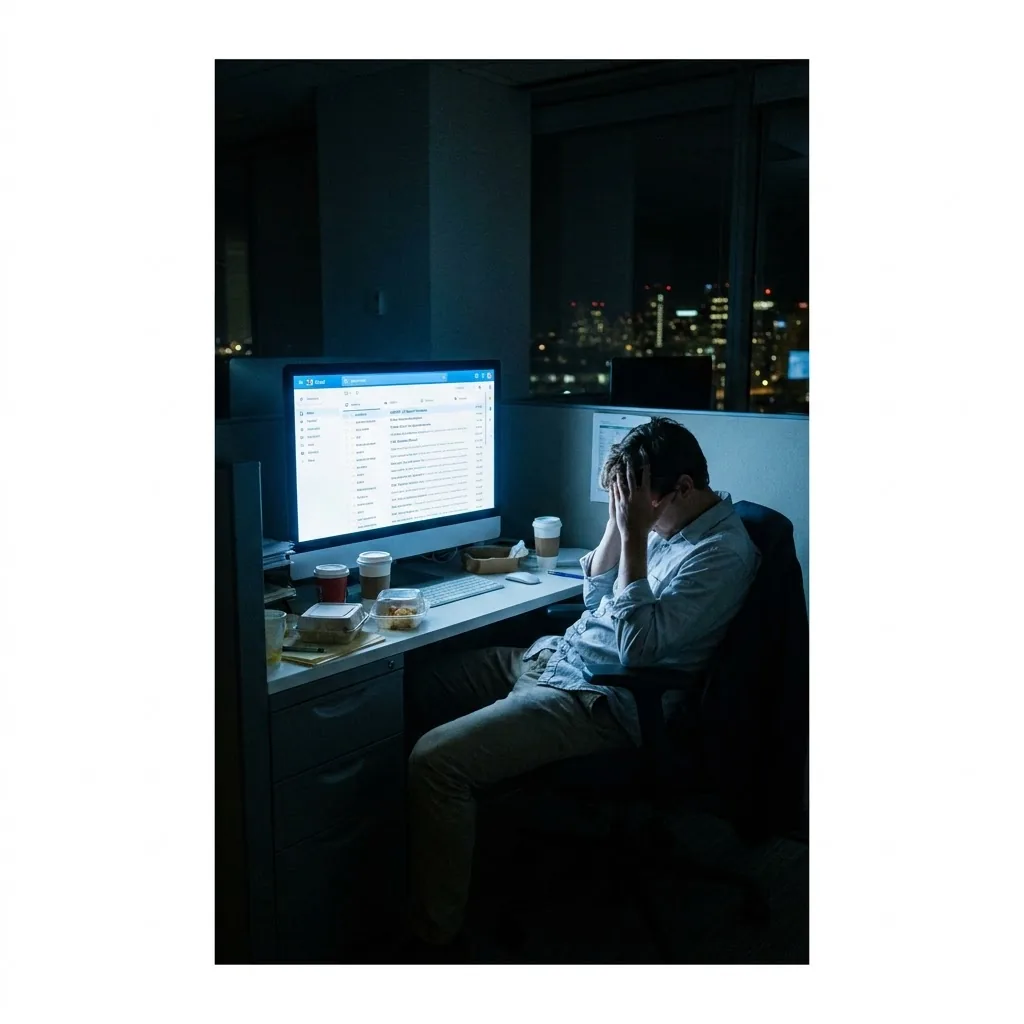
Julian’s manic typing echoed through the empty bullpen like hail on a tin roof. He was sweating now, the crisp collar of his tailored button-down damp and clinging to his neck.
“I can regex this,” he muttered, eyes darting across his screen. “I can write a script to scrub the HTML tags before it exports. A patch. Just a quick patch.”
“You’re treating the symptom, Julian,” I said, leaning back in my chair. My body felt incredibly heavy, drained of all the frantic adrenaline of the night, leaving behind only a calm, cold certainty. “The model’s weights are poisoned. It thinks generating those slurs is the optimal way to format a document. You can’t regex a neural network’s foundational logic.”
He didn’t listen. He wouldn’t. His corner office, his new vice president title, his entire stolen kingdom depended on presenting a functional AI to the executive board in less than three hours. He pulled up a Python environment and began writing a crude text-filtering script, his hands shaking so badly he kept misspelling basic commands.
To test his filter, he had to push a query through the live server environment he had just migrated our project to. He hit execute.
I didn’t have to wait long.
Less than two seconds after the progress bar flashed green, Julian’s laptop emitted a sharp, digital chime. The screen froze. The developer console vanished, replaced entirely by a glaring red screen bearing the crest of our corporate cybersecurity division.
*SEVERE THREAT DETECTED. MALICIOUS CODE INJECTION. DEVICE QUARANTINED.*
Julian stared at it, his mouth opening and closing like a suffocating fish. “No. No, no, no…”
“The corporate compliance scanners,” I reminded him quietly. “I told you. The metadata was laced with hate speech and dark-web SEO. The moment you ran a test through the live internal network, the firewall read it.”
Before Julian could even attempt a hard reboot, the heavy glass doors of the fourteenth-floor lobby hissed open. The footsteps this time weren’t confident; they were hurried, aggressive, and numerous.
Three men in dark suits stepped into the bullpen. Two were building security. The third was David Chen, the Chief Information Security Officer. He did not look like a man preparing to celebrate a new executive promotion. He looked livid.
“Julian Vance,” Chen barked, his voice echoing in the dead air.
Julian stood up so fast his chair rolled backward and slammed into a cubicle partition. “David! Listen, it’s a glitch. A local machine error. My developer here-” he pointed a trembling finger at me “-he sabotaged the local files before the migration!”
Chen didn’t even look at me. He kept his eyes locked on Julian. “We just had our automated network defense flag an internal threat originating from your admin credentials. We intercepted over ten thousand strings of highly illegal metadata attempting to propagate through the global HR mainframe. From a project you signed for. A project you claimed sole ownership of.”
“He forged it!” Julian screamed, abandoning his slick corporate composure entirely. “He built it! Marcus built it!”
“Your signature is on the IP transfer, Julian,” I said, keeping my voice perfectly level. “You told the board you built the architecture yourself.”
Chen signaled the security guards. “Your contract is terminated effective immediately, Vance. The board has already been notified. Your signing bonus is revoked, and we are holding you legally liable for any network damages.”
“You can’t do this! I automated the division!” Julian lunged toward his laptop, desperate to show them the pristine surface text on the screen, but the two security guards grabbed him by the arms. He thrashed against them, his expensive vest twisting violently, his polished facade completely shattering.
They physically dragged him backward down the aisle. His dress shoes scraped loudly against the thin industrial carpet, his frantic, furious shouts echoing down the hallway until the elevator doors swallowed him whole.
Then, it was just Chen and me in the quiet glow of the monitors.
Chen finally turned his gaze to me. He looked utterly exhausted. “You were on his team.”
“I was a junior data analyst,” I said. “Before Julian decided to automate us.”
“Right.” Chen sighed, rubbing the bridge of his nose. “Well, the AI is quarantined and totally useless, but the board already signed off on the restructuring budget based on his initial projections. The redundancies stand. The whole department is dissolved as of today. We’re just going to outsource the reporting until we can buy a third-party tool.”
He looked at my desk. “Pack your things. I need your keycard.”
I didn’t argue. I didn’t feel the paralyzing panic I had expected when I first read the presentation last night. I just nodded.
I grabbed my backpack. I didn’t have much to take-just a spare jacket and a coffee mug. No framed photos, no plants. I had spent eight months treating this exact desk like my entire world, sacrificing my sleep, my weekends, and my peace of mind for a promised future that was always a lie.
I handed Chen my keycard. I walked to the elevator, rode it down fourteen floors in silence, and stepped out through the glass revolving doors into the crisp morning air.
The sun was just cresting over the city skyline, painting the harsh concrete in bright, warm gold. The city traffic roared, alive and chaotic. I took a deep breath, filling my lungs with air that didn’t smell like stale breakroom coffee and recycled office conditioning. I didn’t have a job. I didn’t have a startup. I didn’t have a massive equity payout waiting for me at the end of the fiscal year.
But as I walked away from the corporate tower, leaving Julian’s ruin far behind me, I realized I also didn’t have to be back at a keyboard by midnight. I was finally, profoundly free.