Story code: ST-001484
Part 1: Blood and Steel
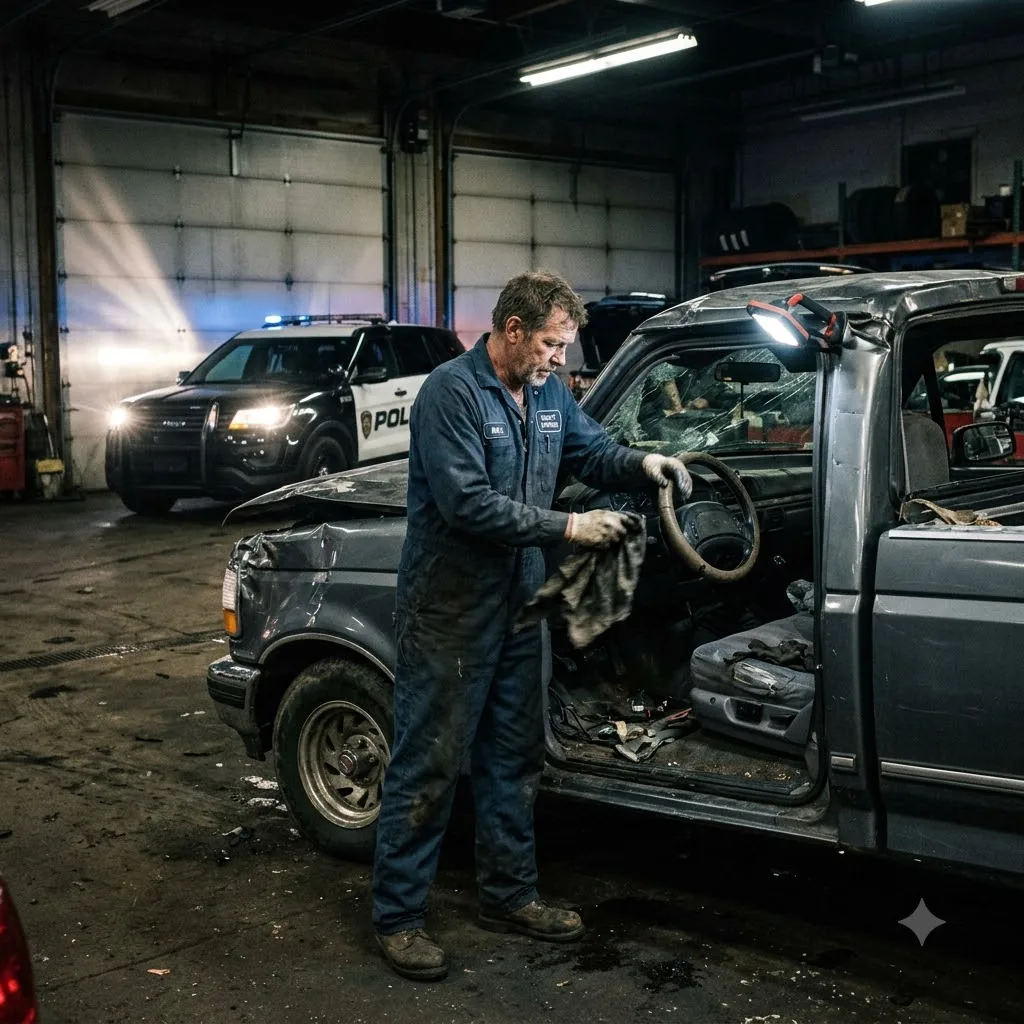
Elias pressed a bleach-soaked sponge into the cracked vinyl of the wrecked F-150, bearing down until the dark, rust-colored stains began to foam. The chemical burn stung his nostrils, masking the heavy scent of copper that lingered in the crushed cab. He tossed the ruined sponge into a bucket and wedged a heavy crowbar under the shattered dashboard, hunting for the plastic housing of the data recorder. The mangled metal of the passenger side groaned in the quiet of the midnight garage as he wrenched the black box free from its mounting bracket.
He carried the module to the heavy steel workbench at the back of the shop. The job was simple, dictated by a note left next to a thick manila envelope. Clean the interior. Destroy the box. Leave no trace of the passenger. Elias placed the black plastic square squarely in the center of an anvil. It took four vicious strikes with a sledgehammer to shatter the reinforced casing. Shards of plastic exploded across the concrete. Elias picked through the debris with thick leather gloves, isolating the green circuit board and the dense silicone memory chip. He laid the chip back on the anvil and brought the hammer down flat. The metal rang out, vibrating up his forearms. He struck it again, turning the digital record of the collision into useless gray powder. He swept the dust and plastic shards into a dustpan, dumped the mess into a barrel of used oil filters, and buried it under a layer of grease-soaked rags.
The manila envelope waiting on his toolbox felt heavy. Elias wiped his hands on his coveralls, leaving dark smears across the denim, and tore the seal. He thumbed through the crisp hundred-dollar bills. This was enough to cover rent, groceries, and the extortionate mandatory supervision fees required to keep him out of a concrete cell. He folded the stack of bills, shoved them deep into his front pocket, and turned to hit the main breaker panel to plunge the shop into darkness.
The side door of the garage clicked open. A heavy boot stepped over the threshold, grinding against the loose gravel and broken glass.
Elias froze with his hand hovering an inch from the light switch.
Officer Vance stepped into the harsh fluorescent glare, looking completely out of place in a tailored charcoal blazer and polished dress shoes. Vance let the heavy metal door slam shut behind him. The solid thud echoed off the corrugated steel walls, sealing the space. Vance did not look at the wrecked, bloody truck. He did not look at the shattered dashboard or the bucket of red-tinted bleach water. He kept his pale, unblinking eyes locked squarely on Elias.
Vance reached into the interior pocket of his blazer and withdrew a trifolded sheet of standard printer paper. He flattened it out against his thigh with deliberate, agonizing slowness, smoothing the creases with his thumb. Elias kept his hands in plain view, lowering them to rest flat against the edge of his toolbox. He focused entirely on regulating his breathing, forcing his chest to rise and fall at a steady pace. A probation officer arriving at an industrial salvage yard at two in the morning meant the fragile, exhausting peace Elias had fought to maintain was about to end.
Vance stated that working the graveyard shift was a lonely way to live.
Elias gave a sharp, single nod. He explained that the salvage yard paid a necessary premium for overnight processing, keeping his tone perfectly flat and deferential.
Vance stepped closer, his polished shoes landing squarely in a sticky puddle of spilled transmission fluid. He did not seem to notice or care about the ruin of his footwear. He held up the piece of paper, turning it slowly so Elias could read the dense black text printed across the top. It was a standard municipal printout detailing three unpaid parking tickets.
Elias read the dates and the staggering accumulation of late penalties on the citations. A cold, prickling sweat broke out on the back of his neck. He stated firmly that he did not own a vehicle, that he walked three miles to the shop every day, and that the citations had to belong to someone else.
Vance raised a single finger to silence him. The officer stated that the municipal system operated flawlessly, and that unpaid civil debts constituted a direct, immediate violation of his release conditions. The rules were absolute, leaving no room for administrative excuses.
Vance detailed the immediate consequences. A violation meant a mandatory hold in the county detention center. It meant a judge would scrutinize his file, his employment, and his associates. It meant the thick wad of undocumented cash currently burning a hole in Elias’s pocket would be seized as evidence of illicit activity.
Vance reached around to the back of his leather belt. The unmistakable rasp of steel sliding out of a nylon pouch filled the quiet garage. Vance held up a pair of heavy metal handcuffs, letting the chain dangle and clink in the dead air. He instructed Elias to turn around and place his hands flat against the side of the bloodstained F-150.
Elias pressed a bleach-soaked sponge into the cracked vinyl of the wrecked F-150, bearing down until the dark, rust-colored stains began to foam. The chemical burn stung his nostrils, masking the heavy scent of copper that lingered in the crushed cab. He tossed the ruined sponge into a bucket and wedged a heavy crowbar under the shattered dashboard, hunting for the plastic housing of the data recorder. The mangled metal of the passenger side groaned in the quiet of the midnight garage as he wrenched the black box free from its mounting bracket.
He carried the module to the heavy steel workbench at the back of the shop. The job was simple, dictated by a note left next to a thick manila envelope. Clean the interior. Destroy the box. Leave no trace of the passenger. Elias placed the black plastic square squarely in the center of an anvil. It took four vicious strikes with a sledgehammer to shatter the reinforced casing. Shards of plastic exploded across the concrete. Elias picked through the debris with thick leather gloves, isolating the green circuit board and the dense silicone memory chip. He laid the chip back on the anvil and brought the hammer down flat. The metal rang out, vibrating up his forearms. He struck it again, turning the digital record of the collision into useless gray powder. He swept the dust and plastic shards into a dustpan, dumped the mess into a barrel of used oil filters, and buried it under a layer of grease-soaked rags.
The manila envelope waiting on his toolbox felt heavy. Elias wiped his hands on his coveralls, leaving dark smears across the denim, and tore the seal. He thumbed through the crisp hundred-dollar bills. This was enough to cover rent, groceries, and the extortionate mandatory supervision fees required to keep him out of a concrete cell. He folded the stack of bills, shoved them deep into his front pocket, and turned to hit the main breaker panel to plunge the shop into darkness.
The side door of the garage clicked open. A heavy boot stepped over the threshold, grinding against the loose gravel and broken glass.
Elias froze with his hand hovering an inch from the light switch.
Officer Vance stepped into the harsh fluorescent glare, looking completely out of place in a tailored charcoal blazer and polished dress shoes. Vance let the heavy metal door slam shut behind him. The solid thud echoed off the corrugated steel walls, sealing the space. Vance did not look at the wrecked, bloody truck. He did not look at the shattered dashboard or the bucket of red-tinted bleach water. He kept his pale, unblinking eyes locked squarely on Elias.
Vance reached into the interior pocket of his blazer and withdrew a trifolded sheet of standard printer paper. He flattened it out against his thigh with deliberate, agonizing slowness, smoothing the creases with his thumb. Elias kept his hands in plain view, lowering them to rest flat against the edge of his toolbox. He focused entirely on regulating his breathing, forcing his chest to rise and fall at a steady pace. A probation officer arriving at an industrial salvage yard at two in the morning meant the fragile, exhausting peace Elias had fought to maintain was about to end.
Vance stated that working the graveyard shift was a lonely way to live.
Elias gave a sharp, single nod. He explained that the salvage yard paid a necessary premium for overnight processing, keeping his tone perfectly flat and deferential.
Vance stepped closer, his polished shoes landing squarely in a sticky puddle of spilled transmission fluid. He did not seem to notice or care about the ruin of his footwear. He held up the piece of paper, turning it slowly so Elias could read the dense black text printed across the top. It was a standard municipal printout detailing three unpaid parking tickets.
Elias read the dates and the staggering accumulation of late penalties on the citations. A cold, prickling sweat broke out on the back of his neck. He stated firmly that he did not own a vehicle, that he walked three miles to the shop every day, and that the citations had to belong to someone else.
Vance raised a single finger to silence him. The officer stated that the municipal system operated flawlessly, and that unpaid civil debts constituted a direct, immediate violation of his release conditions. The rules were absolute, leaving no room for administrative excuses.
Vance detailed the immediate consequences. A violation meant a mandatory hold in the county detention center. It meant a judge would scrutinize his file, his employment, and his associates. It meant the thick wad of undocumented cash currently burning a hole in Elias’s pocket would be seized as evidence of illicit activity.
Vance reached around to the back of his leather belt. The unmistakable rasp of steel sliding out of a nylon pouch filled the quiet garage. Vance held up a pair of heavy metal handcuffs, letting the chain dangle and clink in the dead air. He instructed Elias to turn around and place his hands flat against the side of the bloodstained F-150.