Story code: ST-001462
Part 1: The Overpaint
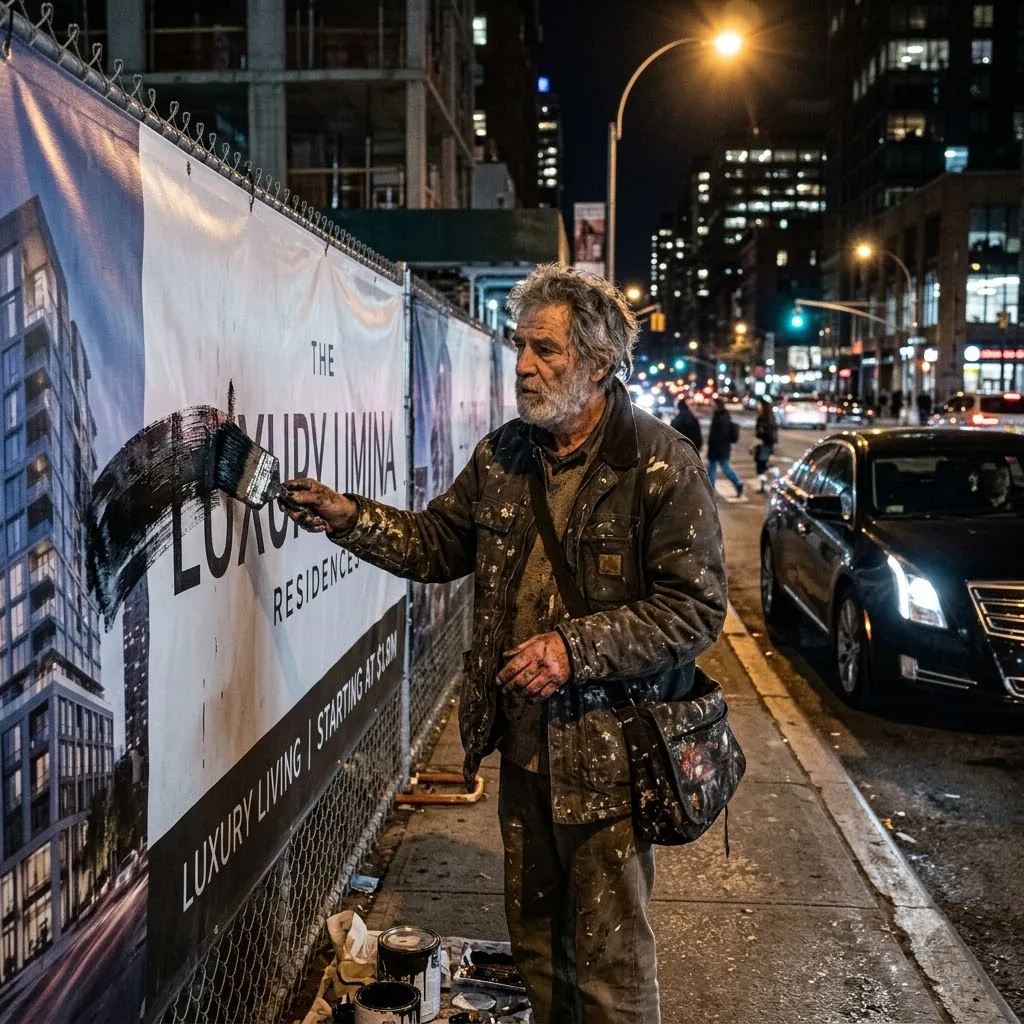
The heavy, chemical sweetness of Spanish Olive spray paint overpowered the damp two-in-the-morning exhaust settling over the intersection of Ninth and Alder. Hector pressed the customized fat cap against the tension of the massive vinyl banner, feeling the slick, unnatural surface of the luxury condo advertisement yield slightly as he traced the outline of a face that had belonged on this brick wall for twenty years. The banner proclaimed “The Horizon at Alder: Elevating the Urban Experience” in crisp, soulless white lettering. Hector layered a deep terracotta over the word “Elevating,” silencing the rattle of the mixing marble by keeping his wrist perfectly locked.
His shoulder burned from three hours of continuous work. He wiped a streak of condensation and sweat from his forehead with the back of his forearm, taking a half-step back on the milk crate to check the proportions. The mural was coming back to life directly on top of the corporate plastic that had been bolted over the original brick. He recreated the weathered lines around the eyes of the neighborhood matriarchs, the precise angle of the corner bodega’s awning, and the vibrant, chaotic geometry of the community garden. He painted from pure muscle memory. They had covered his history, so he was using their marketing budget as a new canvas.
A cold gust of wind swept up the avenue, making the massive vinyl sheet billow and snap against the masonry. Hector checked his watch, calculating the minutes before the shift change at the precinct three blocks away. He needed to finish the primary linework before the early morning delivery trucks started their routes. He swapped the Spanish Olive for a can of Bone White, shaking it with short, muffled strokes against his thigh. He leaned in to highlight the edges of the matriarch’s collar.
The heavy, electric purr of an approaching engine broke the quiet isolation of the intersection. Hector stopped. He slid the can into the deep pocket of his cargo jacket and stepped back into the deep shadows cast by the overhanging fire escape. He expected the slow, sweeping spotlight of a patrol cruiser.
Instead, a sleek black town car with heavily tinted windows glided to a stop directly beneath the sodium streetlamp. The vehicle sat idling, the engine completely silent now except for the faint hum of its climate control system.
Hector held his breath, pressing his spine against the cold brick. The rear passenger door opened with a heavy, expensive thud. A young man stepped onto the cracked pavement. He wore a sharply tailored navy suit under a charcoal wool overcoat, his polished leather oxfords reflecting the orange streetlights. The man did not look around nervously. He did not scan the alleys or check his watch. He walked with measured, unhurried steps directly toward the shadow where Hector stood, completely ignoring the wet paint dripping from the vinyl banner.
The man stopped a respectful three feet away. He did not flinch at the overwhelming fumes of fresh aerosol. He reached inside his overcoat and produced a thick, heavy-stock envelope, extending it into the dim light.
Hector did not move. He kept his hands in his pockets, his fingers resting on the cold aluminum of the spray can.
The man spoke in a calm, flat tone, stating that Hector needed to take the document. There was no aggression in his posture, only the supreme confidence of someone backed by endless billable hours. He stated that avoiding service would only complicate the timeline.
Slowly, Hector pulled his right hand free, his fingertips stained with terracotta and white paint. He took the envelope. The paper was thick, textured, and carried a faint smell of laser toner. The man offered a curt, single nod, pivoted on his heel, and walked back to the idling town car.
The heavy door clicked shut, and the vehicle pulled away, merging seamlessly into the empty avenue. Hector stepped out from the fire escape shadow and ripped the seal of the envelope with his thumb. He tilted the thick stack of legal paper toward the orange glow of the streetlamp.
The bold, capitalized header at the top of the first page read “FELONY COMPLAINT AND PETITION FOR INJUNCTIVE RELIEF.” The plaintiff listed was David Vance, Managing Director of Horizon Development Partners. Hector skimmed the dense paragraphs of legalese. They were not just charging him with criminal mischief and destruction of private property. They were citing damages in excess of fifty thousand dollars, classifying his restoration work as an act of targeted economic sabotage.
Hector turned to the second page. A drafted press release was clipped to the back of the legal filing. The headline read, “Local Vandal Disrupts Community Progress and Affordable Housing Initiative.” The document detailed how David Vance, a self-made entrepreneur, was fighting to bring prosperity to a decaying neighborhood, painting Hector as a dangerous reactionary violently opposing modern revitalization. The PR strategy was clear and devastating. They were going to weaponize David’s success story to completely erase the neighborhood’s actual history, turning Hector’s community against him before he even saw a courtroom.
Hector stared at the final paragraph of the press release, a quote from David expressing deep personal sorrow over the senseless destruction of community resources. A loud metallic clatter echoed from the mouth of the alley to his left, followed by the heavy, rhythmic thud of combat boots hitting the pavement at a dead sprint.
The heavy, chemical sweetness of Spanish Olive spray paint overpowered the damp two-in-the-morning exhaust settling over the intersection of Ninth and Alder. Hector pressed the customized fat cap against the tension of the massive vinyl banner, feeling the slick, unnatural surface of the luxury condo advertisement yield slightly as he traced the outline of a face that had belonged on this brick wall for twenty years. The banner proclaimed “The Horizon at Alder: Elevating the Urban Experience” in crisp, soulless white lettering. Hector layered a deep terracotta over the word “Elevating,” silencing the rattle of the mixing marble by keeping his wrist perfectly locked.
His shoulder burned from three hours of continuous work. He wiped a streak of condensation and sweat from his forehead with the back of his forearm, taking a half-step back on the milk crate to check the proportions. The mural was coming back to life directly on top of the corporate plastic that had been bolted over the original brick. He recreated the weathered lines around the eyes of the neighborhood matriarchs, the precise angle of the corner bodega’s awning, and the vibrant, chaotic geometry of the community garden. He painted from pure muscle memory. They had covered his history, so he was using their marketing budget as a new canvas.
A cold gust of wind swept up the avenue, making the massive vinyl sheet billow and snap against the masonry. Hector checked his watch, calculating the minutes before the shift change at the precinct three blocks away. He needed to finish the primary linework before the early morning delivery trucks started their routes. He swapped the Spanish Olive for a can of Bone White, shaking it with short, muffled strokes against his thigh. He leaned in to highlight the edges of the matriarch’s collar.
The heavy, electric purr of an approaching engine broke the quiet isolation of the intersection. Hector stopped. He slid the can into the deep pocket of his cargo jacket and stepped back into the deep shadows cast by the overhanging fire escape. He expected the slow, sweeping spotlight of a patrol cruiser.
Instead, a sleek black town car with heavily tinted windows glided to a stop directly beneath the sodium streetlamp. The vehicle sat idling, the engine completely silent now except for the faint hum of its climate control system.
Hector held his breath, pressing his spine against the cold brick. The rear passenger door opened with a heavy, expensive thud. A young man stepped onto the cracked pavement. He wore a sharply tailored navy suit under a charcoal wool overcoat, his polished leather oxfords reflecting the orange streetlights. The man did not look around nervously. He did not scan the alleys or check his watch. He walked with measured, unhurried steps directly toward the shadow where Hector stood, completely ignoring the wet paint dripping from the vinyl banner.
The man stopped a respectful three feet away. He did not flinch at the overwhelming fumes of fresh aerosol. He reached inside his overcoat and produced a thick, heavy-stock envelope, extending it into the dim light.
Hector did not move. He kept his hands in his pockets, his fingers resting on the cold aluminum of the spray can.
The man spoke in a calm, flat tone, stating that Hector needed to take the document. There was no aggression in his posture, only the supreme confidence of someone backed by endless billable hours. He stated that avoiding service would only complicate the timeline.
Slowly, Hector pulled his right hand free, his fingertips stained with terracotta and white paint. He took the envelope. The paper was thick, textured, and carried a faint smell of laser toner. The man offered a curt, single nod, pivoted on his heel, and walked back to the idling town car.
The heavy door clicked shut, and the vehicle pulled away, merging seamlessly into the empty avenue. Hector stepped out from the fire escape shadow and ripped the seal of the envelope with his thumb. He tilted the thick stack of legal paper toward the orange glow of the streetlamp.
The bold, capitalized header at the top of the first page read “FELONY COMPLAINT AND PETITION FOR INJUNCTIVE RELIEF.” The plaintiff listed was David Vance, Managing Director of Horizon Development Partners. Hector skimmed the dense paragraphs of legalese. They were not just charging him with criminal mischief and destruction of private property. They were citing damages in excess of fifty thousand dollars, classifying his restoration work as an act of targeted economic sabotage.
Hector turned to the second page. A drafted press release was clipped to the back of the legal filing. The headline read, “Local Vandal Disrupts Community Progress and Affordable Housing Initiative.” The document detailed how David Vance, a self-made entrepreneur, was fighting to bring prosperity to a decaying neighborhood, painting Hector as a dangerous reactionary violently opposing modern revitalization. The PR strategy was clear and devastating. They were going to weaponize David’s success story to completely erase the neighborhood’s actual history, turning Hector’s community against him before he even saw a courtroom.
Hector stared at the final paragraph of the press release, a quote from David expressing deep personal sorrow over the senseless destruction of community resources. A loud metallic clatter echoed from the mouth of the alley to his left, followed by the heavy, rhythmic thud of combat boots hitting the pavement at a dead sprint.