Story code: ST-000680
Part 1: The Golden Handcuffs
Ma poured the cheap champagne into three mismatched plastic soda tumblers, the foam spilling over her scarred knuckles and pooling on the sticky formica counter. The deep fryer bubbled its familiar, exhausting rhythm in the background, pumping out a thick cloud of oxidized peanut oil and scorched garlic that had clung to Leo’s clothes since he was seven. For thirty years, this narrow, windowless kitchen had been a prison of eighty-hour work weeks. Tonight, his parents thought they were finally escaping it. Leo stared at the fizzing golden liquid in his cup, his stomach twisting into a tight, sickening knot. He had exactly fourteen minutes before the illusion shattered completely.
Baba lifted his tumbler with hands that shook slightly, the tendons thick and ropy from decades of hauling fifty-pound sacks of jasmine rice and cases of frozen poultry. He grinned, revealing the gold tooth he had refused to replace so they could afford Leo’s university tuition. Next to the cash register sat a preliminary contract with the number one point five million printed in bold black ink. The corporate developers intended to bulldoze the entire block, erasing the peeling linoleum, the cracked neon sign buzzing in the front window, and the entire row of aging immigrant-owned shops to make way for a towering glass structure of luxury condominiums. To Baba and Ma, that check represented absolute salvation. It meant a house in the suburbs with a small garden, a retirement devoid of crippling back pain, and a quiet life they had bled every single day to earn.
Leo forced his mouth into a stiff smile and clinked his plastic cup against theirs. The champagne tasted like battery acid on his tongue. The phone in his pocket felt like a lead weight pressing against his thigh. He kept his hand hovering near it, waiting for the inevitable vibration. Just forty-eight hours ago, he had convinced himself he was doing the righteous thing. He had looked at the neighborhood as a sacred sanctuary. This block was a monument to their history, a vibrant cultural touchstone that corporate money should never be allowed to pave over and sanitize. He had marched into a municipal office downtown with a fiery sense of justice. He had signed the documents, filed the urgent motions with the pro-bono attorney, and initiated a binding legal process that would freeze the real estate buyout dead in its tracks. He had done it to protect their legacy from gentrification. Now, looking at the exhausted, radiant faces of his aging parents, the crushing weight of his arrogance crashed down on him. He realized he had just condemned them to die behind a deep fryer.
Ten minutes left. Ma was already packing a cardboard box with the ceramic lucky cat statues and the framed first dollar they ever made. She hummed a traditional folk song from her village, a bright, hopeful melody Leo had not heard her sing since he was a small child. Every note felt like a physical blow to his ribs. He opened his mouth to tell them. He needed to prepare them for the harsh reality of what was about to happen. The words jammed in his throat, completely blocked by shame. He looked down at the thick stack of unpaid utility bills shoved carelessly under the register drawer, the red warning notices peeking out from the edges. The buyout was supposed to clear all of that debt. His filing, the one meant to save the soul of the community, was going to drown his family in a permanent state of poverty.
Seven minutes. The neon sign had been switched off an hour ago, leaving the dining room bathed in the harsh, flickering fluorescence of the streetlights outside. Long shadows stretched across the empty, duct-taped vinyl booths. Leo pulled his phone out, pretending to check the time. No messages yet. The attorney had promised to notify him the exact second the legal notice was formally served to the developer’s acquisitions team. Once that happened, the developer was legally bound to notify all the sellers immediately. The chain reaction was unavoidable. Leo wiped a thick film of cold sweat from his forehead. He imagined throwing the device directly into the boiling oil. It would not stop the gears he had already put in motion.
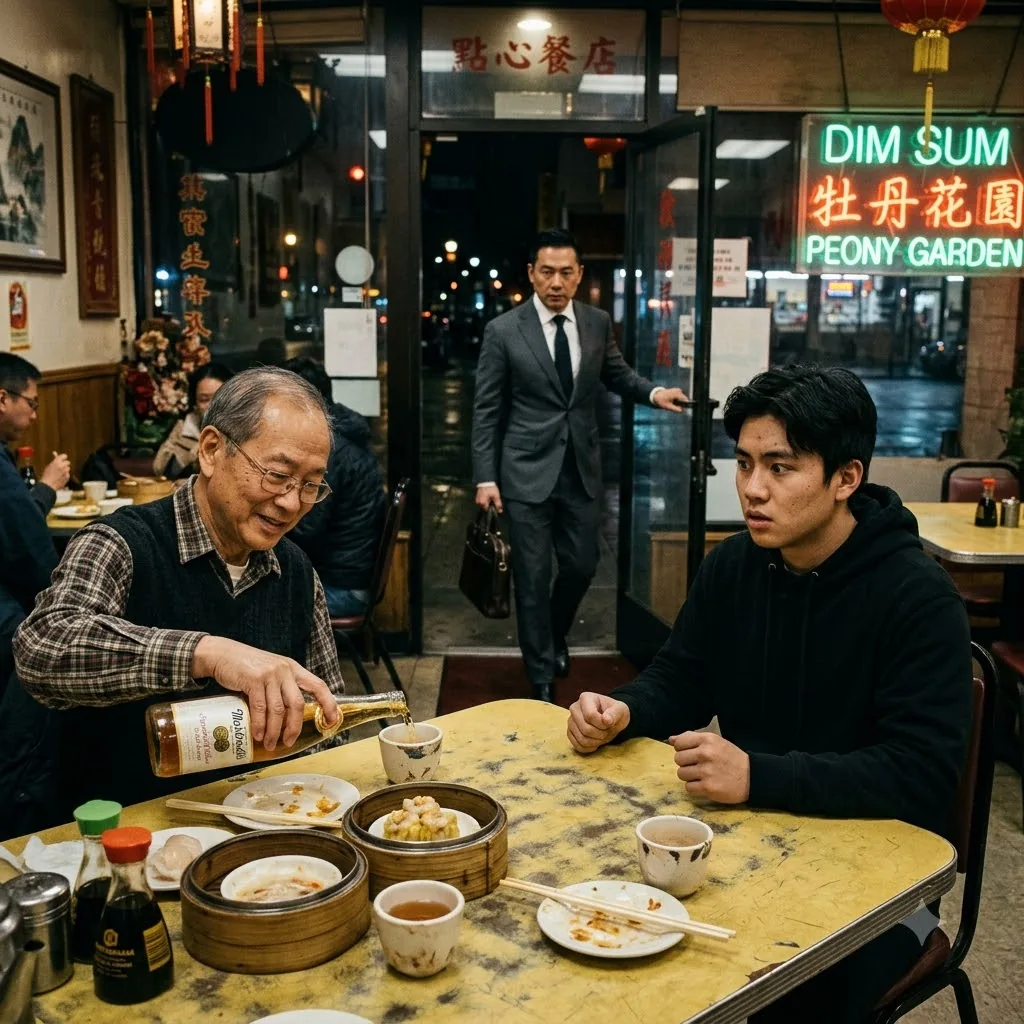
The heavy metal latch on the front door clattered. The deadbolt was securely thrown, but a sharp, authoritative knock echoed through the quiet, dim restaurant. Ma paused instantly, a heavy stack of laminated menus frozen in her hands. Baba frowned, reaching for the damp rag on the counter out of pure habit. Leo’s phone vibrated violently against his palm, the screen lighting up with a single, devastating text from the legal clinic. He did not even need to read the words on the screen. He looked up at the glass door. Standing under the amber glow of the streetlamp was a tall man in a crisp grey suit, clutching a thick manila envelope. The man knocked again, louder this time, his knuckles rapping against the glass with the aggressive rhythm of a demolition crew.
Ma poured the cheap champagne into three mismatched plastic soda tumblers, the foam spilling over her scarred knuckles and pooling on the sticky formica counter. The deep fryer bubbled its familiar, exhausting rhythm in the background, pumping out a thick cloud of oxidized peanut oil and scorched garlic that had clung to Leo’s clothes since he was seven. For thirty years, this narrow, windowless kitchen had been a prison of eighty-hour work weeks. Tonight, his parents thought they were finally escaping it. Leo stared at the fizzing golden liquid in his cup, his stomach twisting into a tight, sickening knot. He had exactly fourteen minutes before the illusion shattered completely.
Baba lifted his tumbler with hands that shook slightly, the tendons thick and ropy from decades of hauling fifty-pound sacks of jasmine rice and cases of frozen poultry. He grinned, revealing the gold tooth he had refused to replace so they could afford Leo’s university tuition. Next to the cash register sat a preliminary contract with the number one point five million printed in bold black ink. The corporate developers intended to bulldoze the entire block, erasing the peeling linoleum, the cracked neon sign buzzing in the front window, and the entire row of aging immigrant-owned shops to make way for a towering glass structure of luxury condominiums. To Baba and Ma, that check represented absolute salvation. It meant a house in the suburbs with a small garden, a retirement devoid of crippling back pain, and a quiet life they had bled every single day to earn.
Leo forced his mouth into a stiff smile and clinked his plastic cup against theirs. The champagne tasted like battery acid on his tongue. The phone in his pocket felt like a lead weight pressing against his thigh. He kept his hand hovering near it, waiting for the inevitable vibration. Just forty-eight hours ago, he had convinced himself he was doing the righteous thing. He had looked at the neighborhood as a sacred sanctuary. This block was a monument to their history, a vibrant cultural touchstone that corporate money should never be allowed to pave over and sanitize. He had marched into a municipal office downtown with a fiery sense of justice. He had signed the documents, filed the urgent motions with the pro-bono attorney, and initiated a binding legal process that would freeze the real estate buyout dead in its tracks. He had done it to protect their legacy from gentrification. Now, looking at the exhausted, radiant faces of his aging parents, the crushing weight of his arrogance crashed down on him. He realized he had just condemned them to die behind a deep fryer.
Ten minutes left. Ma was already packing a cardboard box with the ceramic lucky cat statues and the framed first dollar they ever made. She hummed a traditional folk song from her village, a bright, hopeful melody Leo had not heard her sing since he was a small child. Every note felt like a physical blow to his ribs. He opened his mouth to tell them. He needed to prepare them for the harsh reality of what was about to happen. The words jammed in his throat, completely blocked by shame. He looked down at the thick stack of unpaid utility bills shoved carelessly under the register drawer, the red warning notices peeking out from the edges. The buyout was supposed to clear all of that debt. His filing, the one meant to save the soul of the community, was going to drown his family in a permanent state of poverty.
Seven minutes. The neon sign had been switched off an hour ago, leaving the dining room bathed in the harsh, flickering fluorescence of the streetlights outside. Long shadows stretched across the empty, duct-taped vinyl booths. Leo pulled his phone out, pretending to check the time. No messages yet. The attorney had promised to notify him the exact second the legal notice was formally served to the developer’s acquisitions team. Once that happened, the developer was legally bound to notify all the sellers immediately. The chain reaction was unavoidable. Leo wiped a thick film of cold sweat from his forehead. He imagined throwing the device directly into the boiling oil. It would not stop the gears he had already put in motion.
The heavy metal latch on the front door clattered. The deadbolt was securely thrown, but a sharp, authoritative knock echoed through the quiet, dim restaurant. Ma paused instantly, a heavy stack of laminated menus frozen in her hands. Baba frowned, reaching for the damp rag on the counter out of pure habit. Leo’s phone vibrated violently against his palm, the screen lighting up with a single, devastating text from the legal clinic. He did not even need to read the words on the screen. He looked up at the glass door. Standing under the amber glow of the streetlamp was a tall man in a crisp grey suit, clutching a thick manila envelope. The man knocked again, louder this time, his knuckles rapping against the glass with the aggressive rhythm of a demolition crew.