Story code: ST-000222
Part 1: The Silent Rush
Elias stood behind the glass display case at eight on a Monday morning, listening to the solitary hum of the refrigerated cake unit instead of the usual early rush. The bell above the front door hung perfectly still, marking a chilling absence of the commuters who typically formed a line out onto the Columbus sidewalk by this hour. Elias wiped a damp rag over the already spotless quartz counter, staring at the rows of fresh almond croissants and perfectly glazed danishes that should have been decimated by the breakfast crowd. The silence felt heavy, entirely wrong for the start of the week.
His phone vibrated against the stainless steel register. Elias picked it up, expecting a message from one of his delayed regulars or a supplier running late in traffic. Instead, an email notification blinked on the screen from the event coordinator at the downtown convention center. He opened the message to find two cold, rigid lines of text canceling a massive three-thousand-dollar catering order scheduled for Wednesday. No apology accompanied the cancellation, nor did any offer to pay the non-refundable deposit penalty or a reason for the sudden change of plans.
Before he could process the abrupt loss of revenue, a second email appeared in his inbox. This one came from his primary wholesale distributor. The text was even more brief than the first, stating that their delivery contract was severed effective immediately. They provided zero explanation for terminating a relationship that had spanned three years of flawless, on-time payments.
Elias looked back up at the empty shop. The physical ecosystem of his bakery was deteriorating in real time. The industrial coffee urns hissed in a vacuum, brewing gallons of Ethiopian dark roast for a crowd that simply did not exist. Through the wide front windows, cars drove past on High Street, their tires hissing on the damp pavement, but no one tapped their brakes. The three designated customer parking spots remained completely empty. Even the local dairy delivery truck, usually an immovable fixture in the loading zone by seven-thirty, had skipped its morning drop-off, leaving the curb bare.
Elias walked over to the heavy glass door and pushed it open. He stood on the threshold, listening to the city traffic, waiting for a familiar face to hurry inside holding a reusable travel mug. Only the brisk Ohio wind pushed past him, rustling the stack of unused paper bags by the register.
He let the door swing shut, the bell remaining frustratingly silent. The isolation felt heavy, pressing down on the meticulously organized dining room. He abandoned the front counter and walked slowly toward the swinging doors of the kitchen, needing the comfort of his staff to ground him. Usually, the back of the house operated as a chaotic symphony of digital timers, slamming commercial oven doors, and shouting prep cooks. Today, the rich, heavy scent of fermented yeast and browning butter hung over an unsettling stillness.
Elias pushed through the metal doors, the hinges squeaking loudly in the empty air. Marcus, his head baker of four years, stood rigidly next to the main prep table. The massive Hobart floor mixers were completely powered down, their stainless steel bowls empty. Marcus was not rolling out laminated dough, checking proofing baskets, or pulling the signature sourdough boules from the cooling rack. Instead, he was aggressively untying the thick straps of his canvas apron. His jaw was set tight, his movements rigid and hurried.
Elias approached the steel table, raising a hand to signal for an explanation. Marcus ignored the gesture entirely. The head baker pulled the heavy canvas apron over his head and tossed it unceremoniously over a fifty-pound sack of bread flour. He reached deep into his pocket, retrieved the heavy brass ring of bakery keys, and dropped them onto the exact same sack. The metal clinked sharply, the sound echoing off the white subway tiles of the kitchen walls.
The sudden resignation hung in the air, dense and unspoken. Elias stepped forward, attempting to block the path to the rear alley exit, his palms turned upward in a silent demand for an explanation. Marcus simply shook his head, his posture rigid, his eyes avoiding Elias entirely. The baker extended a flour-dusted index finger and pointed toward the far end of the stainless-steel prep table.
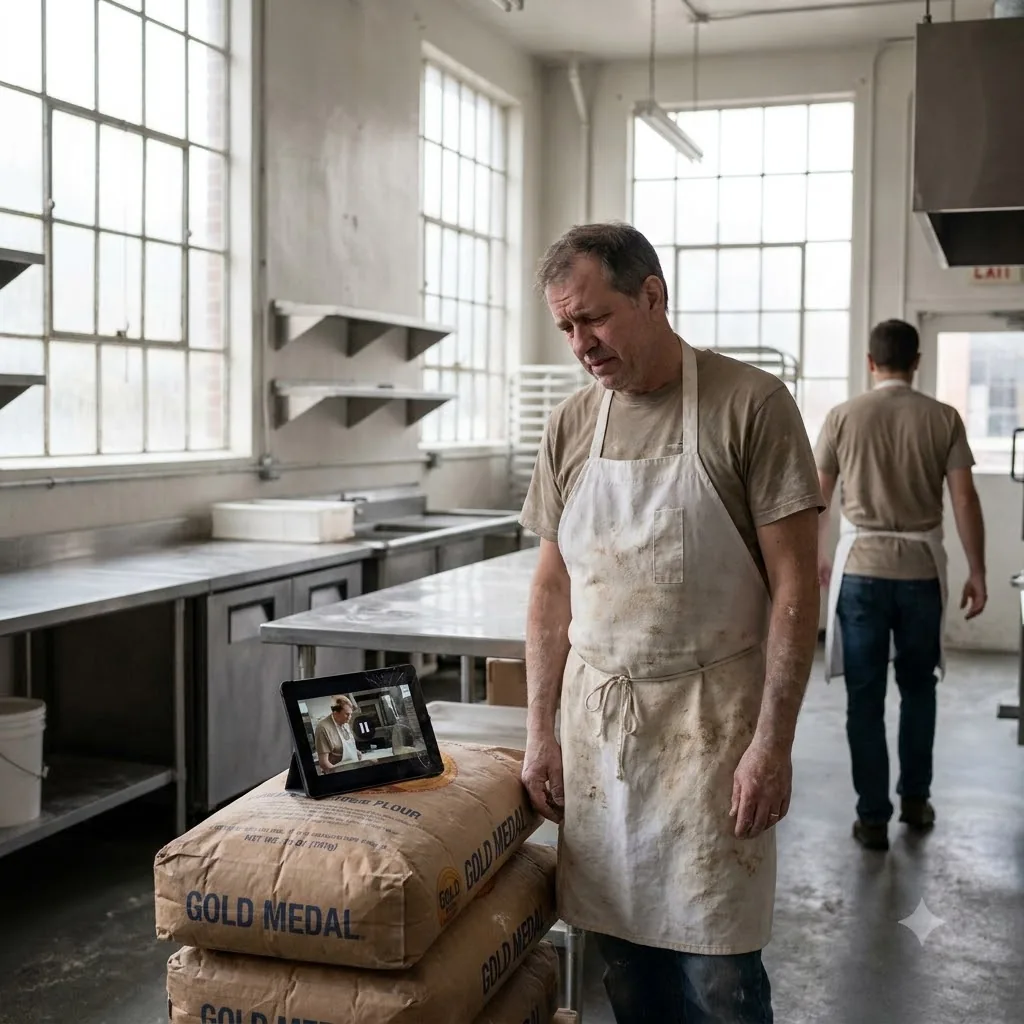
An iPad sat propped against a digital scale, a device Marcus usually used for scaling up hydration percentages for the weekly dough batches. Now, the screen displayed a paused video. Elias leaned over the dusted surface of the table, his eyes locking onto the frozen, dimly lit frame. The image showed an unfamiliar, grainy angle of a room he could not immediately identify, captured by a lens he did not recognize. Marcus reached out, tapped the glass screen once to initiate playback, and immediately turned his back to push through the heavy rear exit door.
Elias stood behind the glass display case at eight on a Monday morning, listening to the solitary hum of the refrigerated cake unit instead of the usual early rush. The bell above the front door hung perfectly still, marking a chilling absence of the commuters who typically formed a line out onto the Columbus sidewalk by this hour. Elias wiped a damp rag over the already spotless quartz counter, staring at the rows of fresh almond croissants and perfectly glazed danishes that should have been decimated by the breakfast crowd. The silence felt heavy, entirely wrong for the start of the week.
His phone vibrated against the stainless steel register. Elias picked it up, expecting a message from one of his delayed regulars or a supplier running late in traffic. Instead, an email notification blinked on the screen from the event coordinator at the downtown convention center. He opened the message to find two cold, rigid lines of text canceling a massive three-thousand-dollar catering order scheduled for Wednesday. No apology accompanied the cancellation, nor did any offer to pay the non-refundable deposit penalty or a reason for the sudden change of plans.
Before he could process the abrupt loss of revenue, a second email appeared in his inbox. This one came from his primary wholesale distributor. The text was even more brief than the first, stating that their delivery contract was severed effective immediately. They provided zero explanation for terminating a relationship that had spanned three years of flawless, on-time payments.
Elias looked back up at the empty shop. The physical ecosystem of his bakery was deteriorating in real time. The industrial coffee urns hissed in a vacuum, brewing gallons of Ethiopian dark roast for a crowd that simply did not exist. Through the wide front windows, cars drove past on High Street, their tires hissing on the damp pavement, but no one tapped their brakes. The three designated customer parking spots remained completely empty. Even the local dairy delivery truck, usually an immovable fixture in the loading zone by seven-thirty, had skipped its morning drop-off, leaving the curb bare.
Elias walked over to the heavy glass door and pushed it open. He stood on the threshold, listening to the city traffic, waiting for a familiar face to hurry inside holding a reusable travel mug. Only the brisk Ohio wind pushed past him, rustling the stack of unused paper bags by the register.
He let the door swing shut, the bell remaining frustratingly silent. The isolation felt heavy, pressing down on the meticulously organized dining room. He abandoned the front counter and walked slowly toward the swinging doors of the kitchen, needing the comfort of his staff to ground him. Usually, the back of the house operated as a chaotic symphony of digital timers, slamming commercial oven doors, and shouting prep cooks. Today, the rich, heavy scent of fermented yeast and browning butter hung over an unsettling stillness.
Elias pushed through the metal doors, the hinges squeaking loudly in the empty air. Marcus, his head baker of four years, stood rigidly next to the main prep table. The massive Hobart floor mixers were completely powered down, their stainless steel bowls empty. Marcus was not rolling out laminated dough, checking proofing baskets, or pulling the signature sourdough boules from the cooling rack. Instead, he was aggressively untying the thick straps of his canvas apron. His jaw was set tight, his movements rigid and hurried.
Elias approached the steel table, raising a hand to signal for an explanation. Marcus ignored the gesture entirely. The head baker pulled the heavy canvas apron over his head and tossed it unceremoniously over a fifty-pound sack of bread flour. He reached deep into his pocket, retrieved the heavy brass ring of bakery keys, and dropped them onto the exact same sack. The metal clinked sharply, the sound echoing off the white subway tiles of the kitchen walls.
The sudden resignation hung in the air, dense and unspoken. Elias stepped forward, attempting to block the path to the rear alley exit, his palms turned upward in a silent demand for an explanation. Marcus simply shook his head, his posture rigid, his eyes avoiding Elias entirely. The baker extended a flour-dusted index finger and pointed toward the far end of the stainless-steel prep table.
An iPad sat propped against a digital scale, a device Marcus usually used for scaling up hydration percentages for the weekly dough batches. Now, the screen displayed a paused video. Elias leaned over the dusted surface of the table, his eyes locking onto the frozen, dimly lit frame. The image showed an unfamiliar, grainy angle of a room he could not immediately identify, captured by a lens he did not recognize. Marcus reached out, tapped the glass screen once to initiate playback, and immediately turned his back to push through the heavy rear exit door.