Story code: ST-000932
Part 2: The Affidavit
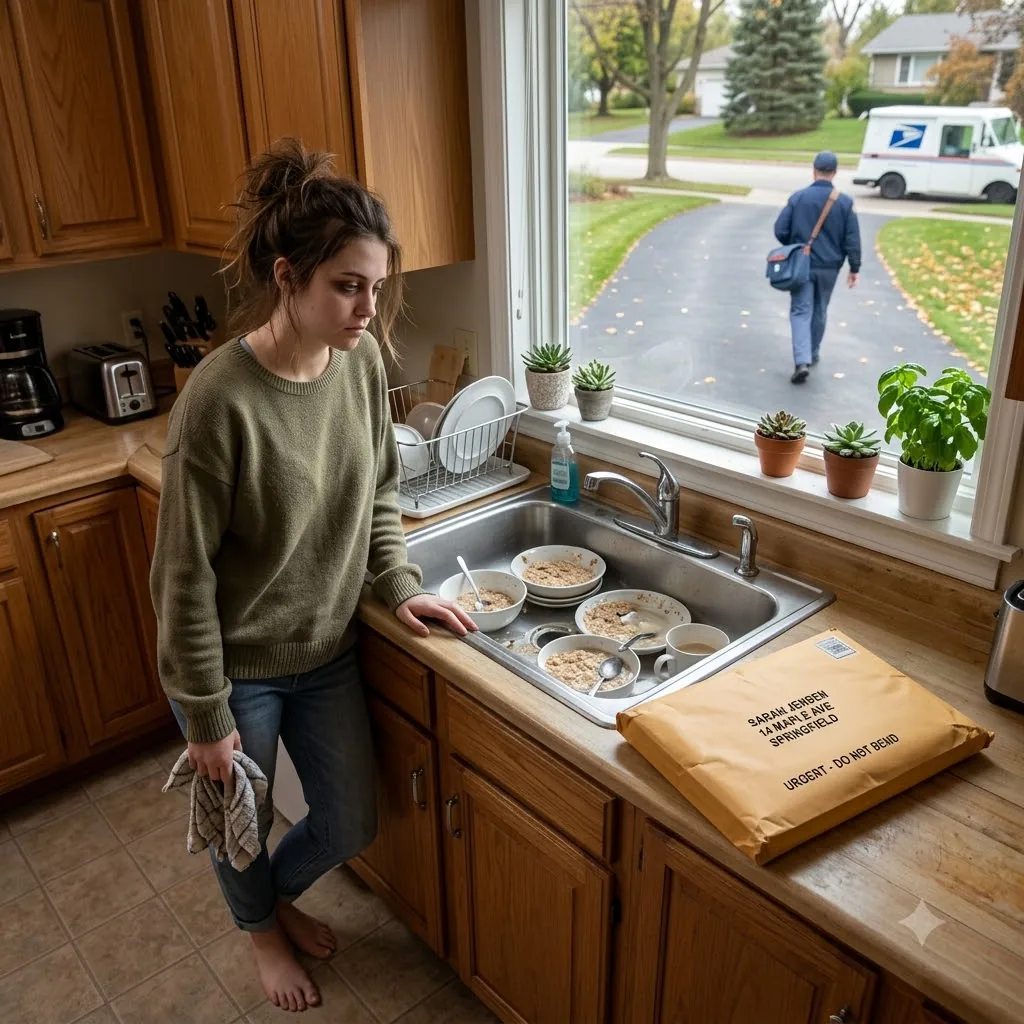
Sarah remained frozen, staring at the scattered white pages resting against the dark wood-grain linoleum of her kitchen floor. The thick manila envelope lay discarded near the stainless steel sink, the harsh scent of the burnt oatmeal suddenly turning her stomach sour. She dropped to her knees, the cold floor biting through her denim jeans, and began gathering the stiff papers with trembling hands. She moved frantically, desperate to scoop up the documents before they somehow contaminated the physical space of her home.
The bold, capitalized letters at the top of the petition blurred in and out of focus. She squeezed her eyes shut, took a shallow, ragged breath, and forced herself to read the sterile legal text. The petitioner was David. He had not called on a birthday, sent a single dollar of child support, or asked for a photograph in five exhaustive years. He had walked out the front door when their son was barely six months old, claiming the chaotic stress of Sarah’s declining parents and her brother’s initial descent into addiction was suffocating his potential. He had driven away in a leased luxury sedan and never looked back.
Now, armed with a high-powered downtown law firm, he was using that exact same history to steal her son.
Sarah leaned her shoulder against the lower cabinets and flipped past the standard boilerplate warnings to the sworn affidavit. The blood drained completely from her face. David’s lawyers had spun a narrative of sheer, terrifying fiction woven together with jagged pieces of reality. He wasn’t just asking for custody; he was demanding an emergency removal, claiming the child was in immediate, life-threatening peril.
She read the bulleted list of allegations, her pulse hammering violently against her eardrums. The petition cited her brother’s fatal overdose in her upstairs guest bedroom three months prior, categorizing it as the “willful exposure of a minor to lethal narcotics.” It did not mention that her son had been safely away at a weekend sleepover, or that Sarah had been the one to find her brother and exhaust herself attempting CPR until the paramedics arrived.
Worse, David had clearly hired a private investigator. Exhibit B contained a series of grainy, date-stamped photographs taken from a vehicle parked on her street. The pictures showed the relentless, aggressive debt collectors-men who looked exactly like the one in the windbreaker who had just served her-pounding on her front door at all hours. David’s affidavit classified these men as “known criminal associates and drug enforcers demanding payment,” painting Sarah as a desperate woman drowning in the violent criminal underworld her brother had supposedly left behind.
A soft thump from the ceiling above snapped Sarah out of the paralyzing shock. It was followed by the familiar, rapid patter of small bare feet hurrying across the upstairs hallway. Her five-year-old son was awake.
Panic surged hot and sharp through her veins. She scrambled upward, her knee catching hard against a cabinet knob. She shoved the disorganized stack of court documents back into the thick envelope, practically throwing it onto the highest shelf of the kitchen pantry, hiding it behind a row of bulk-purchased cereal boxes. She quickly turned on the faucet, splashing cold water over her flushed face, and aggressively scrubbed her wet hands down the front of her thighs just as the little boy appeared at the base of the stairs.
He was clutching a faded plush dinosaur, his blonde hair sticking up in a severe cowlick. He rubbed his eyes and asked for apple juice in a sleepy, raspy voice.
Sarah forced a wide, brittle smile that made her cheeks ache. She walked across the room, wrapped her arms around his small, warm shoulders, and kissed the top of his head. He smelled like baby shampoo and warm cotton. The thought of David’s sterile, silent condominium-the thought of this boy crying out for her in a strange bed while a nanny tried to soothe him-made Sarah’s chest physically cave in.
She poured him a plastic cup of juice, set him up at the small dining table with a piece of toast, and retreated to the hallway with her cell phone. Her fingers slipped twice on the glass screen before she managed to dial her probate attorney’s direct line.
Mr. Gable answered on the third ring. Sarah did not bother with pleasantries; she read the docket number and the title of the emergency injunction in a breathless rush.
A heavy, uncomfortable silence fell over the line. When Gable finally spoke, his normally brisk, confident voice was low and exceedingly gentle. It was the exact tone a doctor uses to deliver a terminal diagnosis.
He explained that probate was entirely separate from family law. He could not represent her in this arena. Furthermore, an emergency ex parte hearing meant the judge would review the evidence within twenty-four hours. Based on the documented allegations of narcotics and criminal elements at the residence, the court would likely side with caution. He told her she needed a specialized, aggressive litigator immediately, and gave her a number for a senior colleague in the city.
Sarah ended the call and dialed the new number. A crisp receptionist informed her that the attorney could take the case and appear at the emergency hearing tomorrow morning, but the firm required a mandatory, non-refundable fifteen-thousand-dollar retainer wired by three o’clock that afternoon. They did not accept payment plans.
Sarah lowered the phone. She opened her banking app. The bold numbers at the top of the screen displayed an available balance of four hundred and twelve dollars. Her credit cards were already maxed out from covering her brother’s funeral expenses.
Outside the front window, the low crunch of gravel signaled another arrival. Sarah peeked through the blinds, praying it was just the standard mail carrier.
It was not. A white county fleet vehicle was idling against the curb. A woman in a dark blazer stepped out, holding a silver badge case on a lanyard and carrying a thick metal clipboard. She did not look toward the house with the aggression of a debt collector. She looked at it with the clinical, calculating assessment of a social worker evaluating a crime scene.
The doorbell rang, a cheerful two-tone chime that echoed through the quiet house, signaling the beginning of the end.