Story code: ST-001202
Part 1: The Disturbed Dust
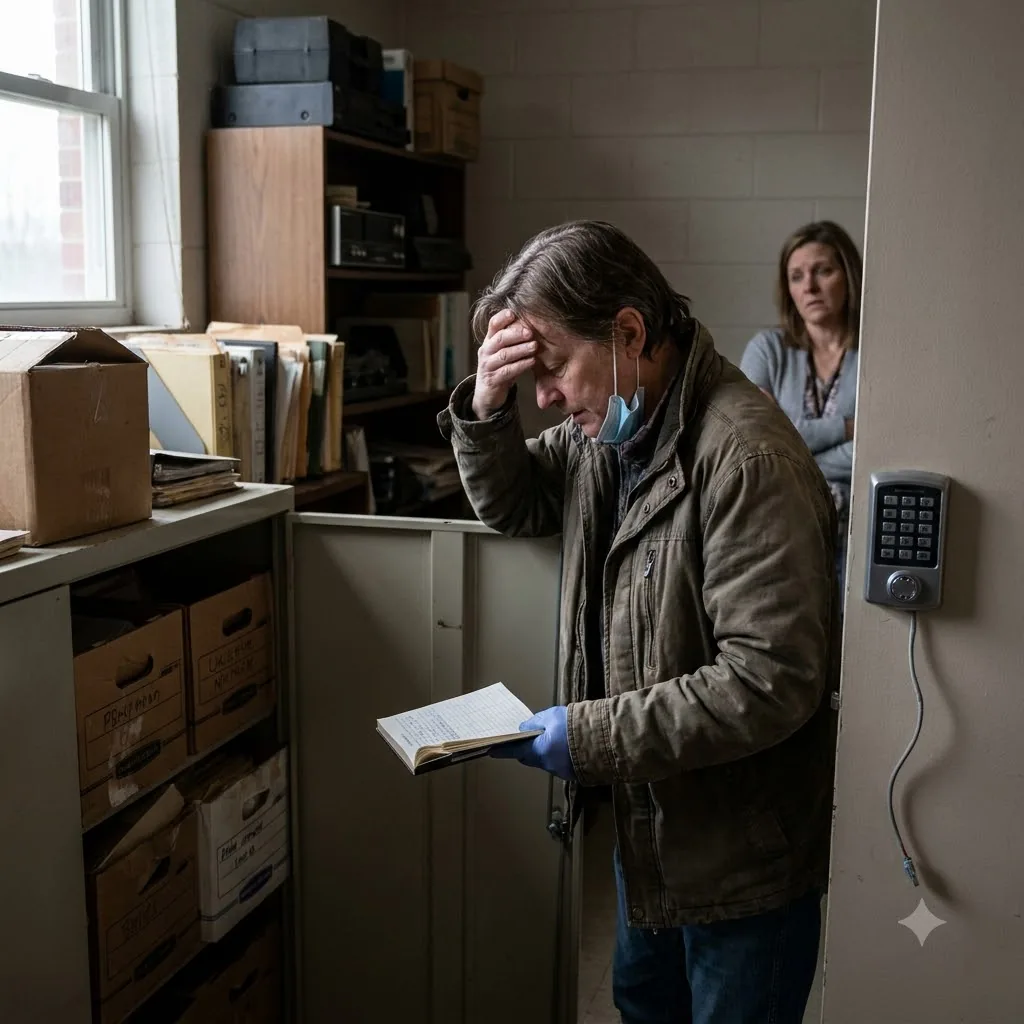
The locked backstage supply room at Oakridge High School was supposed to be a secure archive, but someone bypassed the digital keypad to search through old pandemic-era storage. As a compliance investigator, I found the evidence of this boundary breach sitting on a metal shelf: a dusty, blue cardboard N95 mask box, moved from its designated spot and marked with fresh handprints. The unauthorized entry threatened the autonomy of our staff, who expected their private workspaces to remain closed to hostile local critics like Richard Kress.
I took a photograph of the dust pattern, the digital camera flash illuminating the gray powder that coated the metal shelving. The school auditorium was quiet during my morning inspection, save for the hum of the ventilation system and the distant, rhythmic thud of students practicing a dance routine on the main stage. The ordinary activity of the school continued just fifty feet away, completely insulated from the security breach I was documenting.
I had received an administrative alert late yesterday afternoon regarding an unscheduled access event. Walking into the backstage dressing room supply locker, I had expected a malfunctioning latch. Instead, the physical boundary had been crossed cleanly. The blue cardboard box was faded, its label reading ‘N95 Respirators – 2021 Inventory.’ It was one of several boxes left over from the peak of the school safety protocols, stored away until official decommissioning. For months, Richard Kress had used his public campaign platform to accuse the administration of hoarding these materials, claiming we had hidden resources while demanding more funding. He had stood at the podium during public hearings, demanding a physical inspection of these exact backstage closets.
Now, the closet had been breached. I leaned closer to the shelf. The thick gray dust on the metal rack had a clean, rectangular outline where the box of masks had sat undisturbed for three years. Now, it was pushed two inches to the left, the cardboard surface wiped clean of dust where fingers had grabbed it. Someone had opened the top flap, peered inside, and set it down.
This was a restricted area. The backstage dressing room supply locker was strictly off-limits, requiring Level 2 clearance. I pulled up the digital keycard log spreadsheet on my tablet, sorting the entries by timestamp. The reader on the heavy oak door recorded every scan, matching each entry to a unique employee ID. I scrolled back to Tuesday night, the evening of the district-wide safety forum.
At 10:14 PM, long after the auditorium had been locked and the stage lights turned off, the lock had clicked open.
I stared at the name attached to the card. The access path pointed directly to someone close to me. The card used to breach the storage room belonged to Marcus Vance-my brother, the school’s assistant stage manager. But Marcus had been sitting across from me at our family dinner table at the exact hour his card was scanned. I recalled the exact time Marcus had passed me the salad bowl on Tuesday evening-it was ten past ten. By 10:14 PM, he was washing dishes in my kitchen. His physical card was in his wallet on the counter, or so I had assumed. I saved the log file and closed my tablet, the metal door of the supply room clicking shut behind me as I walked out toward the stage. The discrepancy hung in the air: if Marcus was with me, whose hands had actually held his keycard to open that door?
The locked backstage supply room at Oakridge High School was supposed to be a secure archive, but someone bypassed the digital keypad to search through old pandemic-era storage. As a compliance investigator, I found the evidence of this boundary breach sitting on a metal shelf: a dusty, blue cardboard N95 mask box, moved from its designated spot and marked with fresh handprints. The unauthorized entry threatened the autonomy of our staff, who expected their private workspaces to remain closed to hostile local critics like Richard Kress.
I took a photograph of the dust pattern, the digital camera flash illuminating the gray powder that coated the metal shelving. The school auditorium was quiet during my morning inspection, save for the hum of the ventilation system and the distant, rhythmic thud of students practicing a dance routine on the main stage. The ordinary activity of the school continued just fifty feet away, completely insulated from the security breach I was documenting.
I had received an administrative alert late yesterday afternoon regarding an unscheduled access event. Walking into the backstage dressing room supply locker, I had expected a malfunctioning latch. Instead, the physical boundary had been crossed cleanly. The blue cardboard box was faded, its label reading ‘N95 Respirators – 2021 Inventory.’ It was one of several boxes left over from the peak of the school safety protocols, stored away until official decommissioning. For months, Richard Kress had used his public campaign platform to accuse the administration of hoarding these materials, claiming we had hidden resources while demanding more funding. He had stood at the podium during public hearings, demanding a physical inspection of these exact backstage closets.
Now, the closet had been breached. I leaned closer to the shelf. The thick gray dust on the metal rack had a clean, rectangular outline where the box of masks had sat undisturbed for three years. Now, it was pushed two inches to the left, the cardboard surface wiped clean of dust where fingers had grabbed it. Someone had opened the top flap, peered inside, and set it down.
This was a restricted area. The backstage dressing room supply locker was strictly off-limits, requiring Level 2 clearance. I pulled up the digital keycard log spreadsheet on my tablet, sorting the entries by timestamp. The reader on the heavy oak door recorded every scan, matching each entry to a unique employee ID. I scrolled back to Tuesday night, the evening of the district-wide safety forum.
At 10:14 PM, long after the auditorium had been locked and the stage lights turned off, the lock had clicked open.
I stared at the name attached to the card. The access path pointed directly to someone close to me. The card used to breach the storage room belonged to Marcus Vance-my brother, the school’s assistant stage manager. But Marcus had been sitting across from me at our family dinner table at the exact hour his card was scanned. I recalled the exact time Marcus had passed me the salad bowl on Tuesday evening-it was ten past ten. By 10:14 PM, he was washing dishes in my kitchen. His physical card was in his wallet on the counter, or so I had assumed. I saved the log file and closed my tablet, the metal door of the supply room clicking shut behind me as I walked out toward the stage. The discrepancy hung in the air: if Marcus was with me, whose hands had actually held his keycard to open that door?