Story code: ST-001202
Part 4: The Administrative Line
There was no shouting, no public press conference, and no dramatic exposure. The school district’s legal counsel took the metadata report I provided and acted under Board Policy 704, which governed candidate conduct and the use of public facilities. The violation of a secure safety boundary was clear, documented, and indisputable. The administration chose to handle the matter strictly through administrative channels, leaving no room for Kress to claim political persecution.
The next afternoon, I stood near the auditorium lobby doors and watched the quiet resolution unfold through the glass partition. A courier walked past the reception desk and delivered a sealed white envelope to Kress’s campaign office representative, who was waiting near the entrance. The document inside unilaterally revoked Kress’s permit to use any school facility for his campaign events, citing the security breach and unauthorized keycard usage.
Outside, in the gravel parking lot, two campaign volunteers were already unloading folding tables from the back of a pickup truck for a scheduled evening rally. A campus security officer walked out to meet them, pointing toward the exit gate. The volunteers stopped, looked at the copy of the document the officer held, and began packing the tables back into the truck bed.
Richard Kress stood by the driver’s side door of his sedan, holding a cardboard box of campaign flyers. He looked toward the lobby windows where I stood. He did not wave, and he did not shout. He simply placed the flyers in his trunk, climbed into the driver’s seat, and drove out of the school gates. The red indicator light on the parking lot gate reader blinked once when he passed, confirming his access credentials had been deleted from the active directory.
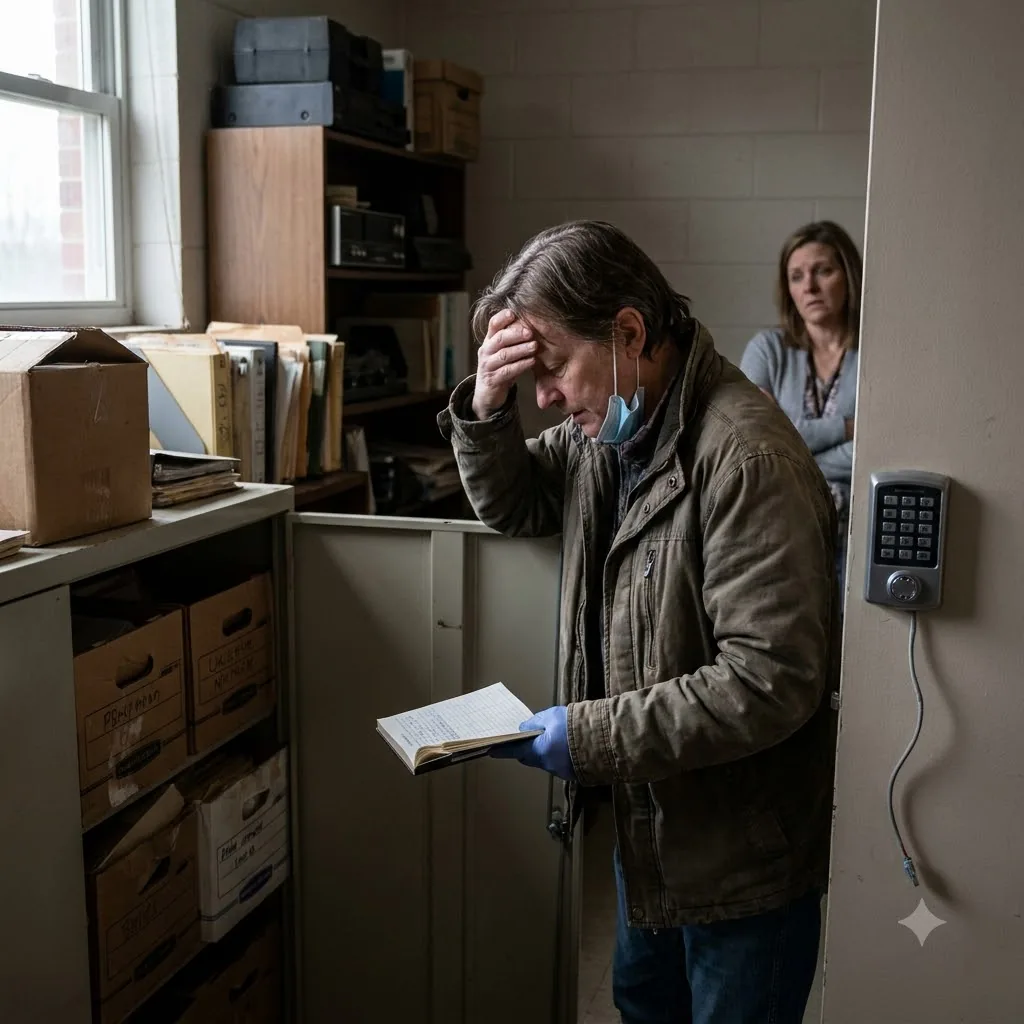
I returned to the backstage dressing room supply locker. The air was cool and smelled of dry concrete. I picked up the N95 mask box from the shelf. I wrapped it in a clear plastic security bag, pulling the adhesive seal tight. I signed the inventory control label across the seam, marking the date, time, and case number.
I placed the sealed box back on the metal shelf, locking the heavy cabinet doors with a new physical brass lock. The gray dust that had once held the shape of Kress’s handprints was now wiped clean, leaving only the polished surface of the steel shelf reflecting the overhead fluorescent light. The door clicked shut, the electronic lock engaging with a solid, final snap. The process had run its course, and the boundaries of the school were restored.
I watched the heavy oak door swing shut, the digital lock indicator changing from green to a steady, solid red. Marcus was back on his shift, installing new lighting gels on the stage, his job secure and his keycard replaced with a new, encrypted token. The quiet process of the district administration had closed the vulnerability without a single line in the local newspaper. The empty space on the shelf where the box had been moved was now clean, the remaining inventory cataloged and locked away in accordance with the district safety rules. The silent enforcement of the policy had drawn a line that no candidate could cross.