Story code: ST-001193
Part 3: Protocol 402-C
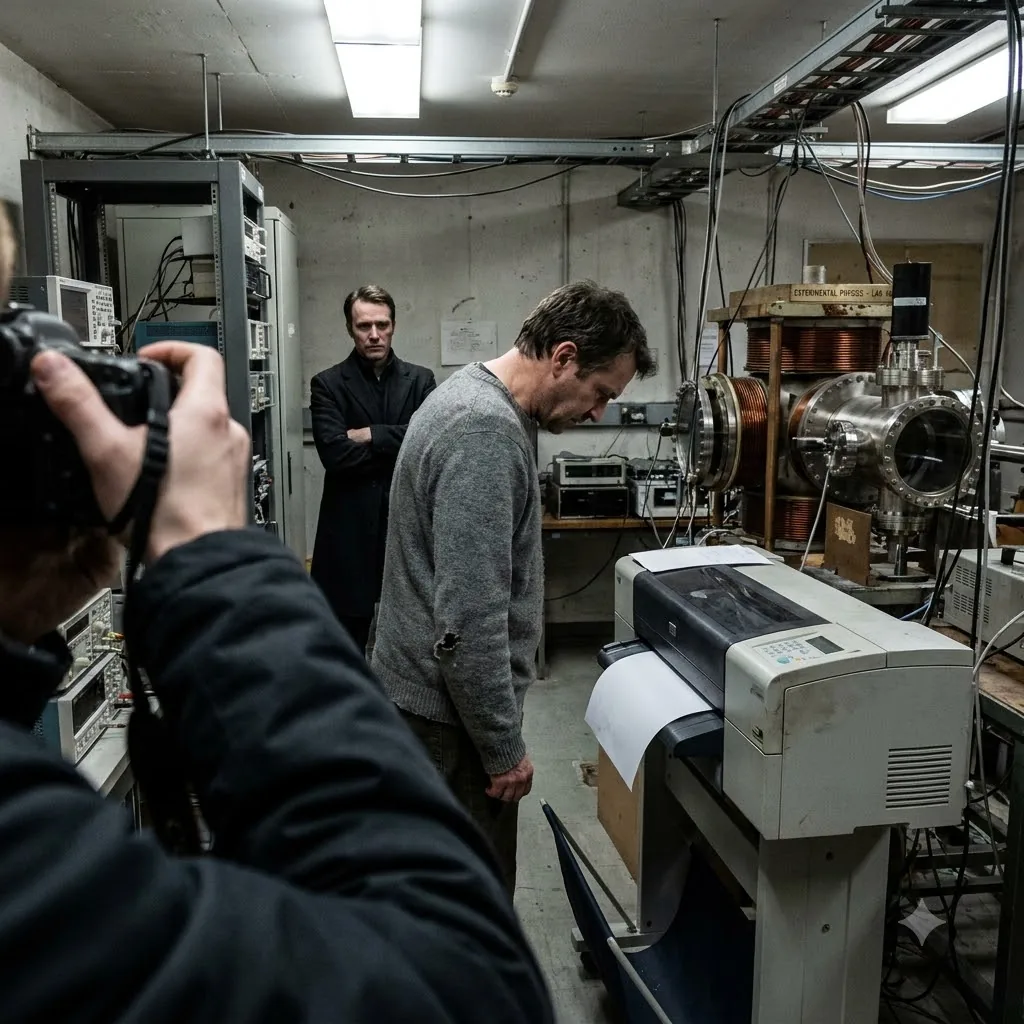
Mara observed Leo Vance draw a thin breath, his fingers steadying as he pointed toward the heavy steel chassis of the mass spectrometer at the back of Sub-basement Lab 4B.
“The ink on that postcard isn’t standard commercial ink,” Leo said, his voice level. “It uses the deuterated polymer carrier we scheduled for synthesis next Thursday. It doesn’t exist in any commercial market today, and we haven’t even run the precursor reactions in this lab yet. If we test the ink’s isotope ratio, we will know exactly when it was manufactured.”
Dr. Marcus Vance did not move toward the instrument. Instead, he leaned back against the edge of the calibration console, his arms remaining folded over his chest. “I am not wasting department helium and beam time on a post-doc’s parlor trick. This lab runs on a strict budget, Leo. We do not run diagnostics on garbage.”
“It isn’t a choice, Dr. Vance,” Claire Kelly said. She did not look up from her monitor, but her fingers tapped a rhythm on the edge of her keyboard. “Under Department Protocol 402-C, any material introduced to the lab that exhibits a potential retrocausal signature must be run through the spectrometer within twelve hours of discovery to prevent timeline contamination. The system logged the card’s entry into the cleanroom when Leo brought it in. The timer is already running.”
Marcus turned his head slowly toward Claire. His jaw remained set, the muscles along his neck tightening. “The protocol is for active experimental outputs, Claire. Not personal mail.”
“The system flagged it automatically because of the polymer casing,” Claire replied, her voice remaining flat and neutral. She clicked her mouse twice, and the large overhead display shifted, showing a flashing yellow warning indicator next to the lab’s active run log. “The system is holding the high-energy laser loop authorization until the integrity scan is completed. If we don’t scan it, the system will lock the primary laser loop in forty minutes.”
Mara watched the other two technicians at the console exchange glances. One of them slowly reached over and cleared his workspace, shifting his chair back from the main terminal. The room grew quiet, save for the low, rhythmic cycling of the spectrometer’s vacuum pumps.
“Run the scan, Marcus,” Leo said. “If the isotope ratio matches current standard ink, I’ll sign the voluntary resignation papers right now and leave the university. But if it contains next week’s deuterated polymer, it means the card is genuine, and you wrote it.”
Marcus remained still for several seconds. His gaze remained fixed on the yellow warning indicator on the wall screen. Slowly, he unfolded his arms and stepped toward the prep table. He picked up the postcard by the edges, his movements deliberate.
Mara watched him carry the card to the mass spectrometer. Only the registered lead researcher could authorize the high-energy laser loops and sign off on retrocausal verification scans. Marcus pressed his thumb against the scanner on the spectrometer’s control panel. The machine beeped, acknowledging his biometric signature, and the heavy metal door of the sample chamber slid open with a soft hiss of released pressure.
Marcus placed the corner of the postcard under the micro-sampling needle. He clicked the mouse to initiate the vacuum seal. The metal door slid shut, and the status bar on the monitor turned a solid, steady amber as the ionization chamber began to draw down pressure.