Story code: ST-001193
Part 1: The Postmark from Lab 4B
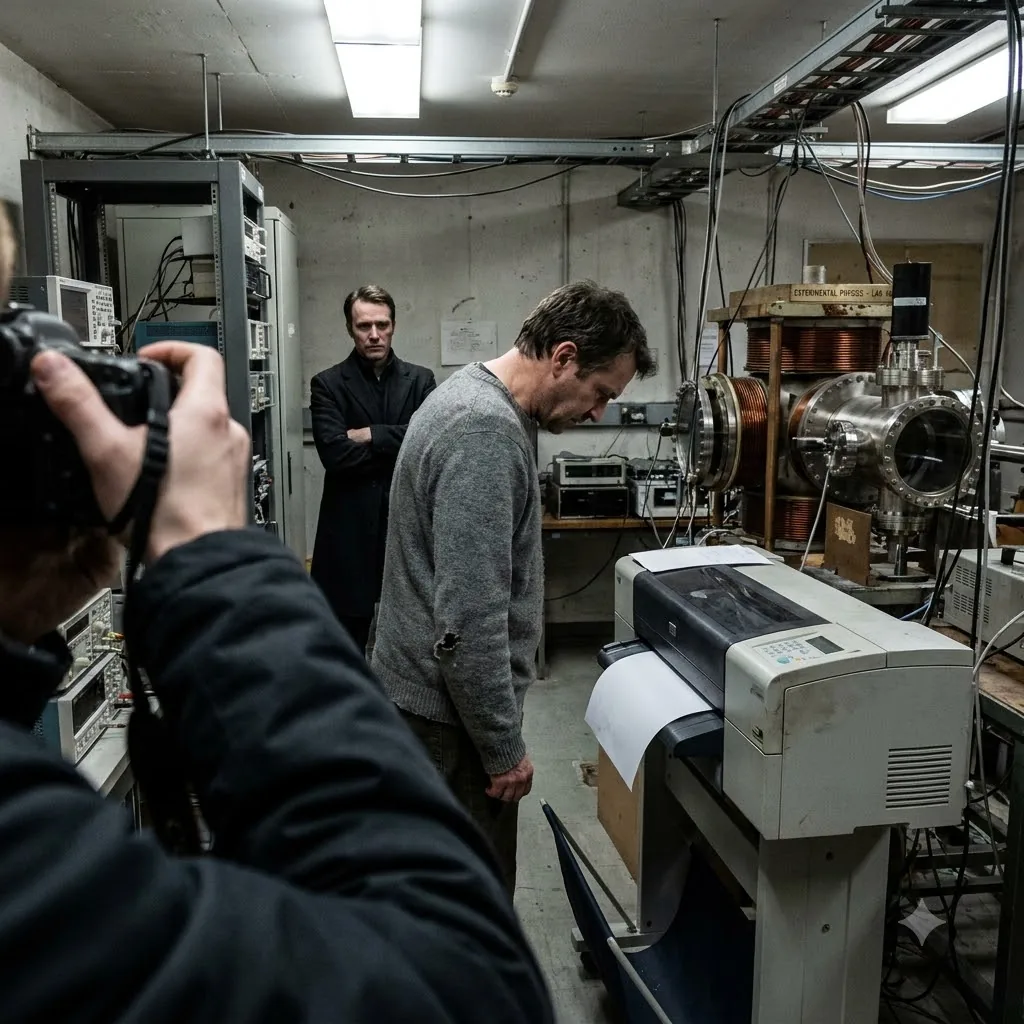
Inside Sub-basement Lab 4B, Dr. Marcus Vance publicly denied the written promise that secured their retrocausal research project, leaving his post-doc nephew Leo Vance holding a stiff polymer postcard postmarked thirty years in the future. As the other technicians looked up from their calibration consoles, Marcus calmly declared that Leo was suffering from a stress-induced delusion and had forged the document to hijack the lab’s patent. Mara observed Claire Kelly pause her data entry, her eyes tracking the tremor in Leo’s hands as his credibility was systematically dismantled in front of the entire team.
“We never had such an agreement, Leo,” Marcus said, his voice flat and even as he adjusted the collar of his lab coat. “I sponsored your post-doc out of family obligation, but this is a desperate fabrication. There is no co-authorship. There is no shared patent.”
Leo took a step forward, holding the postcard by its edges. The ambient hum of the low-energy retrocausal laser loops vibrated through the metal grating of the floor. “You wrote this, Marcus. You signed the bottom, promising me fifty percent of the patent rights once the high-energy loops were authorized. Look at the handwriting. Look at the date.”
Mara watched Claire lean in slightly to look at the object. The postcard possessed a distinct, slightly modern polymer sheen, reflecting the blue light of the nearby calibration monitors. It did not look like standard paper.
“Anyone can mimic a signature, Leo,” Marcus replied, folding his arms. He turned to face the three other researchers sitting at the main console. “We have all seen the toll this project has taken on him. The long hours in the basement, the pressure to secure the next phase of university funding. I think it is best if Leo takes an immediate leave of absence.”
Leo’s face reddened. “I didn’t forge this. It was in my campus mailbox this morning. It has the department’s future routing stamp.”
“Which you could have easily printed on the lab’s high-resolution prototyping press,” Marcus said. He did not look at the card. Instead, he kept his gaze fixed on the other staff members, his tone dripping with professional pity. “We cannot base our department’s funding extension on a piece of mail that violates the basic timeline sequence of our work. If we present this to the board, they will shut us down.”
The other researchers remained silent, their eyes darting between the principal investigator and the post-doc. The public denial was absolute. Leo looked around the room, but no one spoke.
Mara noted Claire’s hand hovering over her keyboard. Claire did not join the silence; instead, she watched the card.
“If you truly believe I forged this, Marcus, then let’s destroy it,” Leo said, his voice cracking slightly.
“That is exactly what we will do,” Marcus said, reaching for the card.
“No,” Leo said, pulling it back. “Because if you never write this promise, and I never receive it, then destroying it now won’t matter. But if the timeline is already locked, destroying it will cause a quantum collapse of the retrocausal loops we’re running right now. The denial creates a paradox. If you didn’t write it, the machine’s current telemetry should remain stable when I put it near the loop. But if the loop reacts, it means the card is linked to a future event you are trying to erase.”
Marcus stopped his hand mid-air, his eyes narrowing slightly as he looked at the laser loop humming in the corner.
Inside Sub-basement Lab 4B, Dr. Marcus Vance publicly denied the written promise that secured their retrocausal research project, leaving his post-doc nephew Leo Vance holding a stiff polymer postcard postmarked thirty years in the future. As the other technicians looked up from their calibration consoles, Marcus calmly declared that Leo was suffering from a stress-induced delusion and had forged the document to hijack the lab’s patent. Mara observed Claire Kelly pause her data entry, her eyes tracking the tremor in Leo’s hands as his credibility was systematically dismantled in front of the entire team.
“We never had such an agreement, Leo,” Marcus said, his voice flat and even as he adjusted the collar of his lab coat. “I sponsored your post-doc out of family obligation, but this is a desperate fabrication. There is no co-authorship. There is no shared patent.”
Leo took a step forward, holding the postcard by its edges. The ambient hum of the low-energy retrocausal laser loops vibrated through the metal grating of the floor. “You wrote this, Marcus. You signed the bottom, promising me fifty percent of the patent rights once the high-energy loops were authorized. Look at the handwriting. Look at the date.”
Mara watched Claire lean in slightly to look at the object. The postcard possessed a distinct, slightly modern polymer sheen, reflecting the blue light of the nearby calibration monitors. It did not look like standard paper.
“Anyone can mimic a signature, Leo,” Marcus replied, folding his arms. He turned to face the three other researchers sitting at the main console. “We have all seen the toll this project has taken on him. The long hours in the basement, the pressure to secure the next phase of university funding. I think it is best if Leo takes an immediate leave of absence.”
Leo’s face reddened. “I didn’t forge this. It was in my campus mailbox this morning. It has the department’s future routing stamp.”
“Which you could have easily printed on the lab’s high-resolution prototyping press,” Marcus said. He did not look at the card. Instead, he kept his gaze fixed on the other staff members, his tone dripping with professional pity. “We cannot base our department’s funding extension on a piece of mail that violates the basic timeline sequence of our work. If we present this to the board, they will shut us down.”
The other researchers remained silent, their eyes darting between the principal investigator and the post-doc. The public denial was absolute. Leo looked around the room, but no one spoke.
Mara noted Claire’s hand hovering over her keyboard. Claire did not join the silence; instead, she watched the card.
“If you truly believe I forged this, Marcus, then let’s destroy it,” Leo said, his voice cracking slightly.
“That is exactly what we will do,” Marcus said, reaching for the card.
“No,” Leo said, pulling it back. “Because if you never write this promise, and I never receive it, then destroying it now won’t matter. But if the timeline is already locked, destroying it will cause a quantum collapse of the retrocausal loops we’re running right now. The denial creates a paradox. If you didn’t write it, the machine’s current telemetry should remain stable when I put it near the loop. But if the loop reacts, it means the card is linked to a future event you are trying to erase.”
Marcus stopped his hand mid-air, his eyes narrowing slightly as he looked at the laser loop humming in the corner.