Story code: ST-000230
Part 1: The Barricade at 4 AM
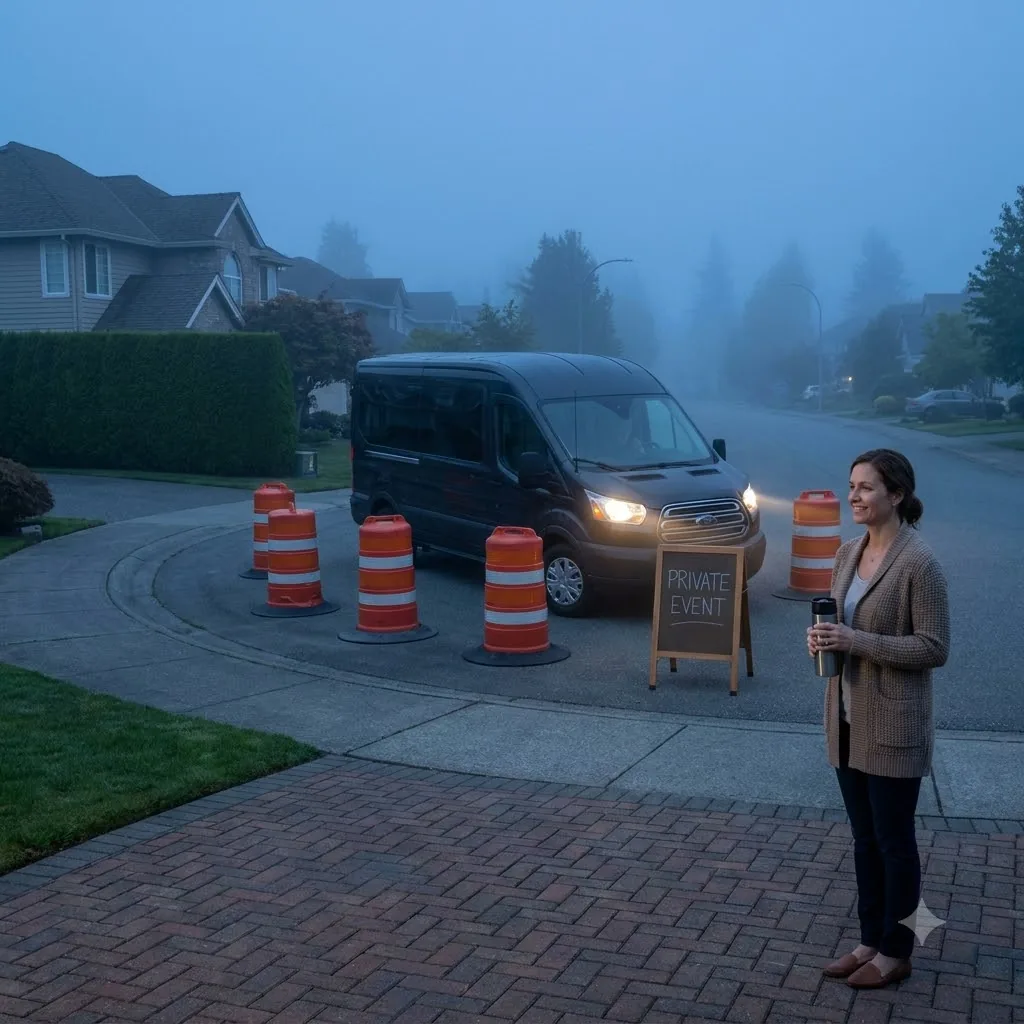
Sarah tapped the brake pedal of the twelve-passenger van, staring through the sweep of her windshield wipers as her headlights illuminated a solid wall of orange. Three municipal-grade traffic barrels blocked the apron of her driveway, their reflective striping glaring back at her through the pre-dawn fog. The heavy plastic drums formed a flawless barricade across the concrete, trapping her heavy-duty transport vehicle in the cul-de-sac. She checked her rearview mirror, confirming the rear tires were still on the slope of her driveway, pinned between the closed garage door and the newly erected obstacle course.
Eleanor stood dead center on the damp asphalt just beyond the barrels. The neighborhood homeowners association chair wore a pristine fleece zip-up and held a silver thermos of coffee in both hands. She offered Sarah a tight, aggressively cheerful smile, entirely unbothered by the chill of the four in the morning air.
Sarah shifted the van into park and kept the engine running. She unbuckled her seatbelt, the quiet rumbling of the engine vibrating through the floorboards. She had a schedule to keep, miles to cover before the state line, and an itinerary she could not delay. She pushed her heavy door open and stepped out into the mist.
Eleanor took a deliberate sip from her thermos. She lowered it slowly, adjusting her posture to stand a little taller.
“Good morning, Sarah.” Eleanor pitched her voice loudly enough to carry over the idling engine, infusing the greeting with the forced politeness of a retail manager dealing with a difficult customer. “I am afraid we have a slight community issue to address.”
Sarah kept her hands out of her pockets, walking down the sloping driveway toward the barricade. She reached out to grip the rim of the center barrel.
“I need to leave, Eleanor,” Sarah said, keeping her tone completely flat.
Sarah shoved the orange plastic. It did not budge. The barrel was weighed down, likely filled with water or sand. She planted her boots and pushed harder, feeling the strain in her shoulders, but the heavy plastic only scraped a brutal, grinding inch across the concrete.
Eleanor tutted softly, stepping closer to the barricade. “I would strongly advise against damaging neighborhood property. The board voted unanimously on the new traffic calming measures last night. We also finalized the enforcement of Section Four, Paragraph B of our community bylaws.”
Sarah let go of the barrel, wiping a streak of road grime from her palm onto her jeans. She glanced back at her idling van. The tinted windows hid the interior, but she knew the clock on the dashboard was merciless. Every minute trapped in this driveway squeezed her margin of safety tighter.
“You need to move these,” Sarah said. “Move them right now.”
“The noise ordinance specifically prohibits commercial-capacity vehicles from idling in residential driveways between ten at night and six in the morning,” Eleanor said, reciting the rule with deep satisfaction. “We sent out the memo yesterday afternoon. Your vehicle is causing a significant disruption to the peaceful enjoyment of our neighborhood.”
Sarah looked around the cul-de-sac. The neighborhood was supposedly asleep. No dogs barked. No birds chirped. The only sound was the quiet hum of her exhaust pipe and the steady drip of condensation from the oak trees. Yet, as she scanned the surrounding houses, three separate porch lights clicked on in unison.
A silhouette stood in the window of the Harrisons’ house next door. Across the street, Mr. Miller stood on his front step, his arms crossed over his bathrobe. It was a coordinated effort. The supposedly progressive, supportive neighbors who had smiled at her block parties were now standing vigil in the dark.
“It is a minor inconvenience,” Eleanor continued, her smile hardening into a flat line. “But rules are what separate a community from chaos. You will have to turn off your engine and wait until the designated hours to operate that eyesore.”
Sarah stepped around the edge of the barricade, intending to slide into the street and see if she could maneuver the van over the curb, dragging the undercarriage across the grass if necessary. Eleanor instantly mirrored her movement, stepping firmly into her path.
“I am conducting an out-of-state transport,” Sarah said, lowering her voice to a harsh whisper. “My passengers are depending on me to get them across the border before sunrise.”
“Your private hobbies are not exempt from the community noise ordinance,” Eleanor replied loudly. “In fact, given your refusal to comply, I have already contacted the proper authorities to handle this ongoing violation.”
Sarah froze. A deep, cold knot formed in her stomach. The police would run her plates, demand her manifest, and see exactly who was sitting in the back rows of her van. She spun around to look down the main arterial road leading into the subdivision, her pulse hammering in her ears.
The sweeping glow of headlights cut through the fog, turning onto their street.
Sarah bolted back toward the van, her mind racing through the worst-case scenarios of a local patrol car blocking the exit. She grabbed the driver-side door handle, ready to throw the vehicle into reverse and attempt to tear through her own front lawn.
The approaching vehicle did not have a light bar on the roof. It was a sleek, black sedan with government plates, rolling silently to a halt right behind Eleanor. The driver side door popped open, and a figure in a sharp charcoal suit stepped onto the wet asphalt, pulling a thick, legal-sized manila envelope from a leather briefcase.
Sarah tapped the brake pedal of the twelve-passenger van, staring through the sweep of her windshield wipers as her headlights illuminated a solid wall of orange. Three municipal-grade traffic barrels blocked the apron of her driveway, their reflective striping glaring back at her through the pre-dawn fog. The heavy plastic drums formed a flawless barricade across the concrete, trapping her heavy-duty transport vehicle in the cul-de-sac. She checked her rearview mirror, confirming the rear tires were still on the slope of her driveway, pinned between the closed garage door and the newly erected obstacle course.
Eleanor stood dead center on the damp asphalt just beyond the barrels. The neighborhood homeowners association chair wore a pristine fleece zip-up and held a silver thermos of coffee in both hands. She offered Sarah a tight, aggressively cheerful smile, entirely unbothered by the chill of the four in the morning air.
Sarah shifted the van into park and kept the engine running. She unbuckled her seatbelt, the quiet rumbling of the engine vibrating through the floorboards. She had a schedule to keep, miles to cover before the state line, and an itinerary she could not delay. She pushed her heavy door open and stepped out into the mist.
Eleanor took a deliberate sip from her thermos. She lowered it slowly, adjusting her posture to stand a little taller.
“Good morning, Sarah.” Eleanor pitched her voice loudly enough to carry over the idling engine, infusing the greeting with the forced politeness of a retail manager dealing with a difficult customer. “I am afraid we have a slight community issue to address.”
Sarah kept her hands out of her pockets, walking down the sloping driveway toward the barricade. She reached out to grip the rim of the center barrel.
“I need to leave, Eleanor,” Sarah said, keeping her tone completely flat.
Sarah shoved the orange plastic. It did not budge. The barrel was weighed down, likely filled with water or sand. She planted her boots and pushed harder, feeling the strain in her shoulders, but the heavy plastic only scraped a brutal, grinding inch across the concrete.
Eleanor tutted softly, stepping closer to the barricade. “I would strongly advise against damaging neighborhood property. The board voted unanimously on the new traffic calming measures last night. We also finalized the enforcement of Section Four, Paragraph B of our community bylaws.”
Sarah let go of the barrel, wiping a streak of road grime from her palm onto her jeans. She glanced back at her idling van. The tinted windows hid the interior, but she knew the clock on the dashboard was merciless. Every minute trapped in this driveway squeezed her margin of safety tighter.
“You need to move these,” Sarah said. “Move them right now.”
“The noise ordinance specifically prohibits commercial-capacity vehicles from idling in residential driveways between ten at night and six in the morning,” Eleanor said, reciting the rule with deep satisfaction. “We sent out the memo yesterday afternoon. Your vehicle is causing a significant disruption to the peaceful enjoyment of our neighborhood.”
Sarah looked around the cul-de-sac. The neighborhood was supposedly asleep. No dogs barked. No birds chirped. The only sound was the quiet hum of her exhaust pipe and the steady drip of condensation from the oak trees. Yet, as she scanned the surrounding houses, three separate porch lights clicked on in unison.
A silhouette stood in the window of the Harrisons’ house next door. Across the street, Mr. Miller stood on his front step, his arms crossed over his bathrobe. It was a coordinated effort. The supposedly progressive, supportive neighbors who had smiled at her block parties were now standing vigil in the dark.
“It is a minor inconvenience,” Eleanor continued, her smile hardening into a flat line. “But rules are what separate a community from chaos. You will have to turn off your engine and wait until the designated hours to operate that eyesore.”
Sarah stepped around the edge of the barricade, intending to slide into the street and see if she could maneuver the van over the curb, dragging the undercarriage across the grass if necessary. Eleanor instantly mirrored her movement, stepping firmly into her path.
“I am conducting an out-of-state transport,” Sarah said, lowering her voice to a harsh whisper. “My passengers are depending on me to get them across the border before sunrise.”
“Your private hobbies are not exempt from the community noise ordinance,” Eleanor replied loudly. “In fact, given your refusal to comply, I have already contacted the proper authorities to handle this ongoing violation.”
Sarah froze. A deep, cold knot formed in her stomach. The police would run her plates, demand her manifest, and see exactly who was sitting in the back rows of her van. She spun around to look down the main arterial road leading into the subdivision, her pulse hammering in her ears.
The sweeping glow of headlights cut through the fog, turning onto their street.
Sarah bolted back toward the van, her mind racing through the worst-case scenarios of a local patrol car blocking the exit. She grabbed the driver-side door handle, ready to throw the vehicle into reverse and attempt to tear through her own front lawn.
The approaching vehicle did not have a light bar on the roof. It was a sleek, black sedan with government plates, rolling silently to a halt right behind Eleanor. The driver side door popped open, and a figure in a sharp charcoal suit stepped onto the wet asphalt, pulling a thick, legal-sized manila envelope from a leather briefcase.