Story code: ST-001377
Part 3: The Q3 Incentive
Elias kept his eyes on the scrap of legal paper, the blue ink of the two-million-dollar figure blurring slightly at the edges. The silence in the locked room felt heavy and viscous, pressing against his eardrums. At the door, the corporate fixer remained perfectly still, a solid wall of charcoal wool and implied violence blocking the only exit.
Across the sprawling mahogany table, Arthur Vance let out a long, shaky exhale. The pharmaceutical representative wiped his sweating forehead with his monogrammed handkerchief, his erratic breathing finally beginning to slow. As Sterling’s threat of federal marshals and asset forfeiture hung in the cold, recycled air, a visible wave of relief washed over Vance. The corporate shield had reengaged. The sheer, unadulterated panic that had reduced him to a trembling mess only moments ago began to recede, replaced rapidly by the familiar, insulated arrogance of a man who realized his expensive lawyers had just bailed him out.
Vance sat up straighter in his ergonomic leather chair, adjusting the lapels of his bespoke suit. He cleared his throat, his voice shifting back toward its usual condescending drawl.
“You played a stupid game, Thorne,” Vance sneered, refusing to look at the forged memo on the table, keeping his eyes locked on Elias instead. “Sterling is right. You take the money, you give us the thief’s name, and you walk away. Or you ruin your life trying to play the hero. Either way, I’m going back to my office.”
Sterling didn’t look at Vance. He kept his predatory, unblinking gaze fixed entirely on Elias, tapping his heavy silver fountain pen against the legal pad. “The name, Mr. Thorne. I will not ask again.”
Elias felt the rapid hammering in his chest begin to steady. He looked at the locked heavy glass doors, then back to Vance’s smug, recovered posture. The two million dollars sitting on the wood between them would erase his crushing medical debts. It would save his house from foreclosure. But it wouldn’t change the fact that Arthur Vance had paid for a luxury lifestyle with his wife’s failing kidneys.
“You’re right about the first document, Mr. Sterling,” Elias said, his voice dropping to a quiet, even tenor that cut effortlessly through the hum of the climate control. “If I took that memo to the press, you’d bury me in federal court. You’d claim it was a stolen trade secret. You’d use the Espionage Act.”
Sterling’s expression remained a mask of absolute granite. “It is stolen property. And you are out of time.”
“But the crime-fraud exception,” Elias continued, ignoring the ticking clock, leaning slightly forward, “means that corporate non-disclosure agreements and trade secret protections don’t apply if the document is being used to conceal a federal felony.”
Vance let out a sharp, derisive scoff, shaking his head. “Oh, listen to the plaintiff. He read a legal blog on his phone.”
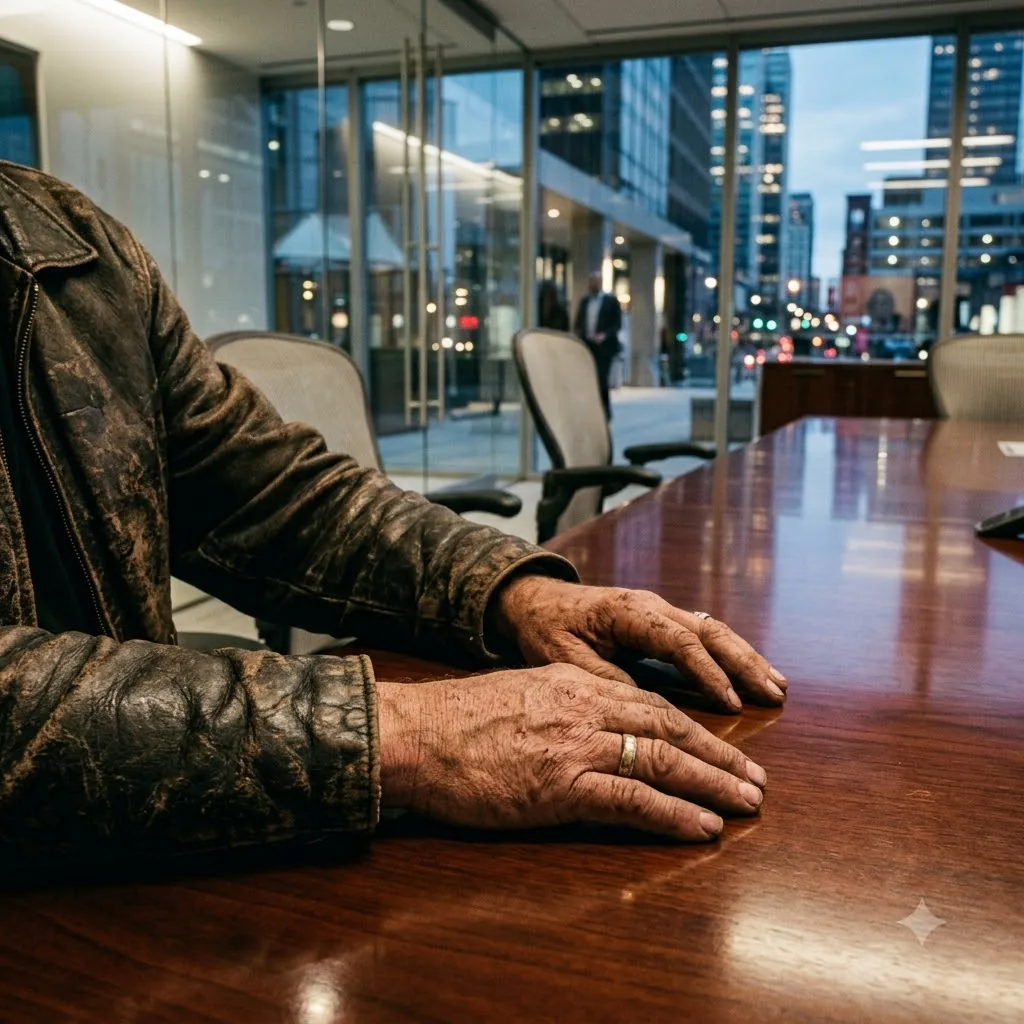
Elias didn’t look at Vance. He reached his right hand inside his frayed blazer.
The fixer by the door instantly shifted his weight, his hand twitching toward his waistband, but Sterling immediately raised two fingers, stopping the massive man in his tracks. Sterling’s eyes narrowed to microscopic slits as Elias slowly withdrew his hand.
Elias’s fingers were closed around a second folded piece of standard printer paper. He had kept it in his inner breast pocket, separate from the memo, pressed flat against his ribs. He placed it gently on the mahogany table, directly beside the two-million-dollar offer.
“I didn’t get that first memo from a whistleblower in IT, Arthur,” Elias said, keeping his palm flat over the new folded square. “A mid-level systems administrator didn’t have clearance for the senior clinical research drives. But he did have access to the external mail servers.”
Vance’s derisive smirk faltered. His hand froze halfway to his silk tie.
“He didn’t give me the company’s internal files,” Elias said softly. “He gave me an archive of your sent folder. I found the renal toxicity memo attached to an external email you sent to Oakridge Nephrology. To my wife’s doctor.”
Elias removed his hand, leaving the second piece of paper exposed. He didn’t push it across the table this time. He let Sterling reach for it.
The senior partner leaned forward, his silver hair catching the recessed lighting, and pulled the paper toward him. He unfolded it with precise, deliberate movements.
It was a printed email, carrying the same pharmaceutical company letterhead, time-stamped six months after the first memo had warned of lethal renal failure.
Elias had memorized this one, too. He recited the text aloud, his voice steady and relentless in the dead air of the conference room.
“Subject line: Q3 Volume Incentives. ‘Doc, I need you to double the script volume on the compound for your remaining patients this month. If Oakridge hits the new quota, I’ll make sure the clinic is booked for three of our heavily compensated consulting seminars in Cabo this winter.'”
Sterling’s eyes tracked rapidly across the page, the granite mask of his face finally beginning to show a hairline fracture.
“But that wasn’t the worst part, Arthur,” Elias said. “‘I am ten grand short of my Q3 President’s Club bonus tier, and I need this. Even if the patients are showing elevated creatinine levels, keep pushing the dosage. The side effects are overblown.'”
The junior litigator beside Vance abruptly stopped breathing. She stared at the paper in Sterling’s hands, her hands hovering over her laptop keyboard, her eyes wide with unadulterated shock.
The silence that followed was total and absolute.
Vance’s recovered arrogance didn’t just break; it completely disintegrated. The blood rushed out of his face, leaving a sickening, chalky pallor. His jaw worked silently, trying to form words, but his vocal cords yielded nothing but a wet click. The monogrammed handkerchief slipped from his trembling fingers, landing softly on the hardwood floor for the second time.
Sterling slowly lowered the paper to the table. He didn’t look at Elias. He turned his head, millimeter by millimeter, until his cold, dead eyes were fixed entirely on Arthur Vance.
“It’s out of context,” Vance whispered, his voice cracking into a pathetic, high-pitched whine. He shrank back into his expensive chair, pressing himself desperately away from his own lawyer. “Sterling, it’s just aggressive sales copy. Everyone does it. The Cabo trips were approved by marketing-”
“You authorized off-label overprescription quotas,” Sterling said, his voice dropping to a terrifying, hollow whisper. “You bribed a clinical physician to push a lethal dosage of a toxic compound. In writing. For a quarterly bonus.”
“Sterling, please, the phrasing is bad but-”
“Shut your mouth,” Sterling hissed, the sheer venom in his voice so absolute it made the junior litigator physically flinch.
Elias sat back in his chair. The entire power dynamic of the room had completely inverted in the span of sixty seconds. The locked door and the hulking corporate fixer were no longer there to trap Elias. They were trapping Vance.
If Elias took this second email to the federal authorities, the pharmaceutical giant couldn’t hide behind intellectual property laws or non-disclosure agreements. It wasn’t corporate negligence anymore; it was an illegal kickback scheme resulting directly in a wrongful death. It was a criminal conspiracy, and Arthur Vance had documented every single piece of it on the company’s servers to secure a vacation and a bonus check.
Sterling looked down at the two-million-dollar offer sitting on the table, then up at Elias. The senior partner’s silver fountain pen hovered uselessly over his pristine legal pad. For the first time since the mediation began, the billion-dollar corporate defense attorney had absolutely nothing to say.