Story code: ST-001827
Part 4: The Price of Breath
Boyd’s hands opened, releasing the torn wool of Ray’s coat. Ray slid down the painted cinderblock wall, his boots squeaking against the linoleum, until his knees hit the floor. He stayed there, gasping for air, the rough concrete biting into his spine.
Boyd didn’t say another word. He didn’t have to. The Sheriff turned his back, kicked the overturned chair out of his way, and walked out of the basement conference room. The heavy metal door slammed shut, the echo vibrating through the floorboards.
Marcus calmly picked up his fallen Styrofoam cup and brushed a drop of spilled coffee from his pristine charcoal sleeve. He checked his silver wristwatch.
“It is seven fifty-five, Mayor,” Marcus said, his voice entirely undisturbed by the violence that had just occurred. “I suggest you go upstairs. You have a municipality to save.”
Ray did not remember the walk up the stairs. He did not remember calling the emergency session to order, nor did he remember the specific, manufactured lies he fed into the microphone about sudden geological instability on the eastern ridge requiring immediate corporate intervention. He only remembered the sound of his own wooden gavel hitting the sounding block, sealing the emergency zoning addendum with a narrow, confused three-to-two vote. He remembered the stunned silence of the gallery, followed by the erupting shouts of the constituents who had trusted him with their futures.
He had ignored them all, walking out the back exit into the freezing November night.
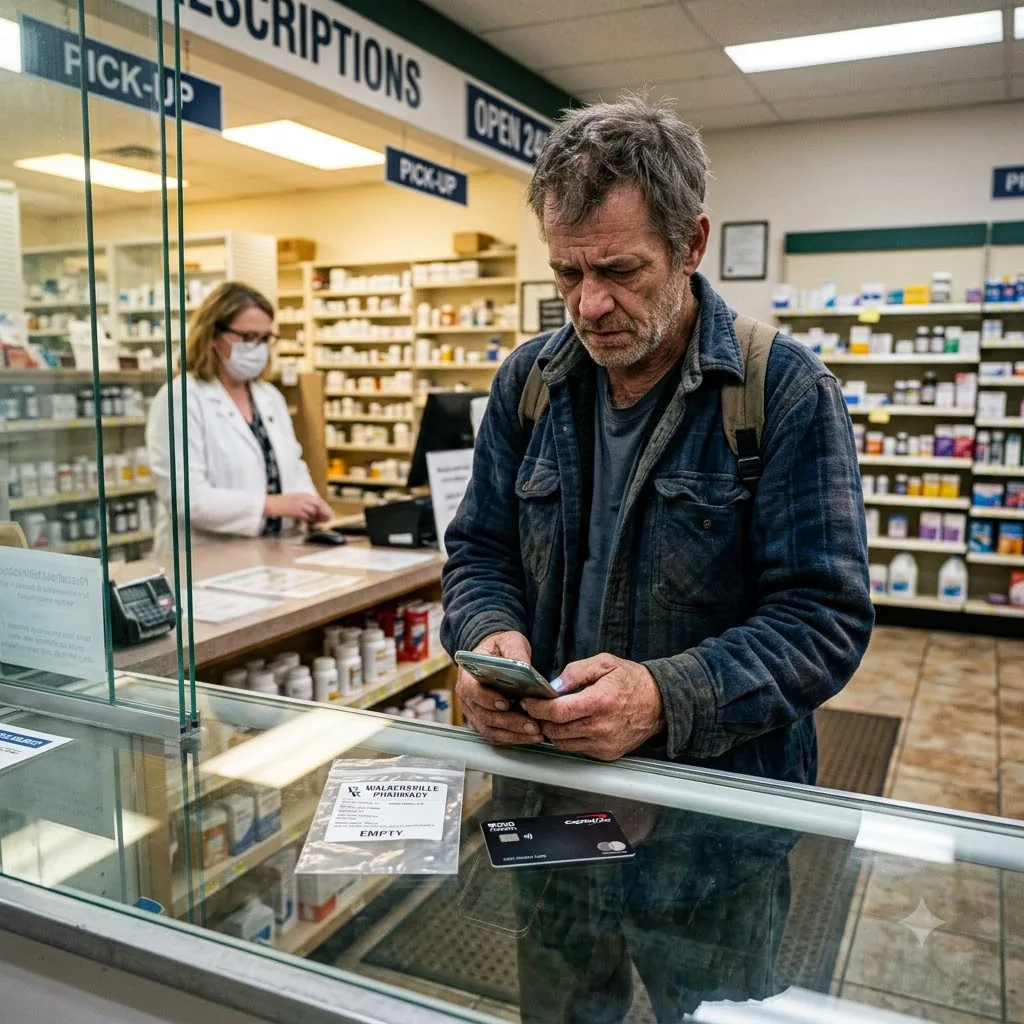
Now, sitting in the cab of his idling truck in his own driveway, Ray stared at the darkened front window of his house. The dashboard clock read 10:14 PM. His ribs ached where Boyd had pinned him. His phone, resting in the cup holder, had not stopped vibrating for two hours. There were thirty-four unread messages from council members, local reporters, and Dave the pharmacist. Ray reached over and powered the device down. The screen went black, and the cab finally fell completely silent.
He turned off the ignition, stepped out into the biting wind, and walked up the front steps.
The house was warm. The faint, metallic smell of the baseboard heaters filled the narrow hallway. Ray took off his torn coat, hanging it carefully on the brass hook. He walked into the living room.
Sarah was still in her worn fabric recliner. The single yellow lamp cast long shadows across her face. She was asleep.
Ray stood in the doorway, paralyzed, just listening.
The terrifying, wet rattle that had filled her lungs just a few hours ago was entirely gone. Her chest rose and fell in a slow, steady, unlabored rhythm. The medication was already working, pulling the fluid from her tissues, stabilizing the cascading failure of her organs. She was safe. She was going to live.
Ray walked closer, his knees trembling with a profound, exhausting relief. He wanted to drop to the floor and bury his face in her lap. He wanted to cry until the tightness in his chest finally broke.
But then he looked at the small wooden side table next to her chair.
The amber pill bottle sat perfectly centered on the coaster. Neatly folded and tucked beneath the bottle was the long thermal receipt. The Vanguard Development logo was completely visible.
Sarah shifted in the recliner. Her eyes fluttered open, adjusting to the dim light. She looked at Ray standing over her. The panic of suffocation had left her eyes, but it had not been replaced by gratitude, or relief, or love.
It was replaced by a hollow, devastating knowing.
She didn’t ask how the emergency city council meeting had gone. She didn’t ask why he had left in such a rush, or why his coat collar was torn. She just looked at him, then looked at the amber bottle, and then turned her gaze away, staring blankly at the dark television screen across the room.
“Sarah,” Ray whispered, his voice cracking.
She didn’t answer. She just pulled the woven throw blanket tighter around her shoulders, shutting him out. She knew what Vanguard was. She knew what he had promised to do to them, and she knew what it meant that their name was printed on the paper buying her life.
Ray backed away from the chair. He walked into the kitchen and stood by the window over the sink, looking out over the quiet, snow-dusted roofs of the town.
It was a small, struggling place filled with people who had looked him in the eye and voted for him. By Monday morning, the new zero-tolerance mandates would hit the sheriff’s department. The quotas would begin. A broken taillight would ruin a family’s week. A teenager skipping math class would be placed in handcuffs. The town he had sworn to protect was no longer a community; it was a hunting ground, a supply chain for a concrete box on the eastern ridge.
Ray reached into his pocket and pulled out the heavy, matte black card. He set it on the kitchen counter. It sat there in the dark, a permanent fixture in their home now.
He listened to the silence of the house. From the living room, he could hear the quiet, steady sound of Sarah drawing a perfect, unobstructed breath.
Ray closed his eyes, gripping the edge of the sink as the crushing reality settled over him. Every single breath she took for the rest of her life was paid for. And he would spend every day of his term making sure the cages stayed full to keep the account open.