Story code: ST-001842
Part 1: The Citation
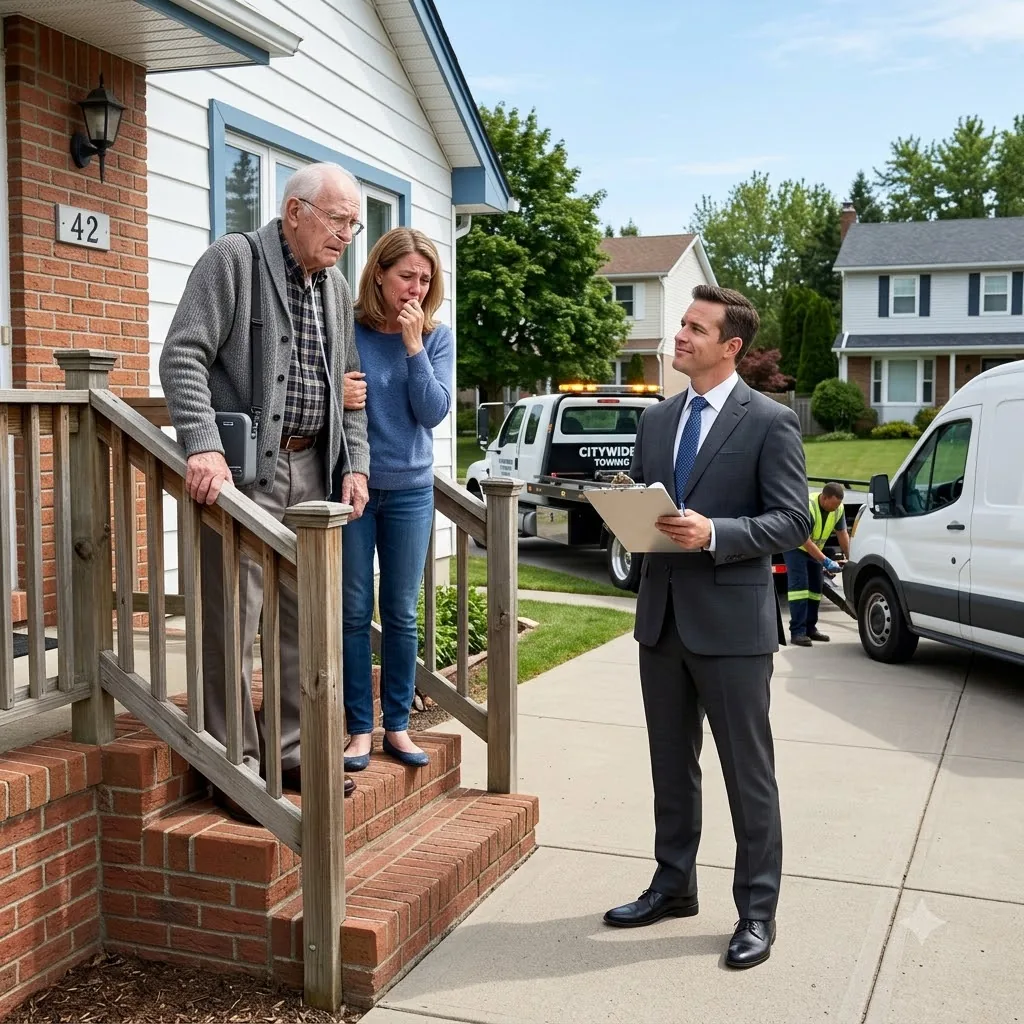
The groan of a heavy winch dragging steel across concrete vibrated through the floorboards, pulling Silas from his chair. He adjusted the plastic cannula under his nose and shuffled to the bay window just in time to see the flatbed tow truck lifting the rear axle of the medical supply van. His daughter, Sarah, sprinted down the driveway in her socks, waving her arms in front of the rumbling diesel engine. Standing on the manicured sidewalk, Arthur, the president of the Oakridge Homeowners Association, clicked a silver pen and calmly jotted notes on a bright yellow citation pad.
Sarah shouted over the noise of the hydraulic lift. She pointed at the bold blue lettering on the side of the van that clearly advertised respiratory therapy equipment. Arthur did not flinch. He simply peeled the top copy of the citation and stepped forward, extending it toward her with a tight, practiced smile.
Silas leaned heavily against the glass, his chest tightening. The delivery driver had only been inside for five minutes to switch out the heavy liquid oxygen tanks that kept Silas breathing through the night. The van was parked neatly in their own driveway. Yet here was Arthur, wearing a pressed pastel polo shirt and tan slacks, directing the tow operator with crisp hand signals as if clearing a major hazard from a runway.
Silas gripped the handle of his walker. He pushed his way toward the front door, the clear plastic tubing trailing behind him, tethering him to the base unit in the corner of the living room. Every step required a conscious effort to draw air into his scarred lungs. The black dust from thirty years in the deep shafts still demanded its daily toll. He shoved the front door open, the humid summer air hitting him like a wet towel.
“You cannot take that vehicle,” Sarah yelled, her voice cracking. “The driver is bringing the secondary tanks out right now. My father needs that equipment to live.”
Arthur adjusted his wire-rimmed glasses and tucked his pen into his breast pocket. “Section four, paragraph B of the community covenants is abundantly clear regarding commercial vehicles. They are not permitted in residential driveways under any circumstances, visible from the street, for any duration.”
“It is a medical delivery.” Sarah stood between the tow truck and the van, her arms crossed. “He is actively making a delivery.”
“The bylaws make no exceptions for vendor types,” Arthur stated. His tone was perfectly modulated, the kind of voice designed to sound reasonable while delivering absolute ruin. “I issued a warning last month when the physical therapist parked a branded sedan on the curb. You chose to ignore the escalating fine schedule. The board authorized immediate removal of the next offending vehicle.”
The tow truck driver leaned out of his window, chewing on a toothpick. He looked at Arthur, then at Sarah, entirely indifferent to the panic unfolding. He pulled a lever, and the winch locked with a loud, metallic clack.
“Drop the vehicle,” the delivery driver shouted, bursting out the front door past Silas. He carried an empty green cylinder on his shoulder. “I have my keys. I will move it to the street.”
Arthur raised a hand, stopping the delivery driver in his tracks. “The tow has already been initiated. The vehicle is now in the custody of the impound service. You can retrieve it from the yard downtown after paying the release fee and the HOA fine.”
Silas watched his daughter deflate, her shoulders dropping as the reality of the situation set in. The nearest impound lot was an hour away. The delivery company would likely refuse to send another truck to this address. Arthur was effectively cutting off the oxygen supply over a line of text in a neighborhood rulebook. It was a level of petty tyranny that defied all logic.
Silas pushed his walker over the threshold, the wheels catching slightly on the door track. He needed to get closer. There was something about the way Arthur stood there, entirely unbothered by the human cost of his actions, that tugged at a dark corner of Silas’s memory. It was not just the cruelty. It was the polished, bureaucratic packaging of that cruelty.
“Mr. Vance,” Arthur said, noticing Silas on the porch. He smoothed the front of his polo shirt. “I advise you to keep your vendors in compliance moving forward. This neighborhood relies on strict adherence to the agreed-upon standards to maintain our property values. I am simply doing the job I was elected to do.”
Silas stopped at the edge of the porch steps. He stared down at Arthur. The midday sun hit the HOA president’s face, casting harsh shadows under his cheekbones and highlighting the sharp, patrician slope of his nose.
Arthur smiled again, a thin, bloodless stretching of his lips. He checked his heavy gold wristwatch.
The air caught in Silas’s throat, and it had nothing to do with his failing lungs. The pastel polo shirt and pristine suburban lawn melted away. The last time Silas had seen that exact smile, that specific tilt of the head, was thirty years ago in a community center with a leaking roof. The man standing on the manicured lawn was older, his hair thinned and graying, but the cold, calculating eyes remained identical.
Silas felt the plastic grip of his walker dig into his palms. He remembered the blinding rain hammering against the windows of the union hall. He remembered a younger version of this same man standing behind a folding table, flanked by armed security guards, handing out single sheets of paper that erased three hundred men’s futures in an instant.
Arthur turned his back to the house and signaled the tow driver to pull away.
Silas took a shuddering breath and spoke the name the man used to go by, his voice carrying just enough rasp to stop Arthur dead in his tracks.
The groan of a heavy winch dragging steel across concrete vibrated through the floorboards, pulling Silas from his chair. He adjusted the plastic cannula under his nose and shuffled to the bay window just in time to see the flatbed tow truck lifting the rear axle of the medical supply van. His daughter, Sarah, sprinted down the driveway in her socks, waving her arms in front of the rumbling diesel engine. Standing on the manicured sidewalk, Arthur, the president of the Oakridge Homeowners Association, clicked a silver pen and calmly jotted notes on a bright yellow citation pad.
Sarah shouted over the noise of the hydraulic lift. She pointed at the bold blue lettering on the side of the van that clearly advertised respiratory therapy equipment. Arthur did not flinch. He simply peeled the top copy of the citation and stepped forward, extending it toward her with a tight, practiced smile.
Silas leaned heavily against the glass, his chest tightening. The delivery driver had only been inside for five minutes to switch out the heavy liquid oxygen tanks that kept Silas breathing through the night. The van was parked neatly in their own driveway. Yet here was Arthur, wearing a pressed pastel polo shirt and tan slacks, directing the tow operator with crisp hand signals as if clearing a major hazard from a runway.
Silas gripped the handle of his walker. He pushed his way toward the front door, the clear plastic tubing trailing behind him, tethering him to the base unit in the corner of the living room. Every step required a conscious effort to draw air into his scarred lungs. The black dust from thirty years in the deep shafts still demanded its daily toll. He shoved the front door open, the humid summer air hitting him like a wet towel.
“You cannot take that vehicle,” Sarah yelled, her voice cracking. “The driver is bringing the secondary tanks out right now. My father needs that equipment to live.”
Arthur adjusted his wire-rimmed glasses and tucked his pen into his breast pocket. “Section four, paragraph B of the community covenants is abundantly clear regarding commercial vehicles. They are not permitted in residential driveways under any circumstances, visible from the street, for any duration.”
“It is a medical delivery.” Sarah stood between the tow truck and the van, her arms crossed. “He is actively making a delivery.”
“The bylaws make no exceptions for vendor types,” Arthur stated. His tone was perfectly modulated, the kind of voice designed to sound reasonable while delivering absolute ruin. “I issued a warning last month when the physical therapist parked a branded sedan on the curb. You chose to ignore the escalating fine schedule. The board authorized immediate removal of the next offending vehicle.”
The tow truck driver leaned out of his window, chewing on a toothpick. He looked at Arthur, then at Sarah, entirely indifferent to the panic unfolding. He pulled a lever, and the winch locked with a loud, metallic clack.
“Drop the vehicle,” the delivery driver shouted, bursting out the front door past Silas. He carried an empty green cylinder on his shoulder. “I have my keys. I will move it to the street.”
Arthur raised a hand, stopping the delivery driver in his tracks. “The tow has already been initiated. The vehicle is now in the custody of the impound service. You can retrieve it from the yard downtown after paying the release fee and the HOA fine.”
Silas watched his daughter deflate, her shoulders dropping as the reality of the situation set in. The nearest impound lot was an hour away. The delivery company would likely refuse to send another truck to this address. Arthur was effectively cutting off the oxygen supply over a line of text in a neighborhood rulebook. It was a level of petty tyranny that defied all logic.
Silas pushed his walker over the threshold, the wheels catching slightly on the door track. He needed to get closer. There was something about the way Arthur stood there, entirely unbothered by the human cost of his actions, that tugged at a dark corner of Silas’s memory. It was not just the cruelty. It was the polished, bureaucratic packaging of that cruelty.
“Mr. Vance,” Arthur said, noticing Silas on the porch. He smoothed the front of his polo shirt. “I advise you to keep your vendors in compliance moving forward. This neighborhood relies on strict adherence to the agreed-upon standards to maintain our property values. I am simply doing the job I was elected to do.”
Silas stopped at the edge of the porch steps. He stared down at Arthur. The midday sun hit the HOA president’s face, casting harsh shadows under his cheekbones and highlighting the sharp, patrician slope of his nose.
Arthur smiled again, a thin, bloodless stretching of his lips. He checked his heavy gold wristwatch.
The air caught in Silas’s throat, and it had nothing to do with his failing lungs. The pastel polo shirt and pristine suburban lawn melted away. The last time Silas had seen that exact smile, that specific tilt of the head, was thirty years ago in a community center with a leaking roof. The man standing on the manicured lawn was older, his hair thinned and graying, but the cold, calculating eyes remained identical.
Silas felt the plastic grip of his walker dig into his palms. He remembered the blinding rain hammering against the windows of the union hall. He remembered a younger version of this same man standing behind a folding table, flanked by armed security guards, handing out single sheets of paper that erased three hundred men’s futures in an instant.
Arthur turned his back to the house and signaled the tow driver to pull away.
Silas took a shuddering breath and spoke the name the man used to go by, his voice carrying just enough rasp to stop Arthur dead in his tracks.