Story code: ST-000620
Part 1: The Third Pew
The heavy oak of the third pew dug into Leo’s spine as Pastor Miller pounded his fist against the pulpit. The sanctuary of Grace Fellowship was packed shoulder-to-shoulder, thick with the smell of cheap cologne and damp wool, but Leo only smelled the sharp, metallic tang of hydraulic fluid. He kept his hands clamped firmly between his knees. The harsh fluorescent lights overhead threatened to illuminate the dark, viscous lines permanently wedged beneath his cuticles.
“They came in the dead of night like a thief,” Miller roared, his face flushed a deep, mottled red. “A coward trying to choke the lifeblood out of our town.”
Beside Leo, his father offered a low, rumbling grunt of agreement. Arthur’s knuckles were white as he gripped his worn leather Bible. The natural gas pipeline was the only reason Arthur could still pay the mortgage. It was the only reason half the men in this room could feed their families. And last night, someone had taken a heavy wrench and a torch to the main pressure valves, crippling the entire eastern distribution node.
Leo swallowed hard, tasting bile. The muscles in his shoulders screamed with every breath he took, a brutal physical reminder of the extreme torque required to snap those heavy steel bolts. He kept his eyes glued to the scuffed toes of his dress boots. He just needed to make it through the hour. He just needed to nod, look appropriately outraged, and slip out the back doors before the fellowship hour started.
The congregation murmured, a rising tide of collective anger that vibrated against the stained glass. Mrs. Gable in the front row was fanning herself aggressively with a hymnal. The men in the back were shifting on their feet, their heavy work boots scraping rhythmically against the hardwood floor. They wanted a face to put to the sabotage. They wanted someone to string up, someone to blame for the fact that the company gates were padlocked this morning.
“Millions of dollars in damage,” Miller continued, leaning over the pulpit. His voice dropped to a gravelly whisper that somehow carried all the way to the vestibule at the rear. “And for what. Some misguided crusade. Some twisted sense of righteousness. They think they know better than the honest, hard-working people of this congregation. They think they can take away our livelihoods in the name of their extreme ideology.”
Leo pressed his thumbs hard against his index fingers, trying to scrape away the remaining slick residue without his father noticing. The hydraulic fluid was stubborn and deeply ingrained. It had soaked into the calluses of his palms, resisting the three rounds of aggressive scrubbing with industrial pumice soap he had attempted at four in the morning. He tucked his hands further under his thighs, feeling the heat of his own guilt radiating under his Sunday suit.
“The foreman called me at dawn,” Arthur whispered to Leo, not taking his eyes off the pacing pastor. “Said the pressure drop was so massive it nearly blew the secondary containment seals. Whoever did it bypassed the digital alarms entirely. Knew exactly which manual valves to hit to cause maximum strain.”
Leo gave a tight, microscopic nod. He had spent six months studying the archival blueprints he found in the basement filing cabinet of his father’s home office. He knew the aging system better than the corporate engineers who recently bought it. He knew the metal fatigue tolerances, the blind spots in the upgraded security camera grid, the exact twelve-minute window between the roving guard patrols. He had executed the plan flawlessly. Or so he had convinced himself while shivering in his truck afterward.
“But the wicked flee when no one pursues,” Miller boomed, snapping Leo back to the present. “And this coward left behind more than just broken pipes and leaking gas.”
The sanctuary went dead silent. The aggressive fanning stopped. The shifting boots froze. Leo felt a cold drop of sweat slide down his ribcage.
Pastor Miller stepped out from behind the heavy wooden pulpit. He walked down the three carpeted steps to the main floor, closing the distance between himself and the front pews. He reached into the pocket of his suit jacket.
“The sheriff’s deputies were out there at first light,” Miller said, pacing slowly across the center aisle. “They found where our saboteur breached the perimeter. They found the cuts in the razor wire.”
Leo kept his breathing shallow. He had been careful. He had worn gloves, a mask, thick layers. He had bagged his tools and thrown them into the deep quarry lake on the drive home.
“And they found this,” Miller said.
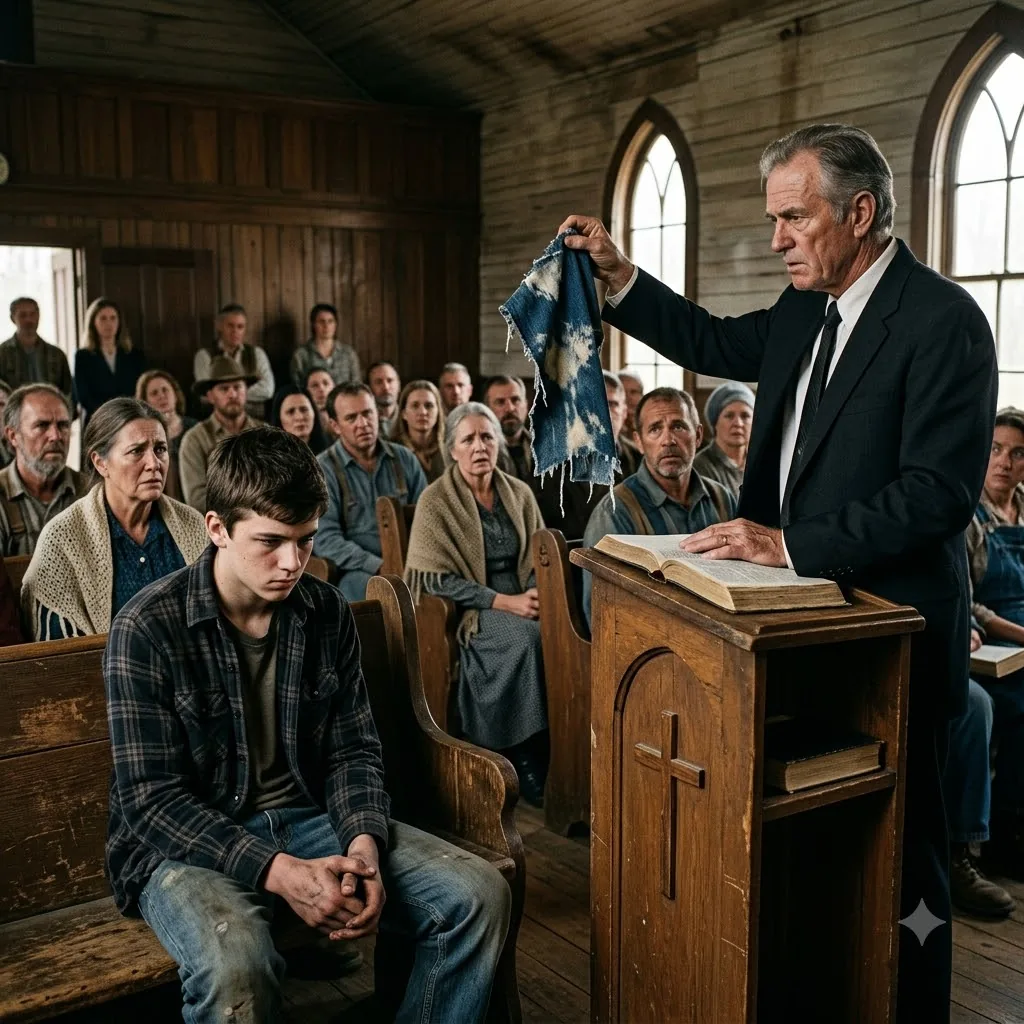
The pastor held up his hand. Pinched between his thumb and forefinger was a small, ragged scrap of fabric. Even from the third pew, the material was unmistakable under the bright sanctuary lights. It was heavy denim, marred by a highly distinct, jagged bleach stain that looked like a crescent moon.
Leo’s stomach plummeted into a lightless void.
“Caught right on the barbs at the top of the fence,” Miller announced, holding the scrap higher. “The sheriff told me to share this with the flock. He said someone in this town knows who wears these clothes. Someone knows who came home last night missing a piece of their wardrobe.”
Arthur leaned forward, squinting at the fabric.
Leo did not need to squint. The phantom draft against his left kneecap suddenly felt like a burning brand. He had thought the tear happened on a rogue branch during his sprint through the woods. He had not checked his clothes in the frantic rush to strip and shower.
Under the cover of his oversized Sunday coat, Leo’s left hand slowly drifted down his leg. His fingers brushed past the sturdy seam of his slacks, tracing the memory of the jeans he had shoved into the back of his closet just hours ago. The bleach stain was from a garage mishap last summer. His father had mocked him for ruining a perfectly good pair of work pants.
“Take a good look,” Miller commanded, stepping right up to the edge of the second pew. “A bleach stain like this is unique. You don’t just buy something like this off the rack.”
Arthur’s head tilted slightly to the side. The worn leather of his Bible creaked as his grip tightened. He stared at the scrap of fabric in the pastor’s hand, then slowly turned his head toward the third pew, his eyes dropping down toward the hem of Leo’s coat.
Leo froze as his father’s large, calloused hand reached out and clamped down on his wrist.
The heavy oak of the third pew dug into Leo’s spine as Pastor Miller pounded his fist against the pulpit. The sanctuary of Grace Fellowship was packed shoulder-to-shoulder, thick with the smell of cheap cologne and damp wool, but Leo only smelled the sharp, metallic tang of hydraulic fluid. He kept his hands clamped firmly between his knees. The harsh fluorescent lights overhead threatened to illuminate the dark, viscous lines permanently wedged beneath his cuticles.
“They came in the dead of night like a thief,” Miller roared, his face flushed a deep, mottled red. “A coward trying to choke the lifeblood out of our town.”
Beside Leo, his father offered a low, rumbling grunt of agreement. Arthur’s knuckles were white as he gripped his worn leather Bible. The natural gas pipeline was the only reason Arthur could still pay the mortgage. It was the only reason half the men in this room could feed their families. And last night, someone had taken a heavy wrench and a torch to the main pressure valves, crippling the entire eastern distribution node.
Leo swallowed hard, tasting bile. The muscles in his shoulders screamed with every breath he took, a brutal physical reminder of the extreme torque required to snap those heavy steel bolts. He kept his eyes glued to the scuffed toes of his dress boots. He just needed to make it through the hour. He just needed to nod, look appropriately outraged, and slip out the back doors before the fellowship hour started.
The congregation murmured, a rising tide of collective anger that vibrated against the stained glass. Mrs. Gable in the front row was fanning herself aggressively with a hymnal. The men in the back were shifting on their feet, their heavy work boots scraping rhythmically against the hardwood floor. They wanted a face to put to the sabotage. They wanted someone to string up, someone to blame for the fact that the company gates were padlocked this morning.
“Millions of dollars in damage,” Miller continued, leaning over the pulpit. His voice dropped to a gravelly whisper that somehow carried all the way to the vestibule at the rear. “And for what. Some misguided crusade. Some twisted sense of righteousness. They think they know better than the honest, hard-working people of this congregation. They think they can take away our livelihoods in the name of their extreme ideology.”
Leo pressed his thumbs hard against his index fingers, trying to scrape away the remaining slick residue without his father noticing. The hydraulic fluid was stubborn and deeply ingrained. It had soaked into the calluses of his palms, resisting the three rounds of aggressive scrubbing with industrial pumice soap he had attempted at four in the morning. He tucked his hands further under his thighs, feeling the heat of his own guilt radiating under his Sunday suit.
“The foreman called me at dawn,” Arthur whispered to Leo, not taking his eyes off the pacing pastor. “Said the pressure drop was so massive it nearly blew the secondary containment seals. Whoever did it bypassed the digital alarms entirely. Knew exactly which manual valves to hit to cause maximum strain.”
Leo gave a tight, microscopic nod. He had spent six months studying the archival blueprints he found in the basement filing cabinet of his father’s home office. He knew the aging system better than the corporate engineers who recently bought it. He knew the metal fatigue tolerances, the blind spots in the upgraded security camera grid, the exact twelve-minute window between the roving guard patrols. He had executed the plan flawlessly. Or so he had convinced himself while shivering in his truck afterward.
“But the wicked flee when no one pursues,” Miller boomed, snapping Leo back to the present. “And this coward left behind more than just broken pipes and leaking gas.”
The sanctuary went dead silent. The aggressive fanning stopped. The shifting boots froze. Leo felt a cold drop of sweat slide down his ribcage.
Pastor Miller stepped out from behind the heavy wooden pulpit. He walked down the three carpeted steps to the main floor, closing the distance between himself and the front pews. He reached into the pocket of his suit jacket.
“The sheriff’s deputies were out there at first light,” Miller said, pacing slowly across the center aisle. “They found where our saboteur breached the perimeter. They found the cuts in the razor wire.”
Leo kept his breathing shallow. He had been careful. He had worn gloves, a mask, thick layers. He had bagged his tools and thrown them into the deep quarry lake on the drive home.
“And they found this,” Miller said.
The pastor held up his hand. Pinched between his thumb and forefinger was a small, ragged scrap of fabric. Even from the third pew, the material was unmistakable under the bright sanctuary lights. It was heavy denim, marred by a highly distinct, jagged bleach stain that looked like a crescent moon.
Leo’s stomach plummeted into a lightless void.
“Caught right on the barbs at the top of the fence,” Miller announced, holding the scrap higher. “The sheriff told me to share this with the flock. He said someone in this town knows who wears these clothes. Someone knows who came home last night missing a piece of their wardrobe.”
Arthur leaned forward, squinting at the fabric.
Leo did not need to squint. The phantom draft against his left kneecap suddenly felt like a burning brand. He had thought the tear happened on a rogue branch during his sprint through the woods. He had not checked his clothes in the frantic rush to strip and shower.
Under the cover of his oversized Sunday coat, Leo’s left hand slowly drifted down his leg. His fingers brushed past the sturdy seam of his slacks, tracing the memory of the jeans he had shoved into the back of his closet just hours ago. The bleach stain was from a garage mishap last summer. His father had mocked him for ruining a perfectly good pair of work pants.
“Take a good look,” Miller commanded, stepping right up to the edge of the second pew. “A bleach stain like this is unique. You don’t just buy something like this off the rack.”
Arthur’s head tilted slightly to the side. The worn leather of his Bible creaked as his grip tightened. He stared at the scrap of fabric in the pastor’s hand, then slowly turned his head toward the third pew, his eyes dropping down toward the hem of Leo’s coat.
Leo froze as his father’s large, calloused hand reached out and clamped down on his wrist.