Story code: ST-001104
Part 1: The Hometown Patriot
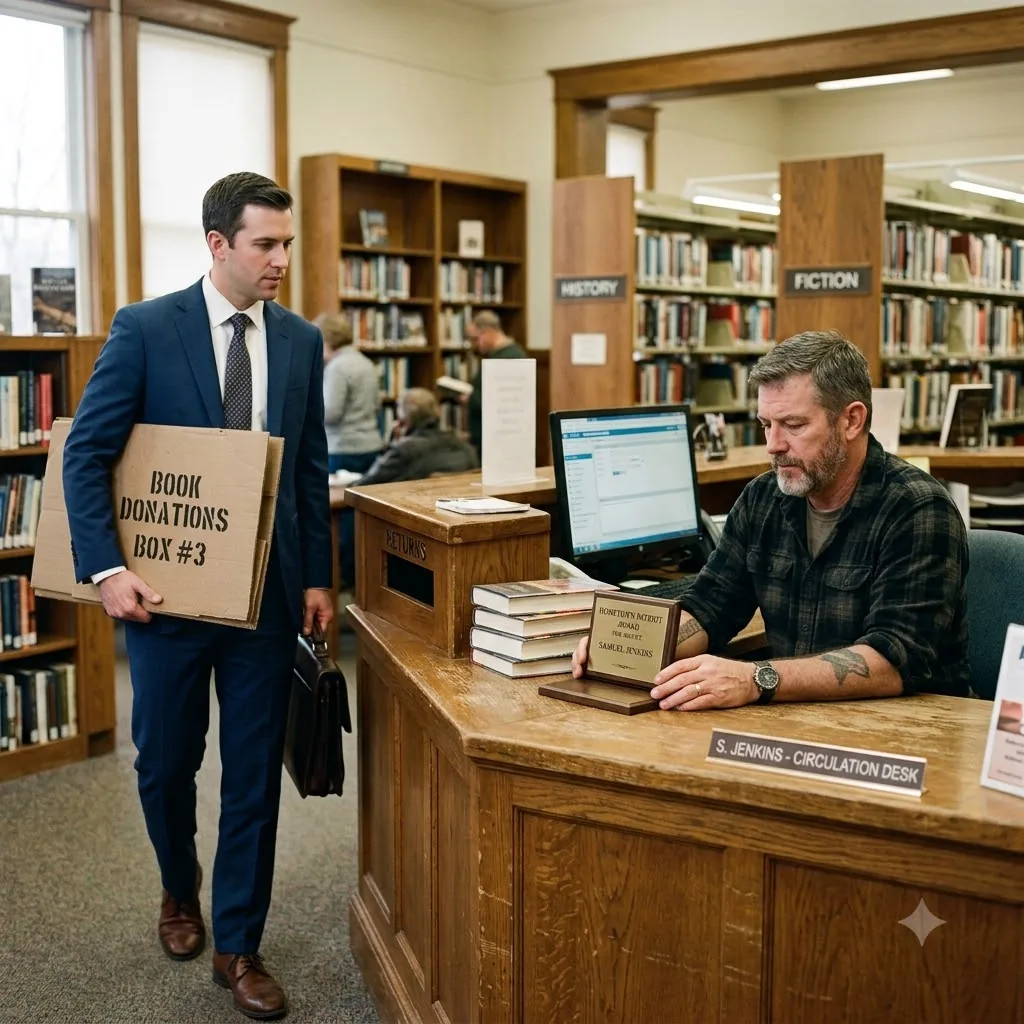
The lingering smell of powdered banquet eggs and burnt coffee clung to the wool of Marcus’s suit jacket. He shrugged out of the garment, draping it over the back of his mesh office chair, and set the cheap brass plaque on the scarred laminate of the main circulation desk. The metal clinked sharply against the heavy silence of the empty library. The engraving caught the harsh fluorescent light overhead, the block letters declaring him a Hometown Patriot. Barely an hour ago, the applause in the community center had been deafening, a room full of people standing to recognize his twenty years of managing the county archives and local branch.
Now, there was only the low, steady hum of the HVAC unit and the quiet ticking of the wall clock. Marcus ran a hand over his face, feeling the exhaustion of the morning’s forced socialization settling into his bones. He reached for his barcode scanner, ready to start processing the overnight drop-box returns, glad to be back in the solitary comfort of his building.
The heavy oak front doors swung open, the sudden draft disrupting the stillness. Dale Ruston stepped inside.
Dale had been the one to hand Marcus the plaque at the breakfast. He was the one who had gripped Marcus’s shoulder for the local newspaper photographer, beaming with all his teeth and calling Marcus the backbone of the community. He was not smiling now. His jaw was set tight, pulling the skin taut over his cheekbones.
Under his left arm, Dale carried a flattened cardboard banker’s box. In his right hand, he held a thick sheaf of printer paper, firmly stapled at the top left corner.
Marcus paused with the scanner in his hand. He slid the brass plaque a few inches to the side, making room on the counter.
“I told the press secretary to email me the digital files, Dale,” Marcus said, keeping his voice leveled to the library’s required low volume. “You didn’t need to walk the photos over yourself.”
Dale let the heavy doors click shut behind him. He didn’t glance at the new release displays, the rotating endcaps, or the large print section he usually complained about. He marched straight down the center aisle toward the circulation desk. The hard leather soles of his expensive loafers snapped aggressively against the worn linoleum.
“This has nothing to do with the photographer,” Dale said. He stopped on the patron side of the desk. He slapped the flattened cardboard box onto the counter, right next to the shiny brass plaque. He tossed the stapled papers on top of the cardboard. “This is about the inventory.”
Marcus looked down at the stack of papers. The top sheet was a spreadsheet, densely packed with tiny twelve-point font. Column after column of numbers stretched all the way down to the bottom margin. It was a massive list of ISBNs, accompanied by shelf locations and partial titles. He could see at least ten pages neatly stacked underneath the cover sheet.
“Annual inventory isn’t scheduled until the end of the fiscal quarter,” Marcus said. He touched the edge of the paper, tracing the top row with his index finger. The numbers corresponded to the local history and sociology sections.
“The schedule has been updated,” Dale said, leaning his weight against the high edge of the counter. The fabric of his tailored suit jacket pulled tight across his shoulders, the very same suit he had worn while leading the standing ovation at the breakfast. “We are doing an immediate, targeted audit of the collection. Every single item on that list needs to be pulled from the shelves, boxed, and placed on the loading dock by three o’clock this afternoon.”
Marcus stared at the sheer volume of numbers. He mentally calculated the density of the spreadsheet. There had to be over five hundred titles listed there. He looked from the sprawling list to the single flattened cardboard box resting on the counter.
“That is physically impossible for one person to do in four hours,” Marcus said, his voice remaining absolutely steady. He tapped the cardboard. “And that box will not hold even a fraction of those volumes.”
“The box is not for the books,” Dale said.
The silence in the library shifted. The quiet peace of the morning vanished, replaced by a heavy, suffocating pressure. Marcus looked from the plain cardboard to the brass Hometown Patriot plaque, then up to the politician who had just handed it to him in front of two hundred cheering residents.
“The box is for your personal items,” Dale continued, his tone utterly devoid of the warmth he had projected at the microphone. “The county council voted in a closed executive session last night. You have a very simple choice to make this afternoon, Marcus. You either pull the collection on that list, or you pack your desk and hand over your keys.”
Marcus did not blink. He looked down at the first ISBN on the list, recognizing the prefix immediately. It was a volume from the restricted county land archives, a basement section Dale had absolutely no legal authority to audit or remove. Before Marcus could point this out, the heavy oak front doors swung open a second time, the hinges groaning as two men in dark windbreakers stepped into the lobby.
The lingering smell of powdered banquet eggs and burnt coffee clung to the wool of Marcus’s suit jacket. He shrugged out of the garment, draping it over the back of his mesh office chair, and set the cheap brass plaque on the scarred laminate of the main circulation desk. The metal clinked sharply against the heavy silence of the empty library. The engraving caught the harsh fluorescent light overhead, the block letters declaring him a Hometown Patriot. Barely an hour ago, the applause in the community center had been deafening, a room full of people standing to recognize his twenty years of managing the county archives and local branch.
Now, there was only the low, steady hum of the HVAC unit and the quiet ticking of the wall clock. Marcus ran a hand over his face, feeling the exhaustion of the morning’s forced socialization settling into his bones. He reached for his barcode scanner, ready to start processing the overnight drop-box returns, glad to be back in the solitary comfort of his building.
The heavy oak front doors swung open, the sudden draft disrupting the stillness. Dale Ruston stepped inside.
Dale had been the one to hand Marcus the plaque at the breakfast. He was the one who had gripped Marcus’s shoulder for the local newspaper photographer, beaming with all his teeth and calling Marcus the backbone of the community. He was not smiling now. His jaw was set tight, pulling the skin taut over his cheekbones.
Under his left arm, Dale carried a flattened cardboard banker’s box. In his right hand, he held a thick sheaf of printer paper, firmly stapled at the top left corner.
Marcus paused with the scanner in his hand. He slid the brass plaque a few inches to the side, making room on the counter.
“I told the press secretary to email me the digital files, Dale,” Marcus said, keeping his voice leveled to the library’s required low volume. “You didn’t need to walk the photos over yourself.”
Dale let the heavy doors click shut behind him. He didn’t glance at the new release displays, the rotating endcaps, or the large print section he usually complained about. He marched straight down the center aisle toward the circulation desk. The hard leather soles of his expensive loafers snapped aggressively against the worn linoleum.
“This has nothing to do with the photographer,” Dale said. He stopped on the patron side of the desk. He slapped the flattened cardboard box onto the counter, right next to the shiny brass plaque. He tossed the stapled papers on top of the cardboard. “This is about the inventory.”
Marcus looked down at the stack of papers. The top sheet was a spreadsheet, densely packed with tiny twelve-point font. Column after column of numbers stretched all the way down to the bottom margin. It was a massive list of ISBNs, accompanied by shelf locations and partial titles. He could see at least ten pages neatly stacked underneath the cover sheet.
“Annual inventory isn’t scheduled until the end of the fiscal quarter,” Marcus said. He touched the edge of the paper, tracing the top row with his index finger. The numbers corresponded to the local history and sociology sections.
“The schedule has been updated,” Dale said, leaning his weight against the high edge of the counter. The fabric of his tailored suit jacket pulled tight across his shoulders, the very same suit he had worn while leading the standing ovation at the breakfast. “We are doing an immediate, targeted audit of the collection. Every single item on that list needs to be pulled from the shelves, boxed, and placed on the loading dock by three o’clock this afternoon.”
Marcus stared at the sheer volume of numbers. He mentally calculated the density of the spreadsheet. There had to be over five hundred titles listed there. He looked from the sprawling list to the single flattened cardboard box resting on the counter.
“That is physically impossible for one person to do in four hours,” Marcus said, his voice remaining absolutely steady. He tapped the cardboard. “And that box will not hold even a fraction of those volumes.”
“The box is not for the books,” Dale said.
The silence in the library shifted. The quiet peace of the morning vanished, replaced by a heavy, suffocating pressure. Marcus looked from the plain cardboard to the brass Hometown Patriot plaque, then up to the politician who had just handed it to him in front of two hundred cheering residents.
“The box is for your personal items,” Dale continued, his tone utterly devoid of the warmth he had projected at the microphone. “The county council voted in a closed executive session last night. You have a very simple choice to make this afternoon, Marcus. You either pull the collection on that list, or you pack your desk and hand over your keys.”
Marcus did not blink. He looked down at the first ISBN on the list, recognizing the prefix immediately. It was a volume from the restricted county land archives, a basement section Dale had absolutely no legal authority to audit or remove. Before Marcus could point this out, the heavy oak front doors swung open a second time, the hinges groaning as two men in dark windbreakers stepped into the lobby.